| | The US imposes a 50% tariff on several Canadian goods, the Houthis declare a “maritime embargo” agai͏ ͏ ͏ ͏ ͏ ͏ |
| |  ODESA ODESA |  BAB EL-MANDEB BAB EL-MANDEB | YAWATA |
 | Flagship |  |
| |
|
The World Today | 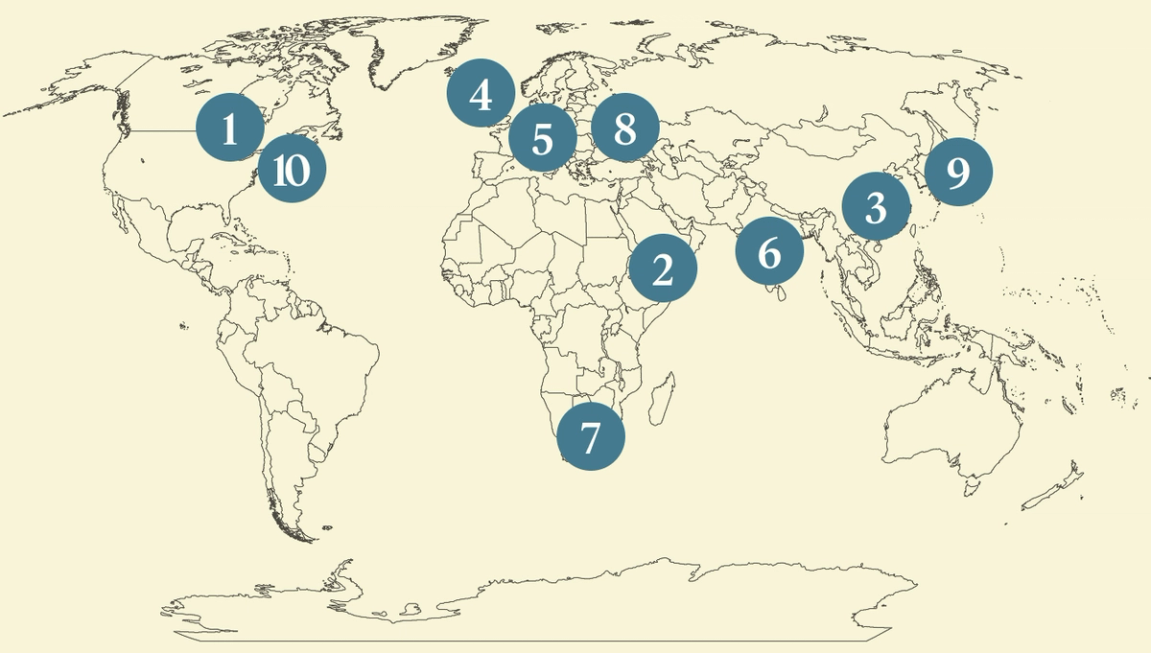 - New US tariffs on Canada
- Houthis threaten Red Sea
- Kimi pauses subscriptions
- New UK PM names cabinet
- Germany business exodus
- India’s private space milestone
- Ozempic in South Africa
- Ukraine labor market changes
- Japan mayor on mat leave
- AI cheating in exams
 A book recommendation for anyone who wants more Odyssey content. |
|
Trump imposes new tariffs on Canada |
 Dylan Martinez/Reuters Dylan Martinez/ReutersUS President Donald Trump announced an additional 50% tariff on a host of Canadian goods Monday, from wine to hockey sticks to cement, reigniting Washington’s tensions with its second-biggest trading partner. The duties come as top US officials are slated to convene in Mexico on Tuesday for further talks on the US-Mexico-Canada free trade agreement, which Trump has indicated he wants to exit. His administration linked the new tariffs — which follow multiple existing sector-specific levies — to alleged “discriminatory measures” by Canada that targeted American goods. The move risks further straining the US-Canada relationship, which has been rocky this year; Ottawa urged the world’s middle powers to form new strategic alliances amid a “rupture” in the global order. |
|
Houthi rebels declare Saudi blockade |
 The Bab el-Mandeb Strait. Nasa Worldview/Handout via Reuters The Bab el-Mandeb Strait. Nasa Worldview/Handout via ReutersYemen’s Houthi rebels declared a “maritime embargo” against Saudi Arabia on Monday, a threat that could disrupt the region’s two main trade arteries at once. Around 9% of global maritime trade flows through Bab el-Mandeb, the gateway to the Red Sea. That figure that has grown as Saudi reroutes 70% of its energy exports to circumvent the Strait of Hormuz. Iran now views its control of Hormuz as “an existential matter of its own security,” Iran’s former vice president wrote in Foreign Affairs, and its leverage over the strait will make it harder for Washington and the Gulf to “exclude Tehran from any future regional security architecture.” |
|
Demand for Chinese AI strains compute |
 Go Nakamura/Reuters Go Nakamura/ReutersBeijing-based AI phenom Moonshot paused new subscriptions for its new Kimi K3 model, underscoring the constraints Chinese tech firms face in delivering their products to a global audience. The open-source model, which has capabilities near those of the top American systems, caused an influx of demand that strained the startup’s computing power. Moonshot is reportedly also preparing for a Hong Kong IPO to capitalize on investor enthusiasm for Chinese AI. Kimi K3’s blockbuster release revived conversations over whether Washington should move to cut off US access to Chinese AI models: American officials have weighed such a move, Axios reported. |
|
UK cabinet picks point to defense priorities |
 Ed Miliband. Jack Taylor/Reuters Ed Miliband. Jack Taylor/ReutersNew UK Prime Minister Andy Burnham named the country’s ex-defense secretary as his finance minister, a surprise move that signals a focus on military spending. John Healey quit his former post last month after accusing then-premier Keir Starmer of endangering Britain by not committing to spending 3% of GDP on defense by 2030. In his new role as chancellor of the exchequer for a major NATO ally and the world’s fifth largest economy, Healey will now be under pressure to achieve that plan himself. Burnham also tapped former energy chief Ed Miliband as foreign secretary in a move that could irk Washington; Miliband reportedly played a key role in the UK’s resistance to getting involved in the US campaign against Iran. |
|
Germany loses last bike helmet maker |
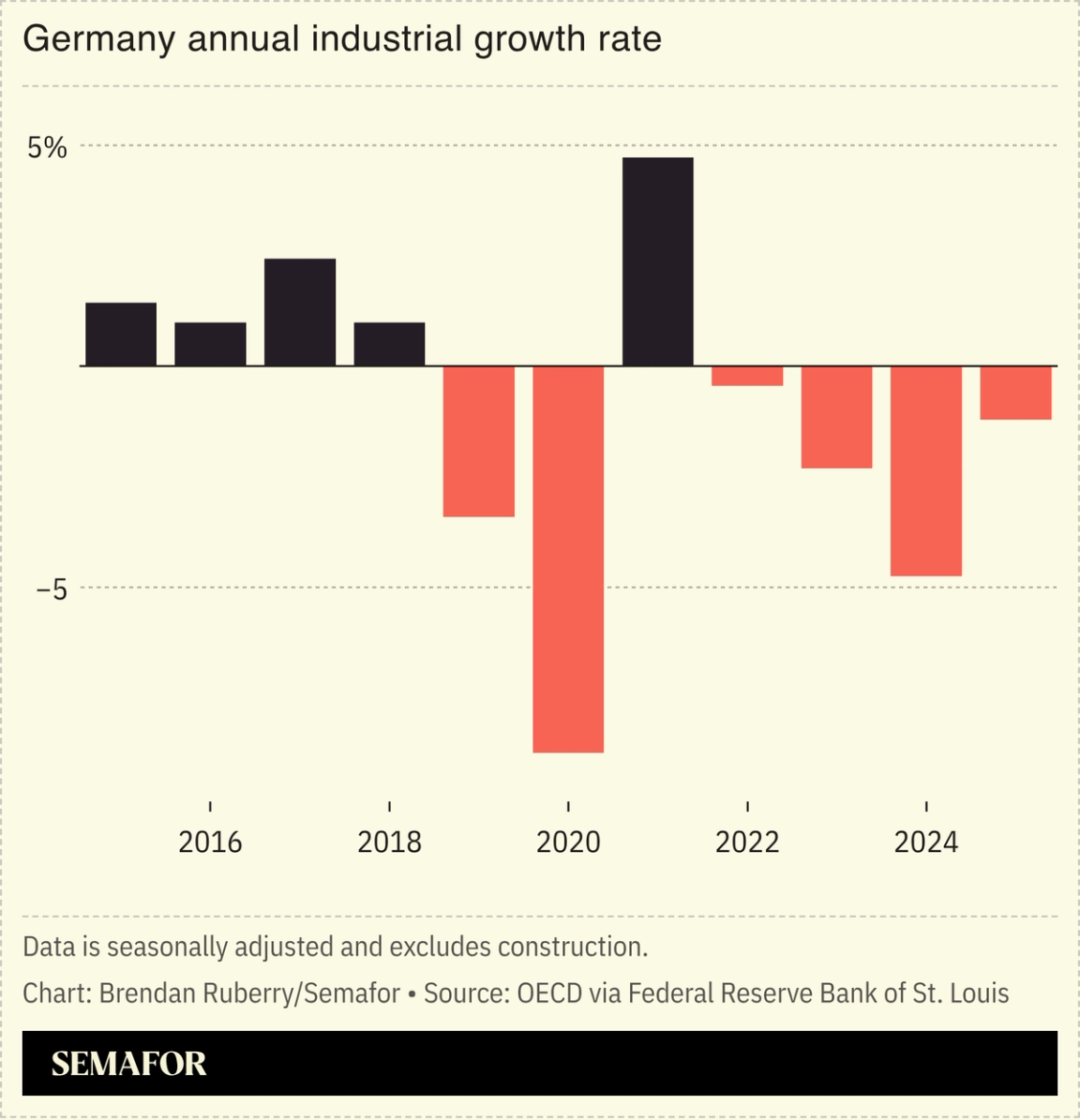 Germany’s last bicycle helmet maker is moving its production to China, a shift that’s emblematic of the worsening business environment in Europe’s largest economy. KED cited rising labor costs, sluggish consumption, and cheap Chinese imports as the reasons behind the move. Bike helmets aren’t covered by EU anti-dumping duties, showing “how hard it is to defend any industry on the continent from Chinese competition,” Nikkei wrote. Chinese manufacturers — which have improved the quality of their goods while keeping prices low — are particularly hurting midsize companies in Germany. “The premium previously commanded by ‘Made in Germany’ is harder to achieve today,” KED’s CEO said. |
|
First private Indian craft reaches orbit |
 Priyanshu Singh/Reuters Priyanshu Singh/ReutersAn Indian company broke the US-China duopoly on commercial spaceflight. India has a decades-old state space sector, which has even landed a rover on the moon. But Skyroot’s Vikram-1 rocket that launched Saturday is the first private Indian craft to reach orbit. The Indian space industry has grown quickly. New Delhi only permitted commercial companies to enter the sector in 2020; Skyroot became its first space unicorn in June. Despite Skyroot’s promising start — neither SpaceX nor Rocket Lab successfully reached orbit on their first go — the real challenges lie ahead: repeated, profitable launches, heavier rockets, and eventually reusable ones. China’s private space sector is also growing, but despite a reusable rocket breakthrough it’s unlikely to catch SpaceX, which dominates launches. |
|
Cheaper Ozempic launches in S. Africa |
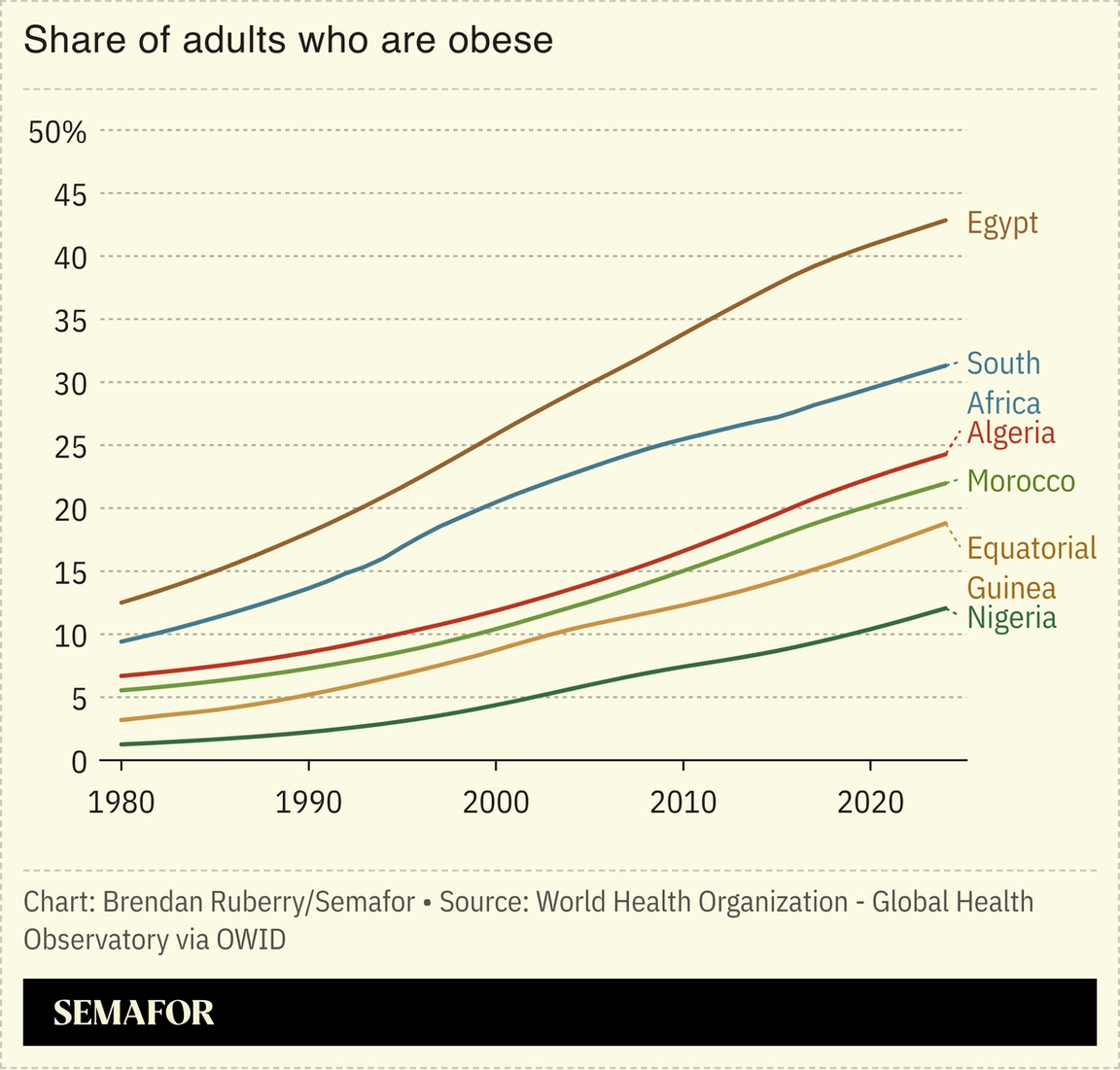 Novo Nordisk launched South Africa’s first low-cost version of its obesity drug Ozempic, in a bid to squeeze out counterfeit products. Global demand for the drug has exploded in recent years, and the high cost of branded versions opened the floodgates for unregulated weight-loss medications. The new product will be “cheaper” than its main brand, the Danish pharmaceutical giant said. South Africa has the highest adult obesity rate in Africa, with roughly 30% of adults classified as living with obesity. Copies of the popular GLP-1 behind Ozempic are also hitting the Indian market — and are expected in China next year — where local pharma players are taking on Western giants. |
|
More women in Ukraine’s workforce |
 Alina Smutko/Reuters Alina Smutko/ReutersConscription has pushed more women into the Ukrainian economy. Ukraine is a relatively patriarchal society: Until 2017, women were banned from around 450 “hazardous” occupations, such as firefighting and foundry work. But war-induced shortages of working-age men, plus government-backed retraining schemes, mean 64% of companies have now hired women into traditionally male roles, and 61% of all new business registrations in the first 10 months of 2025 were women-led, The Counteroffensive reported. Women entered the workforce in huge numbers in the West during World War II, although they were pushed out again afterward; that reversal may not happen in Ukraine, since so many men have died or fled. But women are still paid much less than men for similar work. |
|
Japanese mayor takes maternity leave |
 Joseph Campbell/Reuters Joseph Campbell/ReutersJapan’s youngest female mayor began maternity leave on Monday, fulfilling a pledge that has set off a contentious debate in one of the world’s fastest-aging countries, where politics remain male-dominated. Yawata Mayor Shoko Kawata told Reuters that most residents supported her decision. But she was surprised by the scale of political backlash, adding that more work was required to overcome the cultural stigma associated with childbirth that risks undermining Japan’s pronatalist policies: “Systems can be changed, but people cannot,” Kawata said. Japan elected its first female prime minister last year, but lags nearly all other wealthy democracies in female representation. In the US, Boston’s mayor declined full maternity leave after giving birth last year — a choice that also drew criticism. |
|
US professor suspects AI cheating |
 Brian Snyder/Reuters Brian Snyder/ReutersA Brown University economist who suspected students of using AI to cheat on a take-home exam said he was proven right after he made the final in-person. The average midterm score on Roberto Serrano’s test was 96% compared to a historical range of 65 to 80%, and many answers seemed AI-gene |
|
|


