| | The two biggest themes in global geopolitics — the rollout of AI and the fallout from the Iran war —͏ ͏ ͏ ͏ ͏ ͏ |
| |  Baghdad Baghdad | Nairobi | Abu Dhabi |
 | Energy |  |
| |
|
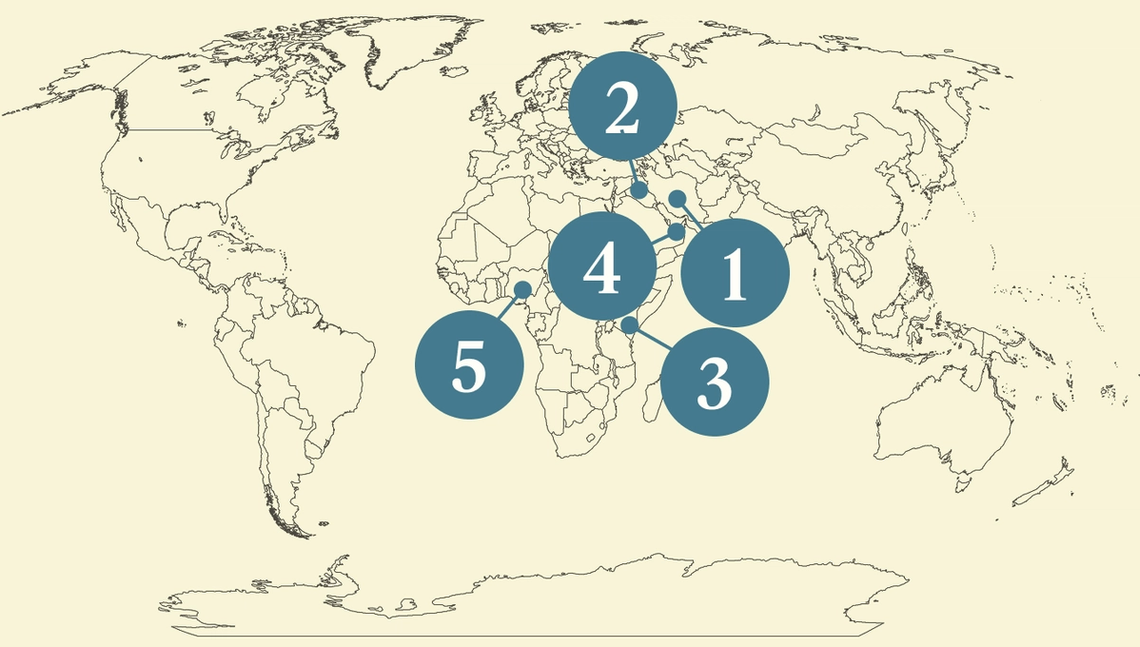 - Shipowners’ risk and reward
- New pipeline deals
- DOE’s propane push
- Major gas investment
- Africa’s new pipeline
 A Texas wildcatter’s win in Venezuela, and Andy Burnham’s plans for UK offshore drilling. |
|
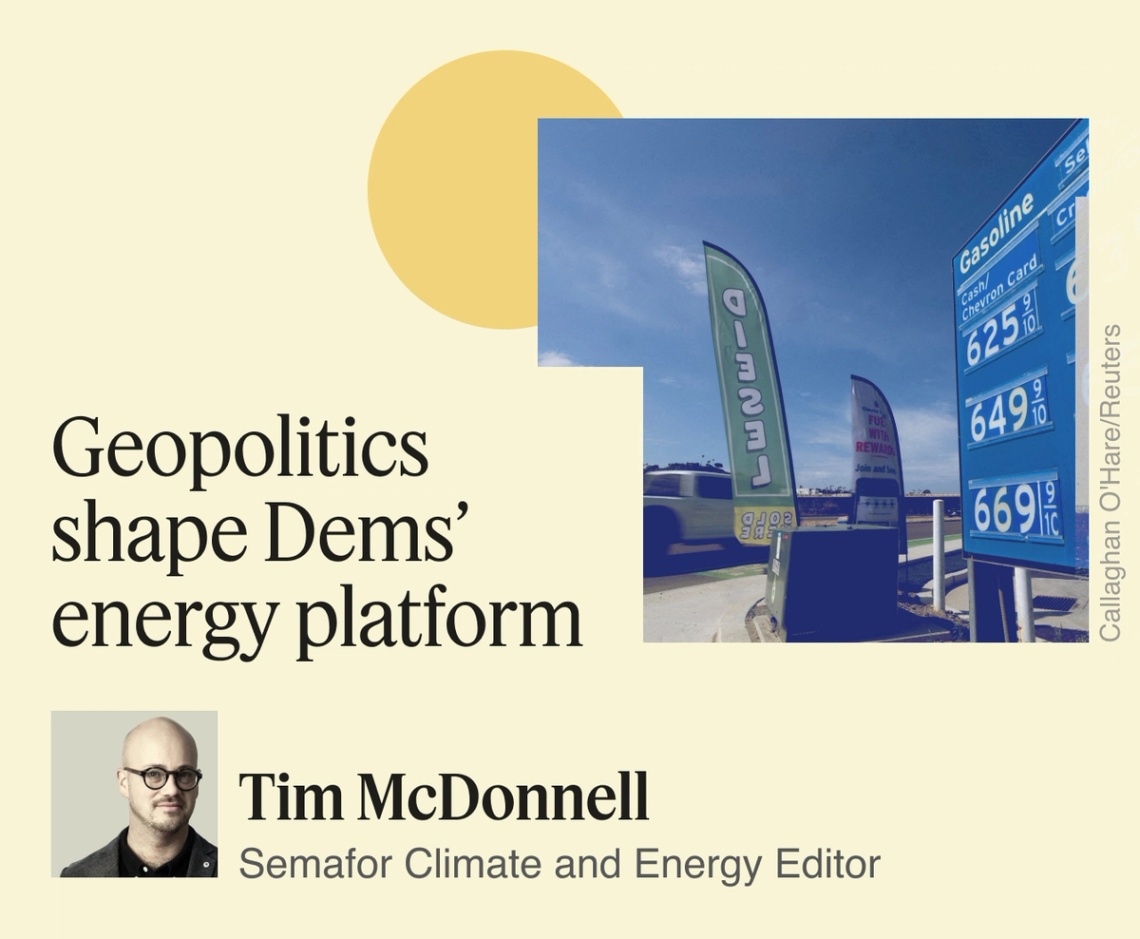 The two biggest themes in global geopolitics — the rollout of AI and the fallout from the Iran war — look set to benefit Democrats, and potentially reshape the US political landscape in a matter of months. Between the steady march of average US gasoline prices back above $4 per gallon and the rapid rise of power prices, American consumers have plenty to be frustrated by in their energy bills. And as November approaches, more contours of the Democratic platform on what to do about it are taking shape, staking out a position that borrows from both the left and the right. The decision last week by New York Gov. Kathy Hochul to place a moratorium on new large-scale data center construction was an indication that more moderate Democrats will be willing to adopt the adversarial stance favored by the party’s progressive wing against Big Tech’s energy footprint, as my colleague David Weigel observed. More Democrats in state governments and in Congress are “absolutely” going to come out in support of similar moratoria, Terry McAuliffe, a Democrat and the former governor of Virginia, told me. At the same time, rising gasoline and power costs have watered down the party’s stance against fossil fuels. Hochul, who weakened the state’s climate goals and signed off on new gas pipelines, is again an example. Fighting climate change remains a talking point for some progressives, but across the party in general that concern is often being put on the backburner in favor of an effort to claim from Republicans the mantle of being the defender of a genuinely “all of the above” energy policy, which the Trump administration has scrapped in favor of a more selective, fossil fuel-centric approach. “Republicans have totally fumbled the ball,” McAuliffe said. “This is a huge opportunity for Democrats, many of whose track records have not been great on energy.” |
|
US-Iran strikes up risk for daring Dynacom |
 Amirhosein Khorgooi/ISNA/via WANA via Reuters Amirhosein Khorgooi/ISNA/via WANA via ReutersThe latest round of attacks in the Strait of Hormuz showed the risk faced by the Greek shipowners who are among the few still chasing outsized profits by sending their tankers into the world’s most dangerous waters. On Monday, projectiles launched by Iran struck two vessels owned by the Greek firm Dynacom as they passed through the strait, part of an escalation of reciprocal strikes that has reduced tanker traffic to a trickle after a brief resurgence in the past month. Dynacom and its billionaire owner, George Prokopiou, have been instrumental during the war in ferrying oil out of the Persian Gulf and into larger export tankers — at windfall prices that have at times reached $500,000 per vessel. As tanker traffic pulls back and crude prices rise, “the premium now from just being able to sell cargoes can’t be overstated,” said Ian Ralby, senior security fellow at the Center for Maritime Strategy, a think tank. That premium still has runway ahead: In a note Monday, Rapidan Group analysts extended their timeline for Gulf oil production to return to prewar levels by a year, into the end of 2027. But for shippers, the risks are also rising: A third Dynacom tanker was struck on Monday by a Ukrainian drone in the Black Sea as it loaded oil from a Russian port. And new threats by Houthi militias in Yemen to attack tankers exiting the Red Sea could open another hostile front. “This is going to become dicey, and a lot of shipowners will sit on their hands,” Ralby said. |
|
Chevron, Qatar eye Iraq-Syria pipeline |
 Essam al-Sudani/File Photo/Reuters Essam al-Sudani/File Photo/ReutersChevron and a unit of Qatari conglomerate Power International Holding agreed to work on reviving an Iraq-Syria oil pipeline. The link could carry up to 2 million barrels a day from Iraq, bypassing the Strait of Hormuz. The deal adds to the prominent role that Syria and Iraq are playing in the Trump administration’s early strategizing for the region’s post-war reconstruction and post-Hormuz energy security. The Chevron deal was part of a $60 billion oil investment package for Iraq that the Trump administration announced Friday. Iraq’s oil sector has been relatively underinvested for years, and could see production ramp up quickly if capital starts to flow in. But first, Baghdad needs more avenues for oil to flow out to the north: Most of the country’s production is in the south, trapped by the Strait of Hormuz. That effort will likely take years, but if it succeeds, it could become a major contributor to a potential post-war oil glut — which, ironically, could work against the economic case for the pipelines themselves. |
|
Semafor Exclusive US boosts propane in Africa |
| |  | Tim McDonnell |
| |
 The Trump administration is replacing the gutted American foreign aid apparatus with, in part, a push to export more US propane. US Energy Secretary Chris Wright made a digital appearance last week at an International Energy Agency summit focused on replacing African households’ use of charcoal and other indoor cooking fuels that are harmful to health and the environment with cleaner alternatives, especially propane and other petroleum-derived gases. “Access to clean cooking is one of the most impactful, yet overlooked, challenges of our time,” Wright told attendees, who included Kenyan President William Ruto and African Union Energy Commissioner Lerato Mataboge. Although Wright’s affinity for propane is nothing new, the effort to push more of it into Africa has emerged as a transactional centerpiece of US energy policy toward the continent. |
|
 The UAE’s national oil company ADNOC said it will invest in a $6.2 billion natural gas development, as the country seeks to boost self-sufficiency and meet growing domestic and international demand. The firm is investing alongside TotalEnergies, Eni, and China National Petroleum Corporation, to tap into a layer of natural gas on top of Umm Shaif, its longest operating offshore oil and gas field. Abu Dhabi is facing dual threats to its natural gas industry: Around a third of its gas supplies are pumped in from Qatar; however, this agreement is due to expire in 2032, and tensions have been simmering between the two countries for years. Meanwhile, the closure of the Strait of Hormuz has reduced LNG exports from Qatar and the UAE, and so the UAE is also considering building another LNG plant in Fujairah, which would be less affected by disruptions in the strait, the Financial Times reported. |
|
New Nigeria-Morocco oil pipeline to Europe |
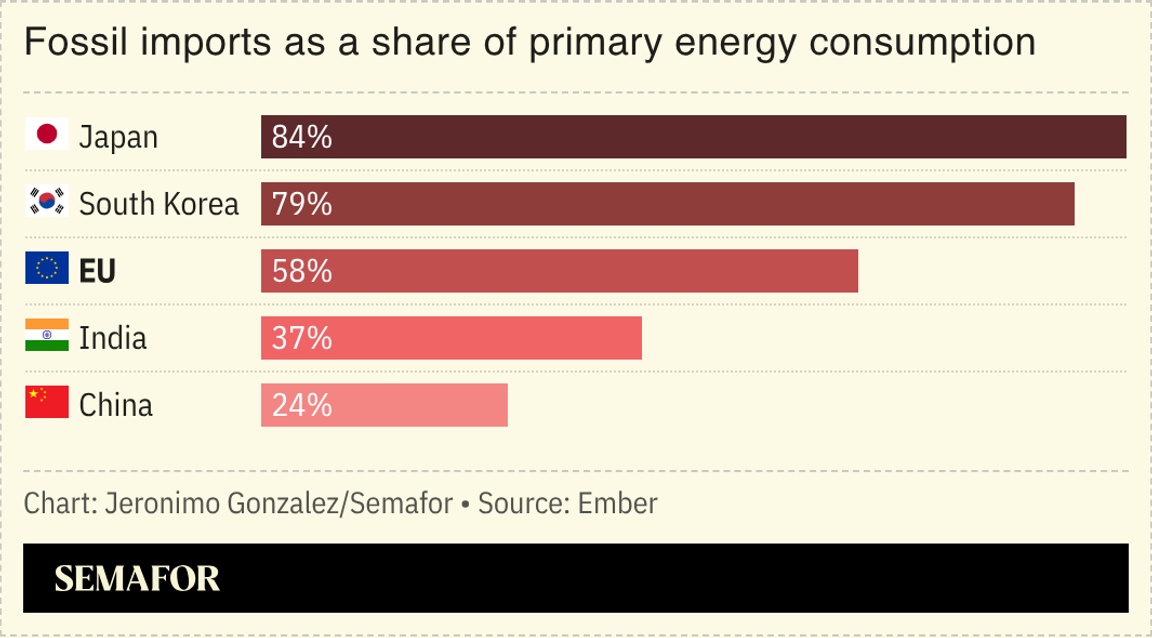 West African leaders approved a plan for a $25 billion pipeline to transport natural gas from Nigeria to Morocco, a major step in expanding the region’s fossil fuel exports to help meet global demand. The agreement signed by heads of the West Africa’s political and economic bloc ECOWAS paves the way for a company to be established for the project. Nigeria holds Africa’s largest gas reserves and began talks with Morocco about a pipeline project a decade ago. The pipeline will run through 13 West African countries, transporting 30 billion cubic meters of gas per year, about half of which is expected to flow through Morocco to European markets. Plans for the Morocco project continue as construction of the Trans-Sahara Gas Pipeline, a separate project being built by Algeria to source gas from Nigeria, proceeds. Natural gas has the potential to help fill Africa’s electricity availability gap, but global demand for it also stems from a push by Europe to diversify its gas sources, following years of overreliance on Russia. |
|
 America’s biggest retailer is quietly getting into banking. After previous misfires in financial services, Walmart is back at it with OnePay, which has 7 million customers, $50 billion in annual payment flow — and virtually zero in acquisition costs. On this week’s Compound Interest, presented by Amazon Business, OnePay CEO Omer Ismail joins Liz and Rohan to discuss why he thinks the company can succeed where other fintechs have floundered and whether the big box titan can really compete with the big banks. Listen to the latest Compound Interest now. |
|
 New Energy- Fourteen Democrat and Independent US senators sent a letter to Invenergy’s CEO James Murphy expressing their frustration at the energy giant’s decision to terminate the leases of four offshore wind energy sites, following pressure from President Donald Trump.
Fossil Fuels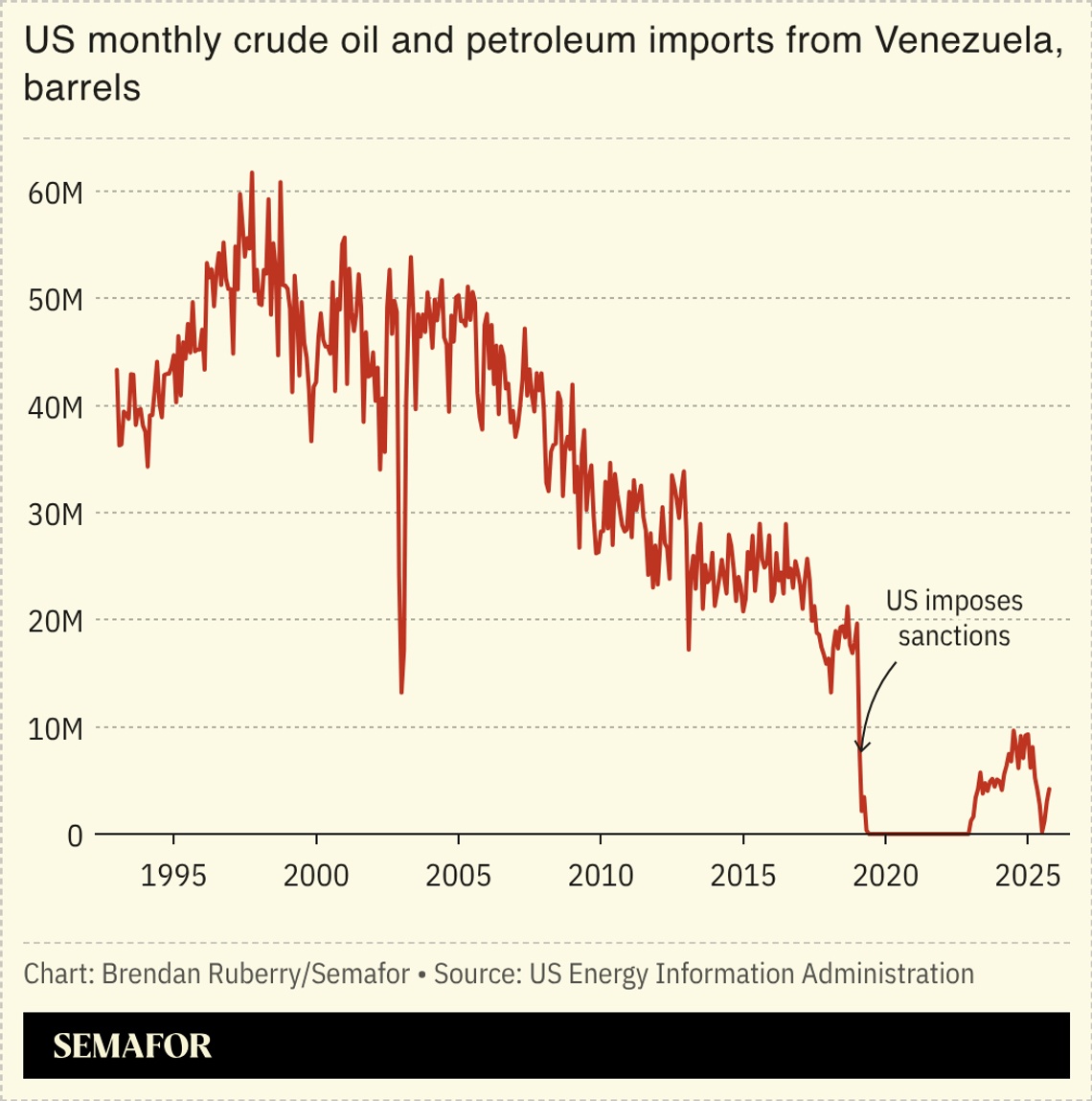 Finance- China plans to end a decade-long consumption tax exemption for solar and lithium-ion batteries, as Beijing seeks to contain intense competition in the green-energy sector that has risked major oversupply and destructive price wars.
- Pension funds Standard Life Plc and Allianz Global Investors said they are increasingly concerned about “climate tipping points,” meaning thresholds when the natural environment will become dangerously affected by climate change. Standard Life said it is running simulations across its portfolio to see how its assets will be affected.
Politics & Policy- The EU is considering implementing a three-year delay on penalties for energy importers that do not comply with new methane emissions rules, following fierce lobbying from the US and some member states.
EVs |
|
|


