| | The US plans to unleash a new wave of tariffs, Ukraine’s top general is ousted, and biotech dealmaki͏ ͏ ͏ ͏ ͏ ͏ |
| |  | Flagship |  |
| |
|
The World Today | 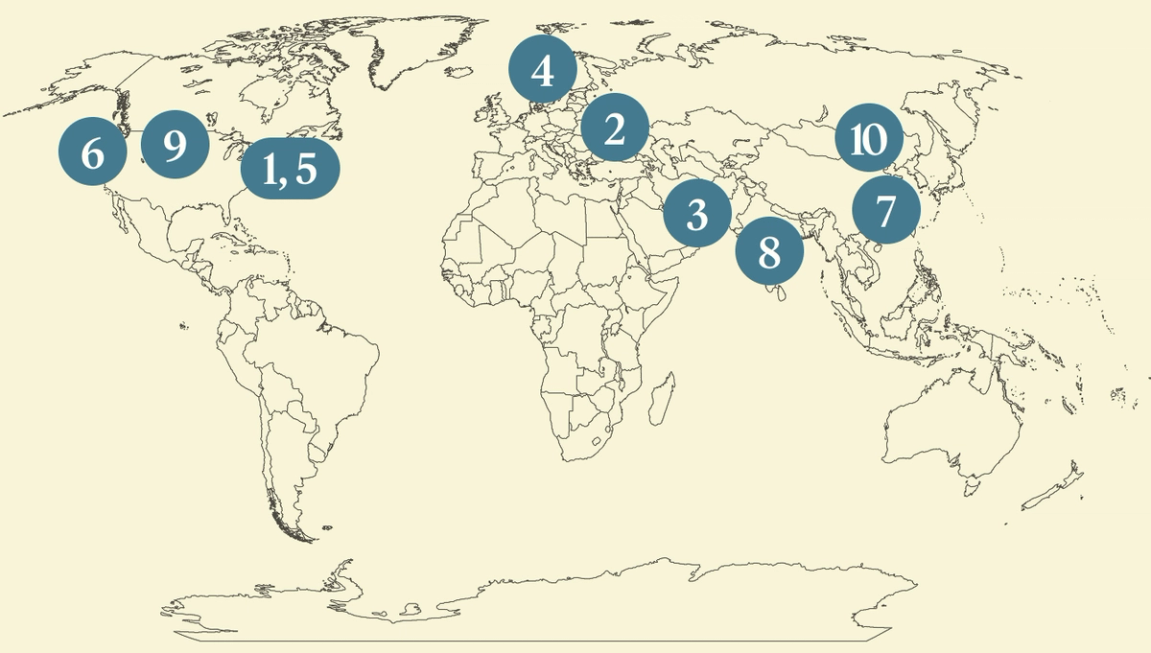 - Start of a new trade war
- Ukraine military shakeup
- Trump’s Iran troubles
- Novo sues Eli Lilly
- Biotech deal boom
- Betting against AI firms
- US probes Chinese AI
- India’s Cockroach protests
- US eyes firefighting drones
- China’s gig worker literature
 An ode to trash collectors. |
|
Washington tees up fresh tariffs |
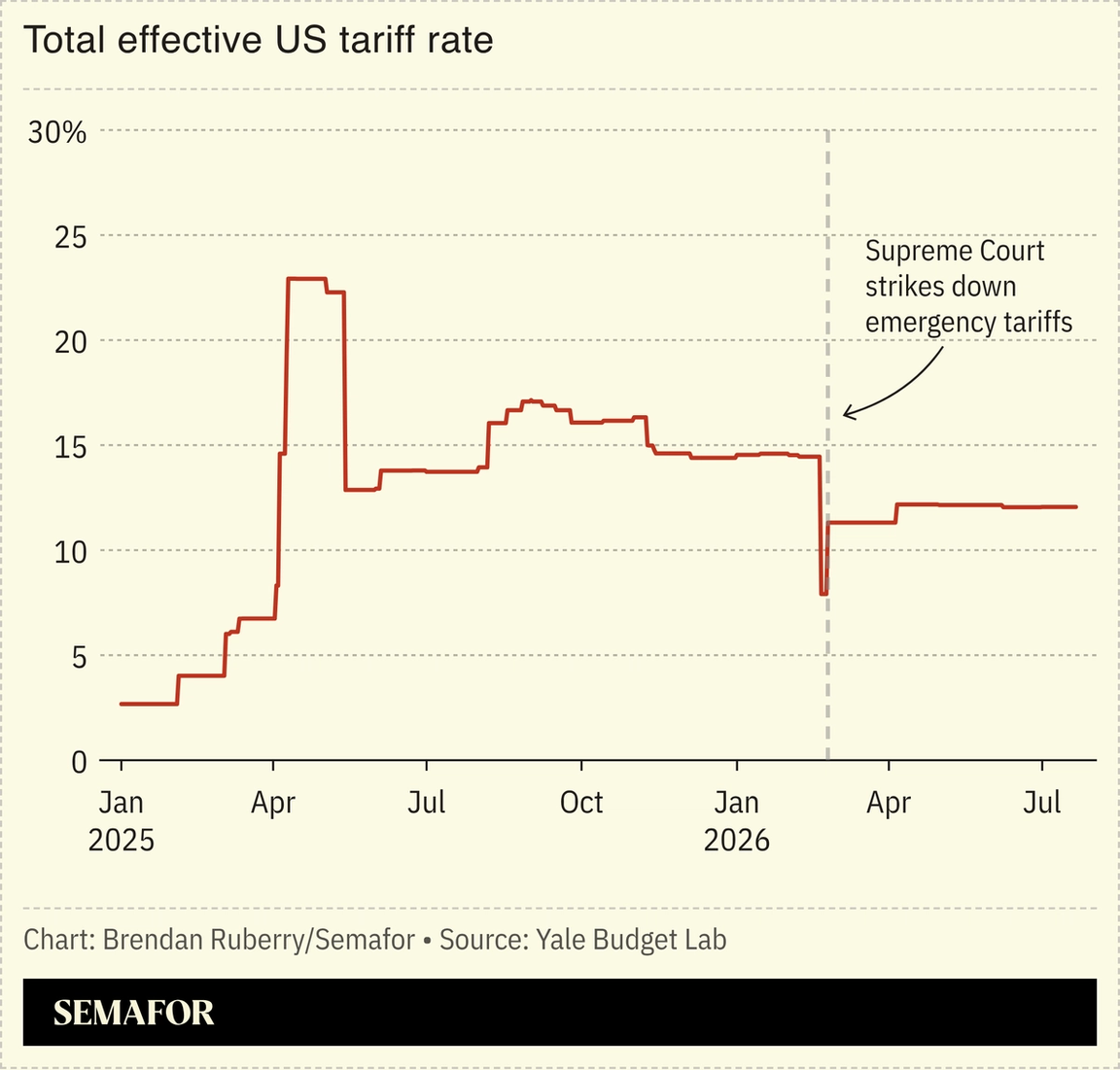 US President Donald Trump plans to unleash new tariffs on 60 more countries as soon as Friday, setting up another round of bruising trade wars. Trump has already hit Canada and Brazil with fresh levies; the US’ trade representative said Tuesday, “We do expect action soon.” The duties could fall between 10 and 12.5%, the Financial Times reported, and risk amplifying uncertainty amid ongoing negotiations over the US-Mexico-Canada agreement, which Trump has indicated he wants to exit. But the president has limited room to escalate in a tit-for-tat fight, given the Iran war-fueled inflationary pressures and Washington’s battle-hardened trading partners who have learned from earlier bouts: “In a trade war, fighting back works,” Canada’s former deputy prime minister wrote. |
|
Zelenskyy sacks Ukraine military chief |
 Thomas Peter/Reuters Thomas Peter/ReutersUkraine’s president on Tuesday dismissed his top general, in the country’s biggest military shakeup since 2024. Volodymyr Zelenskyy’s move followed widespread protests triggered by the removal of the country’s popular, young defense minister, who spearheaded an embrace of technology in the war against Russia, helping shift the tide in Kyiv’s favor. The ousted commander, meanwhile, “had come to represent the darkest, most punishing realities of a war fought through sheer attrition,” The New York Times wrote. Zelenskyy’s new pick for a commander-in-chief, who is two decades younger than his predecessor, is likely to please protesters, as it signals the president’s acknowledgment of the generational shift in wartime leadership. |
|
US woes pile up over Iran |
 Eric Lee/Reuters Eric Lee/ReutersThe White House’s Iran war problems are compounding as it faces scrutiny over its military budget and the deaths of US service members. “This is what a quagmire looks like,” one person close to the Trump administration told Politico. The estimated cost of the Iran war is $37.5 billion, the US defense secretary said Tuesday, as he requested more funds from lawmakers to plug what he called an urgent shortfall. With 18 deaths and nearly 100 soldiers injured, the Pentagon is also under pressure to address the impact to US troops. President Donald Trump, vowing revenge against Tehran, has threatened to escalate the conflict, saying Tuesday he has “no interest in meeting” with Iranian officials. |
|
Novo sues Lilly amid escalating rivalry |
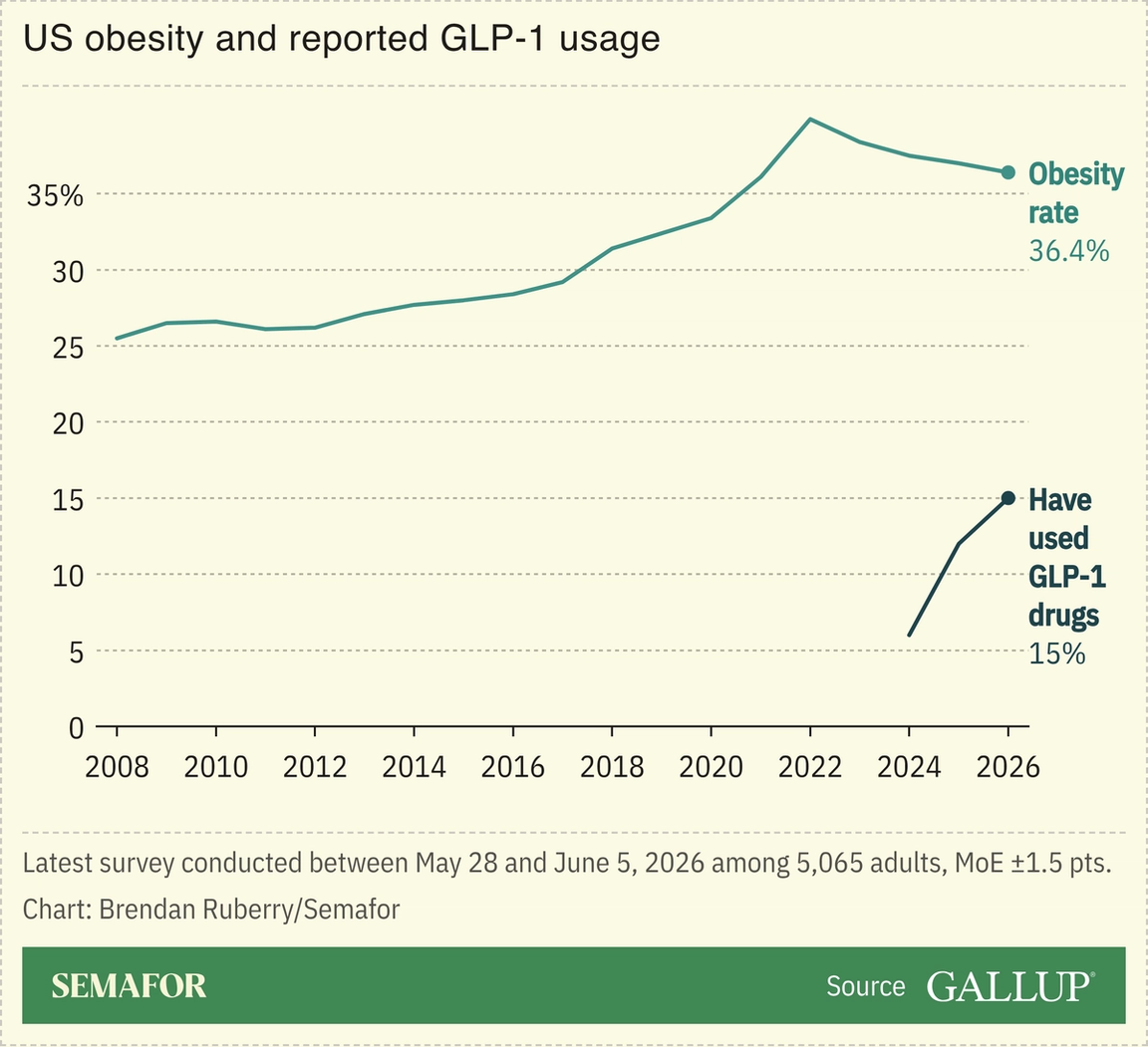 Ozempic maker Novo Nordisk sued Eli Lilly on Tuesday, accusing the US drug giant of misleading advertising practices. The lawsuit reflects the companies’ intensifying rivalry in the US weight-loss drug market. Novo argued that Lilly’s ads used outdated comparisons for how much weight users lost using the drugs. The legal tactics are part of the Danish company’s “strategy for clawing back market share,” Bloomberg wrote. Novo also sued Hims & Hers earlier this year over its copycat version of the Wegovy pill. The advertising spat, though, is uniquely American: The vast majority of nations ban commercials for prescription-only medications. In the UK, companies like Novo get creative by promoting their brands with “disease awareness campaigns” — without pushing a particular product, CNN wrote. |
|
Biotech dealmaking surges |
 Mike Blake/Reuters Mike Blake/ReutersBiotech is commanding attention from dealmakers and investors. Pharma companies have acquired 37 biotech firms worth at least $1 billion this year, more than all of 2025, as they race to bolster pipelines before several blockbuster drugs lose their patent protections in the coming years. The Trump administration’s light-touch regulatory approach and windfalls from top-selling drugs are also driving M&A, the Financial Times noted. Against this backdrop, biotech and pharma firms’ IPOs are producing some of the year’s strongest returns, outperforming many AI-related listings, Bloomberg reported. “This is the healthiest biotech IPO market we have had in a long time,” an investment banker said. |
|
Bets against AI companies spike |
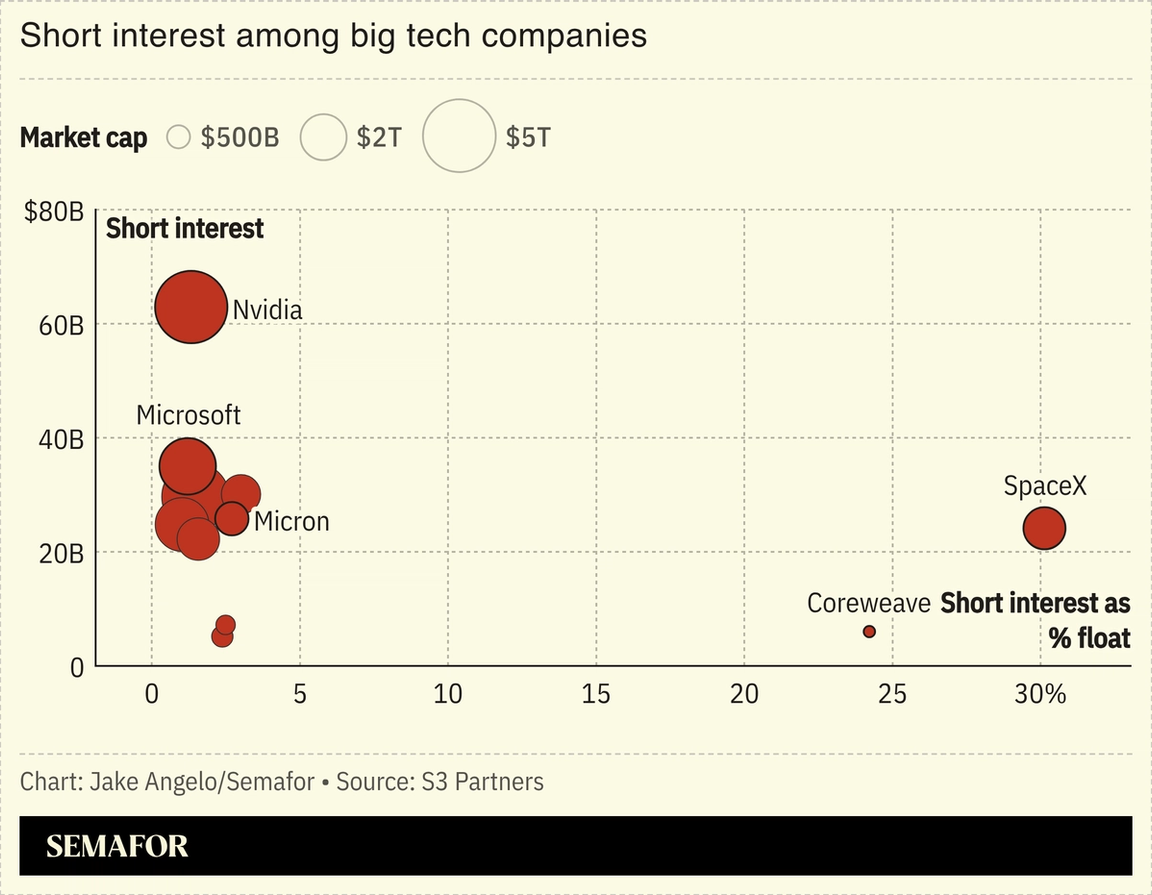 Bets against the stock market are at all-time highs, as investors’ mounting concerns over Big Tech spending sharpen fears of an AI bubble. Bets against AI companies have crept up in particular, with investors growing impatient for evidence that outsize capital expenditure translates to profit. This week’s tech earnings will further test appetites: Alphabet, due to report Wednesday, saw its shares fall over scrutiny of its spending and delays to its latest Gemini model. Rapid improvements in China’s open-source models are also stoking concerns that Big Tech could be over-building capacity, with hyperscalers’ AI bills set to increase. AI-linked firms will need to justify their combined $27 trillion valuation, The Atlantic wrote, or “we could be in for a massive correction.” |
|
US could sanction top Chinese AI models |
 Evan Vucci/Reuters Evan Vucci/ReutersThe US will scrutinize top Chinese AI models for signs they ripped off American competitors — as Beijing eyes restrictions on overseas access to those same systems. Washington has accused Chinese tech firms of what it calls intellectual property theft through a process called distillation, in which one AI is trained on another’s outputs. “That’s unacceptable,” the US Treasury secretary said Tuesday, adding that “we have the ability to sanction them.” As Chinese open-source models boom in popularity globally, Beijing is considering limiting foreign access to tech from some of the country’s top AI labs, the Financial Times reported, showing how both superpowers are racing to protect their frontier tech, as they also prepare for AI talks reportedly set for September. |
|
Modi critics seize on Cockroach rallies |
 Indian opposition leader Rahul Gandhi. Adnan Abidi/Reuters Indian opposition leader Rahul Gandhi. Adnan Abidi/ReutersIndian police briefly detained the country’s top opposition leader and his sister during a protest on Tuesday, as a fresh wave of public outrage puts pressure on Prime Minister Narendra Modi’s government. Rahul Gandhi was criticizing the authorities’ use of tear gas and batons on Monday against thousands of protesters who were demanding changes to India’s education system. The student-led movement is spearheaded by the Cockroach Janta Party, which began as a satirical online protest but has since snowballed into one of the largest demonstrations challenging the ruling coalition. Their momentum gives ammunition to Gandhi’s opposition party, which has lost many elections under Modi’s tenure but is looking to make inroads with young people, analysts said. |
|
US explores firefighting drones |
 BC Wildfire/Handout via Reuters BC Wildfire/Handout via ReutersUS forestry authorities are testing firefighting drones, as rising global temperatures mean North American wildfire seasons grow longer and more dangerous. Recent Canadian wildfires have poured so much smoke into the northern US that President Donald Trump threatened new tariffs on Ottawa (and then imposed them, for purportedly different reasons). Major blazes are also burning south of the border. Crewed firefighting aircraft are often deployed, but such operations are dangerous — they must fly low over rugged terrain with unpredictable fire-driven winds. Drones have smaller payloads and shorter ranges, so cannot replace crewed aircraft altogether, but can be stationed close to at-risk areas and respond more quickly, hopefully reaching fires before they spread and cause major damage, Ars Technica reported. |
|
Gig worker wins top China literary prize |
 Thomas Peter/Reuters Thomas Peter/ReutersA 56-year-old food delivery driver won China’s top literary prize. Wang Jibing is the latest gig worker to receive official recognition for his contributions to a national creative renaissance that is both by and about delivery drivers. Gig workers now account for 44% of China’s total workforce; readers are opting for intimate stories that illuminate their quotidian struggles, such as Hu Anyan’s acclaimed 2023 memoir I Deliver Parcels in Beijing. Wang won the prize for his 2024 collection Low Flight, some of which he scribbled on scraps of paper between deliveries. “If there’s a fifth season in the human world / It must be spring for deliverymen,” Wang writes in the titular poem.
|
|
|


