| | In this edition: Africa needs a power sector overhaul for AI growth, South Africa’s investment body ͏ ͏ ͏ ͏ ͏ ͏ |
| |  Addis Ababa Addis Ababa |  Pretoria Pretoria | Luanda |
 | Africa |  |
| |
|
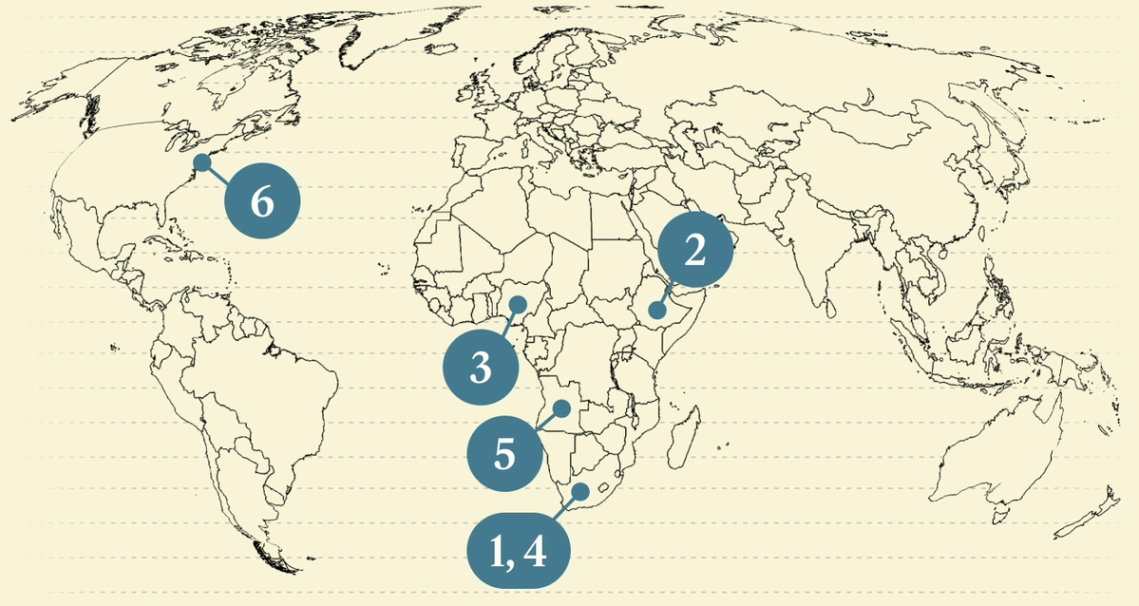 - Africa’s AI power problem
- AI lender eyes Ethiopia
- Inflation expectations contrast
- Investment body in crisis
- Chinese firms bet on Angola
- Senator’s PEPFAR threat
 Ghanaian artists remake classic movie posters. |
|
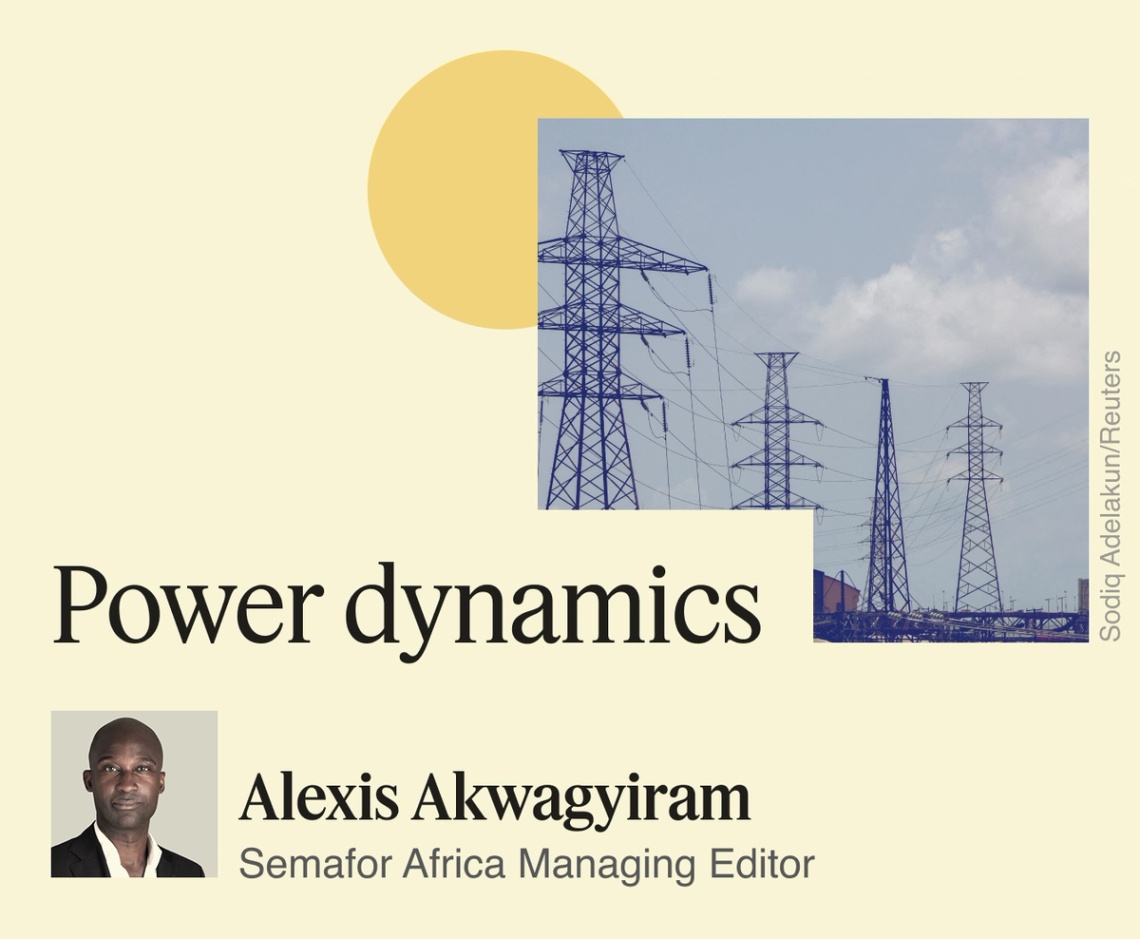 Access to power is inextricably linked to Africa’s digital evolution — that’s the main takeaway from a recent IMF paper. The lender says AI could make sub-Saharan Africa’s economy around 4% bigger over the next decade than the Fund’s baseline projection, but that requires better electricity supply, internet access, and digital skills. Without policies that remove those bottlenecks, AI’s impact would be negligible. It’s a stark reminder of the challenges faced by African policymakers: Around 600 million people across sub-Saharan Africa — roughly half the region’s population — lack access to power. AI, as in other parts of the world, offers an opportunity to drive economic growth in the coming decades. But the infrastructure needed for everything from online payments and logistics platforms, to tax systems and health services, requires continuous operation of data centers to ensure uninterrupted service. “Without electricity, nothing happens,” Martin Schindler, the lead author on the IMF report, told me. The importance of electricity is no secret, but more potential solutions are needed — and quickly. The lengthy process of constructing power plants, for example, involves planning permission, commissioning, and construction, and the same goes for building data centers. For that reason, policies that unlock access to energy are crucial. Those solutions, and the evolution of digital infrastructure, won’t necessarily look the same in Africa as in other continents. Just as mobile phone use evolved in different ways from other parts of the world, AI use and deployment will differ. And it will also vary across an entire continent. But power is a common constraint that cuts across Africa’s borders. Hardy Pemhiwa, the CEO of Cassava Technologies, summed it up well during a recent event in London. “Whatever, we do with energy, so goes the cost of tokens,” said Pemhiwa, whose company last year announced a $700 million partnership with chipmaker Nvidia to build and upgrade data centers across the continent. “At its very base, the cost of AI is going to be the cost of energy.” |
|
Semafor Exclusive Data centers need power sector overhaul |
| |  | Alexis Akwagyiram |
| |
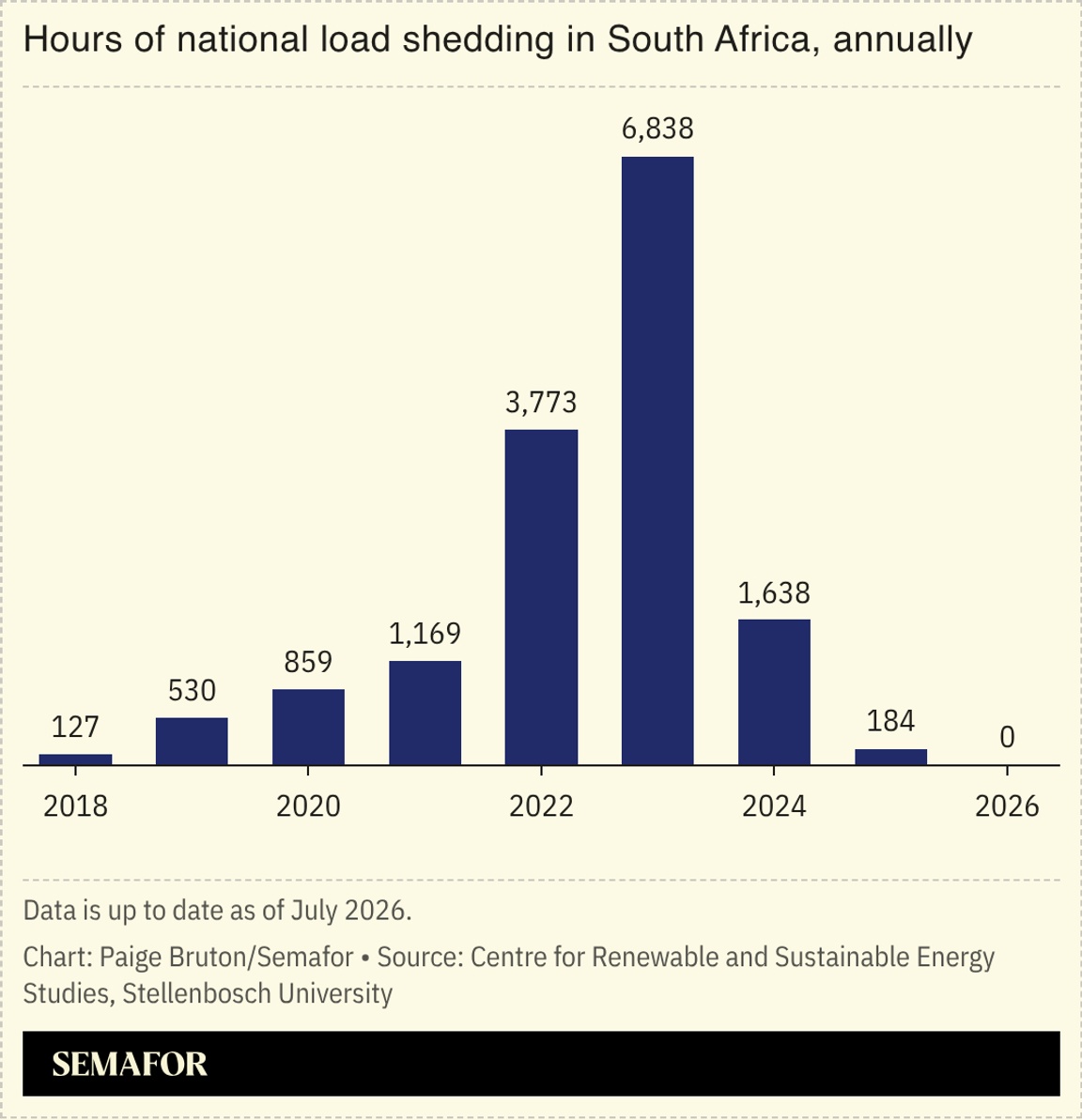 African countries must open up their power markets to court the private investors needed to supply the electricity that AI will demand, a data center executive told Semafor. Africa only hosts about 160 data centers — around 5.5% of the global total — and aging grids in many countries mean access to power is limited. At present, independent power producers across the continent typically sell electricity to state utilities under long‑term power purchase agreements. Robert Skjødt, CEO of Raxio, which operates in six African countries, told Semafor that in many nations, regulatory reform was needed to “allow a private supplier of electricity to supply to a private buyer” while using the grid. South Africa has in recent years seen a surge in private energy generation since the wide roll out of power purchase agreements. Both Kenya and Nigeria are now carrying out similar reforms. |
|
Semafor Exclusive AI-driven lender eyes Ethiopia, Egypt |
| |  | Tiisetso Motsoeneng |
| |
 Optasia CEO Salvador Anglada. Bright Light Liquid/Semafor. Optasia CEO Salvador Anglada. Bright Light Liquid/Semafor.An AI-driven finance platform backed by one of South Africa’s biggest lenders is expanding into two of Africa’s largest credit-starved markets, its CEO told Semafor. Optasia, which made its stock market debut last year, argues its machine-learning algorithms can maintain a default rate that is a fraction of traditional commercial banks. The company uses AI and mobile data to provide micro loans, working capital, and airtime advances to unbanked consumers and small businesses: Last year, it facilitated about $6 billion in credit across 38 markets in developing nations, CEO Salvador Anglada told Semafor. Optasia is now looking to move into Ethiopia and Egypt, which have a combined population of around 100 million. The expansion comes as the company posts a group-wide default rate of 1.2%, or around $60-70 million, which it expects will hold steady despite scaling into high-density economies. That loss ratio makes the business model viable where traditional banks have failed, Anglada said. |
|
South Africa, Nigeria inflation split |
 A woman shops in Abuja. Afolabi Sotunde/Reuters. A woman shops in Abuja. Afolabi Sotunde/Reuters.Living costs in sub-Saharan Africa’s two largest economies are moving in opposite directions, with Nigeria’s consumer price increases cooling off while South Africa’s inflation rate jumped to levels last seen two years ago. Nigeria’s central bank kept its policy rate unchanged this week, forecasting inflation to remain at moderate levels in the medium term after it softened to 15.9% in June: David Omojomolo, analyst at Capital Economics, said he expects Nigeria to resume rate cuts in September. The country’s cooling prices contrast with price shocks happening elsewhere in Africa — particularly in South Africa, where newly released inflation data prompted economists at Goldman Sachs to raise their 2026 average forecast. The South African Reserve Bank is due to meet on Thursday for its next interest rate decision. — Tiisetso Motsoeneng and Alexander Onukwue |
|
S. Africa’s PIC crisis deepens |
 South African Minister of Finance Enoch Godongwana. Nic Bothma/Reuters. South African Minister of Finance Enoch Godongwana. Nic Bothma/Reuters.South Africa’s finance minister said he was preparing to oust his deputy and fire the remaining board of Africa’s largest fund manager, escalating an ongoing governance battle over its suspended CEO. The shake-up at the $200 billion-plus state-owned Public Investment Corporation is turning what began as a forensic audit of a bad private equity deal into a showdown over political interference in the biggest player in South Africa’s financial system. The upheaval comes days after the PIC board suspended CEO Patrick Dlamini over a flawed $24 million private equity settlement, sparking internal warfare and board member resignations. In reaction, Finance Minister Enoch Godongwana issued a formal notice in his capacity as the PIC’s sole shareholder to consider dissolving the entire board. Doing so would also strip his own deputy finance minister, David Masondo, of his role as the chair of the board. South Africa’s largest opposition party introduced a bill this week to ensure the chair of PIC is not linked to politics because the fund has been “stumbling from scandal to scandal” over the past decade. — Tiisetso Motsoeneng |
|
Chinese firms invest in Angolan port |
 Angola signed a $900 million deal with two private Chinese investors to help develop its free trade zone, part of Luanda’s efforts to diversify its oil-dominant economy. Half of the sum will go toward building a port terminal outside the capital, while the other half will be spent on surrounding infrastructure such as roads, power, and utilities. The oil-rich southern African nation has made a push to expand its economy beyond crude: A Chinese-backed aluminum plant opened this year, and a cooking oil refinery, logistics platform, and national grain reserve are all under development. Beijing has been a major foreign investor in Angola — Africa’s top recipient of Chinese loans — since the turn of the century, pioneering what came to be known as the Angola Model, in which Luanda repaid its Chinese loans with oil exports. But the arrangement was weakened when oil prices tumbled and China diversified its suppliers. — Jenny Vaughan |
|
Semafor Exclusive GOP Senator urges PEPFAR funds release |
| | Burgess Everett and Adrian Elimian |
| |
 Sen. John Cornyn, R-Texas. Kylie Cooper/Reuters. Sen. John Cornyn, R-Texas. Kylie Cooper/Reuters.A Republican senator in Texas is threatening to vote down two of US President Donald Trump’s ambassador nominations unless the White House releases money aimed at fighting AIDS in Africa. GOP Sen. John Cornyn told Semafor he would not support the Trump administration’s nominees to run US embassies in Jamaica and Slovakia. Cornyn — who estimated about $1.3 billion in PEPFAR funding is ready to be released immediately — could singlehandedly stall both nominations. Cornyn said he saw first-hand the benefits of PEPFAR on a visit to Africa last year. The signature program of former President George W. Bush has enjoyed two decades of largely bipartisan backing, but it has faced repeated disruption since the beginning of the second Trump administration. Washington has said it will completely end PEPFAR funding to South Africa, which has the highest population of people living with HIV. |
|
 Business & Macro |
|
|


