|
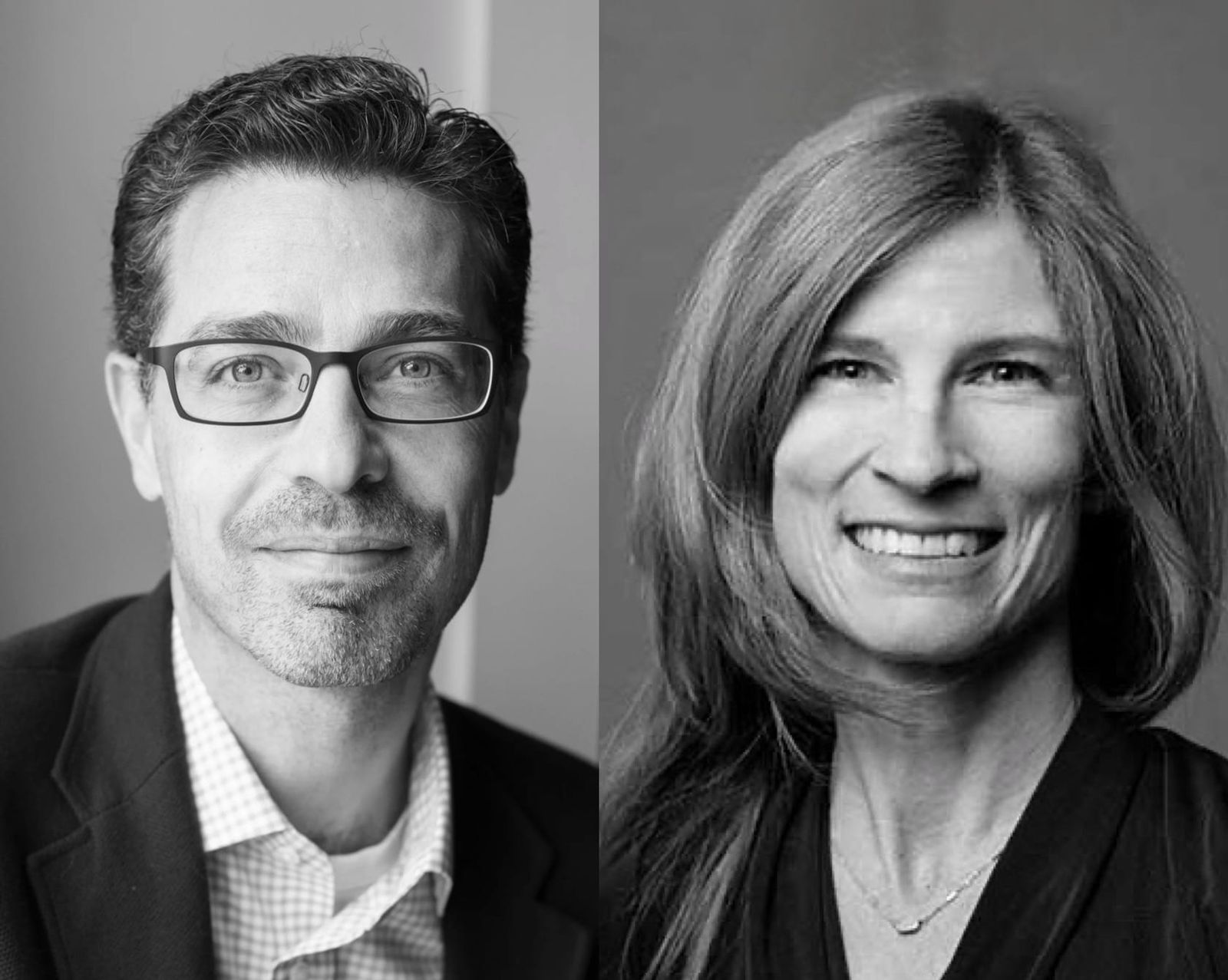
By Stephanie Rasmuson Michael and Tracy Balboni have devoted their lives to bridging two worlds that are too often treated as separate: medicine and faith. Together, the Massachusetts couple has spent decades caring for patients facing serious illness, mentoring future physicians and researchers, advancing scholarship at Harvard, planting churches, and demonstrating through their own marriage that scientific excellence and Christian faith are not at odds with one another. They believe each strengthens the other. Their careers have followed different paths. Tracy is a nationally recognized radiation oncologist, educator, and researcher whose work has helped shape the fields of palliative radiation oncology and the study of spirituality in serious illness. Michael, who originally prepared for pastoral ministry, became a researcher studying theology, medicine, and spiritual care before ultimately returning to his lifelong calling as a full-time pastor. Together, they have co-authored influential research, built educational initiatives, founded communities, and are preparing to publish Walking Lois Home, a book chronicling one of the most profound experiences of their lives. Their story is one of calling rather than career planning. It is also one of hospitality, service, and a shared conviction that caring for the sick is among the church's highest callings. Michael's journey began in Reading, Massachusetts, where he attended a small Christian school in Woburn that has since closed. "I knew a call to ministry when I was 16 years old," he recalled. "I felt a calling to become a pastor." That conviction shaped every educational decision that followed. He attended a conservative Bible college in Minnesota before enrolling at Westminster Theological Seminary, expecting to spend his life serving as a pastor. Medicine was nowhere in those plans. "I had no thoughts about medicine, no thoughts about caring for the sick," Michael said. "It was the furthest thing from my mind." Meanwhile, Tracy grew up thousands of miles away in California. "I spent most of my childhood days roaming in the beautiful redwood forest," she said. Medicine surrounded her from an early age. Her mother, father, and stepfather were all physicians, and she began working in her mother's rheumatology office while still a child. At the same time, another passion emerged: competitive cycling. By age 13, Tracy was racing competitively. She continued through college at Stanford University, eventually competing nationally, internationally, and for a professional cycling team before an injury ended her racing career. She then attended Harvard Medical School, where she discovered her passion for caring for patients facing serious illness. Those experiences ultimately led her into radiation oncology, where she would become a leader in palliative cancer care. Their lives intersected unexpectedly at a church retreat while Tracy was in medical school and Michael was completing seminary. Michael remembers knowing almost immediately that he wanted to marry Tracy. "Before that [first] date, I knew that she was the one," he said. Tracy, however, initially declined his invitation because she was too busy. After eventually agreeing to dinner in Boston's North End, the two quickly realized they shared something deeper than common interests. Although their relationship included a brief two-and-a-half-month pause, they became engaged within months and married just eight months after their first date. Nearly 25 years later, they still describe their marriage as a shared calling. That calling redirected Michael's career entirely. Rather than entering pastoral ministry immediately, he pursued doctoral studies at Boston University, researching the intersection of religion, theology, and medicine. Eventually, he joined Tracy in research at Harvard Medical School. Together, they became pioneers in examining questions that had received surprisingly little scholarly attention. How do physicians' own beliefs influence the care they provide? How should clergy accompany those living with serious illness? What role does spirituality play in patient outcomes? Their collaborative work eventually expanded across Harvard's medical, public health, and divinity communities through the Initiative on Health, Spirituality and Religion, bringing together researchers from multiple disciplines to study the relationship between faith and serious illness. Tracy simultaneously built an exceptional clinical and academic career. She helped establish a specialized palliative radiation oncology program serving patients with advanced cancer across Mass General Brigham, including Massachusetts General Hospital, Dana-Farber Cancer Institute, and Brigham and Women's Hospital. She later became program director for Harvard's radiation oncology residency, overseeing physician education across those institutions while mentoring future specialists. She credits much of that journey not to personal ambition, but to God's guidance. "I just laid it down before the Lord," she said, recalling decisions about balancing motherhood, academic medicine, and research. "It was just very clear that that door was very open." Tracy’s commitment to Christian education extends beyond medicine. She serves as a Trustee of Boston Trinity Academy (BTA), a Christ-centered college preparatory school in Hyde Park dedicated to educating students from diverse backgrounds in an academically rigorous environment rooted in faith, integrity, and service. Founded in 2002, Boston Trinity Academy currently enrolls 265 students in grades 6 through 12, the majority of whom come from African American, Latino, Asian American and multiracial families. More than 65% of students receive financial aid, and the school reports a 100% college or university placement rate among its graduates. The Balbonis’ connection to Boston Trinity is also deeply personal. Their daughter recently graduated from BTA and was selected by her classmates to deliver the commencement address, reflecting the family’s longstanding investment in Christian education and the next generation of leaders. Their son is also a BTA graduate. The Balbonis' research has consistently emphasized treating patients holistically rather than simply treating diseases. Their work has explored how spiritual care influences patients with advanced cancer and has contributed to a growing body of evidence demonstrating spirituality's importance in serious illness. Yet perhaps nothing shaped their understanding more than a woman named Lois. During the COVID-19 pandemic, Michael met Lois through church after she received a diagnosis of metastatic cancer. Initially providing pastoral care, he soon recognized that isolation, not death itself, was her greatest fear. Rather than allowing her to spend her final months alone in a nursing home during pandemic restrictions, Michael and Tracy invited her into their home. What they expected would be only weeks became six months of around-the-clock caregiving. "It was an entirely different level to have them in your home and to take care of them day in and day out for six months," Michael reflected. That experience transformed not only their family but also their ministry, ultimately inspiring Walking Lois Home, which tells Lois' story while encouraging churches to rediscover their historic responsibility to care for the sick. Their commitment to integrating faith and professional life extends beyond healthcare. More than two decades ago, they helped establish the Longwood Christian Community, a residential Christian community near Harvard Medical School supporting students, physicians, nurses, scientists, and public health trainees navigating the demanding years of biomedical education. What began with just four people living together has grown into eight neighboring homes serving roughly 50 residents while providing mentorship, hospitality, and spiritual formation. Today, Michael also serves as a pastor at Restoration Fellowship Boston, a congregation they helped launch two years ago that now gathers hundreds each week near Massachusetts General Hospital. Throughout every stage of their work, the Balbonis have intentionally resisted separating professional life from personal faith. "I think one of the themes of our life has been integration," Michael said. "Not division, not separation, but an integration of things." That philosophy shapes not only their careers but also their home life. The couple has raised three children together, including an adopted daughter who arrived from Afghanistan after the American withdrawal from Kabul. They enjoy hiking, gardening, golfing, and spending time outdoors, believing hospitality around the dinner table can be just as meaningful as academic publications or sermons. Ultimately, both say leadership is less about achievement than service. For Tracy, leadership means "serving others and upholding others," encouraging people to discover their God-given gifts and faithfully use them. Michael hopes to leave something equally simple. "Follow God with all of your heart, soul, strength, and mind,” he said. “No matter where He leads, and no matter what it costs." He also hopes people choose something different from worldly success. "To not live for money, or for fame, or for power," he said. Instead, he believes true leadership is found in lifting others up, practicing genuine hospitality, living with integrity, and remembering that every encounter with someone suffering is sacred. For Michael and Tracy, that conviction has shaped every chapter of their lives; their careers stand as a reminder that medicine may heal the body, faith may strengthen the soul, and when the two work together, both patients and caregivers can flourish.
|