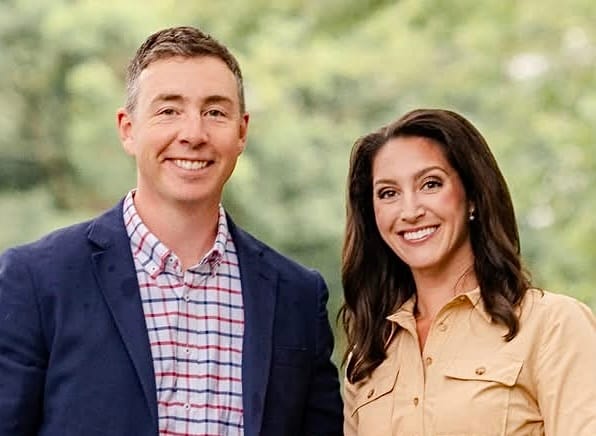
 Ryan Fattman and Stephanie Fattman Spotlight: Senator Ryan Fattman Reflects on Leadership, Faith, and Public ServiceBy Stephanie Rasmuson For more than a decade, Senator Ryan Fattman has represented communities across Massachusetts with a leadership style shaped as much by his hometown upbringing as by his years on Beacon Hill. Representing the Worcester and Hampden District in the Massachusetts Senate, Fattman has built a reputation as an outspoken advocate for government transparency, fiscal accountability, and policies he believes strengthen families and local communities. Whether debating legislation on the Senate floor or coaching youth basketball on Saturday mornings, Fattman approaches leadership with the same philosophy: listen first, remain grounded in principle, and never stop working to improve the lives of those around you. That combination of public service, deep community roots, and personal conviction has made him one of Massachusetts' most recognizable legislative leaders. Born in 1984 and raised in Sutton, Fattman describes his childhood not in terms of wealth, but of abundance in the things he values most. "We didn't grow up wealthy or with a lot of resources, but we were very wealthy and loved (by being) rich in family," he said. His mother operated a nursery school in Worcester, where Fattman proudly became one of her first students, while his father spent more than four decades working for General Mills. Together, they created what he remembers as a stable, loving home rooted in faith, service, and respect for others. The family attended St. Mark's Church in Sutton, reflecting both his mother's Irish Catholic heritage and his father's Lutheran background. Sutton remains home today. It is where Fattman grew up, attended public schools, and is now raising his own family. His interest in leadership began surprisingly early. From sixth through twelfth grade, Fattman served as class president after his grandfather encouraged him to run. His first campaign centered on a practical issue: creating a safer crosswalk connecting Sutton's school campus. "I learned at a young age that no matter how big you are, your age is just a number, and if you're willing to use your voice, you can get stuff done," he recalled. That experience left a lasting impression. Long before entering politics, he discovered that effective leadership begins by identifying problems, listening to people, and finding practical solutions. Basketball soon became another defining influence. "I say it was my first love of life," Fattman said. After a dramatic growth spurt in elementary school, basketball became a central part of his identity throughout middle school and high school. Although he had opportunities to continue playing competitively in college, his interests gradually shifted toward student government, public policy, and political service while attending Suffolk University. He later earned a master's degree in public policy from Tufts University, preparing him for a career in public office. One of the most significant influences on his life came from an eighth-grade history teacher who also coached his basketball team. "He used to say, 'Americans can do anything. But you have to be involved. You have to lend your voice to the process,'" Fattman remembered. Those lessons extended beyond the classroom. Growing up with a World War II veteran grandfather, developing a love for American history, and watching his parents respectfully debate politics around the dinner table taught him that disagreement need not become division. "My mom was a Democrat. My dad a Republican…They disagreed, but they didn't dislike each other because of it. They loved each other," he said. That willingness to listen remains central to how he approaches public service today. One of the most formative moments in Fattman's life, however, came during college when his beloved basketball coach suddenly died from a brain aneurysm while coaching a game. The loss forced him to reevaluate what success truly meant. "There was no amount of money that was going to bring him back," Fattman reflected. "I wanted to be engaged in a life that was meaningful, that made an impact." Instead of pursuing worldly success alone, he chose a path focused on service. He began coaching young athletes himself, an experience that unexpectedly connected him with local community leaders who encouraged him to seek elected office. Looking back, he sees God's providence at work through even life's greatest hardships. "The Lord gives you things that you can handle," he said. "He never puts anything on your plate that you're too weak for." That faith continues to shape both his personal life and his approach to governing. Elected to the Massachusetts House of Representatives in 2011 before winning election to the Massachusetts Senate in 2014, Fattman has become one of the Legislature's strongest advocates for transparency and accountability. Throughout his tenure, he has pushed for greater public access to legislative records, supported efforts to audit the Legislature, and consistently argued that citizens deserve to know how their elected officials are voting. "Transparency is the currency of our democracy," he said. He believes public confidence depends upon openness, noting that voters cannot hold representatives accountable if legislative actions remain difficult to access. Representing a district that includes rural towns, manufacturers, farms, and small businesses, Fattman says affordability has become the defining issue facing Massachusetts. He argues that rising energy costs, housing expenses, and regulatory burdens have gradually made the Commonwealth less competitive for families and employers. While his positions often place him in the minority, particularly on environmental policy and government spending, he views those disagreements as part of healthy democratic debate rather than personal conflict. Years in public office have also taught him the importance of maintaining perspective. Following a particularly contentious reelection campaign in 2018, Fattman chose to step away from personally engaging on social media, believing the increasingly hostile online environment distracted from meaningful conversations. "I wasn't gonna go down the vitriolic rabbit hole," he said. Instead, he has focused on direct conversations with constituents, emphasizing listening over reacting. Outside the Senate, Fattman remains deeply invested in family life. He and his wife, Worcester County Register of Probate Stephanie Fattman, are raising four young children while balancing demanding public careers. He continues coaching youth basketball, seeing it as an opportunity to invest in the next generation just as his own coach once invested in him. As he reflects on the future, Fattman remains optimistic that a new generation of leaders can restore confidence in public service through integrity, transparency, and a willingness to engage respectfully across political differences. He often returns to a quotation that has guided his life from Winston Churchill, "Success is not final, failure is not fatal: it is the courage to continue that counts." For Fattman, leadership is not measured solely by elections won or legislation passed. It is measured by the willingness to continue serving faithfully, to remain accessible, and to leave institutions stronger than they were found. Whether speaking with constituents at the State House, coaching children on a basketball court, or raising his own family in the same town that shaped him, Ryan Fattman continues to pursue the kind of public service rooted in conviction, gratitude, and an enduring belief that ordinary citizens can make an extraordinary difference.
|