| | In today’s edition: A Saudi maritime coalition, an unconventional approach to Hormuz, and VC investm͏ ͏ ͏ ͏ ͏ ͏ |
| |  | Gulf |  |
| |
|
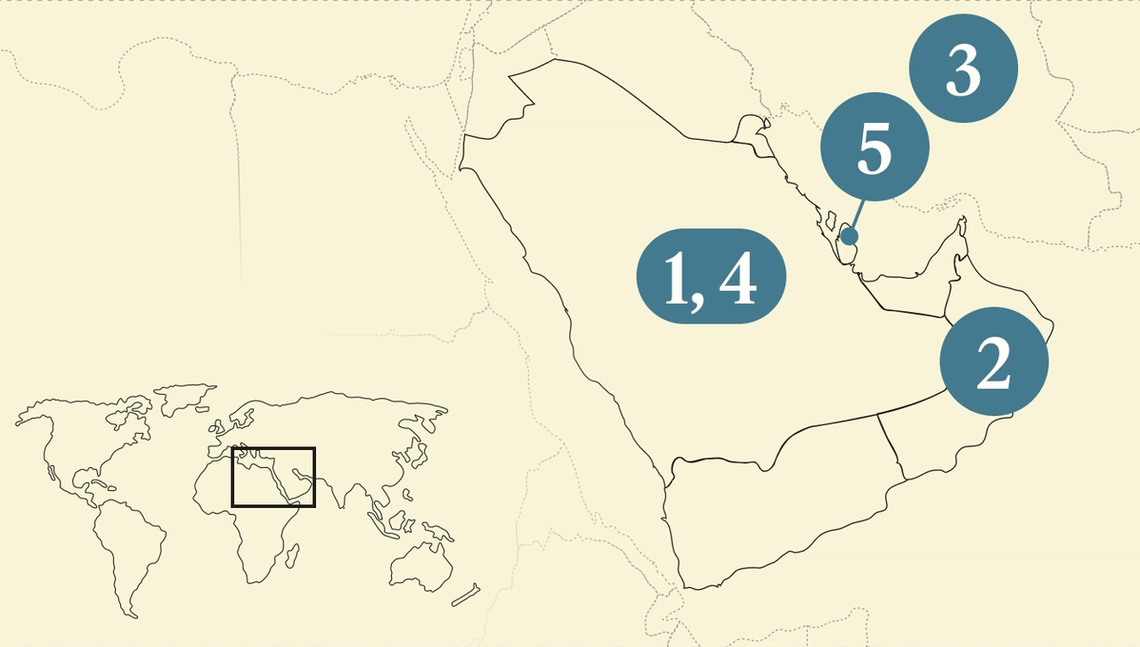 - Saudi builds naval alliance
- Iran and the Law of the Sea
- Middle East’s futile wars
- Saudi private capital stalls
- Slow recovery for Gulf LNG
 Week Ahead: Mubadala DC Open and Aramco earnings. |
|
 It was supposed to last six weeks. Now the Iran war is entering its sixth month, with simultaneous diplomacy and flare-ups, and little clarity on how it ends. What is becoming clearer is the damage to Gulf economies. Saudi Arabia released data this week that shows the impact. The kingdom has weathered the conflict better than most of its neighbors, absorbing fewer strikes so far and moving most of its crude through the Red Sea. That helped trim the second-quarter budget deficit, but the economy still contracted on lower overall oil output. This snapshot gives a sense of how much deeper the strain may be in Kuwait and Qatar, where most oil and gas exports have stalled. Corporate earnings are also showing a growing divergence: Saudi petrochemical producers with facilities on the Gulf coast have struggled, while companies on the Red Sea are thriving. Shipping firm Bahri reported second-quarter net income more than six times higher than a year earlier. Domestic demand also has pockets of strength: Banks and telecom companies are posting profit growth, and at least one hospitality company is performing well. Americana Restaurants — which operates more than 2,700 KFC, Pizza Hut, and other franchises — reported a 60% rise in first-half net income and plans to pay a dividend. “Resilience” has become the strategy, aspiration, and mantra across the region, and, in aggregate, most economies are demonstrating it. The harder question is how long they can cope before more significant adjustments become necessary. |
|
Saudi builds its coalition of the willing |
 Mohamed al-Sayaghi/Reuters Mohamed al-Sayaghi/ReutersSaudi Arabia is quickly being pulled into a war it spent months trying to sidestep. The Houthis’ campaign against the kingdom has widened beyond tanker attacks in the Red Sea: This week the group struck oil facilities in the Eastern Province from Iraqi territory, operating jointly with Iraqi armed groups under Iranian supervision, according to Reuters. Saudi and US jets hit back at Iraqi sites on Wednesday — prompting Iraq’s prime minister to scrap a planned meeting with Saudi Crown Prince Mohammed bin Salman. Riyadh’s answer is to institutionalize its defense. It convened military representatives from 43 countries and proposed a maritime coalition covering the Red Sea, Bab el-Mandeb, and the Gulf of Aden. Thirteen states signed on — Kuwait, Bahrain, Qatar, Egypt, Türkiye, and Pakistan among them — though the UAE and Oman were absent. No firm military commitments were made. The stakes are rising because the Red Sea is now Saudi Arabia’s lifeline: Hormuz traffic remains thin, with just four commodities vessels transiting Friday. The squeeze is reaching Europe, reports The New York Times, where gas storage sits at 54% — the second-lowest summer level since 2011. Energy company Equinor doubts the bloc will hit even its softened 80% winter target. |
|
Oman’s Hormuz plan faces stiff opposition |
 Majid Asgaripour/West Asia News Agency via Reuters Majid Asgaripour/West Asia News Agency via ReutersOman’s efforts to end the Strait of Hormuz impasse center on a key section of international maritime law, one whose application is opposed by both Iran and the West — for different reasons. Article 26 of the UN Convention on the Law of the Sea allows countries to levy some fees on ships “for specific services rendered,” and Muscat has sought to base a deal to reopen the strait on that language. As JPMorgan analysts pointed out in a note to clients Thursday, the concept has precedent: Denmark, Sweden, and Türkiye all charge for services through the Danish and Turkish straits respectively. But Tehran — which, like the US, is not a party to UNCLOS — argues that such a system does not go far enough, and that because the strait “belongs to Iran,” it should have greater control; it has rejected Oman’s proposal. At the same time, the US and Europe are also opposed to Muscat’s efforts, worried that such a system would betray maritime principles of freedom of navigation. This leaves Oman in a tricky position: aiming to use international law to negotiate a way out of a crisis, but with opposition coming from all sides. — Prashant Rao |
|
Iran war hasn’t altered regional reality |
 Chris J Ratcliffe/Reuters Chris J Ratcliffe/ReutersThe Iran war, and the Gaza conflict that preceded it, seem transformative for the Gulf, but not much has actually changed, according to academic F. Gregory Gause III, writing in Foreign Affairs. The region remains host to outsiders playing balance-of-power games and numerous conflicts drag on. Iran and Israel — the two countries most responsible for recent regional instability — are as powerful as ever, and their leaders firmly set in their beliefs. Washington lacks the ability to impose order, and “the US and Israel cannot bomb their way to a better region,” he wrote. What would help is a sustainable settlement with Iran, including a framework for managing the Strait of Hormuz, and real engagement on the Palestinian issue. Without satisfying both Palestinian self-determination and Israeli security, Gause wrote, long-term regional stability is “a fantasy.” |
|
Saudi private capital deals slump |
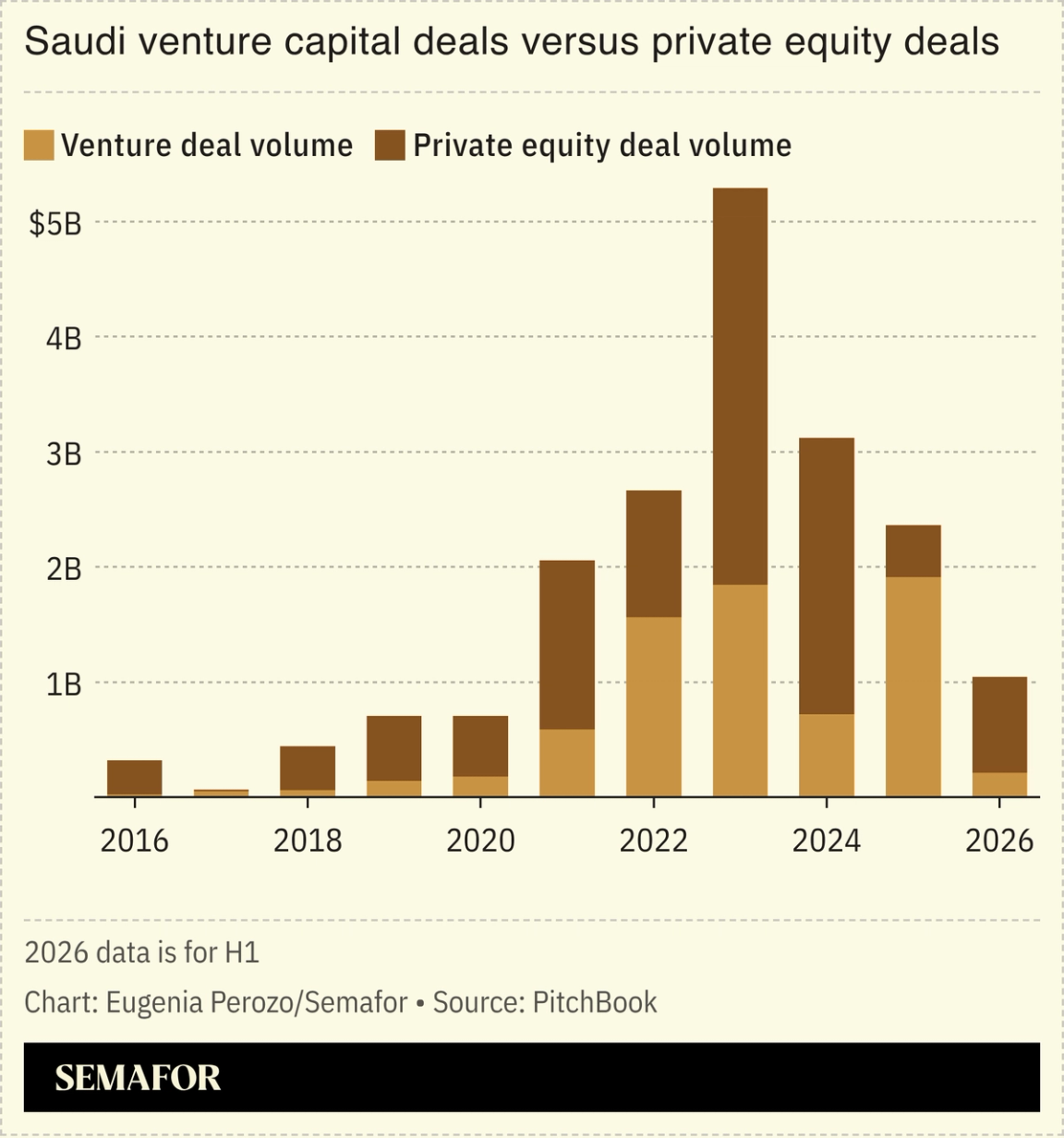 Saudi Arabia’s private capital dealmaking slowed in the first half of the year, with venture funds most affected. While small, early-stage deals continued, the lack of any significant venture investments meant deal volumes dropped to $210 million, from more than $1 billion in the same period a year earlier, according to a PitchBook report. Private equity ran the opposite way, with $833 million across 17 deals already exceeding last year’s total. But fundraising has dropped to just $50.9 million so far this year, compared with $786 million across all of 2025, and there have been no venture-backed exits. |
|
Long road to LNG recovery |
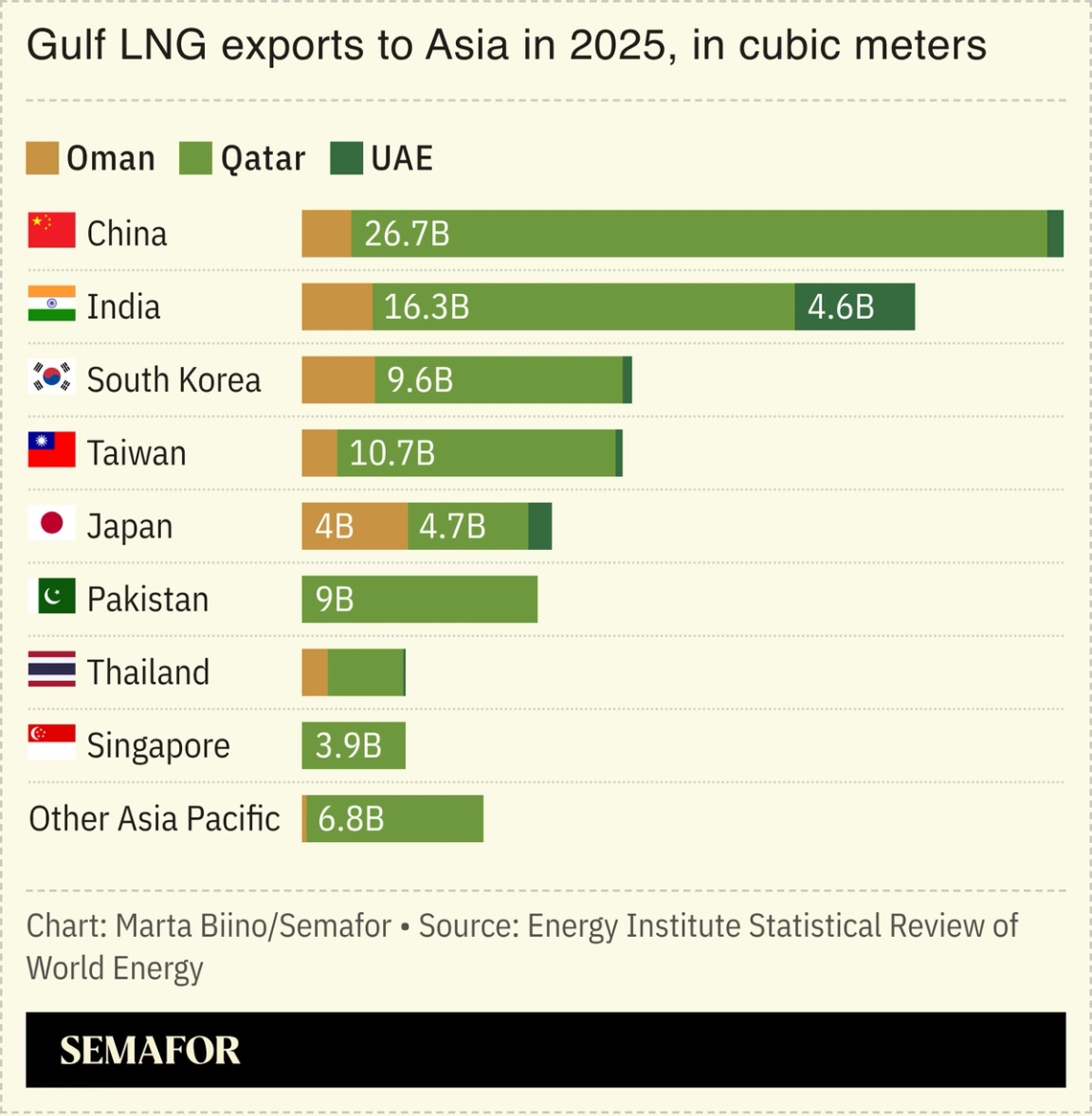 Qatar sent its first liquefied natural gas cargo through the Strait of Hormuz in weeks, while oil company ADNOC is also moving ships into position for loadings, Bloomberg reported — signs that production may ramp up if flows are sustained. Before the war, roughly a fifth of the world’s LNG passed through the strait, and the disruption has left Asian buyers scrambling. Pakistan and Bangladesh have spent about $1.9 billion replacing canceled Qatari cargoes — more than double the cost of the lost Gulf deliveries, according to Bloomberg’s Stephen Stapczynski. The small number of ships now moving indicates a slow recovery. QatarEnergy this week extended force majeure for customers in Europe and Asia through the end of September, pushing out expectations of when normal exports will resume. The company has bought around $1 billion of LNG cargoes from the US this year to help ease supply disruptions for some of its Asian buyers, Reuters reported. — Mohammed Sergie |
|
| |