|
|
|
|
|
|
|
|
|
Home of the Week, 31 Victoria Ave., Markham, Ont. Winsold
|
|
|
|
|
This week: Realtors are taking a break from the housing industry after several years of downturn, and Canadian couples are considering prenups to protect their housing investments. Plus, the iconic home from a beloved sitcom goes on sale. |
|
|
|
|
|
|
|
|
|
|
With home sales slow, realtors take a step back from the industry |
|
|
|
|
|
|
|
|
|
|
|
|
|
In2ition CEO and founder Debbie Cosic says some of her former employees have moved onto other types of jobs. Sammy Kogan/The Globe and Mail
|
|
|
|
|
|
|
|
|
|
|
Debbie Cosic’s Mississauga-based real estate brokerage In2ition used to sell about 3,000 preconstruction condos across the country every year prior to the downturn. Last year, they sold 800 units. Because activity slowed, she had to downsize and change her business model to focus predominantly on houses and rental-only apartment buildings. She now has about 50 employees compared to a few years ago when she had a staff of 150, including realtors. |
|
|
|
|
In Ontario, the country’s largest real estate market, there were 84,798 realtors or salespeople at the end of last year, according to provincial regulator, the Real Estate Council of Ontario (RECO.) That is down 1.3 per cent from 2024 and marked the first decrease in licensed realtors in at least eight years. Read the full story. |
|
|
|
|
|
|
|
|
|
|
A growing number of Canadians say they want a prenup, but few people sign them |
|
|
|
|
|
|
|
|
|
Illustration by Dominic Bugatto
|
|
|
|
|
Prenuptial agreements, more commonly known as prenups or marriage contracts, have been part of the legal landscape in Canada for decades. They are meant to bring clarity and certainty in the event a marriage breaks down, yet, as Zahra Khozema writes, most Canadians still avoid them, often because of high costs and emotional toll. |
|
|
|
|
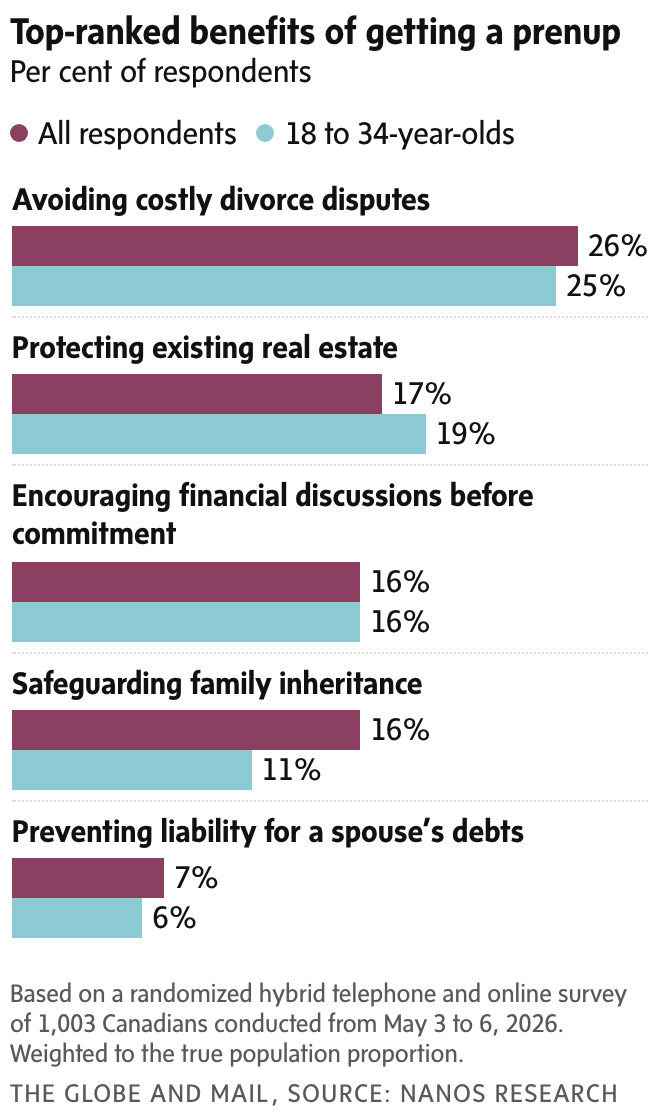
More younger Canadians are showing interest in prenups in recent years, particularly as housing becomes harder to afford and family money plays a bigger role in home ownership. |
|
|
|
|
|
|
“Every couple in the story who had a prenup either already owned property or had bought a home with help from family they wanted to protect – no one was ultra rich, so, housing has changed the equation,” Khozema said. “Maybe wealth in Canada is just measured differently now, through a single home, not millions in a TFSA or a big business.” |
|
|
|
|
A prenup could also be a condition for parents to feel comfortable contributing financially to a new home, she said. |
|
|
|
|
“I still think wealth plays a role, but now I actually see them as something that can matter even more for middle class Canadians. If it took you years to save a down payment or your parents helped you buy your first home, that’s probably one of the biggest financial achievements of your life,” Khozema said. “You have something worth protecting.” |
|
|
|
|
Khozema said that while she was surprised at how few Canadians actually have a prenup, what held couples back from getting one was the act of putting it together. |
|
|
|
|
“I expected disagreements between couples, but more often than not they were on the same page. It was the legal process that wore them down,” she said. Read the full story. |
|
|
|
|
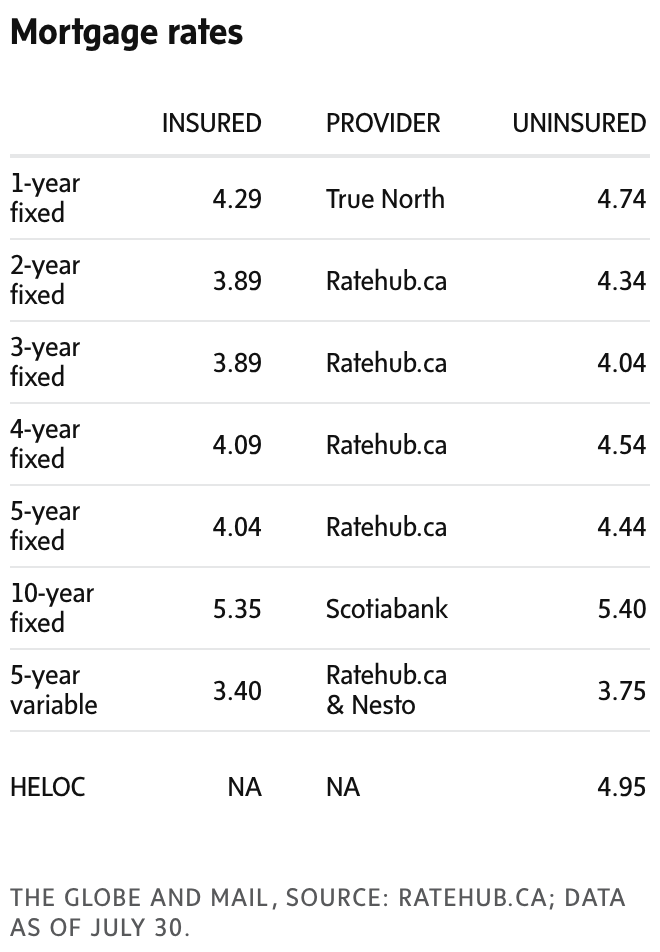
This week’s lowest fixed and variable mortgage rates in Canada |
|
|
|
|
|
|
|
|
|
|
|
|
|
|
|
|
|
|
Canada’s disclosure rules for homes with dark pasts can be murky |
|
|
|
|
|
|
|
|
|
Witthaya Prasongsin/iStockPhoto / Getty Images
|
|
|
|
|
Earlier this year, when homebuyers in Hudson, Que., sued the prior owners after discovering a deadly home invasion took place in 2020, the case hinged on one major detail: The sellers allegedly didn’t disclose that a violent death had taken place in the house. |
|
|
|
|
Quebec is unique in Canada, in that sellers in the province must fill a declaration form that asks these kinds of questions about a home’s past. But in the rest of the country, as Salmaan Farooqui writes, experts say disclosure of a home’s history – such as a murder, suicide or criminal activity that occurred on the property – tends to fall under caveat emptor, meaning “let the buyer beware.” Essentially,
the buyer must do their own due diligence. |
|
|
|
|
|
|