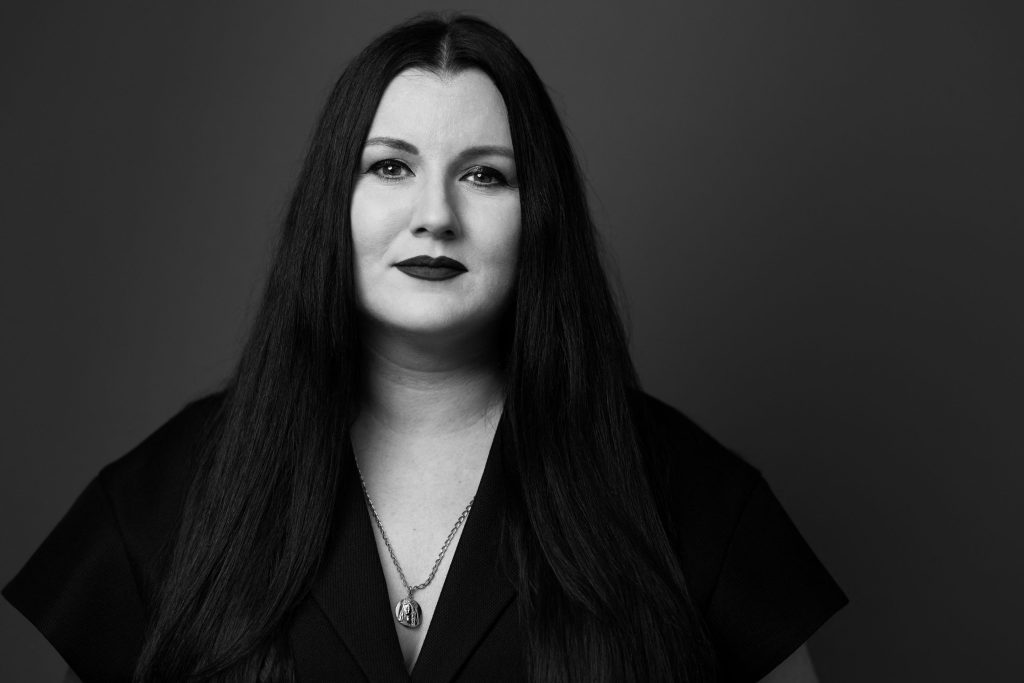
It’s been almost one month since Fidji Simo
announced she would not return to her role as the No. 2 exec at OpenAI because of the fragile state of her health. My colleague Emily Forlini, who covers AI for
Fortune, just published
the first interview with Simo since she left her position.
Simo told Emily that her health is “physically the worst [it’s] ever been.” But she is still working on an important project: her company ChronicleBio, which aims to find cures to complex conditions like POTS, which is what Simo has. These are often conditions that mostly affect women and that can leave patients completely disabled—sensitive to light and sound, spending most of their time in a completely dark room with no stimulation. But they don’t cause death, which is another reason research into these diseases doesn’t get funded.
The company is trying to solve a specific problem in clinical trials, which is that diseases like POTS often have “sub-diseases,” with different underlying genetic causes contributing to the same set of symptoms. A drug could work well for one sub-disease, but not most patients, and right now the trial would likely be canceled. As Emily explains, ChronicleBio is “finding patients with similar symptoms, grouping them together, and then testing drugs on those subgroups so the trial is more likely to be successful.”
In its first year, ChronicleBio has performed 890 blood draws from 709 patients in Utah, Arizona, Texas, and India. It has over 3,500 tubes of blood in its biobank and has extracted 153 terabytes of data from the blood. It’s raised $15 million to date, and next week is launching a sign-up link for mobile phlebotomy trucks to come to the homes of people with certain chronic diseases. Participants will get an in-depth report on their condition, free for the first 250 people. In exchange, they’ll give their biological data to ChronicleBio to help with this mission.
Simo and Emily talked at length about this work and what it means to the longtime exec to be able to tackle it, even while she’s had to take a step back from her main career path.
“It’s obviously a horrible disease, and I certainly wish I could have dodged it. But at the same time, I think it has given me enormous meaning,” she says. Read the full conversation
here.
Emma Hinchliffeemma.hinchliffe@fortune.comThe Most Powerful Women Daily newsletter is Fortune’
s daily briefing for and about the women leading the business world. Subscribe here.