It has been over three-and-a-half years since the debut of OpenAI’s ChatGPT spurred booming corporate interest in generative artificial intelligence tools to remake work. And yet Hitachi, which employs nearly 290,000 globally, still hasn’t deployed a single, enterprise-wide AI tool for all workers across the Japanese conglomerate.
This more cautious approach may prove to be prudent for Hitachi, given that research has shown a high number of
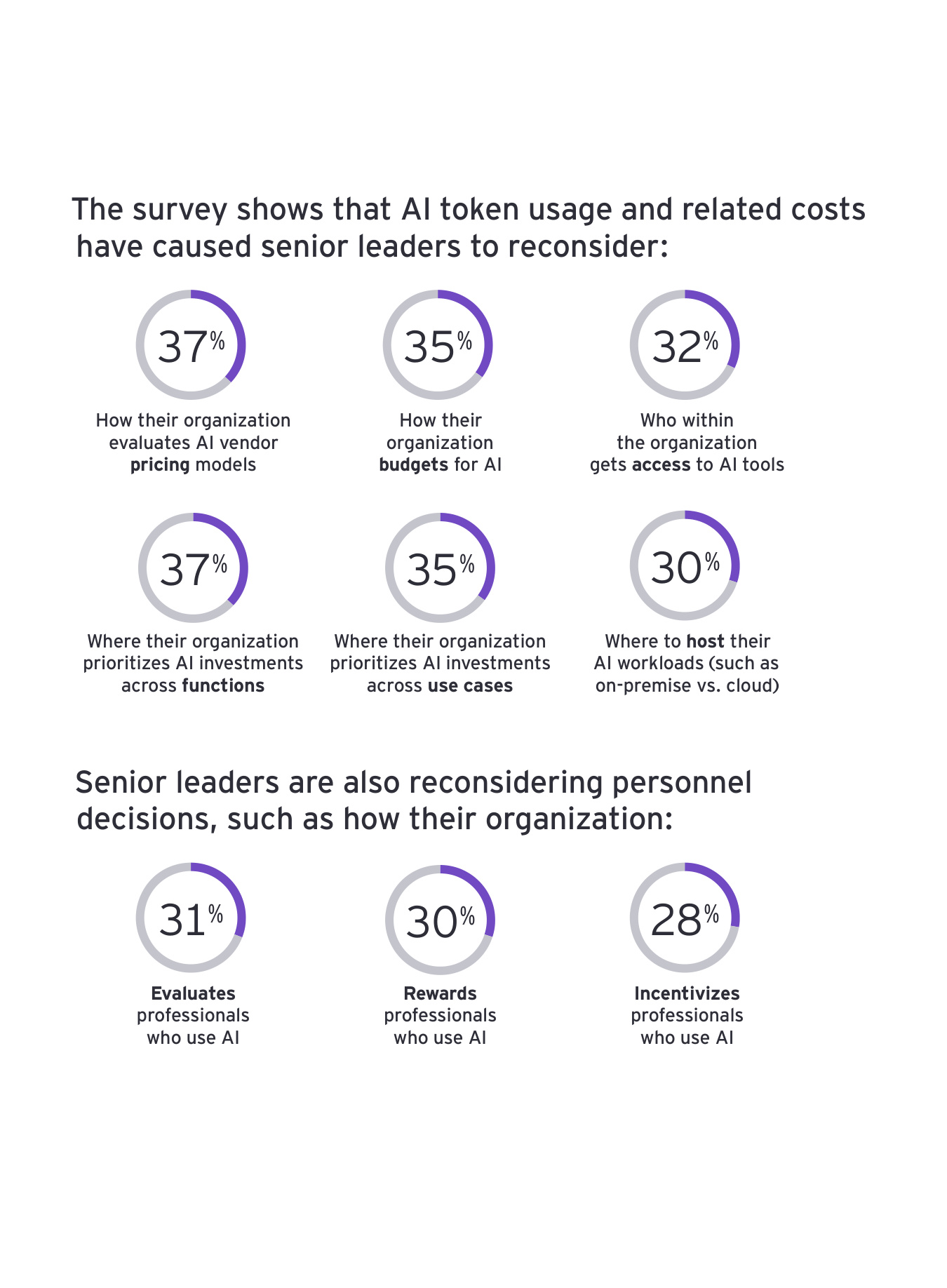
enterprise AI pilots fail and a debate that’s intensified regarding the cost of AI, leading most large employers like Hitachi to closely track workplace AI usage as costs rise.
Bala Krishnapillai, the senior vice president and chief information officer of Hitachi’s Americas division, says there are plenty of AI tools that have been widely embraced by the company’s workforce. His internal AI adoption strategy focuses on three buckets. The first are everyday productivity tools like Microsoft Copilot and Google Gemini, used to summarize emails, meetings notes, and for translation, the latter especially critical for the 607 subsidiaries that operate across 190 global markets.
Krishnapillai says his IT team works closely with business leaders to evaluate and approve job-specific tools, which can include AI-enabled content creation used by creative professionals or for competitive analysis to help the sales team. The third focus area is on developers and AI coding assistants, where Hitachi works closely with Anthropic.
“From the enterprise AI strategy standpoint, there is no one solution,” says Krishnapillai, who joined Hitachi in 2018 and has served as CIO of the Americas division since April 2025.
Though he encourages AI adoption across the company, Krishnapillai says “consuming of tokens is a big thing. We are putting in some controls.” Some departments where competitiveness is deemed critical to their work, like research and development, have no AI usage restrictions. But more broadly across Hitachi, division managers are responsible for how their teams use AI and are tracking their spending.
One bigger challenge that Krishnapillai has had to address is data complexity. Founded in 1910 as a single mining machinery repair shop, Hitachi today operates a sprawling business that includes rail systems, digital products, industrial machinery, power and renewable energy, and medical systems. Ranked
#197 on the Fortune Global 500, Hitachi was most well known by the general public for manufacturing and selling consumer electronics including televisions and camcorders, a business it has fully exited as it pivoted to selling more digital systems and services, which now account for 27% of revenue.
Hitachi generates $70 billion in annual revenue today and it got that massive through acquisitions. Some of the company’s larger deals in recent years include the $11 billion spent on the power grids business acquired from Swiss-based tech firm ABB and a $9.6 billion deal to scoop up U.S. software vendor GlobalLogic.
A century of dealmaking has resulted in data stored across more than 150 different customer relationship management (CRM) software systems, including Salesforce, SAP, and Microsoft. When marketing and sales teams would work on a new business proposal, it could take weeks to produce an accurate analysis report.
“We have massive data stored in our ecosystem,” says Krishnapillai. “It was unmanageable from an IT enterprise standpoint.”
Krishnapillai tapped enterprise software vendor Appian to connect data on top of the legacy infrastructure, without requiring any migration to a single database. The two main benefits to this approach is that today, teams are able to create new projects at both a faster pace and with sharper insights from Hitachi’s data ecosystem.
“When we create a proposal now, it becomes stronger, more compelling, and very competitive,” says Krishnapillai.
Hitachi and Appian say the new approach has led to a 40% efficiency gain for the sales and marketing team, as well as a 20% reduction in operating costs.
Matt Calkins, CEO of Appian, says this data fabric will also make it easier for Hitachi to embrace agentic AI. He says these autonomous agents can, at times, ask unexpected questions and search for unanticipated data sources across the business in order to reach their conclusions.
“Everybody’s got scattered data, and everybody needs to inform unpredictable agents,” says Calkins. “They’ll be like humans, exploring the enterprise and making decisions, and so they need to go places that you didn’t already orchestrate and expect.”
That’s an optimistic view, if everything goes right. Rogue AI agents—a report
published this week said models built by Anthropic and OpenAI took unsanctioned actions—highlight the dangers of embracing AI in this manner and the need for tight governance.
Krishnapillai says he’s focused on establishing security protocols and data protection and privacy before the company is fully ready to embrace autonomous tasks. He says Hitachi is actively talking with vendors to find a software system that can monitor the creation of all AI agents, which will help avoid unnecessary duplication, but also promote agents that can be applied in cross-functional ways across the business.
“We are in the early phase,” says Krishnapillai, regarding his progress on agentic AI. “Our goal is to become autonomous in the future. But we are not there yet.”
John Kell