Hello!
Rising temperatures and their effects on water and food insecurity are the focus of today’s newsletter. The World Food Programme warned that a powerful El Niño weather event could push nearly an additional 49 million people into acute food insecurity across some of the world's most vulnerable regions by the end of next year.
Meanwhile, Britain's cereal harvest is on track to be the worst since comparable records began in 1984, as crops wither after one of the driest and hottest spring-summer periods on record. But it’s not just climate pressures affecting food supplies.
A surge in attacks on ships, ports and export terminals in the Black Sea is disrupting global supplies of grain and oil, showing how conflict and weather are combining to threaten food security. Before we unpack concerns around rising food insecurity, here are a few stories that are also on my radar today: |
|
|
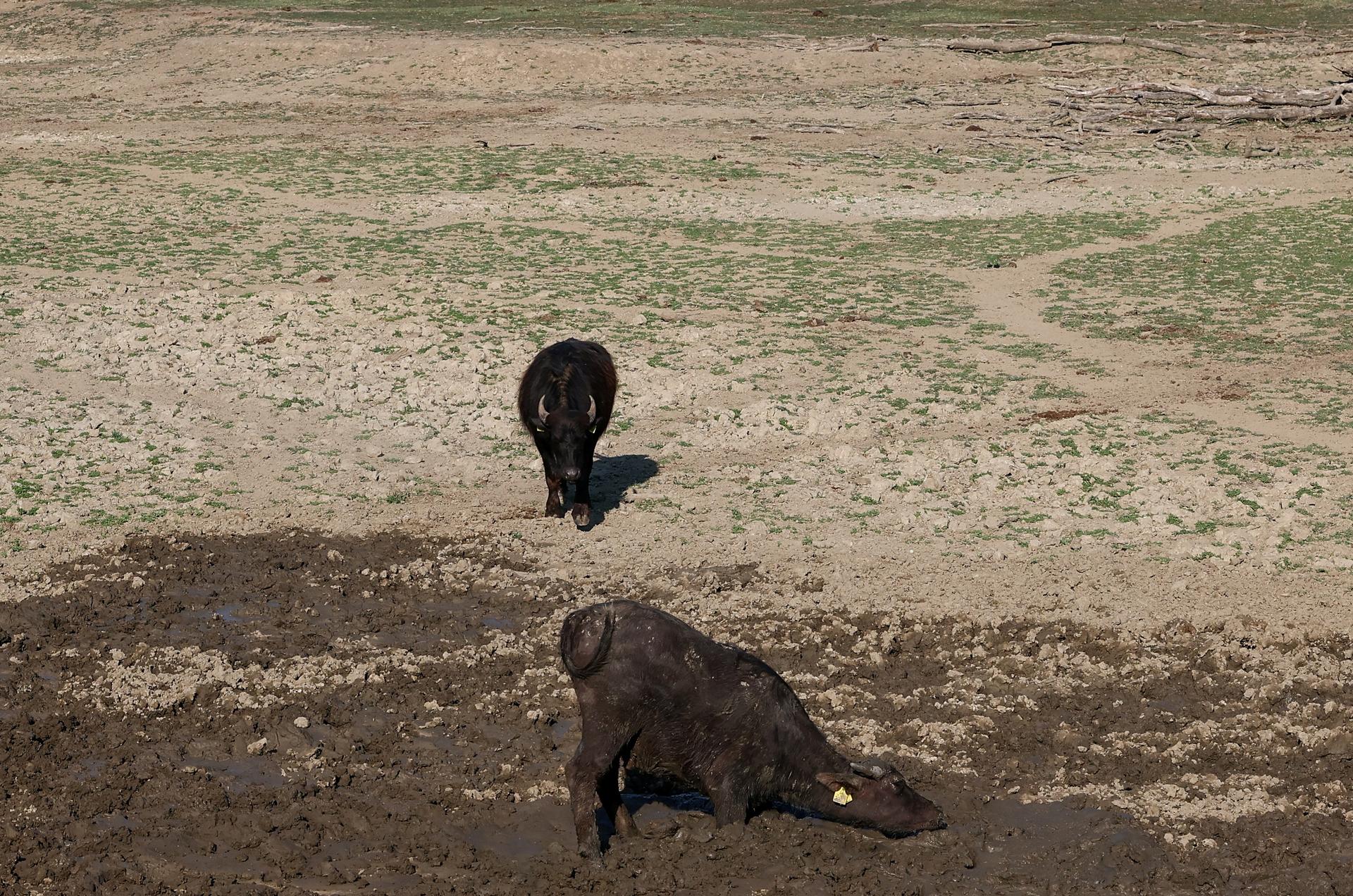
A water buffalo wallows in the mud left behind after a lake dried out due to a heatwave that hit Europe, at a farm in Knicanin, Serbia. REUTERS/Zorana Jevtic |
The World Food Programme said in a report that there was an 81% chance of a very strong El Niño event, with sea surface temperatures at their warmest levels since at least 1982 and potentially making it the strongest such event since 1950.
For context, El Niño is a periodic warming of ocean surface temperatures in the Pacific, which alters global weather patterns and is often associated with drought in Southern Africa, delayed monsoons in parts of Asia and erratic rainfall elsewhere.
Central America and Southern Africa are expected to be among the hardest-hit regions, with the number of people facing food insecurity set to increase by 83% in Central America and nearly 75% in Southern Africa, the WFP report said. Southern Africa as well as South America and the Caribbean could each see more than 12 million additional people fall into acute food insecurity.
In Europe, Britain’s Energy and Climate Intelligence Unit said the dry conditions may have knocked as much as 2.5 million metric tons off the nation’s cereal and oilseed harvest compared to earlier forecasts, costing UK arable farmers up to £390 million ($524 million) in lost revenue.
Farmers across Europe have also warned of a slump in production and rising prices due to the extreme weather. |
|
|
|
When shocks begin to overlap |
The concern for policymakers is the prospect of several overlapping shocks.
Jean-Martin Bauer, director of WFP's Food Security and Nutrition Analysis Service, told reporters that global food markets entered the El Niño period in a relatively strong position following good harvests in 2025, but warned that conflict in the Middle East and potential weather-related crop losses could put further upward pressure on prices.
Russia, the world's largest wheat exporter, and Ukraine, also a major agricultural exporter, have intensified attacks on each other's agricultural export facilities and commercial vessels in the Black Sea area in recent weeks.
The Black Sea is a vital route for shipments of grain, crude oil and refined products. Its waters are shared by Russia and Ukraine as well as Bulgaria, Georgia, Romania and Turkey.
The latest escalation is creating another pressure point for commodity markets already coping with disruptions to major shipping routes in the Middle East. "The bigger concern is when shocks begin to overlap,” said Nicolas Jaquier, emerging market fixed income portfolio manager at global investment manager Ninety One.
“If higher energy prices coincide with fertilizer constraints and then weather-related food inflation, the impact becomes broader and more persistent than any one shock on its own,” he added. |
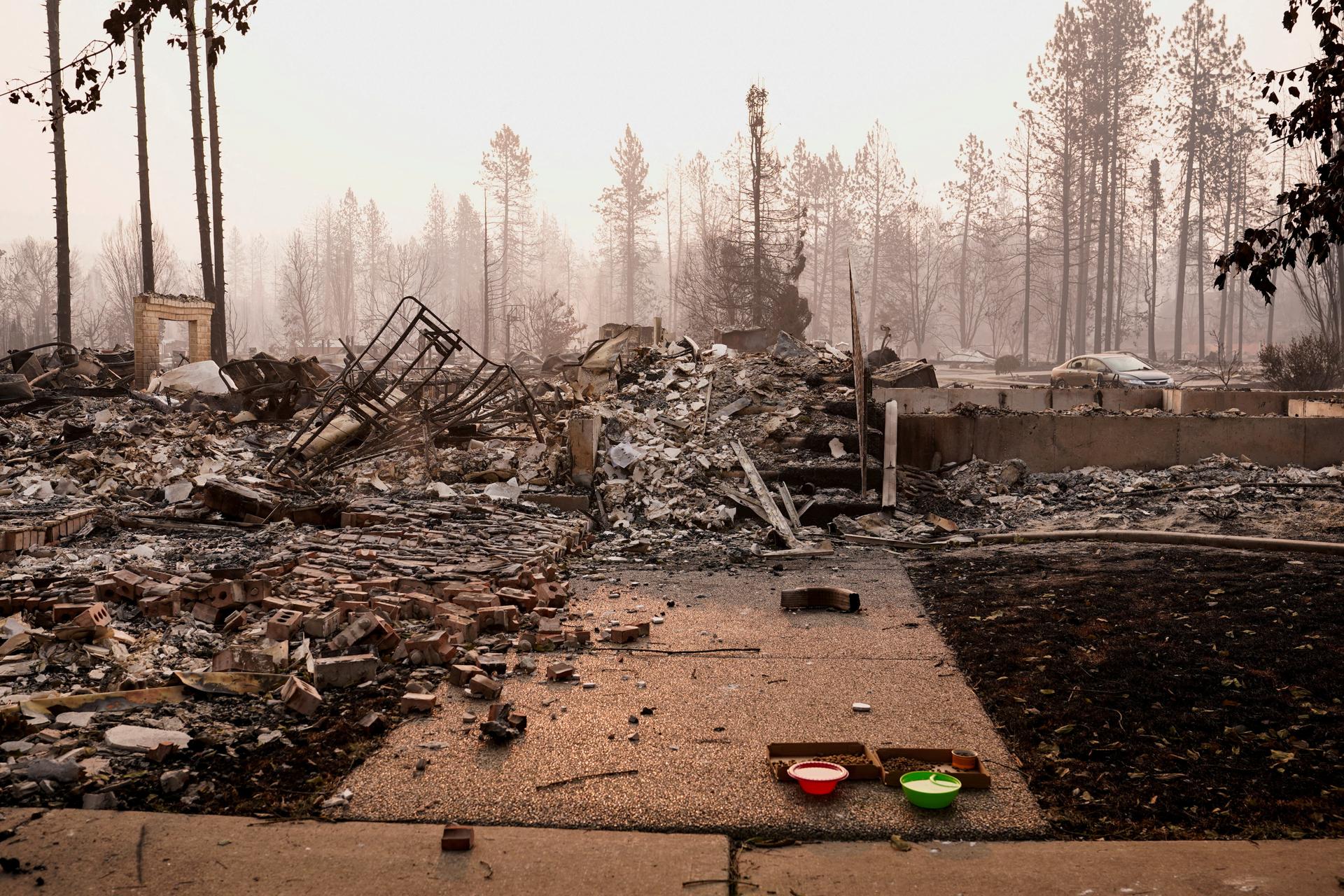
A view of the area burned by the Old Trails Fire wildfire, in Spokane, Washington, US. REUTERS/David Ryder |
-
Spokane wildfire arrest: Spokane resident Aaron Farinacci, a 37-year-old man, previously imprisoned for killing his father, made his initial appearance in county court after being jailed on a $1 million bond on a count of first-degree arson, according to court records. He has been charged with starting one of three fires that have destroyed over 700 houses and other buildings and forced 64,000 people to evacuate the city hit hardest by wildfires sweeping the drought-stricken Pacific Northwest United States.
-
Greece wildfire: Residents returned to gutted homes and fire-scarred landscapes northwest of Athens this week, as wildfires eased across Greece. In the coastal community of Porto Germeno, some 60 km (40 miles) northwest of Athens, local resident Vivi Gialia surveyed the remains of her parents' home and the fire-ravaged landscape of her childhood summers. Click here to read the full story.
-
Hungary power cuts: Hungary’s Prime Minister Peter Magyar has thanked companies and households who have voluntarily reduced their power usage by 600 to 700 megawatts (MW) each day in the peak consumption periods after a government appeal to ease pressure on the grid amid a severe drought that people have described as a "wake-up call."
-
South African lithium mines: A coalition of South African activists and farmers are launching objections to the prospecting of lithium mines due to fears of losing productive land to open-pit mines. Data from South Africa's mines department reviewed by Reuters show lithium prospecting licences laying claim to some 73,000 hectares (282 square miles), an area slightly larger than the city of Pretoria.
-
Google’s Indian data center: Construction has begun in India’s southern state of Andhra Pradesh for Google's planned Indian data center hub. But mounting opposition from environmentalists over water supplies and wildlife is creating hurdles for the U.S. tech giant's $15 billion project. Click here for the full video and story.
|
|
|
|
Dan Lambe, chief executive of the U.S.-based nonprofit Arbor Day Foundation, shares his thoughts on wildfires and forest regeneration: “Increasing global temperatures have created drier conditions that cause wildfires to burn hotter and longer, making natural forest regeneration less likely.
“It’s made reforestation efforts – from site preparation and seedling procurement to tree planting and growth management – even more critical. “A warmer world is changing landscapes and to ensure forests are future-resilient, we need to leverage science and data to understand what those changes might look like and what tree species will thrive in those conditions. “But reforestation doesn’t happen on a stopwatch.
“After disasters like the wildfires in Spain and Spokane, people come first. Our job is to listen to communities, work with local partners, and be ready to help replant when the time is right, whether that’s next season or years from now.” |
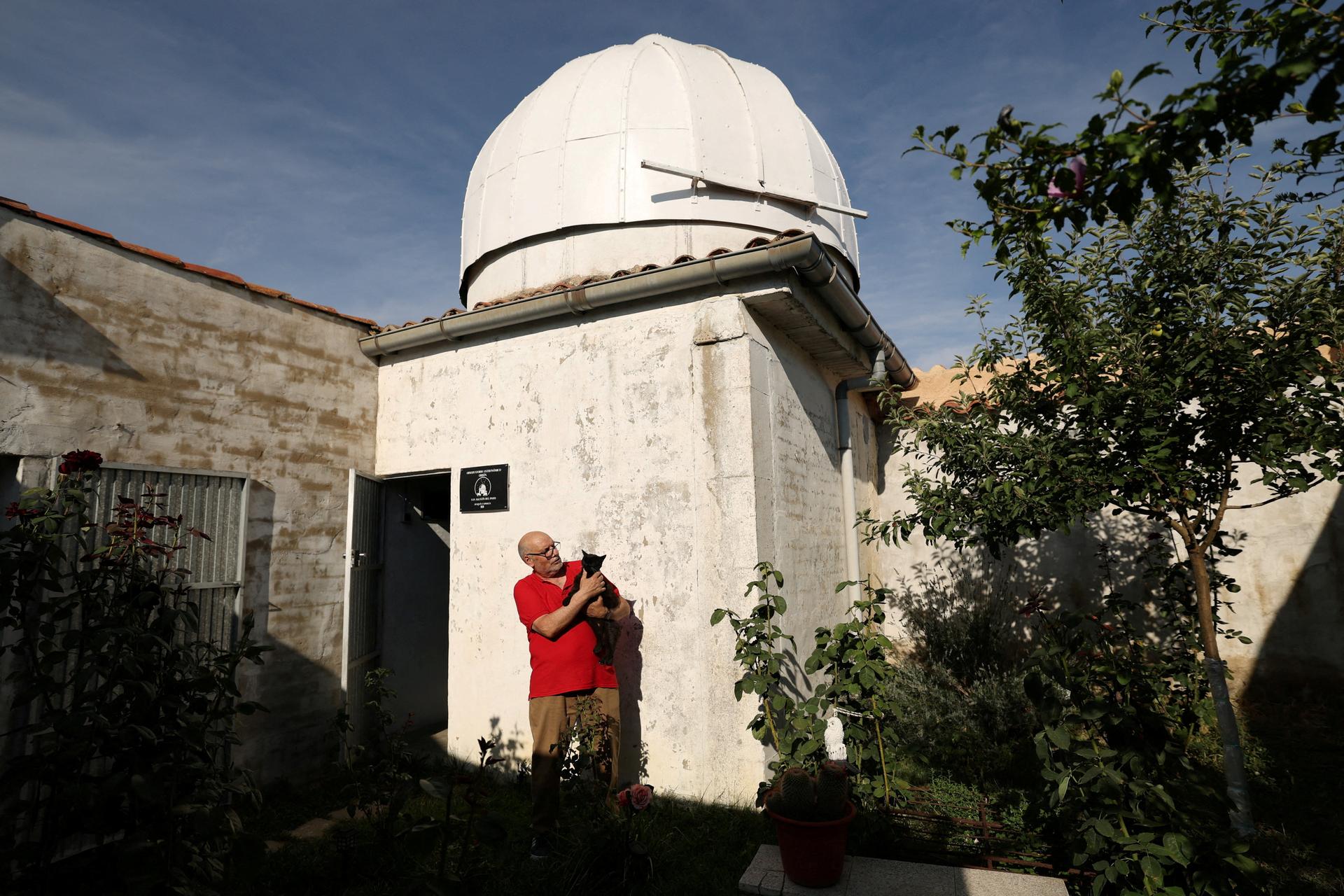
Self-taught astronomer Joaquin Tapioles holds his black cat in front of the domed observatory he built in San Agustin del Pozo, Spain. REUTERS/Violeta Santos Moura |
Today’s spotlight focuses on space – the final frontier – as retired shepherd Joaquin Tapioles in a tiny Spanish farming village prepares to watch next week's first-in-a-century total solar eclipse from the observatory he built after being inspired by the mysteries of the skies as a boy.
The first total eclipse visible from the Iberian peninsula since 1912 is set to draw skywatchers from across Spain and abroad. Click here for the full story. |
|
|
|
|