| | Asian allies fret over US commitment, Washington and Beijing’s tech decoupling expands, and a transl͏ ͏ ͏ ͏ ͏ ͏ |
| |  | Flagship |  |
| |
|
The World Today | 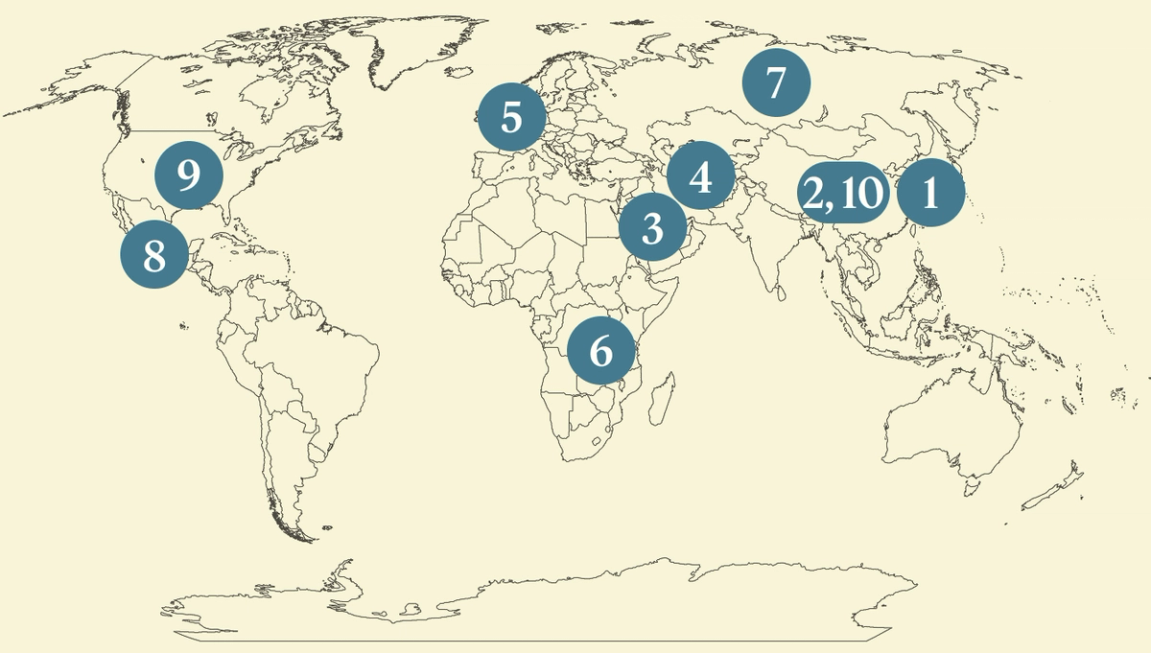 - Asian allies fret over US
- Superpower decoupling
- A new geopolitical order
- Bond yields surge on war
- Banks upbeat on Europe
- Zambia incumbent wins
- Russia widens crackdown
- US visas ‘weaponized’
- Reservoirs drying up
- Reading Thoreau in China
 A book of ‘many pleasures’ that is ‘not, mostly, a book about pleasure.’ |
|
US allies worry about Washington |
 Kim Hong-Ji/Reuters Kim Hong-Ji/ReutersUS allies voiced worry over Washington’s strategy in Asia after President Donald Trump said he would scale back participation in key military drills. Trump’s announcement that he would reduce the size of the joint exercises with South Korea — in part because of Seoul’s lack of support for his war in Iran — “has deepened concerns about US reliability among Indo-Pacific allies,” the Financial Times reported. Japan, which has long had difficult relations with South Korea, said cooperation between Washington and Seoul was “critical” for stability in Asia. Australia, meanwhile, said it was “very concerned” by North Korea’s nuclear program; Trump has suggested that his scaling back of the drills was linked to a desire to revive talks with Pyongyang. |
|
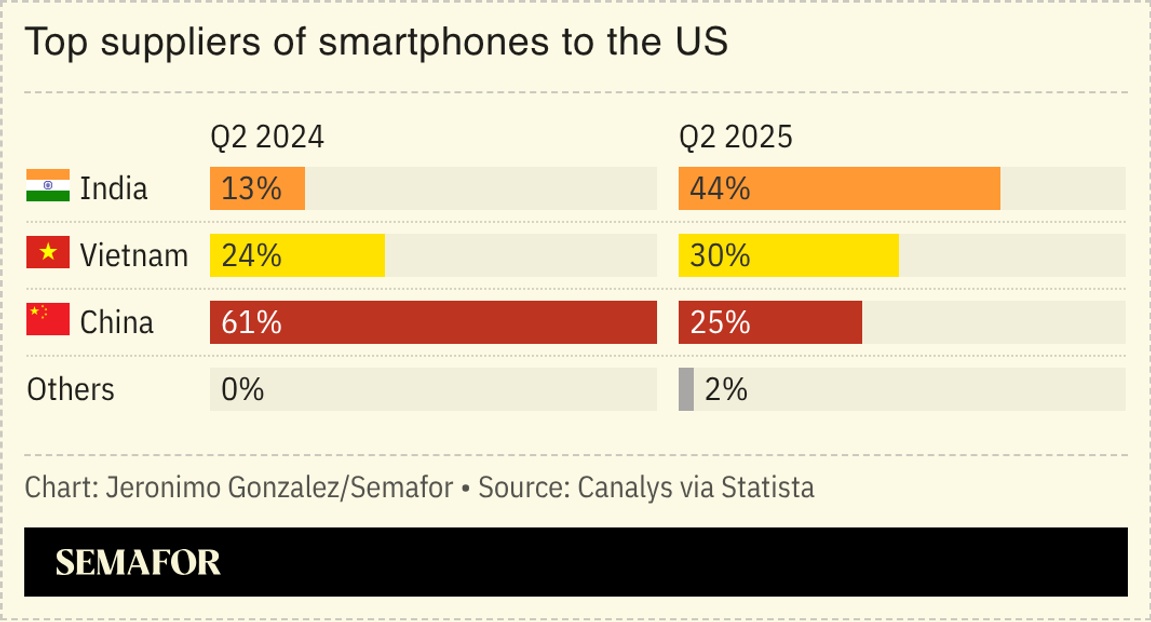 Google reportedly plans to move its smartphone supply chain outside of China by next year, the latest sign of a deepening tech decoupling as tensions mount between Washington and Beijing. The Silicon Valley giant has told suppliers it will shift manufacturing largely to India and Vietnam, Nikkei reported, and is far from alone in reducing its reliance on China: Rival Big Tech firm Microsoft has shut at least 15 joint ventures and branch offices over the past five years, according to Reuters. The direction of travel is hardly one way, either, with Chinese authorities reportedly removing Microsoft’s Windows operating system from a host of government computers earlier than scheduled as part of efforts to reduce reliance on foreign tech providers. |
|
The new, ‘rotten-tail world’ |
 Courtesy of Foreign Affairs Courtesy of Foreign AffairsGeopolitical upheaval is upending the Middle East’s security architecture and forcing middle powers worldwide to be more flexible, but may ultimately deliver a new, stable equilibrium, analysts argued in the latest issue of Foreign Affairs. Though Gulf states are upping US military purchases, “long-building doubts about American power and purpose have passed their tipping point,” a leading political scientist warned. Separately, the director of the European Council on Foreign Relations argued that “states will have to adapt cunningly” to “a rotten-tail world” — a play on a Chinese term for a project gone haywire. But forcing smaller countries to play a greater role, two Biden-era officials insisted, may “strengthen the alliance system,” arguing: “Tensions can spur reforms that create tomorrow’s capability.” |
|
Iran war fears shake markets |
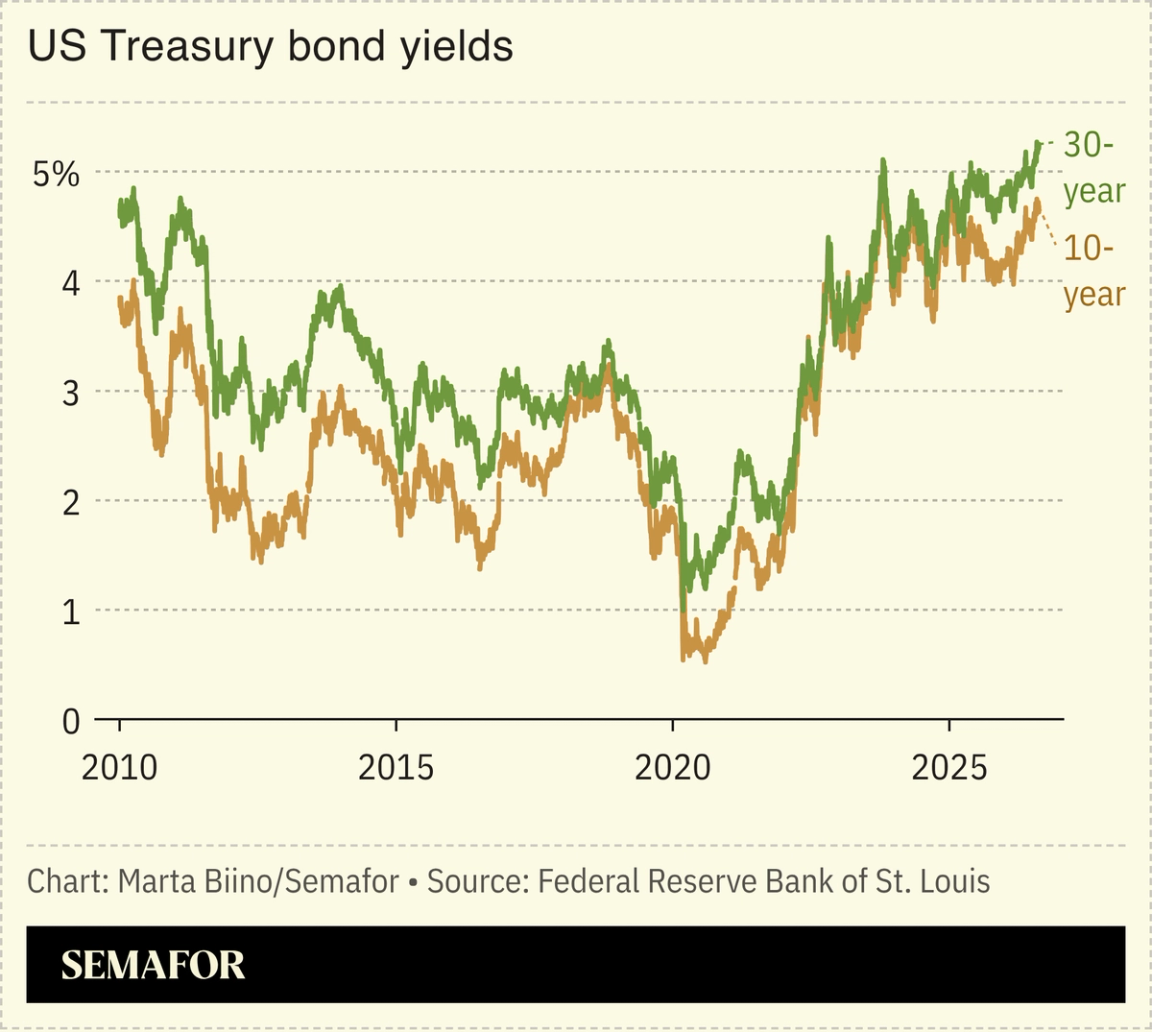 Government bond yields rose to multiyear highs and stock markets fell on growing concern that tensions between the US and Iran are unlikely to resolve in the near future. Benchmark oil prices also topped $90 a barrel as investors fretted that efforts to reopen the Strait of Hormuz were making little headway. Worries over inflation because of rising oil prices and threats to key supply-chain chokepoints, as well as huge debt issuance tied to the AI infrastructure boom, drove yields on 30-year US Treasury bonds to nearly their highest level since 2002. Elsewhere, French and German long-dated yields are at their highest since 2008 and 2011 respectively, while Japanese ones are closing in on an all-time record. |
|
Big banks see value in Europe |
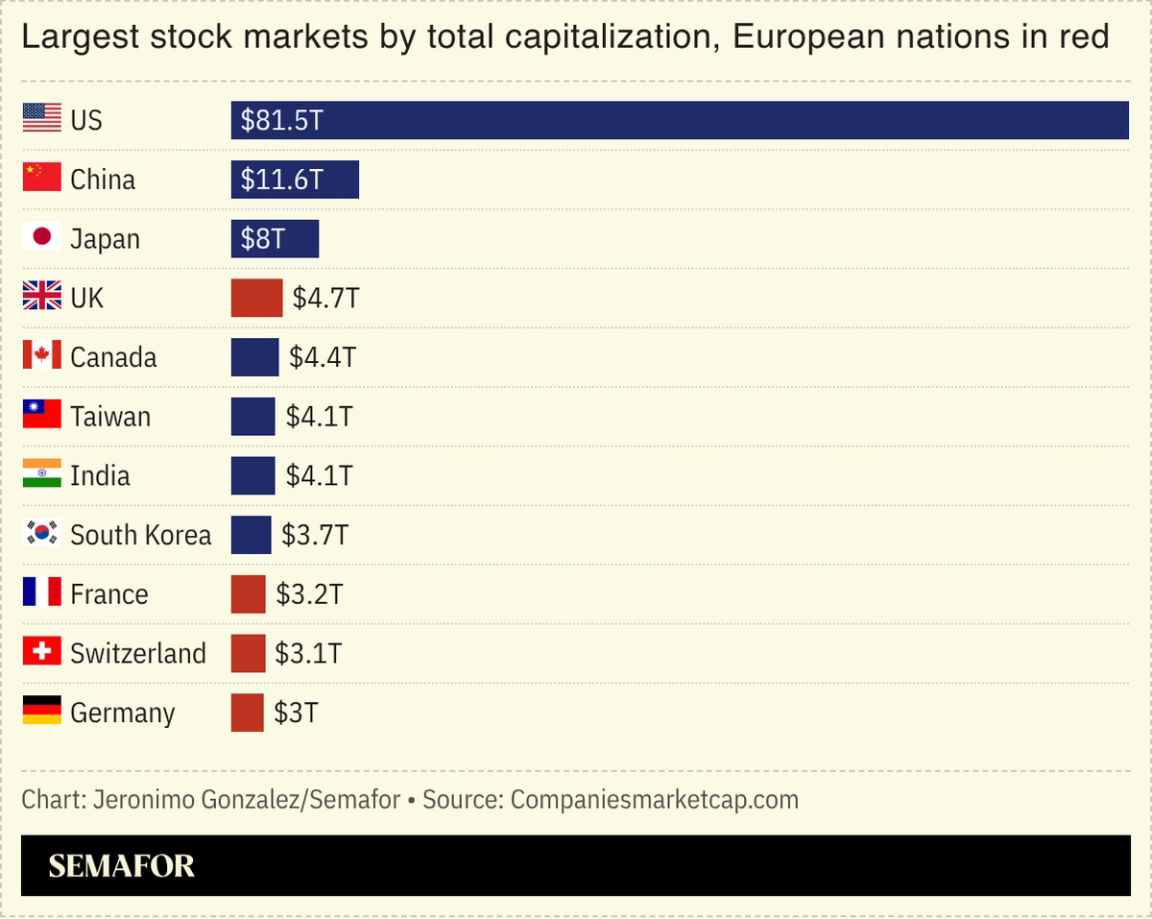 Investors have turned unnecessarily bearish on European markets, a host of investment banks argued. Goldman Sachs listed seven myths about regional equities in a note to clients, including that earnings growth was nonexistent and competition from China would derail corporate expansion — all of which it said were either incorrect or belied a more complex reality. ING’s chief economist, similarly, warned that “the European storyline has become systematically more negative than the underlying reality.” For the UK in particular, Morgan Stanley noted that British stock market returns largely matched those of the US over the past five years, and worries about runaway debt may be overblown given the worse fiscal pictures or rises in bond yields in peer countries. |
|
Zambia president reelected |
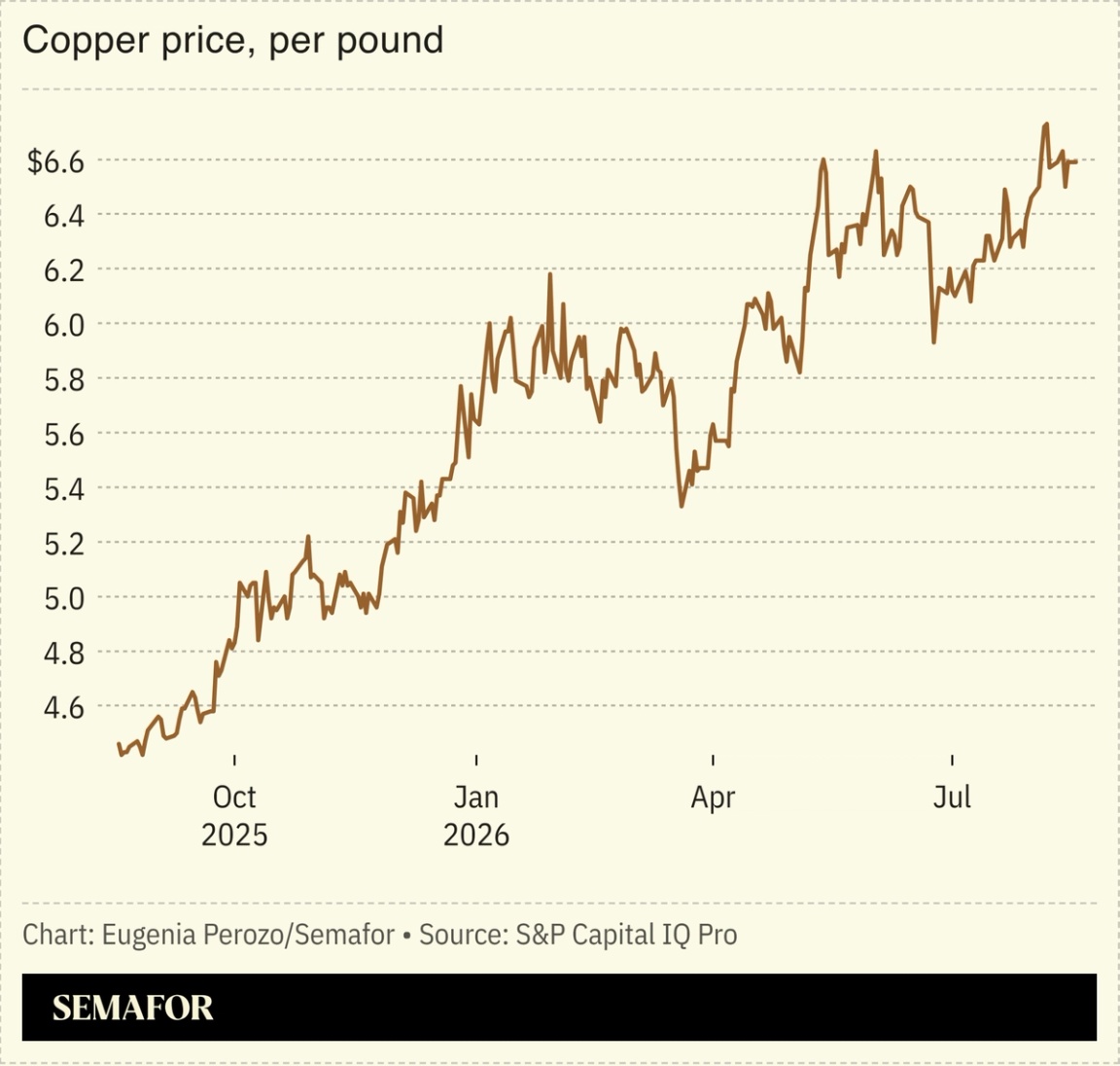 Hakainde Hichilema was reelected as president of copper-rich Zambia, a result likely to be welcomed by investors despite accusations of a crackdown on political opponents. Since becoming president in 2021, Hichilema has overseen a massive influx in foreign direct investment, helping lift his country’s copper output to record levels. Soaring prices for the metal — driven largely by surging global demand for AI data centers and renewable energy infrastructure — have improved the fortunes of producers globally: BHP, the world’s biggest mining company, reported booming first-half growth as copper overtook iron to become its main revenue driver for the first time. However, JP Morgan warned this year that the fallout of the Iran war could weigh on prices. |
|
Kremlin silences war critics |
|
Visa cancellation enrages Mexico |
 Henry Romero/Reuters Henry Romero/ReutersMexican President Claudia Sheinbaum accused Washington of meddling in her country’s politics after it cancelled the visa of the son of a former president. Andrés Manuel López Beltrán — who is seen by many in Mexico as a presidential hopeful despite facing widespread corruption allegations — said the decision to ban him from the US was “Hitlerian.” The US State Department has “weaponized” visas since the start of President Donald Trump’s second term, as it looks to advance its “Donroe Doctrine” of reasserting hegemony over the Western hemisphere, The New York Times reported. Visa sanctions “are not meant to punish, but to change behavior,” Washington’s ambassador to Chile told the Times. |
|
Falling US reservoir water levels |
 Caroline Brehman/Reuters Caroline Brehman/ReutersWater levels at the largest reservoirs in the US fell to their lowest in decades, underscoring the crisis countries across the northern hemisphere face as summer temperatures reach record highs. Lakes Mead and Powell, which provide water to around 40 million people, have seen levels decline for decades as climate change has brought the region’s longest dry spell for at least 1,200 years, experts said. Recent scorching temperatures have strained freshwater supplies elsewhere: Germany’s Rhine River, one of Europe’s most important commercial arteries, has dried up so much that even some of the shallowest barges are unable to traverse it, while similar issues in the Danube have forced Romania to shut off its sole nuclear plant. |
|
China’s literary involution |
 Barry Huang/Reuters Barry Huang/ReutersChinese readers are increasingly being |
|
|


