| | Canada scrambles to avert new 50% US tariffs, Chinese search giant Baidu’s AI bet falters, and this ͏ ͏ ͏ ͏ ͏ ͏ |
| |  | Flagship |  |
| |
|
The World Today | 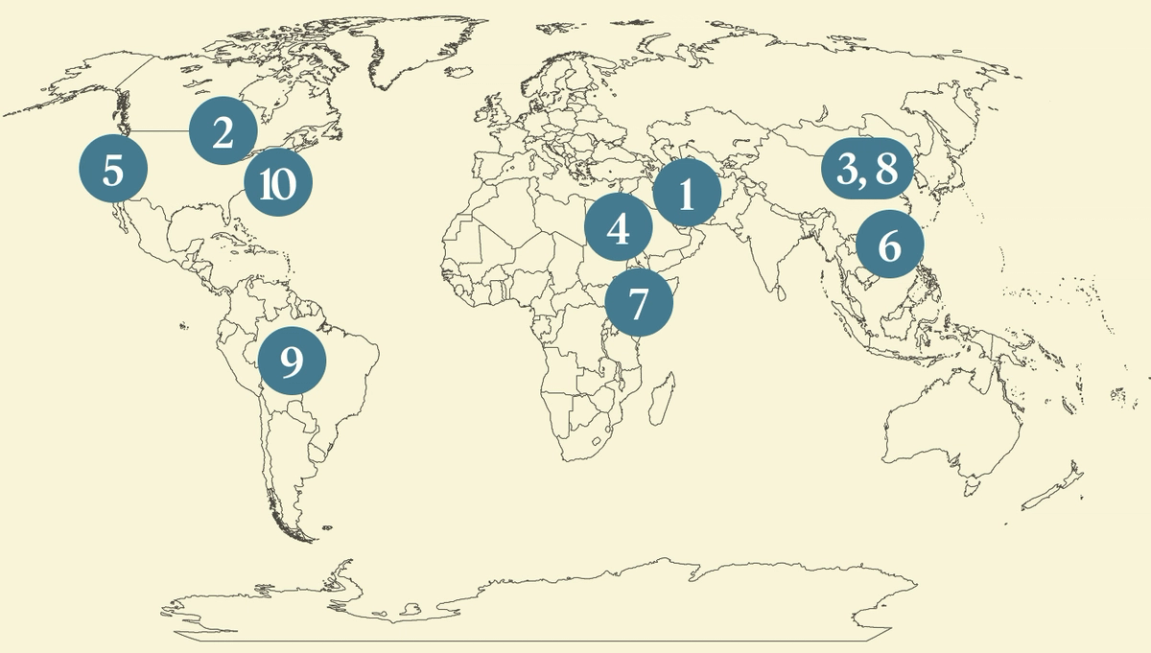 - Hormuz waiting game
- US, Canada trade talks
- Baidu revenue falls again
- Saudi fund’s value shrinks
- Meta addiction trial opens
- The new ‘China shock’
- Ethiopian airport fight
- New Chinese consumer
- LatAm population ages
- The monoculture returns
 A book lays bare the ‘mental and physical cauldron of professional tennis.’ |
|
US-Iran waiting game over Hormuz |
|
US, Canada hold last-minute trade talks |
 Leah Millis/Reuters Leah Millis/ReutersCanadian Prime Minister Mark Carney spoke with US President Donald Trump on Monday, as Ottawa scrambles to avert new 50% tariffs that take effect at midnight on Wednesday. A deal to avoid the duties sits on Trump’s desk, Politico reported, but one sticking point is US tariffs on Canadian vehicles. Carney described the negotiations as “very delicate and intense,” and Ottawa has warned Washington that the tariffs could jeopardize further trade talks: A breakdown of the US-Mexico-Canada Agreement could cost the US economy $1 trillion by 2035, per one analysis. Around a third of Canadians favor a forceful response to Washington’s threats, according to a poll, and only 18% want to offer concessions like ending provincial bans on American alcohol. |
|
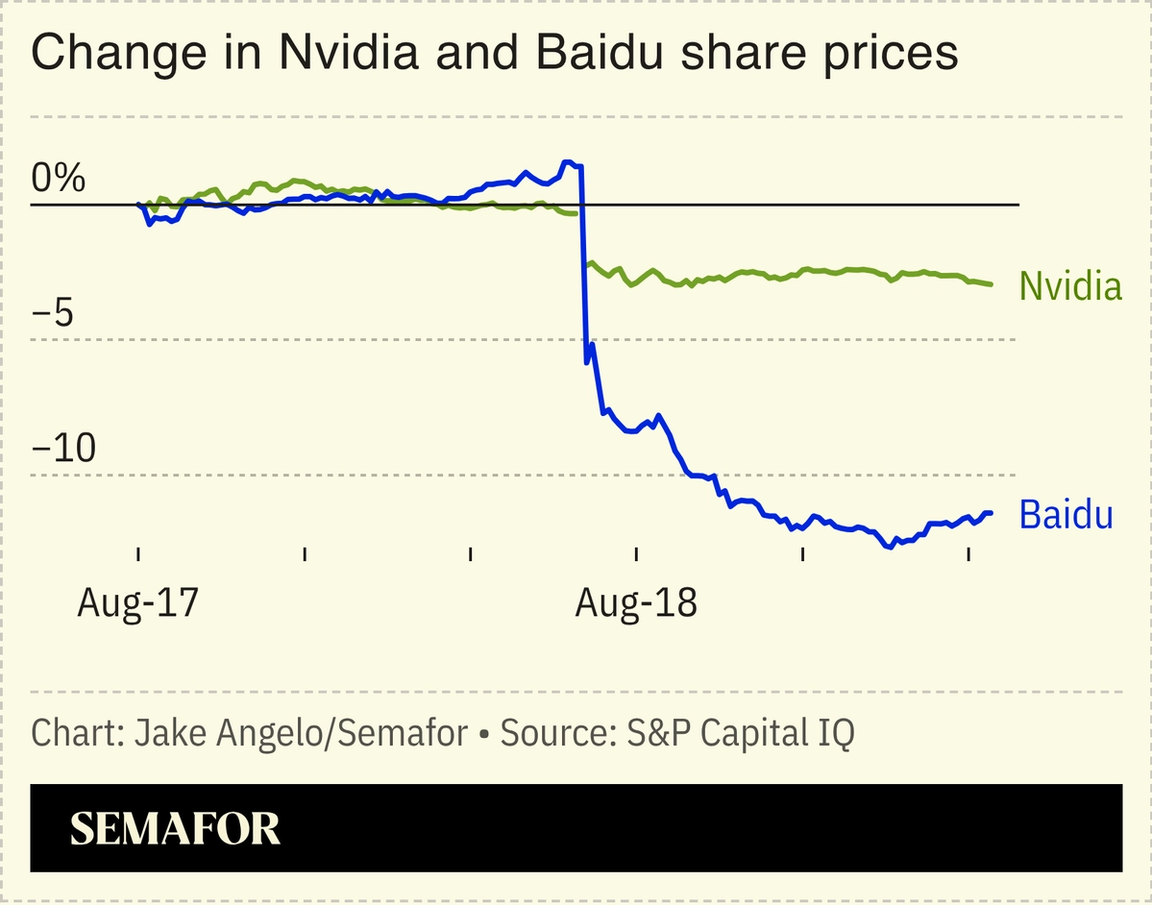 Chinese search giant Baidu posted a fifth consecutive quarterly revenue drop on Tuesday, sending its stock sliding, as it shells out to keep pace with domestic AI peers. Baidu is pivoting to become an “AI-first company,” its CEO said, tripling its quarterly capex as it ploughs cash into compute. But Baidu “faces a two-pronged existential fight,” Bloomberg wrote: It’s losing ad share to ByteDance and Alibaba — only partly offset by cloud growth — and its Ernie model lags open-weight offerings from AI firms Moonshot and DeepSeek. While Baidu’s stumble reflects broader anxiety over big AI spenders, Bank of America said Nvidia’s stock could be trading at up to a 50% discount, with investors “overstating the risks” of the US chipmaker’s AI investments. |
|
PIF value shrinks to $900 billion |
 Hamad I Mohammed/Reuters Hamad I Mohammed/ReutersThe value of Saudi Arabia’s Public Investment Fund shrank $10 billion last year to around $900 billion, the first such drop this decade, reflecting both the Iran conflict and Riyadh’s shift to focus its efforts at home. The Saudi sovereign wealth fund, which was established by royal decree 55 years ago this week, is central to the kingdom’s goal to chart a future beyond oil. But the value of PIF’s domestic equity investments fell in 2025, and it has pulled back on big bets like The Line and LIV Golf. PIF attributed its performance to “wider market conditions.” Still, it hasn’t disappeared from the international stage: PIF dollars are crucial to Paramount’s planned $110 billion acquisition of Warner Bros. Discovery. |
|
Meta youth addiction trial opens |
 Mike Blake/Reuters Mike Blake/ReutersMeta rejected claims that its apps were designed to addict young users, as a trial began Tuesday that could reshape the social media giant’s businesses. Brought by 29 US states, the lawsuit argues Facebook and Instagram knowingly contributed to negative health outcomes for minors. The outcome could result in billions of dollars in penalties for Meta and potentially lead to significant changes to the platforms, as countries from Australia to Poland to Vietnam look to curb youth access to social media. The backlash has spurred safety action on other tech fronts, as well: OpenAI said Tuesday it will restrict teenagers to a version of ChatGPT with greater mental health safeguards, as the company faces suits for allegedly failing to prevent self-harm among users. |
|
China’s ‘physical AI’ takes center stage |
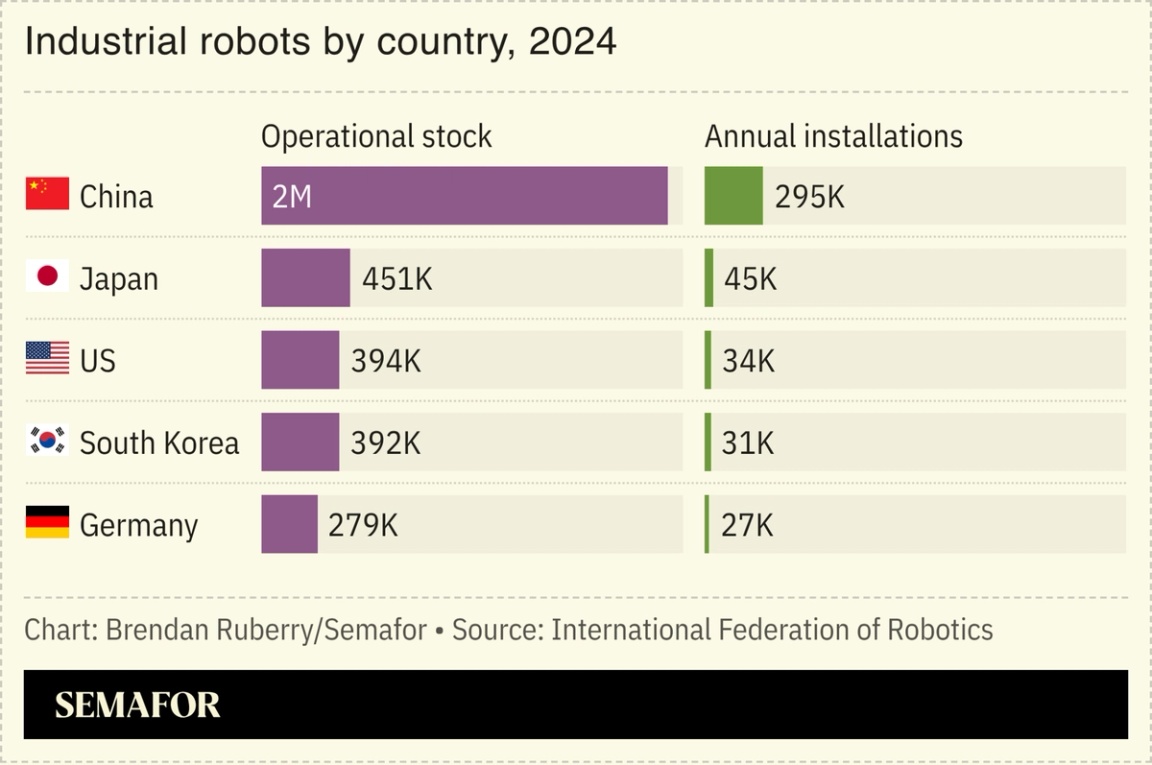 The World Robot Conference kicks off in Beijing on Wednesday coinciding with humanoid maker Unitree going public in Shanghai, as the world faces a new “China shock” from advanced AI technology, experts said. While earlier economic disruption to the West centered around traditional manufacturing, Chinese policymakers are honing in on the “new new three” sectors of pharmaceuticals, robots, and AI to drive export growth. Earlier this week, Unitree revealed a “Superman” robot that can jump more than six feet in the air and sprint at a speed of nearly 30 miles per hour, spurring investor enthusiasm for Chinese humanoids that can already dance and perform martial arts. The “tougher test,” Reuters wrote, is proving they can “work reliably to generate economic value.” |
|
US, China battle over Ethiopian airport |
 Tiksa Negeri/Reuters Tiksa Negeri/ReutersEthiopia’s planned $12.5 billion airport is rapidly emerging as a key battleground in the power struggle between the US and China for influence in Africa. The Bishoftu International Airport, which is slated to be the continent’s biggest upon completion, has sparked an international bidding war, with American and Chinese firms vying for control over a project that could reshape logistics across the Horn of Africa. Though US contractors have missed out on the civil works, the White House is reportedly positioning companies including Boeing and GE to compete for technology and equipment contracts. The moves come as Beijing and Washington accelerate their push for leverage across the region, with both seeking to control access to Africa’s vast mineral reserves. |
|
 Casey Hall/Reuters Casey Hall/ReutersChina’s deepening economic slowdown is reshaping domestic consumption for high-end handbags and humble burgers. Recent earnings releases point to stronger sales for prestige beauty brands like Estée Lauder, while companies such as LVMH reported largely flat demand for traditional luxury staples like handbags. The shift reflects the tastes of a more price-sensitive and discerning Chinese consumer, a Bloomberg columnist noted. Meanwhile, China’s burger market is set to grow 8.7% annually through 2035, underscoring broader economic trends toward smaller, one-person households and cost-conscious consumers. At both ends of the market, shoppers are now favoring higher-value-for-money products as a prolonged property slump and weaker confidence “make price tags ever more decisive,” Reuters wrote. |
|
Latin America’s demographic crisis |
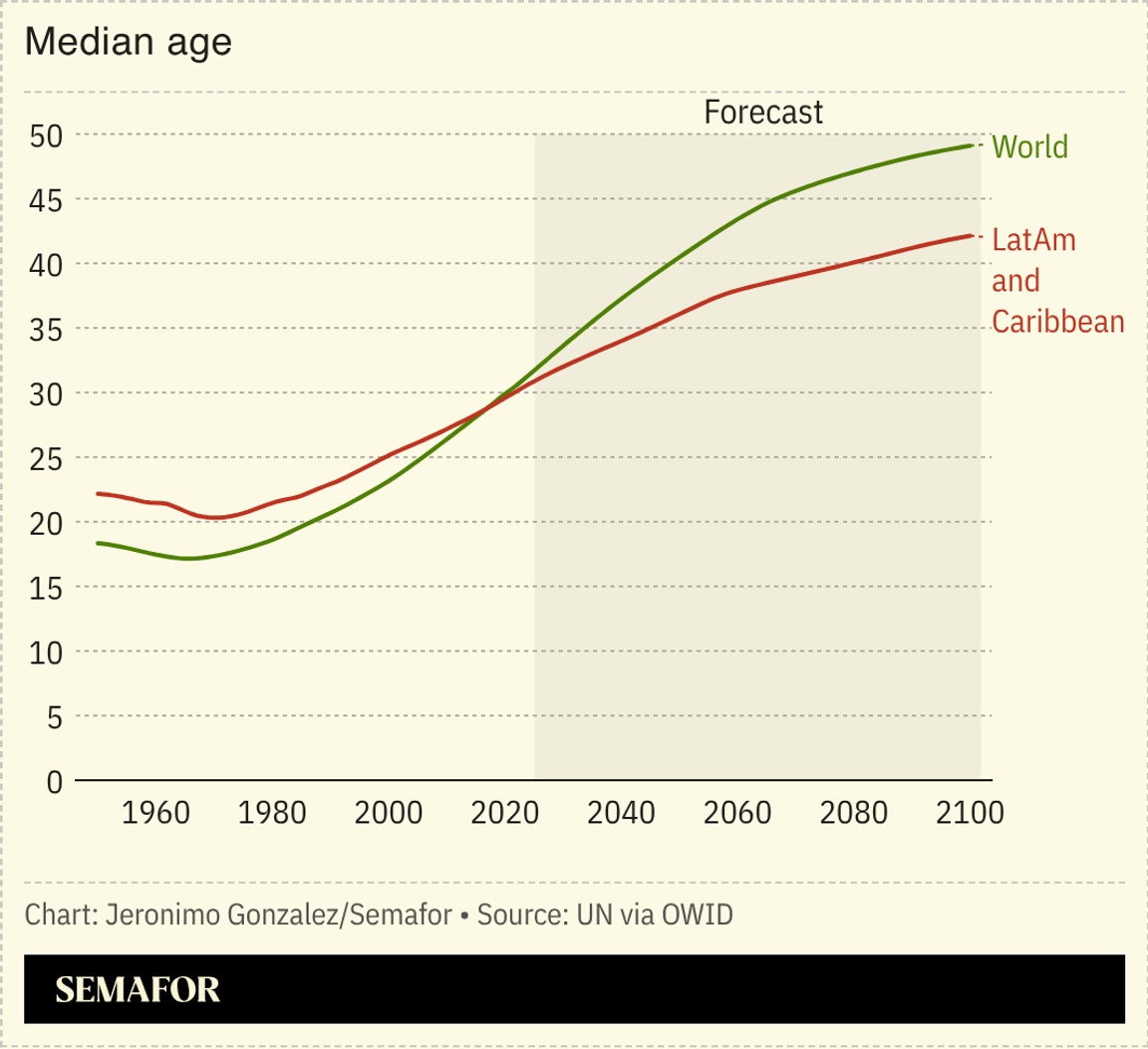 Latin America’s population is aging rapidly, hurting the region’s prospects of becoming rich before it becomes old, and presenting a major challenge to policymakers. The region’s working-age population rose steadily for years, lifting per-capita incomes. However, this “demographic bonus” is ending as more workers leave the labor force, saddling public finances with higher spending on pensions. The region also faces a demographic crisis: The fertility rate has fallen to just 1.8, far below the replacement rate. In response, governments should invest in boosting productivity and early adoption of AI, two experts argued in Americas Quarterly: Such moves “could be the spark to start a period of faster economic growth.” |
|
|


