| | The US delays 50% tariffs on Canada, US-S. Korea drills to end early, oil giants unveil new Venezuel͏ ͏ ͏ ͏ ͏ ͏ |
| |  | Flagship |  |
| |
|
The World Today | 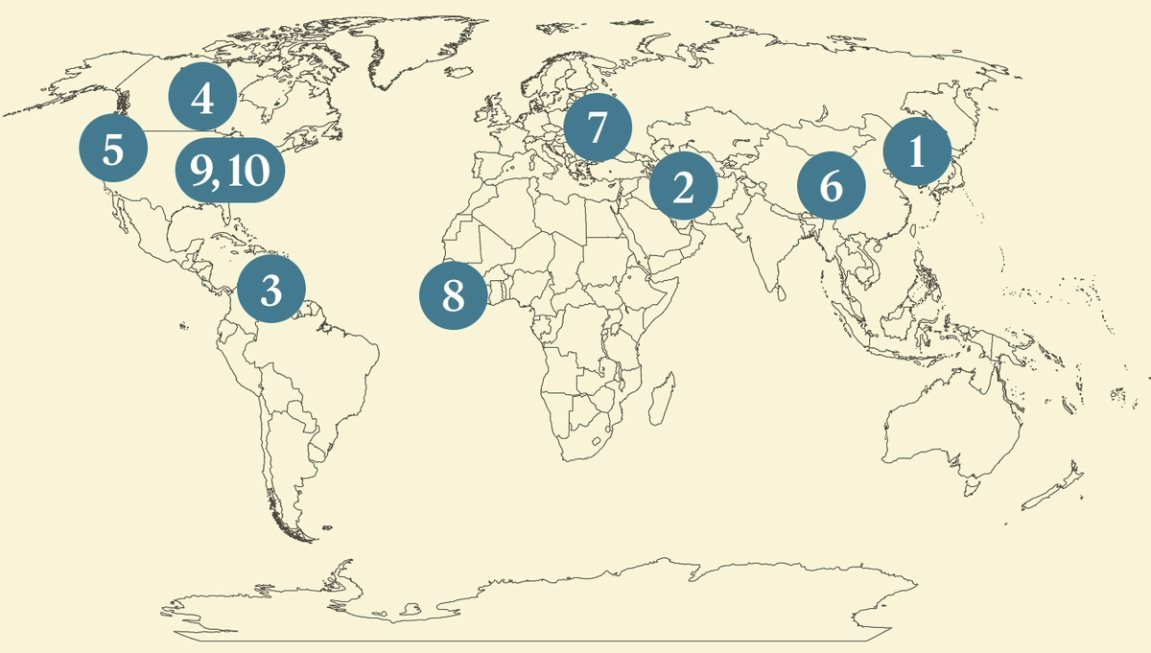 - S. Korea cuts drills short
- Iran conflict tensions rise
- Oil giants pivot to Latam
- Canada wins trade reprieve
- OpenAI trails Anthropic
- Unitree’s blockbuster IPO
- Call for Ukraine elections
- Liberia takes US deportees
- AI reshapes internships
- AI reshapes publishing
 A ‘book that will keep you up until 3 o’clock in the morning.’ |
|
US-S. Korea drills to end early |
 Kim Hong-Ji/Reuters Kim Hong-Ji/ReutersSouth Korea said military exercises with the US will be cut short on President Donald Trump’s request, deepening unease among American allies in Asia. Trump plans to revive talks over North Korea’s nuclear program and wants to meet with the pariah state’s dictator this year, The Wall Street Journal reported. The cutting back of the South Korea drills has shaken confidence in US commitment to Asia: Foreign Policy characterized a Pentagon official’s recent visit to Southeast Asia as an “empty charm offensive,” some Taiwanese fear being sacrificed as part of a superpower bargain, and North Korean soldiers’ participation in Russia’s war in Ukraine “makes high-quality allied military exercises more important, not less,” an Australian think tank argued. |
|
Middle East braces for long war |
|
Oil majors bet on Venezuela |
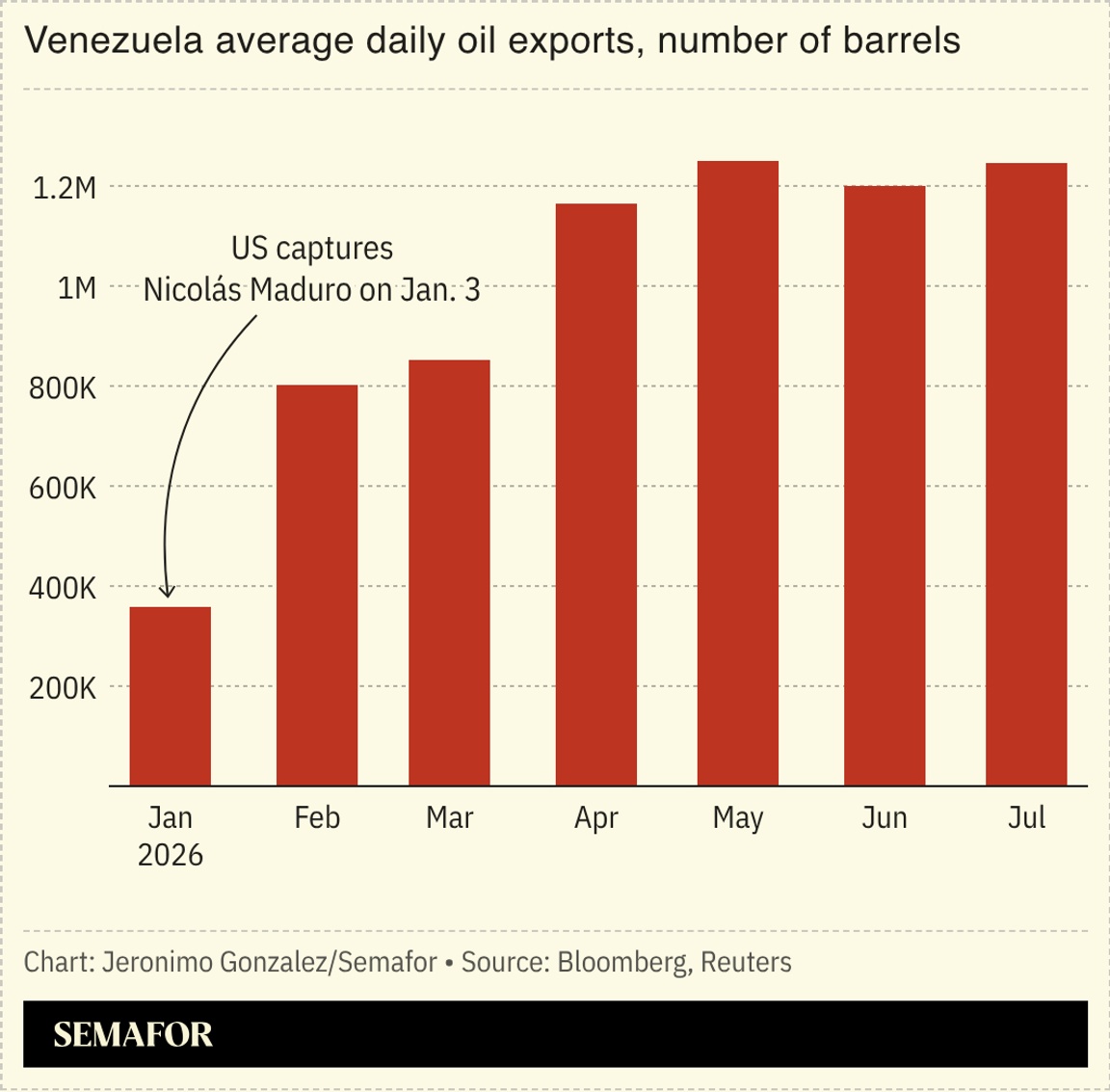 Two of the world’s biggest energy companies vowed to increase oil and gas production in Venezuela, as concerns over a protracted conflict in the Middle East override worries over Caracas’ treatment of international firms. BP and ADNOC answered Washington’s calls for energy companies to help rebuild production in Venezuela — which holds the world’s largest stated crude reserves — with plans to develop a major offshore gas field. Other fossil fuel giants have held firm on compensation demands tied to assets expropriated by Venezuela’s ousted leadership. Still, Big Oil’s bid to diversify is feeding the rise of the Latin American petrostate, with Brazil announcing a significant oil discovery near the Amazon River. |
|
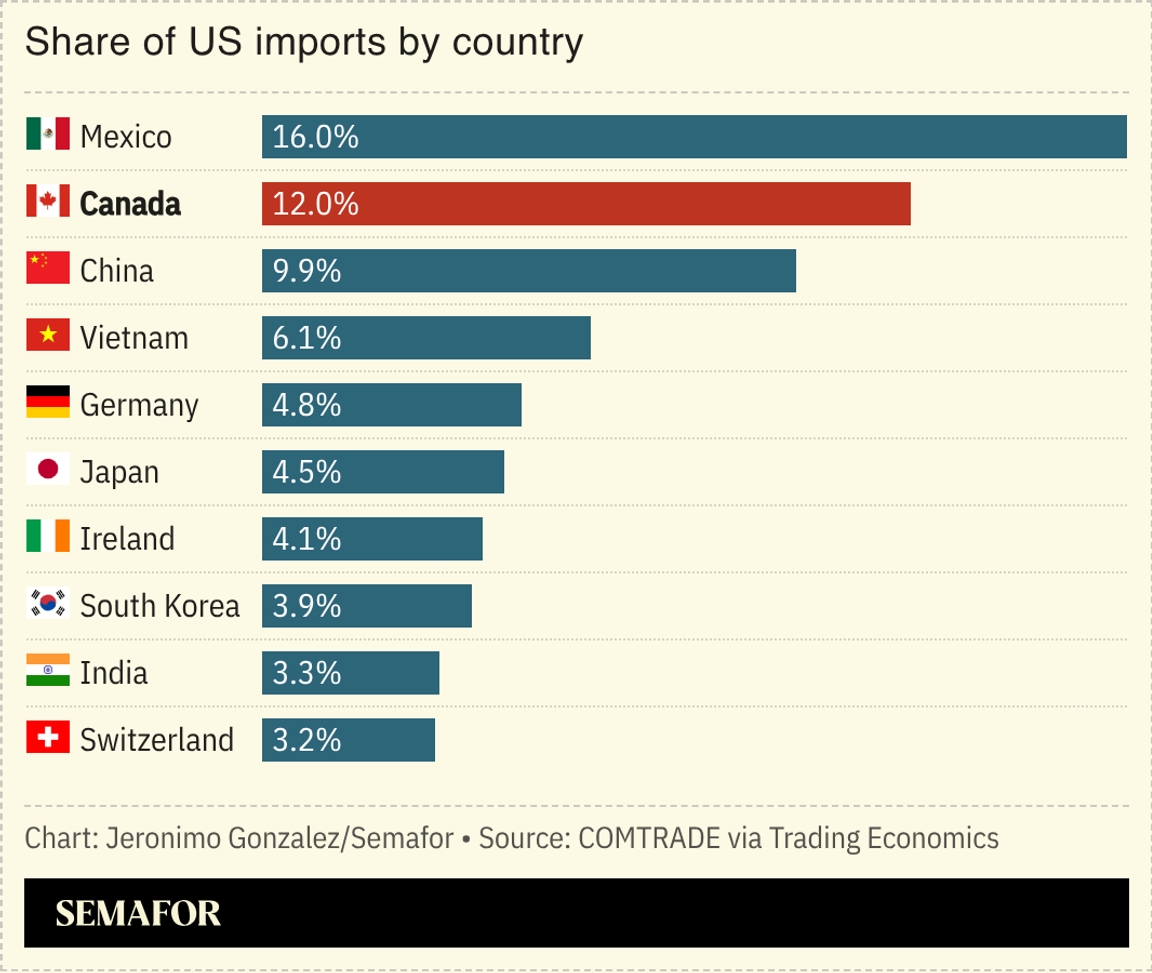 US President Donald Trump gave Canada a three-day reprieve on tariffs that had been due to come into effect overnight, suggesting the countries were on the verge of a trade agreement. The 50% levies would have affected 5% of Canadian exports to the US; Washington separately said the new deal would also include “economic security commitments” and digital trade “alignment.” An agreement could provide momentum for talks to renew the USMCA North American trade pact; US-Mexico talks have dragged on, and the White House has publicly opposed renewing the transcontinental deal. Though Washington ostensibly sees an opportunity to exact better terms, the long-term cost of its tactics may be significant: Canadians and Mexicans now view China more favorably than the US. |
|
OpenAI sales growth slows |
 Anna Rose Layden/Reuters Anna Rose Layden/ReutersOpenAI said quarter-on-quarter sales growth cooled to 18% while losses deepened, unnerving investors as the firm prepares for what is expected to be one of the biggest IPOs ever. Rival Anthropic’s annualized revenue, meanwhile, topped $65 billion — up more than sevenfold from the end of last year — and more than 50% above OpenAI’s, Bloomberg reported. The figures show the firms’ diverging fortunes as they prepare to go public, though both are increasingly locked into a price war with Chinese competitors, some of which offer only marginally less advanced models at a significant discount. “The US labs have cut the middle and are defending the top,” an expert told the Financial Times. |
|
Unitree shares surge at IPO |
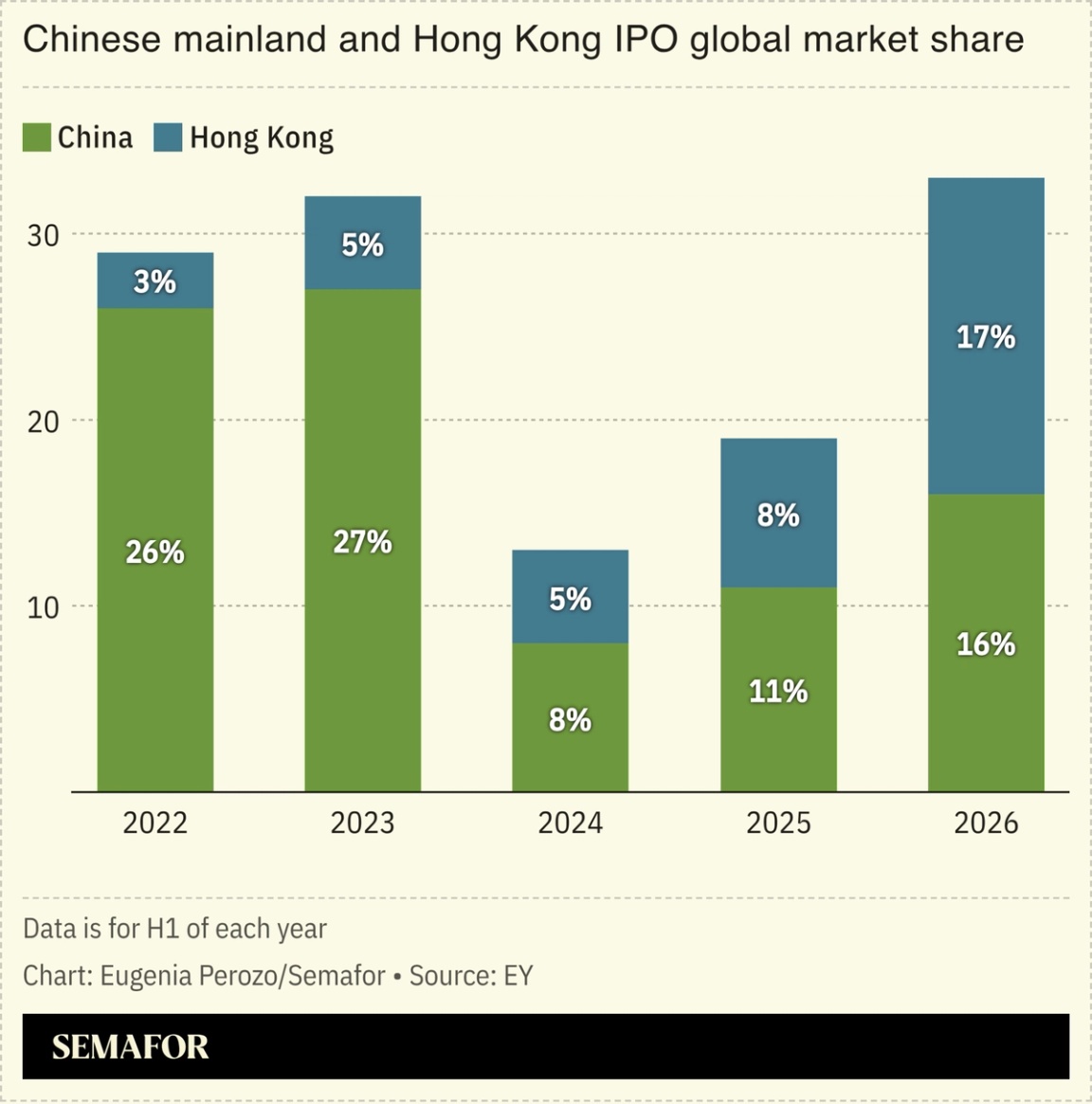 Shares in Chinese robotics giant Unitree soared more than 600% on their debut, highlighting a domestic frenzy for tech firms and the strength of the country’s IPO market after years of decline. The world’s second-largest economy has rapidly emerged as the global leader in humanoid robots manufacturing, producing virtually all of the world’s supply last year. Unitree’s debut comes as Chinese stock markets rebound, buoyed by investor demand, with many firms choosing to list in mainland markets: The number of IPOs in Shanghai and Shenzhen has risen by almost 40% in the first half of the year compared to the same period in 2025, with firms raising almost twice as much, a Deloitte report showed. |
|
Calls for Ukraine elections |
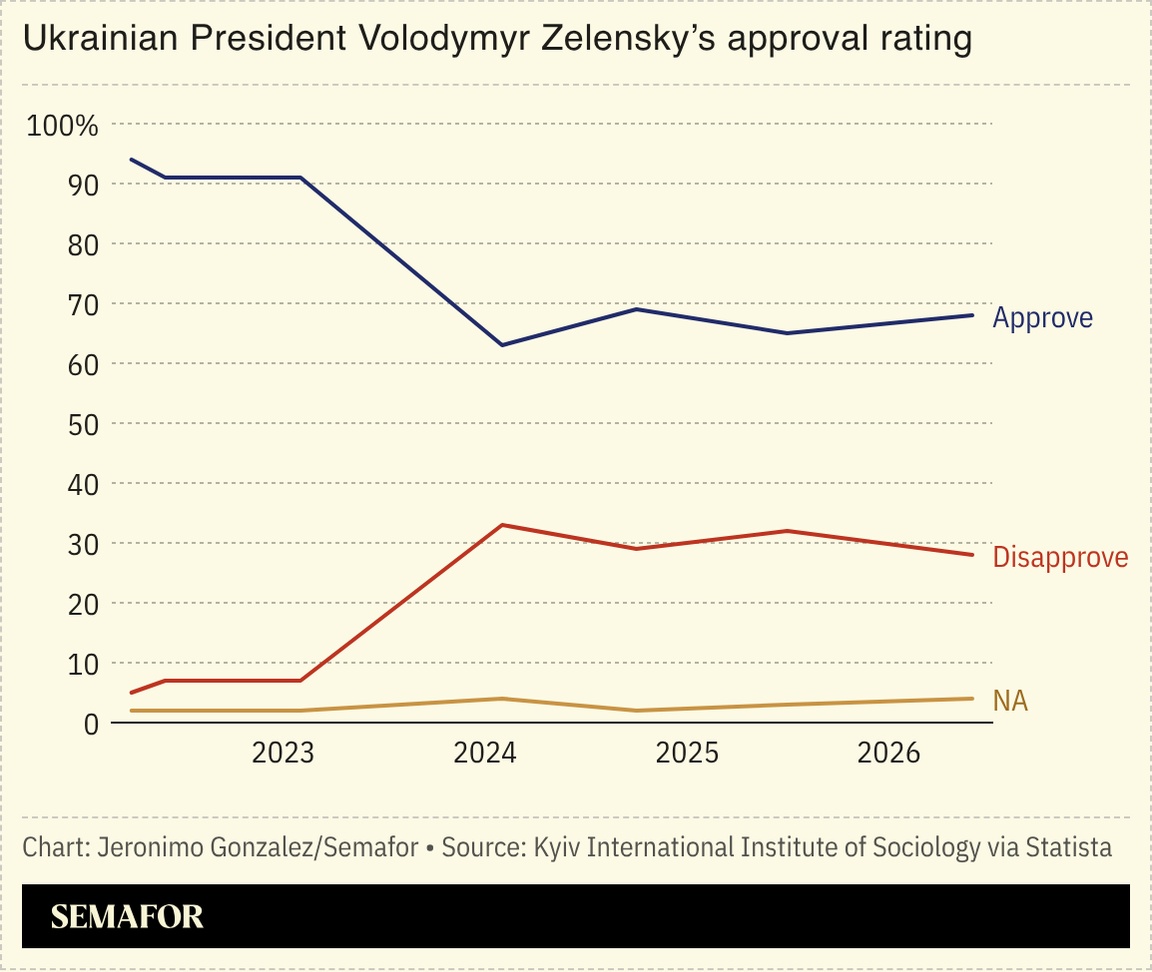 Ukraine’s recently sacked defense minister called for presidential elections, a major challenge to incumbent Volodymyr Zelenskyy and the clearest sign of a potential return of open politics in the country. Zelenskyy had fired Mykhailo Fedorov — a popular politician who presided over a shift in Ukraine’s military strategy to a greater use of low-cost drones — over a dispute with the country’s military commander, triggering widespread protests. Ukraine has been under martial law since Russia’s full-scale invasion in 2022, and there has been little appetite for elections to replace Zelenskyy after his term ended in 2024. Conventional politics are, however, increasingly reemerging, with the ruling majority’s parliamentary cohesion eroding because of political rebellions. |
|
 On Wednesday, September 16, Dr. Jon Kole, medical director and senior director of Psychiatry, Headspace, will join us for the Youth Wellbeing Forum: Building Resilient Generations. As young people are challenged by rising rates of loneliness, anxiety, and depression, we are bringing together experts across technology, healthcare, and policy to examine solutions that can build lasting resilience. Semafor editors will sit down with Rep. Suzanne Bonamici (D-Ore.); Rep. Kevin Kiley (I-Calif.); Jaymes Black, CEO, The Trevor Project; Nicole Hockley, co-Founder & CEO, Sandy Hook Promise; and more to explore how to build lasting resilience for the next generation. Washington, DC | Sep. 16 | Request Invite |
|
Liberia to take US deportees |
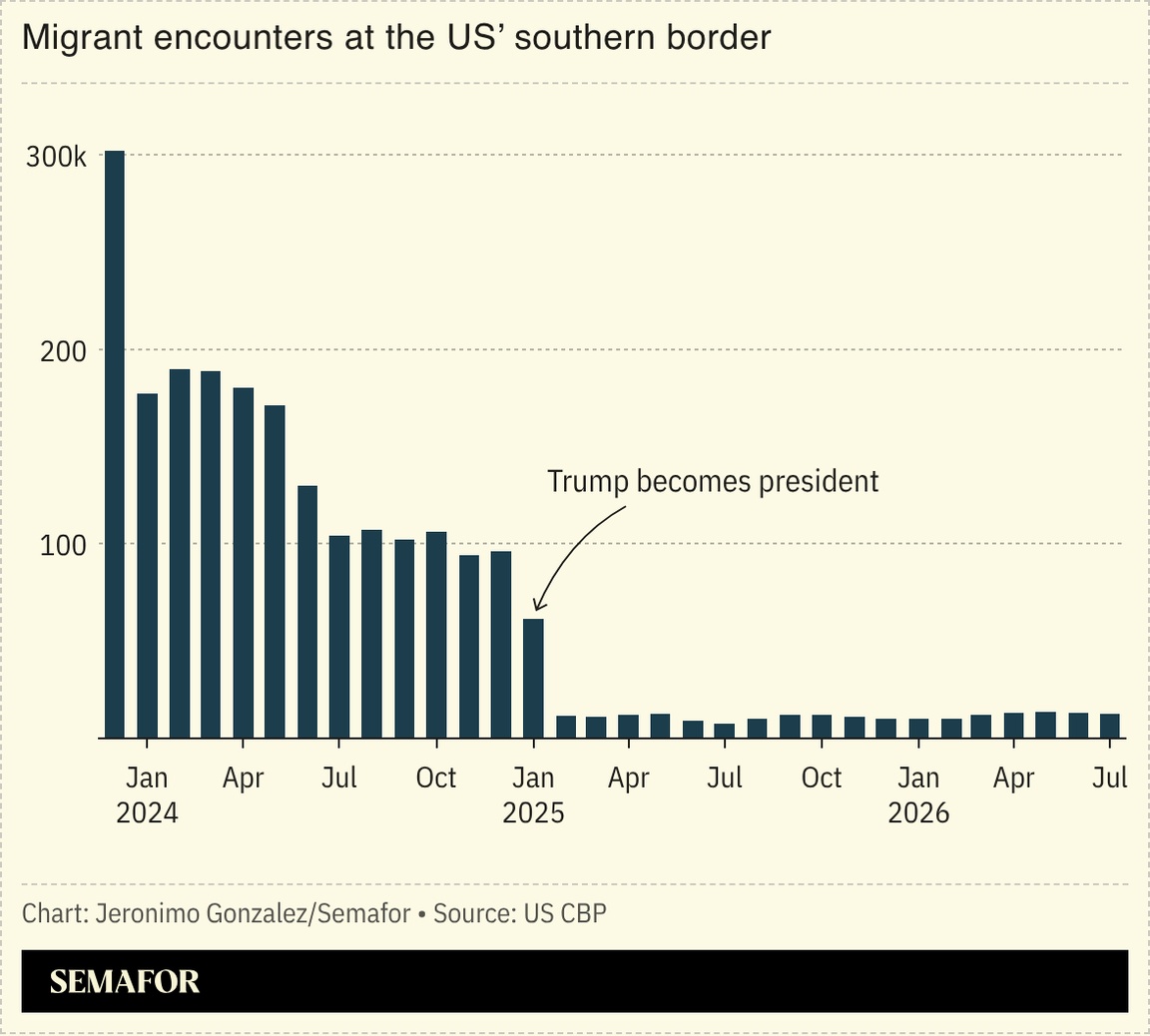 Liberia, one of Africa’s poorest countries, agreed to take in 1,200 deportees from the US over the course of the next year, one of the largest such deals agreed by Washington. The announcement comes as the Trump administration is pushing to deport Salvadoran migrant Kilmar Ábrego García — who was wrongfully expelled from the US last year in a much-publicized case — to Africa. In return for accepting deportees, the US has offered to lift tariffs or ease visa restrictions for host countries, including some of the world’s most repressive regimes, The New York Times reported. The Trump administration has used the threat of deportation to far-flung countries to stem illegal crossings, which have plummeted to record lows. |
|
AI is reshaping internships |
 Andrew Burton/Reuters Andrew Burton/Reuters |
|
|


