| | The success of an mRNA skin cancer vaccine marks a major milestone in cancer therapies, markets rall͏ ͏ ͏ ͏ ͏ ͏ |
| |  | Flagship |  |
| |
|
The World Today | 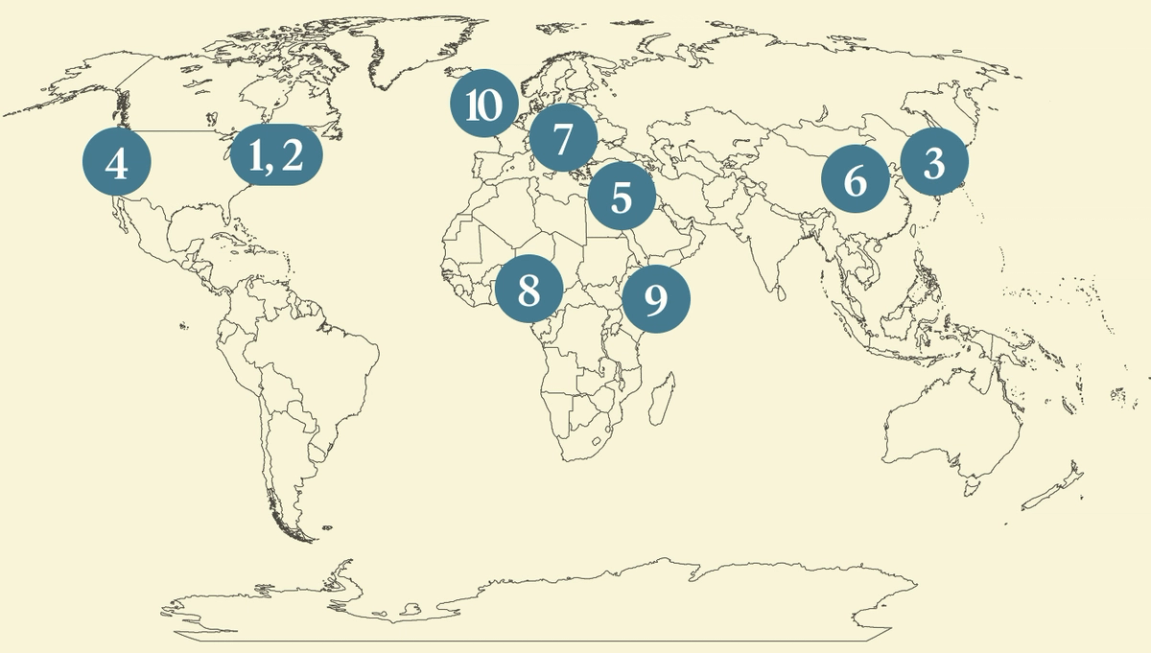 - Cancer vaccine success
- Bond yields plunge
- SK Hynix share buyback
- Bipartisan AI backlash
- Israel probes Gaza killings
- China-EU tensions flare
- Europe warms to ACs
- Dangote’s fortunes soar
- Somalia Airlines’ comeback
- Targeting ‘vertical drinking’
 A valuable addition to the canon of Appalachian literature. |
|
mRNA cancer vaccine sees success |
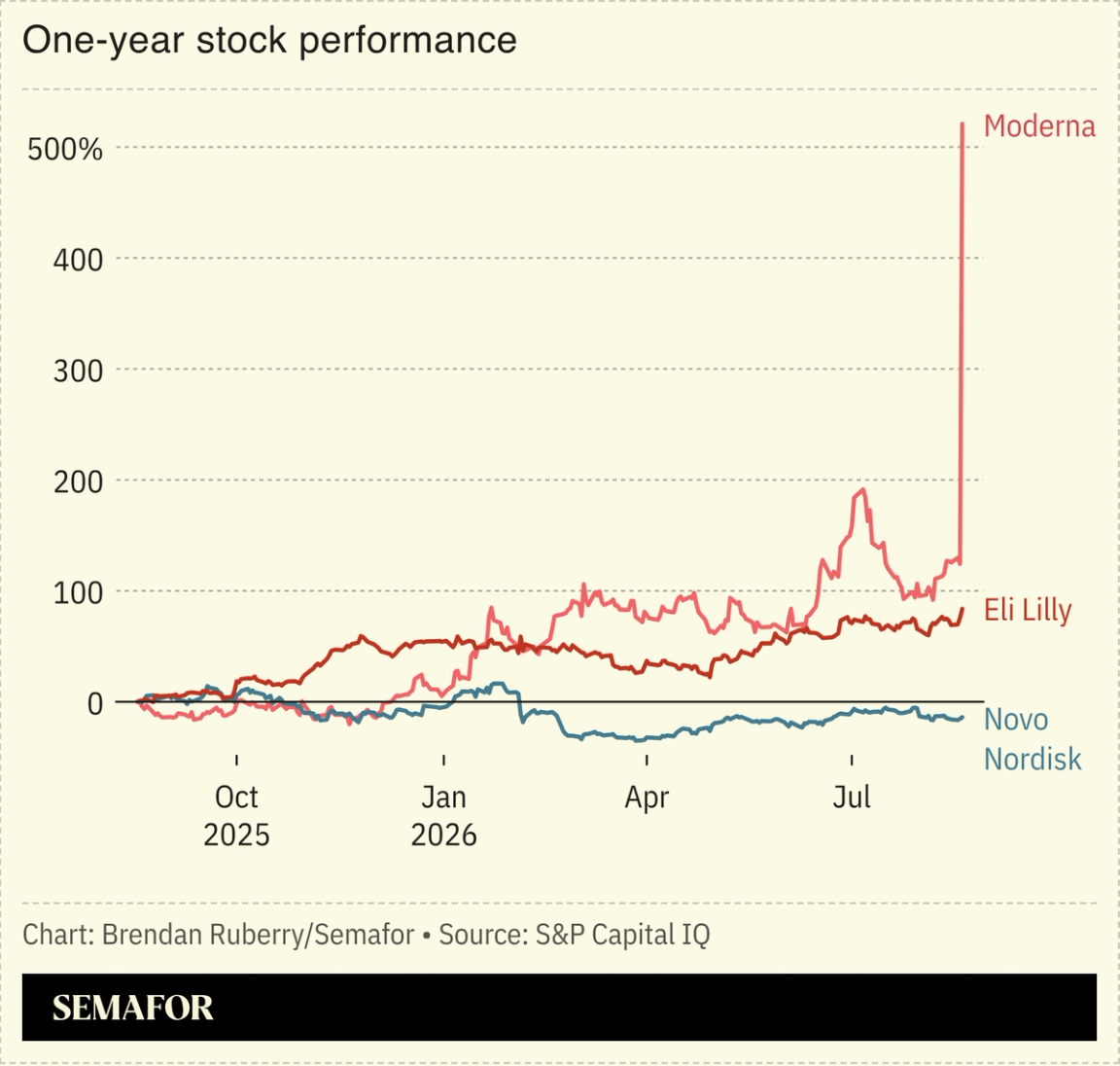 An experimental vaccine prevented the return and spread of cancer in high-risk melanoma patients, Moderna and Merck announced Wednesday, a milestone in the pursuit of cancer therapies. Built on the mRNA platform that allowed Moderna to quickly roll out COVID-19 vaccines five years ago, intismeran is a genetically personalized vaccine that instructs the patient’s immune system to attack tumors, slowing melanoma’s progression and spread. Such “neoantigen” vaccines have long been viewed as a promising cancer treatment, but this late-stage trial was the first aimed at “definitively proving their benefit,” STAT News wrote. Moderna’s shares surged more than 175% on Wednesday: “We have started to demonstrate the potential of an entirely new class of medicine,” its CEO said. |
|
Bond yields fall after Treasury move |
 Kylie Cooper/Reuters Kylie Cooper/ReutersMarkets climbed on news that the US Treasury would double its purchases of long-term bonds, after yields soared to multi-year highs. Yields on the longest US bond pulled back from their highest levels since 2007 on the announcement, as the White House — instead of waiting for the Federal Reserve to cut rates — pushed to lower borrowing costs ahead of November’s midterms. Analysts suggested the move was unlikely to quiet volatility in Treasurys, but “they have to try something,” a Brandywine portfolio manager told Bloomberg: “What really gets long rates lower is a slowing economy or resolution on the Iran conflict.” The credit-fueled AI boom, which could account for one-third of US growth this year, according to ING, is also driving up borrowing costs. |
|
SK Hynix to buy back $28.6 billion in shares |
 Angelina Katsanis/Reuters Angelina Katsanis/ReutersSK Hynix announced it would buy back and cancel more than $28.6 billion of its shares, as the world’s second-biggest memory chipmaker acted to boost investor confidence after its shares sank Wednesday. Hynix raised more than $26 billion last month, in the largest share sale by a non-US company, as demand for its memory chips soars during the AI boom. However, persistent volatility in its stock price points to enduring investor concerns about the sustainability of the debt-fueled AI buildout. Google on Wednesday reached an AI chip deal that would allow it to buy $12 billion in shares of semiconductor firm Marvell, as the hyperscaler’s memory demands grow, raising further concerns among analysts about circularity in AI financing. |
|
Bipartisan backlash to AI buildout |
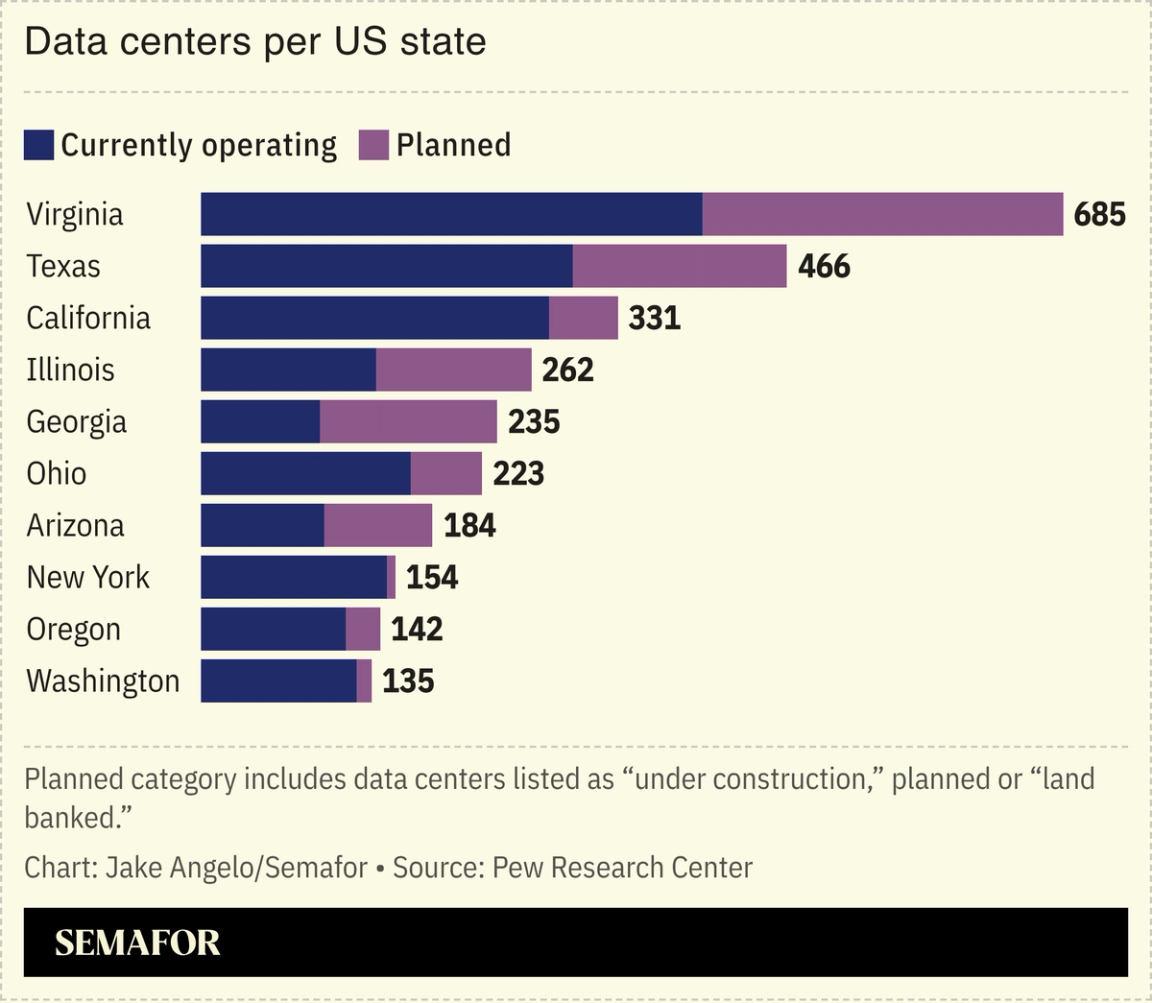 Mounting hostility toward the AI buildout in the US is scrambling typical left-right divides in ongoing primary elections, as rural and young voters spearhead a public techlash. Texas’ Republican governor, who previously touted the state as the “epicenter” of AI development, has paused new data center approvals; Virginia’s Loudoun County prospered from a data center windfall but residents there are now pushing back, too. “No society on earth has historically been more pro-technology than America,” the Financial Times’ US editor argued, making the country’s “distinctly Luddite turn” all the more striking. Opposition to the facilities is crossing party lines, Semafor’s David Weigel wrote, “creating a problem for [Republicans] that the president is unreservedly pro-AI.” |
|
Israel to investigate Gaza killings |
 Mussa Qawasma/Reuters Mussa Qawasma/ReutersIsrael’s military said Wednesday it was launching criminal investigations into attacks that killed a Palestinian child and 15 Palestinian paramedics, the first such probes into troop conduct in Gaza. The incidents had provoked international scrutiny of the country’s assault on Gaza. The rare move, The Wall Street Journal wrote, reflects Israel’s “sensitivity to criticism” over the lack of accountability for its soldiers’ actions during the war, which has killed around 20,000 non-combatants. Washington had urged Israel to investigate 5-year-old Hind Rajab’s death, which was the subject of an Oscar-nominated film. The White House has in recent days also pressured Israel’s leader to condemn Israeli settlers’ siege of Palestinians in the West Bank, which soldiers stand accused of abetting. |
|
China blocks EU subsidies probe |
 Maxim Shemetov/Reuters Maxim Shemetov/ReutersChina on Wednesday ordered organizations and individuals not to comply with an EU probe of e-commerce giant JD.com’s acquisition of a German electronics retailer, escalating tensions between Brussels and Beijing. It’s the first Chinese takeover to be investigated under the bloc’s rules that scrutinize firms receiving foreign subsidies. Beijing said EU regulators’ request for documents “seriously undermined the international rule of law” and threatened retaliatory measures. The clash underscores the broader difficulties Europe faces in shielding its firms from China’s industrial policies, which Brussels has blamed for costing European jobs. One of Germany’s largest industrial associations on Wednesday urged the bloc to prioritize developing domestic robotics supply chains after shares of Chinese robot maker Unitree soared in its trading debut. |
|
Sweltering Europe turns to Chinese ACs |
 Tom Nicholson/Reuters Tom Nicholson/ReutersEurope’s scorching summer has led to a surge in air conditioning imports from China, undermining the continent’s plans to reduce reliance on the Asian giant. Though Europe has long been reluctant to install ACs — less than a quarter of homes have units, compared to 90% in the US — record temperatures this year have forced many to reconsider, lifting sales at Haier, Hisense, and other Chinese providers. The surge comes at a time when European leaders, wary that their industrial capacity is being hollowed out, seek to cut Chinese imports. The economist Noah Smith called for higher trade barriers against Chinese goods, arguing that such protectionism may push Beijing to “change its economic model to one that benefits regular Chinese people more.” |
|
Iran war offers windfall to Dangote |
 Sodiq Adelakun/Reuters Sodiq Adelakun/ReutersThe fortunes of Africa’s biggest oil refinery are soaring thanks to the Iran war. Dangote Refinery on Tuesday secured $1 billion in financial backing ahead of the company’s planned IPO, expected to be the continent’s largest-ever listing. Dangote’s IPO pursuit comes amid the expansion of its 650,000-barrel per day plant, which has become the main domestic supplier of refined fuels to the Nigerian market, and was also “the world’s single largest exporter of jet fuel” in April and May, according to S&P Global Energy, with shipments reaching the US for the first time this year. The refinery is now a “lifeline” to buyers whose supplies have been choked off by the Iran war, an analyst told The New York Times. |
|
Somalia Airlines set to resume service |
 Shabele Media/Reuters Shabele Media/ReutersSomalia’s national airline is set to resume service for the first time since its government collapsed 35 years ago. Flights could begin next month, Bloomberg reported, though Somalia Airlines was also due to resume flights in September 2025. Mogadishu began exploring a restart in 2022, shortly after it regained control of its airspace after 27 years. Somalia’s capital in particular has seen marked changes over the last few years, with construction booming — helped by some returning expats — and deaths linked to the al-Shabab terrorist group on track for their lowest in 20 years, The Economist reported. Still, aid cuts have exacerbated drought conditions, and “it sometimes feels like things can go back,” a civil servant said. |
|
|


