| | The volume of crude oil on tankers globally fell faster over the past two weeks than any point durin͏ ͏ ͏ ͏ ͏ ͏ |
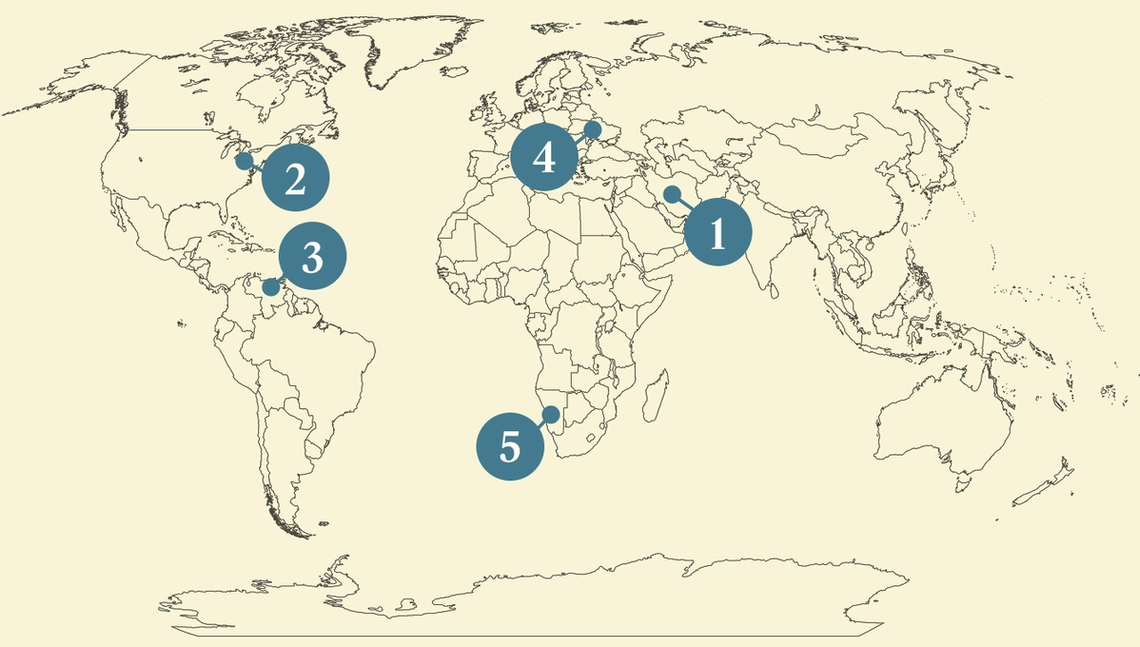
| |  Tehran Tehran |  Pittsburgh Pittsburgh |  Caracas Caracas |
 | Energy |  |
| |
|
 - Naval escort working
- Data center pushback
- Venezuela deals
- Wartime EV adoption
- Africa’s drilling rush
 A $40 million EV, and a new Trump-whispering spokesperson for oil drillers. |
|
 A big hiccup is moving through the global oil trade that’s likely to cause another surge in prices, especially in Asia, over the next few weeks. With tanker traffic out of the Persian Gulf constricted over the past six months, higher exports from other countries, especially the US, have helped close the gap and keep prices relatively in check. There was also the extra burst of shipments out of the Gulf during the short-lived ceasefire in June. Now the tankers that sprang out at that moment, including those from Iran, are reaching ports in Asia. But a number of other factors are conspiring to drive down the volume of crude “on water” — that is, in a tanker — faster over the past two weeks than any point during the war, according to new data from the market intelligence firm Vortexa. So despite the US Navy’s efforts to push oil out along the Omani coast, “Hormuz is currently not really the problem,” David Wech, Vortexa’s chief economist, told me. 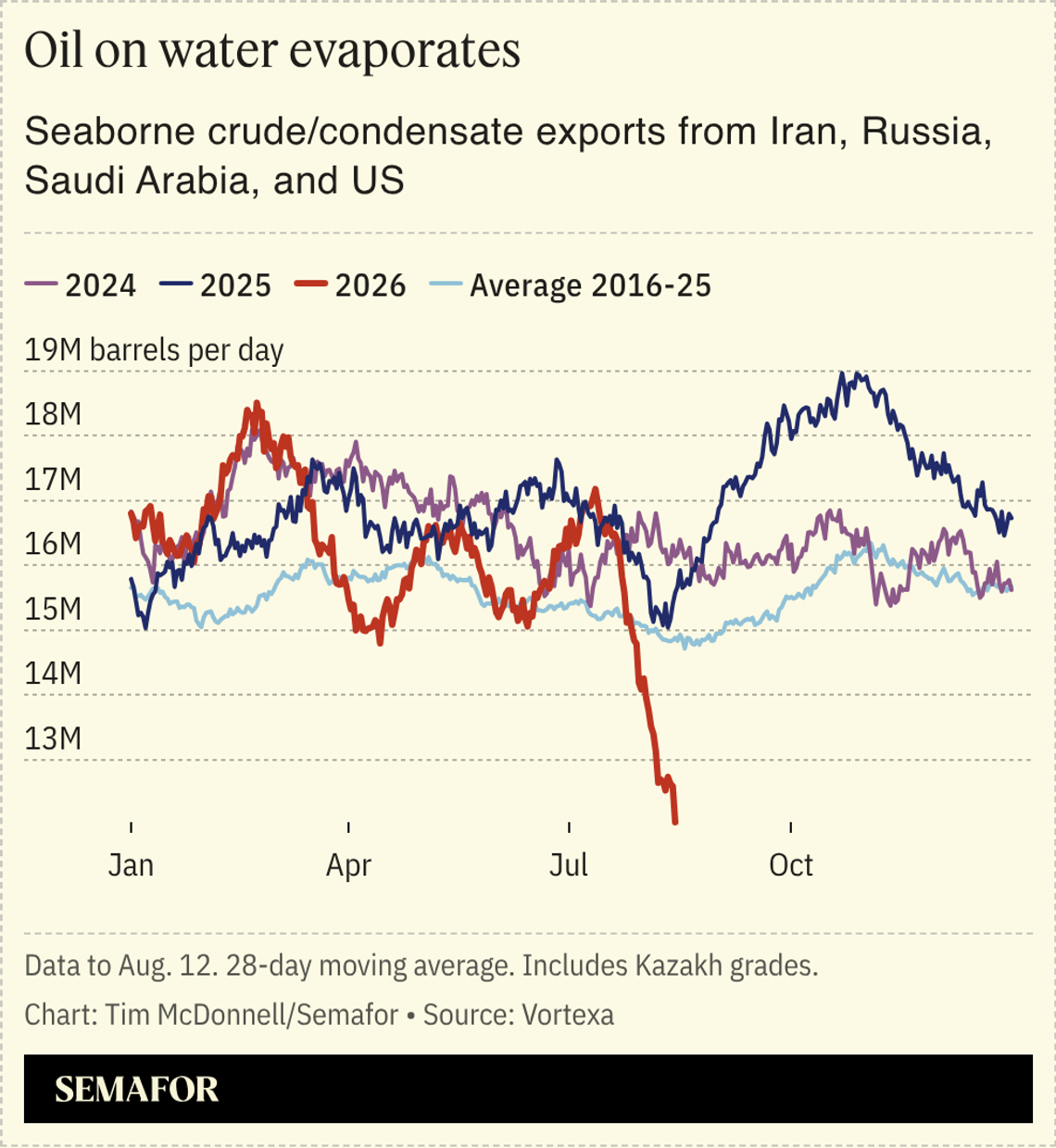 Exports from a handful of key suppliers have plummeted: Russia’s because of Ukrainian drone attacks, Iran’s because of the US blockade, and Saudi Arabia’s because of Houthi attacks in the Red Sea. For the US, the essential wartime swing supplier, the problem is politics and economics. The previously authorized Strategic Petroleum Reserve release has run out, with little appetite in the Trump administration for another. Record-breaking profit margins for fuel refineries have also acted like a magnet to keep crude at home — a trend that will be exacerbated by the administration’s push this week for even higher refinery runs. The upshot is that the global market is still undersupplied by at least 4 million barrels per day, Wech said. At the same moment refineries in China are ramping up, very little seaborne oil is moving toward Asia. That means even more will need to be drawn out of storage next month, and the sight of depleted storage tanks is a surefire price driver. Just like at the beginning of the war, consumers in Asia will feel the pinch first and worst. But it comes around to everyone sooner or later. “We are in a very different market now,” Wech said, “and not everybody has realized that yet.” |
|
US naval escort working in Hormuz |
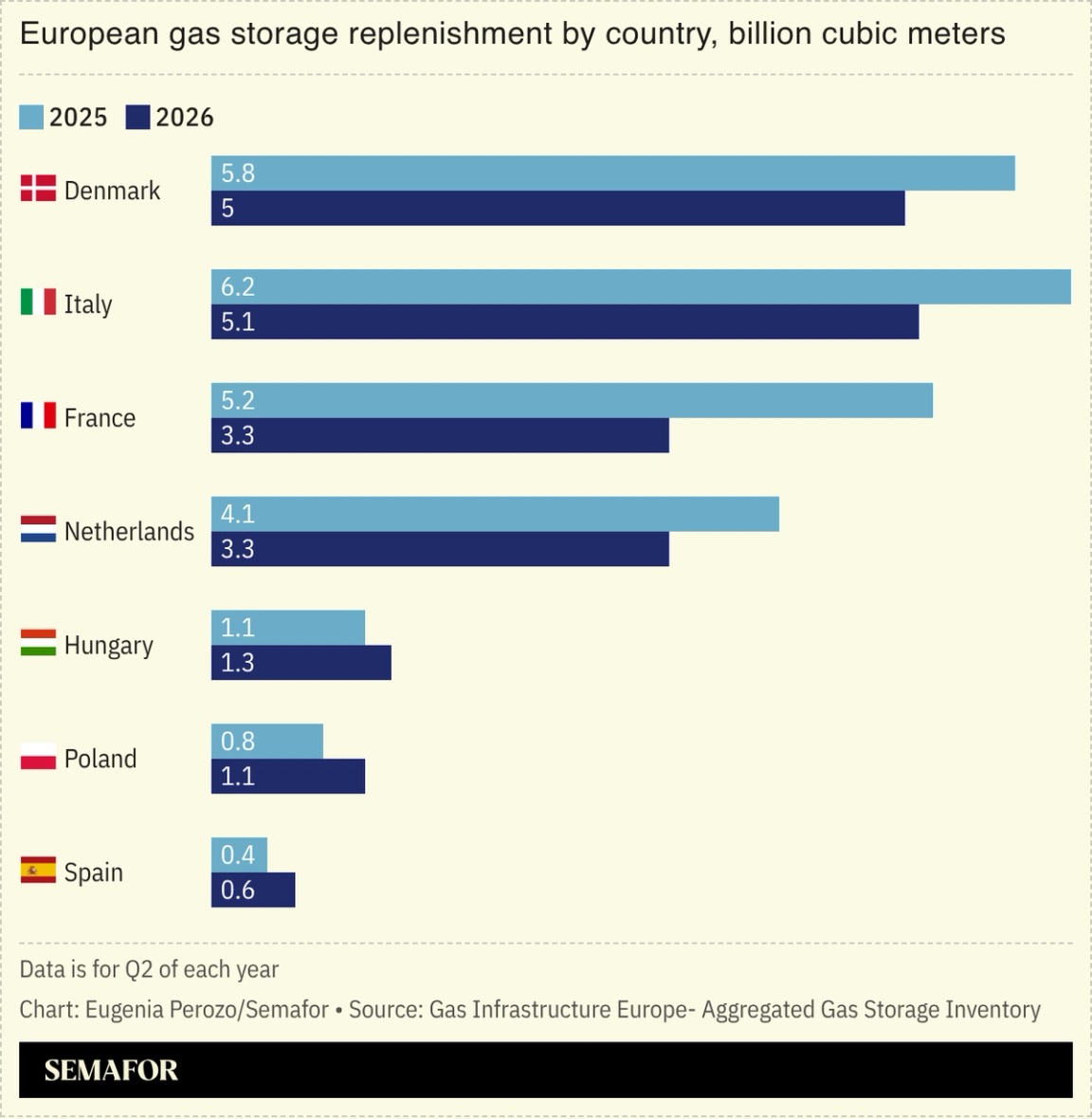 More oil than previously thought appears to be making its way out of the Gulf, helping keep elevated oil prices from spiking further. According to Axios, the US military has helped ferry crude through the Strait of Hormuz, driving overall levels of exports through the key waterway to about half prewar levels and undermining Iranian efforts to control the crossing. Separately, Saudi Arabia’s state-owned oil giant has notified at least three European refiners that it will meet its full contracted sales obligations next month, Bloomberg reported. Indeed, prices for oil tankers are surging to record highs. Yet crude prices continue to rise as the global market for refined fuels remains undersupplied. Meanwhile, the reduction in LNG shipments out of the Gulf presages a difficult winter for Europe, which is receiving less than three-quarters of the shipments required to reach targeted storage levels for liquefied natural gas, Handelsblatt reported. As the EU prepares to bar Russian gas imports next year, the bloc’s inventories are at their lowest levels in 17 years. |
|
Data center pushback grows |
 Fred Greaves/Reuters Fred Greaves/ReutersWall Street is still hankering after AI power profits, despite mounting political opposition to data centers and red flags about their electricity plans. Private equity giant KKR made an offer to buy the Pennsylvania gas-powered utility UGI, The Wall Street Journal reported, part of the accelerating agglomeration of AI power plants by private investors. The state’s Gov. Josh Shapiro, a Democrat, became the latest state leader to impose new roadblocks on data center construction over fears of rising power costs, however. A growing majority of Americans nationwide oppose data construction near their homes, a new Heatmap poll found. And the off-grid power plants running the newest crop of hyperscale data centers are running into unexpected technical breakdowns. The possibility that bureaucratic and engineering obstacles hold back data center construction is the biggest risk for investors: According to Wood Mackenzie, two-thirds of the data power projects currently on drawing boards will never get built. |
|
US oil companies lock in Venezuela deals |
 Issac Urrutia/Reuters Issac Urrutia/ReutersAfter months of slow progress and noncommittal MOUs, international oil companies are making tangible headway in Venezuela. Oil Minister Paula Henao announced deals with two US firms this week. Oilfield service provider SLB will provide AI software to facilitate drilling, and said it is working to import oil rigs into the country. And Texas producer Hunt Oil became one of the first to sign a production agreement with state-owned PDVSA; a spokesperson declined to comment on details of the deal. Others are expected after meetings in Houston this week between Venezuelan officials and US executives, Politico reported. More drilling in the country is already helping the US shield itself from the mounting global fuel shortage: Half of Venezuela’s oil output is being exported to the US, a senior US official said. Still, oil industry progress remains slow because of legislative uncertainty, the aftermath of two devastating earthquakes, and the basic logistics of doing business: Parts of the country are facing frequent hours-long blackouts. —Eugenia Perozo |
|
 Ukraine’s EV sales rate fell faster than any other country this year, nearly 12% compared to 2025, though rising oil prices drove sales up almost everywhere else. EVs and hybrids will account for about one-third of global car sales this year, from just 4% in 2020. That share is increasing rapidly across many markets this year, including China, where the pace of total car sales has slowed. But it’s contracting in a few notable places, including the US — and in Ukraine, where the cash-strapped government has rolled back tax incentives and Russian attacks have damaged charging infrastructure. |
|
 Pilar Olivares/Reuters Pilar Olivares/ReutersNorway’s Equinor bought into Chevron’s deepwater block off the coast of Namibia, the latest global energy giant to bet on an oil and gas boom across the African continent. Equinor took a 17% stake in the license, joining Chevron, QatarEnergy, and Namibian firms such as Trago Energy in transforming the southwest African nation’s coast from an unproven frontier into sub-Saharan Africa’s hottest oil play. The oil deals are unfolding alongside Namibia’s push to build a multibillion dollar green industry. The dual strategy is partly underpinned by Washington’s renewed embrace of fossil fuels, which includes the unfreezing of development finance for oil and gas projects. US majors, meanwhile, continue to expand across the continent: Chevron announced a major new offshore find in Angola, and Exxon said it will forge ahead with plans for a new LNG terminal in Mozambique, despite recent violence in the area. — Tiisetso Motsoeneng |
|
 New EnergyFossil FuelsFinance- Climate action remains the 21st century’s most significant growth story, rather than AI, Stern review author Lord Nicholas Stern told Bloomberg 20 years after the publication of his seminal report on the costs of climate change.
Politics & PolicyMinerals & MiningEVsPersonnel |
|
|


