|
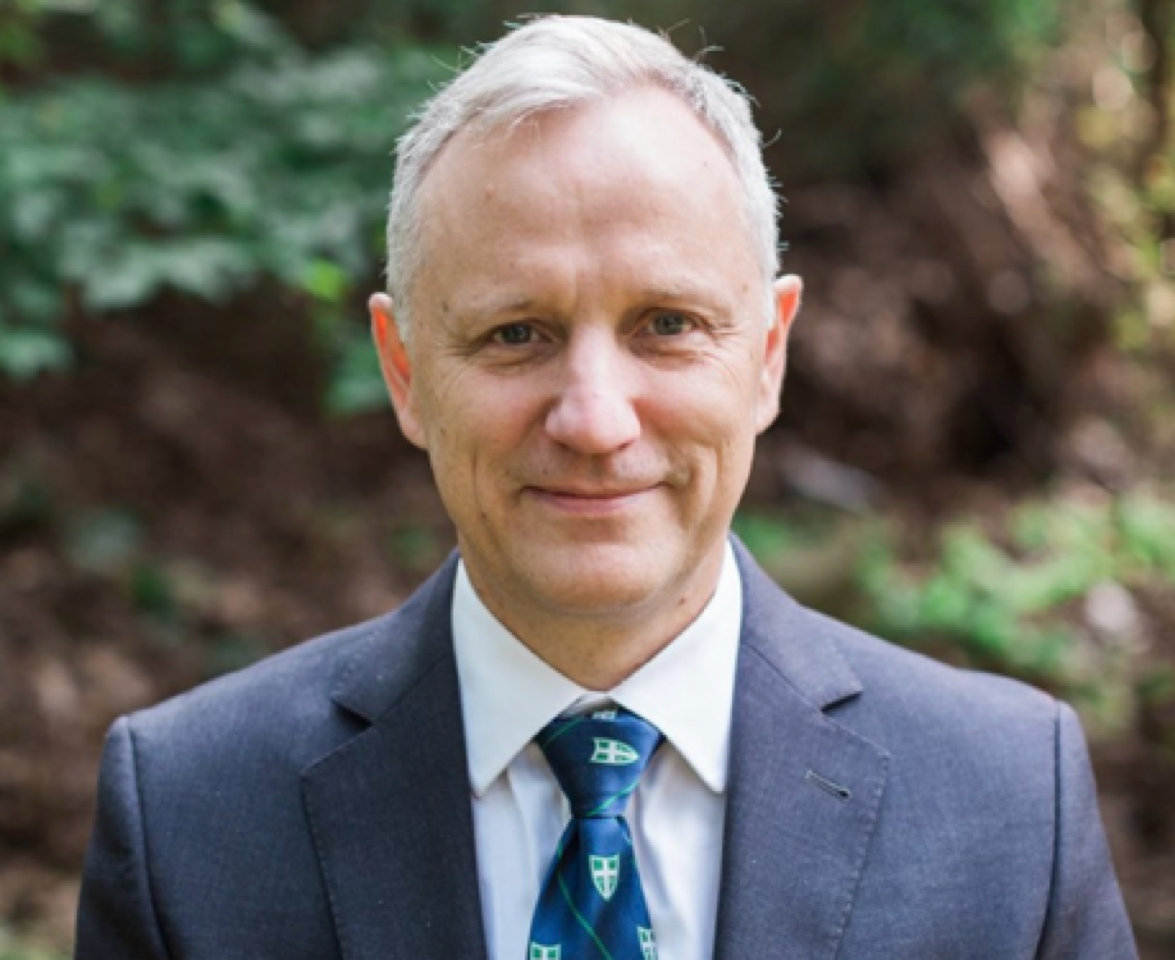
By Stephanie Rasmuson Timothy Belk has spent much of his career considering what a rigorous education should demand of students and what role Christian faith should play in shaping their understanding of the world around them. As Headmaster of Boston Trinity Academy, Belk leads a Christian college-preparatory school serving students in grades 6-12 across Greater Boston. Founded in 2002, the school has built its mission around bringing together academic rigor, Christian faith, and students from a wide range of racial, cultural, and socioeconomic backgrounds. It is now widely considered to be one of the top Christian prep schools in New England and the most academically rigorous. Today, Boston Trinity enrolls nearly 260 students at its five-acre campus in Boston's Hyde Park neighborhood. The school maintains a 7-to-1 student-faculty ratio, while 81 percent of its faculty hold advanced degrees. About 60% of students receive financial aid, reflecting a commitment to economic accessibility that has been part of the school's mission since its founding. Approximately 60% of the students come from African American, Asian American, Latino, and mixed-race families. For Belk, however, those numbers tell only part of the story. He sees education as preparation for a larger responsibility: teaching young people to think seriously, engage honestly with people whose experiences differ from their own, and use what they have learned to contribute to the communities around them. "We're trying to produce students who can participate in a city that has many perspectives in it for the good of the city," Belk said. That philosophy reflects a life and career that took shape far beyond Massachusetts. Born in Uganda, raised largely in England, educated in Scotland and shaped by years of international travel before entering education in the United States, Belk's path to Boston Trinity was anything but direct. Belk spent the first years of his life in Uganda, where his British parents were missionaries, and his father practiced law. His extended family included missionaries, diplomats, educators and church leaders, including a great-uncle who served as a bishop in Uganda. Political instability eventually prompted the family to return to the United Kingdom, where Belk grew up in a small English village. The experience left him with both a global outlook and a deep connection to Christianity. Belk remembers walking through the village to church and hearing its bells ringing through the community. He recalled celebrating the church's 800th anniversary in 1976, reinforcing a sense that Christianity was deeply rooted in the history and culture surrounding him. "I remember just being in church as a young child and just being in awe of it," Belk said. Education was equally important in his family. Belk attended Tonbridge School, a historic English school founded in 1553. While he received a strong academic education and regularly attended chapel, he increasingly sensed a separation between the Christian traditions surrounding the institution and the intellectual life taking place within it. That tension would eventually become central to his own philosophy as an educator. Belk continued his education at the University of St. Andrews in Scotland, where he initially planned to study philosophy and international relations before ultimately pursuing art history and international politics. He later earned a Master of Philosophy in International Security Studies from St. Andrews. At the time, he imagined a career related to international security. Instead, his path took another turn. Following the collapse of communism, Belk moved to Moscow, where he spent eight to nine months studying Russian and observing a society undergoing enormous political and cultural change. An unexpected opportunity in the travel industry then led him into international work, guiding trips through remote regions and spending time in countries including Iran, Morocco, Nepal, India, Pakistan and China. "The world is huge. (It’s) fascinating and beautiful and miserable," Belk said. Exposure to different cultures also forced Belk to reconsider questions of belief, meaning and identity. He had grown up taking Christianity seriously, but through his education and early adulthood had gradually distanced himself from it. "I stopped really taking it seriously," he said. Eventually, Belk came to believe faith was not something he could separate from his understanding of life. Around the same period, another major change redirected his future. Belk reconnected with Sara, the woman who would become his wife. The two had first met when they were 18 but had barely spoken for eight years. Belk traveled from London to Montana to see her, and within a week, they decided they wanted to get married. "Both of us, I would say, at that point realized this is something that God has orchestrated, and our lives were about to take a dramatic shift," Belk said. Marriage also introduced Belk to a family deeply involved in education and ultimately changed the direction of his career. He began working at a small Christian school in Montana associated with his father-in-law's church, where he helped provide a classical education to students from farming and working-class families. He later joined The Stony Brook School in New York, spending a decade there and becoming increasingly interested in the relationship between Christian faith and rigorous intellectual inquiry. One principle from Stony Brook's founding headmaster, Frank Gaebelein, particularly influenced his thinking: "all truth is God's truth." That idea would follow Belk to Boston. Belk first learned about Boston Trinity Academy through a student planning to transfer there from Stony Brook. He began researching the relatively young school and became interested in what its founders were attempting to build. "I was fascinated by the mission," he said. Boston Trinity had opened its doors only a few years earlier, in September 2002, with 54 students in grades six through nine in a rented building on Beacon Street in Brookline. The school grew by adding a grade each year, and its first graduating class of 16 seniors completed the program in 2006, with all 16 headed to college. That same year, Boston Trinity purchased its current campus and moved to Hyde Park. Its founders included Boston-area leaders in finance, education and faith who wanted to create a rigorous college-preparatory school grounded in Christianity and accessible to students across neighborhoods and socioeconomic backgrounds. Belk was drawn to the school's conviction that academic excellence, Christian faith and socioeconomic and racial diversity could exist within the same institution. He joined Boston Trinity as academic dean and taught AP European History. His classroom immediately demonstrated both the challenge and promise of the school's model, with students arriving from dramatically different educational and personal backgrounds. The expectation, however, remained the same: students would be challenged rather than patronized. "If you have the drive, the vision, and you want to work at this, we will show you how. We're going to keep you together and doing that, because everybody here has something to contribute," Belk said. That philosophy continues to shape Boston Trinity today. Every graduate is required to complete at least three Advanced Placement courses, and the school currently offers 16 AP courses. Its Upper School curriculum also requires four years of English and History, at least three years each of science, mathematics and a world language, along with biblical studies, arts and athletics. According to Belk, students also complete a 25-page research paper before graduation. The academic results, he said, demonstrate that students from different educational backgrounds can succeed when schools combine high expectations with meaningful support. Boston Trinity reports that more than 80% of AP exams taken by its high school students earned scores of 4 or 5, while 99% of its students enroll at four-year colleges. "We're training students to achieve at a very high level," Belk said. "But honestly, we think that we're teaching beyond the AP test level." For Belk, rigorous grading and high expectations are forms of respect. "We have a very high academic vision," he said. "We are not going to put up shoddy work, and we're gonna give you real grades." Academic achievement, however, represents only one part of that formation. Central to the school's culture is the expectation that students learn alongside people whose backgrounds, experiences, and perspectives may differ significantly from their own. Boston Trinity describes its mission as educating students from diverse backgrounds in an academically demanding, Christ-centered community and preparing them for lives marked by "faith, integrity, and service." "One of the things that is most important here at the school is that there's a culture of learning to talk together across difference, to address problems together, that you have to learn to listen," Belk said. Students are encouraged to question, debate and wrestle with difficult subjects. Belk believes those habits are particularly important in an increasingly polarized culture, where disagreement can quickly become a reason to dismiss another person. "We can see each other in the image of God as a person, right?" he said. Belk believes young people must learn that neither privilege nor disadvantage fully defines another person. Instead, education should teach students to encounter others with humility, intellectual curiosity, and respect. Boston Trinity's financial-aid program helps make that model possible. The school distributed $2.5 million in financial aid during the 2025-2026 school year, and roughly 60 percent of its families receive financial support. The goal is not simply to place students with different backgrounds in the same building, but to have them develop relationships through meaningful shared experiences. For Belk, Boston Trinity's mission is also deeply personal. All four of his children attended the school. His wife, Sara Belk, is also an integral part of Boston Trinity. She serves as Chair of the Art Department but is best known as Theatre Arts Director. She has directed several dazzling plays, ranging from Shakespeare’s Hamlet and The Merchant of Venice to Waiting for Godot and The Crucible. To participate in one of the plays she directs can be a life-changing event for a student, and many volunteer for a chance to be in one of the plays she directs. Outside of school, Belk and his wife love the outdoors. Having spent years traveling through mountain ranges around the world and with his wife's Montana upbringing, hiking remains an important part of their life together. "We love the mountains," Belk said. They spend time hiking in New Hampshire's White Mountains and have traveled to the Italian Alps for hut-to-hut hiking trips. When their four children are together, the family also enjoys cooking, sharing meals, talking and spending time outdoors. Those quieter moments provide a counterbalance to the demands of leading a school. Belk credits Boston Trinity's faculty, leadership team, board members and supporters with creating a community capable of navigating those difficulties while remaining focused on the school's larger mission. Looking ahead, Belk hopes Boston Trinity continues to grow and that more families are attracted to an educational model grounded in academic excellence, Christian faith, friendship and responsibility. More than two decades after 54 students first walked into the school's rented Brookline building, Boston Trinity has grown into an institution educating nearly 260 students on its Hyde Park campus. Yet the central proposition that attracted Belk remains much the same: students from different backgrounds can be held to demanding academic standards while learning together in a community grounded in Christian faith. For Belk, the purpose extends beyond preparing students to enter college or begin successful careers. Education brings obligations, he believes, and knowledge should equip students to engage seriously with others and contribute to the communities around them. "This is a high calling to be well educated," Belk said. "We need to take this seriously."
|