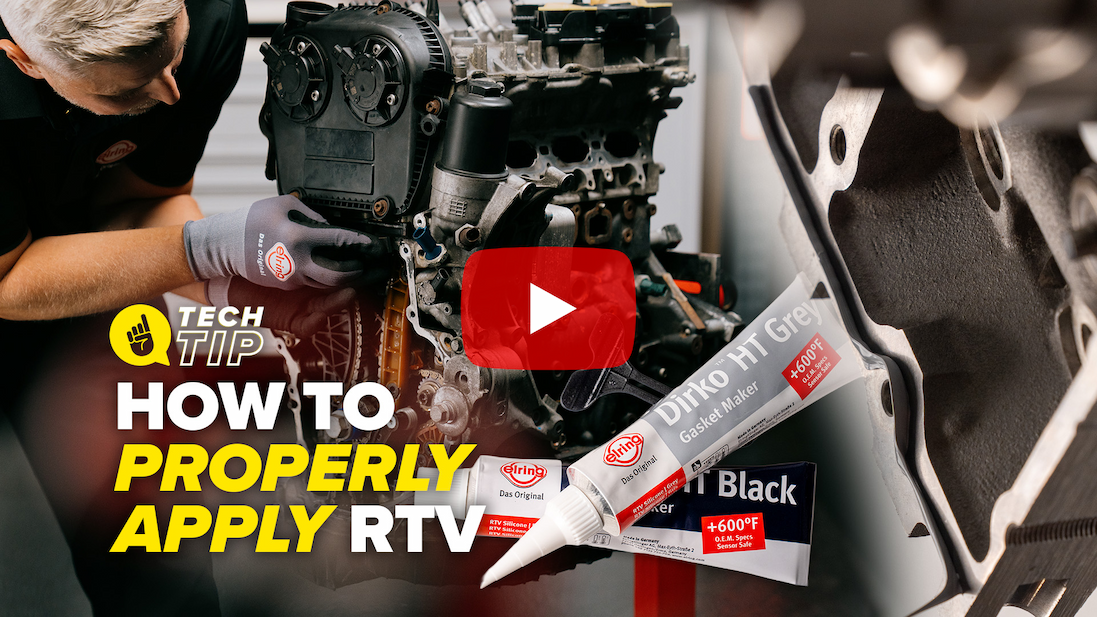
Using RTV sealant seems simple, but proper application matters more than you might think.
From preparing the sealing surface to applying the right amount and allowing enough time to cure, a few small details can make the difference between a proper seal and a potentially costly mistake. Start With a Clean Surface
Before applying new RTV, completely remove the old sealant and inspect the mating surfaces for imperfections.
When working with aluminum components, a plastic scraper is a safer choice than metal to help avoid damaging the sealing surface. Less Is More
More RTV doesn't create a better seal. Apply only what's necessary to properly seal the surface.
Cutting the nozzle to create a small opening can help you maintain contact with the surface and lay down a thin, consistent bead. Give It Time to Cure
RTV begins curing when it's exposed to air. You generally have about 5 to 15 minutes of working time after application.
For applications like an oil pan, wait about 30 minutes before adding oil and starting the engine. A two-millimeter sealing gap will fully cure within about 24 hours. Why Too Much RTV Can Be a Problem When two components are tightened together, excess RTV isn't only squeezed outward. It can also be pushed inside the engine. If enough excess sealant separates internally, it can potentially block oil passages, restrict lubrication, and lead to serious engine damage. Watch this week's Tech Tip to learn how to properly prepare, apply, and cure RTV sealant and why, in this case, less really is more. Watch now. |