|
|
|
|
Good morning. I’m Emma Graney, The Globe and Mail’s energy reporter. Calgary, where I’m based, is undoubtedly the heart of Canada’s oil and gas sector. But Atlantic provinces are doing their darndest to grow the offshore industry as global markets recalibrate, looking for more stable supplies as the war in Iran and the closure of the Strait of Hormuz drag on. More on that today, but first: |
|
|
|
|
|
|
|
|
|
|
|
|
|
|
|
|
Trade: Two sources familiar with the negotiations say the prospective trade deal being negotiated in Washington this week would lower U.S. President Donald Trump’s tariffs on Canadian autos from 25 per cent to 15 per cent and preserve an exemption for the value of American content. |
|
|
|
|
Alcohol: Even if U.S. booze returns to Canadian store shelves, some consumers say they’ll be inclined to “let it rot there.” |
|
|
|
|
|
|
|
|
|
|
|
|
|
|
|
|
|
|
|
|
|
|
|
|
|
|
|
The Flotel Endurance, an offshore accommodations and construction support unit, prepares to deploy to the West White Rose offshore oil field in the Jeanne d'Arc Basin in July, 2025. Greg Locke/The Globe and Mail
|
|
|
|
|
|
|
|
|
|
|
Newfoundland is (tentatively) bullish on Bay du Nord |
|
|
|
|
|
|
|
|
|
|
The on-again, off-again Bay du Nord development has been a heck of a ride for Newfoundland and Labrador. Norway-based Equinor put the project on ice in May, 2023, citing unfavourable economics and skyrocketing costs. Equinor’s St. John’s office spent months recalibrating and redesigning the proposal to make it more palatable to the company’s board and shareholders. |
|
|
|
|
|
|
|
|
Bay du Nord is still not set in stone; a final investment decision isn’t due until early next year. But enthusiasm for the project – which would be Canada’s first deepwater oil development – is palatable. Premier Tony Wakeham is confident in its success, and Charlene Johnson, the head of Energy NL, says she can’t picture a reality in which Bay du Nord does not go ahead. |
|
|
|
|
Signs from Equinor are positive too. At the recent Energy NL conference in St. John’s, Jim Beresford, Equinor Canada’s vice president, said “if Bay du Nord were a book, it would be a damn exciting read.” |
|
|
|
|
|
|
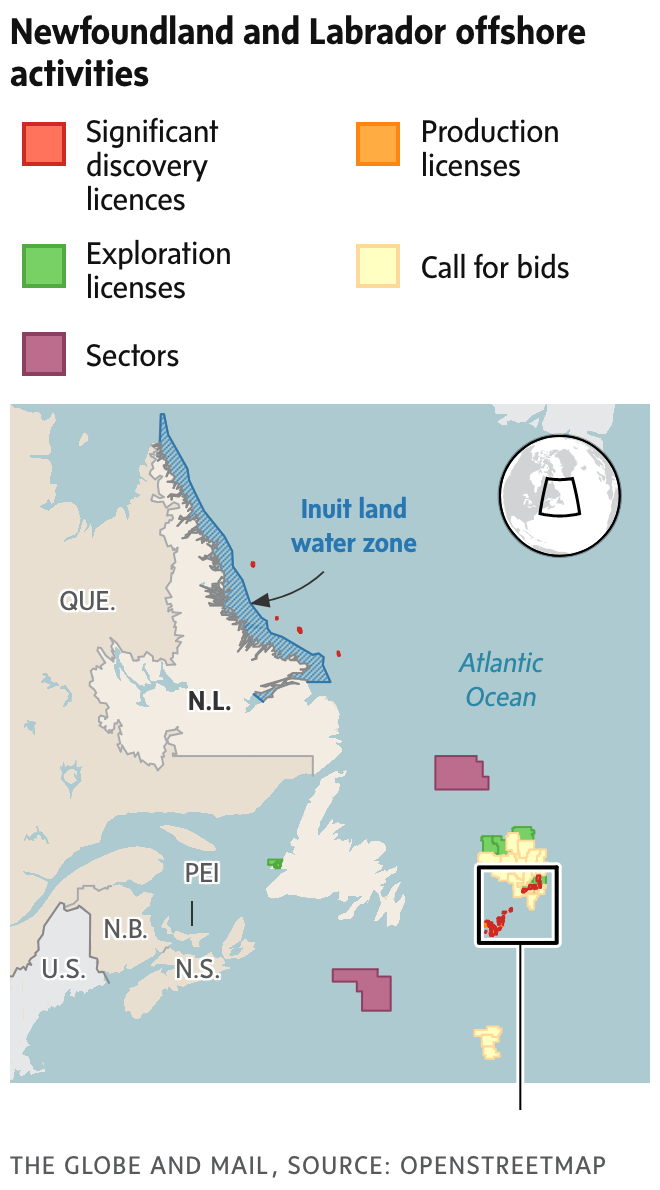
Oil and gas accounts for 18 per cent to 25 per cent of Newfoundland’s annual GDP. The third-largest oil-producing province in Canada, it pumped out 87.6 million barrels of oil in 2025. All of that came from four offshore fields in the Jeanne d’Arc Basin, the centre of which lies roughly 340 kilometres east of St. John’s. |
|
|
|
|
But Bay du Nord would extend the province’s oil production even further – roughly 500 kilometres offshore – into the Flemish Pass Basin. The first phase of the project would tap roughly 400 million barrels of oil, with production due to begin in 2031. |
|
|
|
|
If built, Bay du Nord would provide a much-needed economic boost to Newfoundland. Under a recently signed benefits agreement, it would provide up to $6.4-billion in direct revenue to the province over its first 25-year phase, through royalties, taxes and a possible equity stake. That could really help a province facing a $688-million deficit for the 2026-27 fiscal year, rising to $1.1-billion by 2029-30. |
|
|
|
|
Ottawa has said it will do all it can to de-risk Bay du Nord. It has already approved the project’s environmental assessment and has agreed to cover any fees that could be due under a United Nations convention because it sits outside Canada’s exclusive economic zone. |
|
|
|
|
For now, then, it’s a waiting game. |
|
|
|
|
But next door, in Nova Scotia, Premier Tim Houston is all in on oil and gas. |
|
|
|
|
It once had a decent-sized offshore sector. In fact, it was home to Canada’s first such project, but the industry had dwindled to nothing by 2018. Houston wants to revive it for the revenue and jobs he says are crucial to improve the fiscal fortunes of the one of the worst economies in North America. |
|
|
|
|
Neither Wakeham nor Houston consider themselves in competition when it comes to oil and gas development. Instead – to use parlance from the region – a rising tide lifts all boats. |
|
|
|
|
|
|
|
|
|
|
|
|
|
|
|
|
Pipelines, permits and partners |
|
|
|
|
|
|
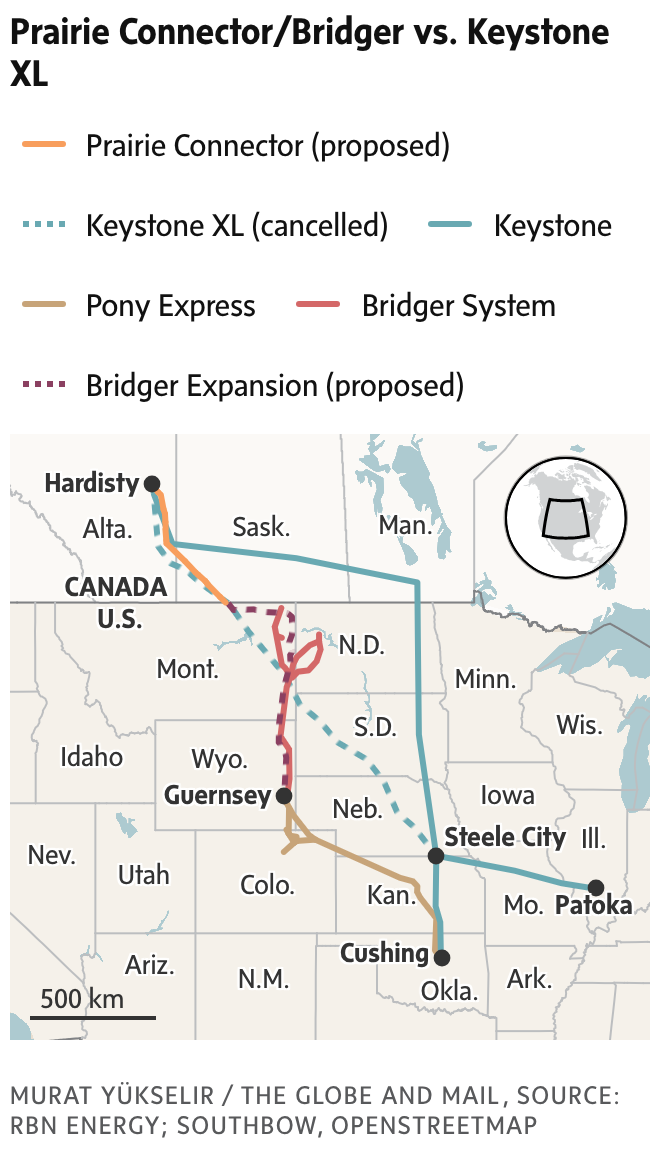
News of Keystone XL’s rebirth may be slightly exaggerated. However, a proposal that loosely follows parts of the previous Keystone XL route is well under way, with final investment decisions planned for the middle of next year. A spinoff from TC Energy, the proposed Prairie Connector pipeline, would use pipe that was constructed in Canada for Keystone XL. |
|
|
|
|
|
|
|
|
|
|
|
|
|
|
|
|
|
|
|
|
|
|