And Europe's hottest town struggles to adapt to extreme heat.

See how companies and governments are responding to climate change and social challenges. Subscribe to Reuters.com for $1/week.


Sustainable Switch

Sustainable Switch

Climate Focus

By Sharon Kimathi, Energy and ESG Editor, Reuters Digital

Hello!

Forecasters around the world have confirmed that the developing El Niño weather pattern is likely to be the strongest in ‌living memory.

As a quick refresher, the El Niño phenomenon is caused ‌by unusually warm waters in the Pacific Ocean which naturally occurs every two to seven years and can cause more rainfall in certain areas or drought in others.

Britain's Met Office national weather forecaster said 2026 is going to be renowned for the development of the largest El Niño in living memory and what is probably the largest such event since the 19th century.

The Met Office said 2027 is very ‌likely ⁠to replace 2024 as the warmest year on record.

Their latest forecasts showed a more than 3 degrees Celsius rise in equatorial Pacific sea-surface temperatures later this year. A typical El ⁠Niño causes a rise of 1 C to 2 C, with 2 C considered a major event.

China's National Climate Centre said that the formation of a super  El Niño could be the strongest ever recorded.

Since the start of the summer, China has already seen the effects of an El Niño, including torrential rain in various regions.

Last week, the strongest ‌typhoon ⁠to hit China this year, Typhoon Dolphin, unleashed extreme rain across the country's eastern, central and northern regions, far from the coast where it made landfall following a two-week journey across ⁠the Pacific Ocean.

Elsewhere, heavy rains linked to the El Niño weather phenomenon caused flooding in Peru this week that disrupted access to the ancient Inca citadel ‌of Machu Picchu, closed roads due to landslides and flooded homes in the capital Lima.


Climate Buzz

1. Europe's hottest town says climate change is reshaping daily life

Residents of Floridia, an Italian town in the Province of Syracuse, Sicily, have been struggling to adapt to the extreme heat temperatures. Five years ago, Floridia broke a record when it hit 48.8 degrees Celsius (119.8 degrees Fahrenheit) in August 2021 which turned the Sicilian town into a symbol of Europe's warming climate. This year, Reuters Climate ⁠Monitor data showed Floridia reached 2.8 C above the average in July from the 1961-1990 historic norm. Click here to read about residents' concerns around heat affecting health and local traditions.


A man wipes the sweat off his face in the Sicilian town of Floridia, Italy, in this screengrab taken from video. REUTERS/Danilo Arnone

2. Japanese men turn to hair removal in scorching summer

In keeping with the theme of extreme heat changing daily life, click here for an insightful read on how Japanese men are turning to hair removal to survive the sweltering heat leading to a surge in business for grooming clinics.

3. Singapore's plan to clear forest for housing faces a backlash

Singapore said in July it ‌was looking to clear two-thirds of the 23-hectare (57-acre) Maju Forest to build more public housing. But the announcement triggered an outcry from residents, leading to more than 49,000 people signing two petitions that urged the government to build on brownfield land, such as golf courses and former commercial and institutional sites, and redevelop older public housing estates at higher densities. Click here to read the government’s response and more.

4. Serbia turns to Russia to help fight wildfires

A Russian Emergencies Ministry IL-76P firefighting plane landed in Serbia’s southern city of Nis this week to tackle a wildfire in the Deliblatska Pescara natural protected reserve that has raged for weeks. Serbia also has access to emergency EU help under the bloc's Civil Protection Mechanism, even though the country is not a member of the European Union. The plane's arrival is another sign of Serbia's balancing act between Russia, with which it has historical ties, and the EU, which it ⁠hopes to join.

5. West Africa cocoa sector struggles to meet EU anti-deforestation rules, raising supply concerns

Industry experts estimate that when the EU Deforestation Regulation comes into effect at the end of December, farmers across West Africa, ⁠including top grower Ivory Coast and Nigeria, would struggle to comply with the law which could squeeze the region's exports to the EU and lead to higher costs for its chocolate makers and its buyers. Click here for the full story. 


What to Watch

 
Play 
 

Amid a coastal breeze and summer sunshine, a corporate volunteer team joined more than 16,000 New Yorkers who have worked with the Billion Oyster Project, a nonprofit dedicated to restoring oyster reefs in New York Harbor. Click here to watch the full video.


Climate Commentary

  • The Science Based Targets initiative’s (SBTi) flagship Net Zero Standard has undergone its first major update, prompting a mixed response from the climate community. Click here to find out more in a piece by Ethical Corp Magazine contributor Oliver Balch.
  • Hungary’s record solar output is helping to shield its power system from the worst effects of the forced cutbacks after the country's only nuclear power plant had to drastically lower output following a ‌drop in water levels on the Danube River. Click here to read the full piece by Reuters global energy transition columnist Gavin Maguire.
 

Climate Lens


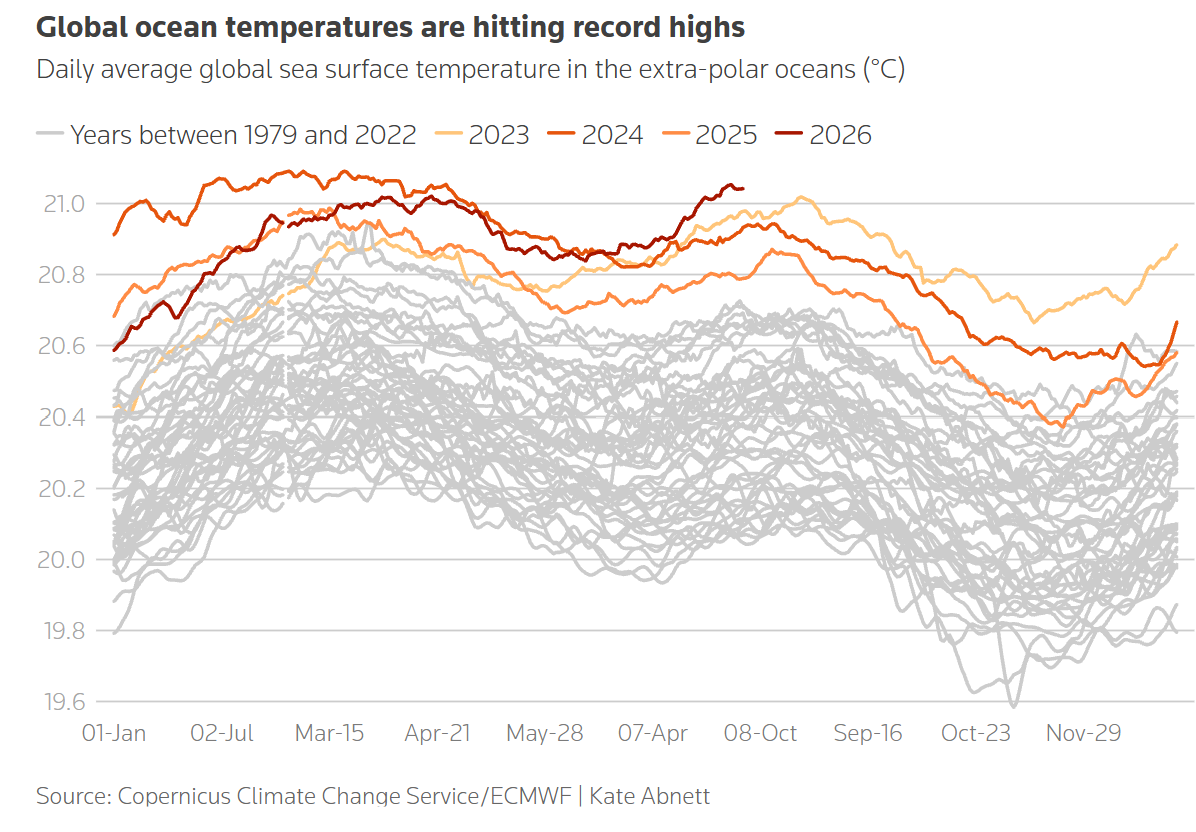
Mediterranean and around 1.4 C to Western European seas, according to an analysis by scientists at the World Weather Attribution (WWA) ⁠group, which uses peer-reviewed methods to assess global warming's role in extreme weather events.

Last month, the average temperature in the Mediterranean was 27 degrees Celsius (81 degrees Fahrenheit), the highest for any July on record, while an offshore buoy near Mallorca recorded 33 C in early August. Click here for the full analysis by Reuters Europe climate and energy correspondent Kate Abnett.