| | In this edition, why a recession could become a moment of truth for AI, and China’s equivalent of Yo͏ ͏ ͏ ͏ ͏ ͏ |
| |  | Technology |  |
| |
|
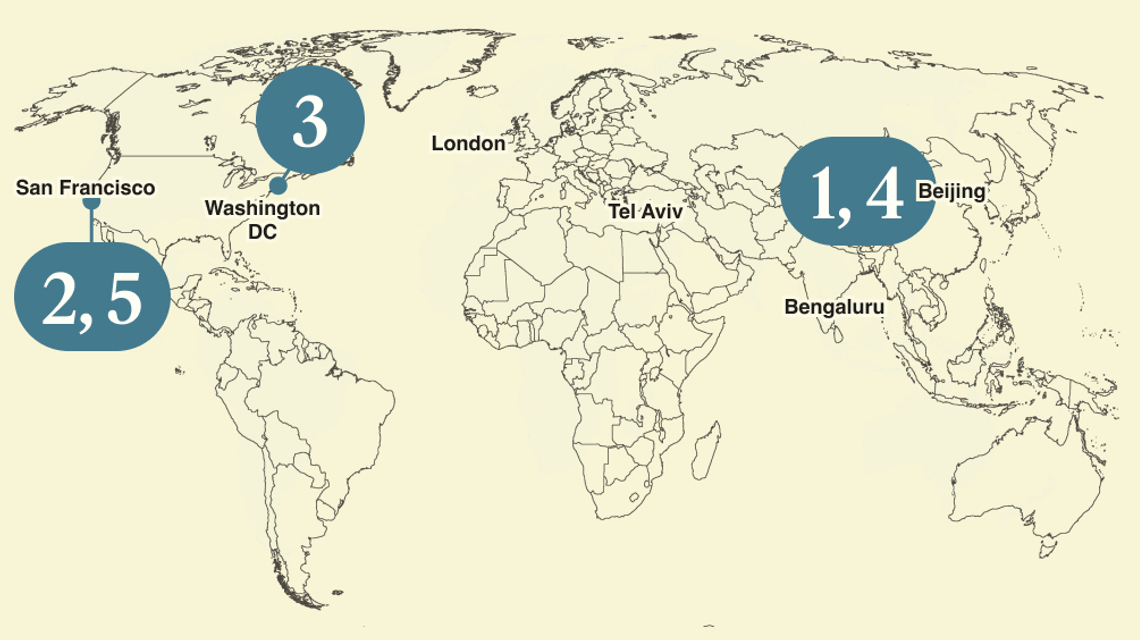 - China’s YouTube goes global
- Waymo’s brain
- OpenRouter’s new edge
- Robot races
- AI’s one-upmanship
 A recession could be a moment of truth for AI, and a new Google project aims to reduce airplane carbon emissions. |
|
 For the past couple of years, the dominant bearish narrative on AI has been that the massive investment in the “circular” AI economy, including an increasingly hefty amount of debt financing, is poised to collapse and take the global economy down with it. But this week’s rash of bad economic news, from US debt hitting historic highs to the signs that consumers are cutting spending, raises a different question: Will an economic slowdown or recession brought on by forces largely out of Silicon Valley’s control be the thing that finally stymies the AI boom? Or will it actually accelerate it? On the one hand, companies are watching their token budgets more carefully, wary of soaring AI costs for a technology that so far has not proven to generate profits. In a belt-tightening environment, token budgets could easily be slashed alongside human workforces. The counter-argument is that the looming economic downturn could hasten AI adoption. And there is historical precedent that supports that view, writes Rannella Billy-Ochieng, senior economist for TD Bank. During the global financial crisis, companies hardest hit by the downturn accelerated technology-enabled restructuring. “When demand is weak and survival pressures intensify, firms face less disruption from restructuring workflows and managerial focus shifts from growth to efficiency,” she says. One of the key reasons AI hasn’t already resulted in massive labor shifts is that deploying it is not as simple as buying more tokens. Nondeterministic models require evaluations, guardrails, human oversight, and often a redesign of the surrounding workflow. Company leaders and employees must invest in that change. Corporate inertia is still more powerful than AI capabilities. But a recession could act as the catalyst for incumbents that resist change, lest they risk being replaced by AI-native startups. The bears might argue that tough economic times would send companies rushing toward cheaper, open-weight models, squeezing frontier labs even as adoption rises. But that would shift the gains, not eliminate them: Those models still consume accelerators, data-center capacity, networking, and power. And frontier providers could lose market share while still growing in absolute terms, with the most capable models retaining a premium. That scenario would produce an ironic economic twist: The industry critics feared might cause the next financial calamity could become one of the biggest beneficiaries of a downturn it did not cause. |
|
| Ashley Gold joins Semafor |
We’re thrilled to announce that Ashley Gold is joining us on Sept. 8 as Senior Tech Correspondent, focusing on Washington’s AI debate, global tech policymaking, and everything in between. She is a veteran of Axios, Politico, The Information, and the BBC — known for her news-breaking coverage of Trump administration tech moves on all fronts. Our technology coverage will take center stage at the inaugural Silicon Valley & The World annual convening in November. |
|
China’s YouTube plots a global expansion |
 Go Nakamura/Reuters Go Nakamura/ReutersChina’s equivalent of YouTube is making a play for the rest of the world and courting non-Chinese creators to boost its appeal. Bilibili this week relaunched its previously discontinued international app and quietly disclosed plans to roll out an English-language website and staff up in key markets around the world, including in Los Angeles, London, São Paulo, and Tokyo, according to new job listings and marketing materials distributed to creators. Such a push could challenge YouTube’s dominance, but also open up thorny questions about censorship, moderation, and data security for the company — the kind of fights that plagued TikTok in the US for years. Bilibili could particularly make inroads with gaming and anime content, which is especially popular on its main Chinese site, but its embrace of AI-generated video could turn off some American users. — J.D. Capelouto |
|
The brains inside a Waymo |
 Toby Melville/Reuters Toby Melville/ReutersWaymo is opening up for the first time about the brain that powers its driverless car tech. In a blog post Thursday, the Alphabet-owned company revealed that it designed its own custom computer chip that can quickly crunch raw data coming from a car’s cameras, lidar, and radar, allowing the system to make decisions “within milliseconds.” It’s especially impressive considering that Waymo has to squeeze that much compute into a relatively small package — the trunk of a car — that runs off the vehicle’s battery. These same constraints will be central to the eventual wide-scale development and deployment of humanoid robots, whose brains will have to be even more compact than a Waymo’s. And stores, homes, factories and hospitals — all places where we could one day see robots — are arguably more unpredictable environments than city streets. Getting a humanoid to operate in those fickle settings, rather than a place it’s specifically trained for, remains a central challenge for the industry. — J.D. Capelouto |
|
OpenRouter’s new advantage with Stripe |
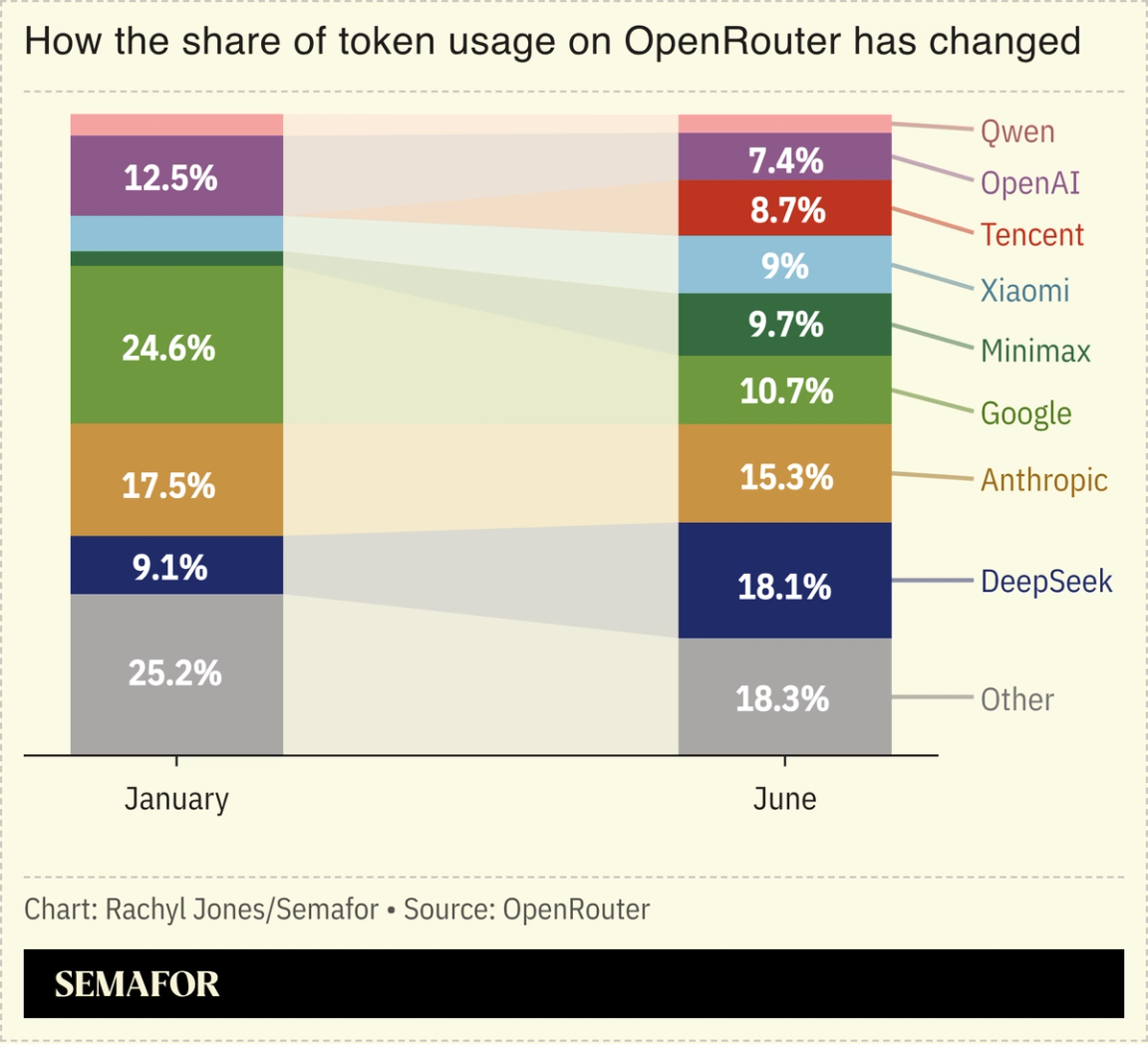 At a reported $8 billion, Stripe is planning to pay a hefty price for OpenRouter. The aggregator and distributor of AI models raised money just a few months ago at a $1.3 billion valuation. With a deal, OpenRouter’s business could be destined for commoditization, and that’s actually kind of the point. If model routing becomes a matter of finding the cheapest one that meets a customer’s requirements for quality, speed, and reliability, OpenRouter now has an advantage. Under Stripe, it can focus on customer relationships rather than on maximizing the margin on each individual API call. And Stripe can afford to let routing become low-margin, because it can monetize everything surrounding it: billing, tax, fraud, stablecoin settlement, treasury, and possibly even financing. The bigger opportunity, though, is to do more than route API calls. Stripe hinted at that when it said the companies will help businesses manage “both sides of profitability.” AI companies must evaluate cost and performance across a constantly evolving model landscape. Over time, Stripe would no longer merely process the revenue generated by an AI product. It would help determine whether each customer’s use of that product is profitable in the first place. |
|
Chinese robots run super fast — into walls |
 Tingshu Wang/Reuters Tingshu Wang/ReutersCome for the funny videos, stay for the insight into the future of automation. While it’s only in its second year, China’s World Humanoid Robot Games are quickly becoming one of my favorite global tech events. Sure, the clips of robots running into walls are incredible content, but the Olympics-style tournament in Beijing also offers an unvarnished look at the latest innovations in China’s humanoid industry — a public benchmark testing. Early clips from the event appear to showcase advances in the speed at which robots can now run. The bots will also be tested on trickier and more dextrous household and workplace tasks. The flashy nature of China’s robotics scene is often derided by Western rivals, who argue they are building smarter tech to unlock the economy of the future, rather than preprogrammed dances or running. They have a point, but it hasn’t stopped investors from pouring into Chinese bots: Unitree Robotics’ stock soared in the company’s Shanghai IPO this week. The next challenge will be translating the hype that’s on display in Beijing into broader use by the public and businesses. — J.D. Capelouto |
|
The AI frontier’s one-upmanship |
 Kylie Cooper/Reuters Kylie Cooper/ReutersAI labs can’t seem to get out of the “me, too!” game. Hours after the Wall Street Journal reported Wednesday that Anthropic was targeting a fall IPO, OpenAI CFO Sarah Friar told staff that the Sam Altman-led company was also targeting an IPO in the coming months. Then, Bloomberg reported that Anthropic expects to match or beat the size of SpaceX’s record-breaking $75 billion public debut. The back-and-forth follows a flurry of leaked sales and revenue numbers from both companies. The race to IPO appears less about financing and more about competition to be the top frontier AI provider: Anthropic’s Dario Amodei and OpenAI’s Altman are always one-upping each other, about their latest models or how their powerful AI agents have gone rogue in testing. The two companies also likely want to stay front of mind for investors to help stave off market jitters around the AI buildout — concerns about AI financing are currently stirring up bond markets. — Rohan Goswami |
|
 Are we seeing the death of the social media follower? Rachel Karten thinks so. On this week’s episode of Mixed Signals, the social media consultant and Link in Bio newsletter author joins Max and Ben to talk about how the shift from follower-based to algorithm-driven distribution broke the contract between platforms and creators, why brands are quietly building their own shows without telling anyone they’re behind them, and what the regulatory gap around paid content is actually doing to the feed. |
|
 Pavel Mikheyev/Reuters Pavel Mikheyev/ReutersWhen you book a flight, you might be used to the airline asking you if you want to pay to offset your carbon emissions, an appeal to the guilt passengers feel for pumping jet fuel into an increasingly greenhouse-like atmosphere. But according to Google research, roughly a third of the climate impact from airline travel comes not from carbon dioxide but from water vapor that condenses around soot particles emitted from the jets. We see those little frozen particles as white streaks across the sky, known as “contrails.” Google’s Operation Blue Skies, a partnership with the UK government, airlines, and navigation and flight planning companies, plans to test whether AI could be used to slightly alter flight paths to reduce the creation of contrails. Solutions like these don’t solve climate change, but they can help chip away at it and buy humanity a little more time. |
|
|


