Lumina Foundation is working to increase the share of adults in the U.S. labor force with college degrees or other credentials of value leading to economic prosperity.
As a first-generation Mexican American student from Houston, William Mariscal knows firsthand that getting into college is only part of the challenge. Mariscal attends Johns Hopkins University with need-based financial aid, scholarships, and work-study assistance that cover his full cost of attendance. But after a scooter accident left him with thousands of dollars in medical bills, he realized how quickly an unforeseen expense could unravel even the most carefully planned budget.
Mariscal's experience underscores a reality felt by millions of students every day: College affordability isn’t just about paying tuition. It’s about ensuring students have the financial stability and emergency support they need to stay in school when life takes an unexpected turn.
Ahmed Tamimi hasn’t traveled home to Palestine since the Trump administration issued a travel ban last December, restricting entry and visas for people from 40 countries. Tamimi is a rising sophomore at St. Lawrence University in Canton, New York. He says being away from home is difficult for him. Tamimi has a five-year visa, but he doesn’t want to risk his education. He's worried he might not be allowed back into the United States.
It's a dilemma many international students today are facing: choosing between going home to see their families or staying in the United States until they graduate.
Everyone talks about enrollment cliffs and financial pressures. What almost no one talks about is the quiet crisis of confidence among young women arriving on campus. College students today are a very academically prepared generation, and yet many carry a level of anxiety and self-doubt that previous generations did not. The pandemic years, social media, and the pressure to have life figured out at 18 have taken a real toll.
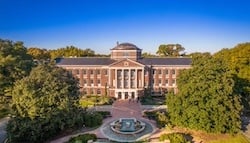
At Meredith College, one of three women's colleges in North Carolina, leaders believe it is their job not just to educate students but to build their belief in themselves. President Aimee Sapp explains more in this interview.
Americans may be questioning the relevance and value of higher education, but students are still applying to colleges in droves. Some of the greatest interest comes from applicants from low-income households and first-generation college students.
A report released last week by Common App, an online portal that lets students apply to more than 1,150 colleges and universities, shows 1.5 million students submitted more than 10.7 million applications in the 2025-2026 cycle, a 6 percent increase from the previous year.
After Bilal Ali graduated from high school, he wasn’t able to think about college. His father had just died, leaving him on his own. At 21, fearing he had missed his chance to get a degree, he enrolled at Highline College in Des Moines. But he still had to work every night to afford the rent for the two-bedroom apartment he shared with six roommates. He soon began to doubt if he could finish his education.
Then, an innovative housing program at the community college changed everything.
Millions of students will soon arrive on college campuses, full of excitement and trepidation about what’s to come. Some will have received a special gift: a grant, known as merit aid.
Merit aid was originally intended for students with exceptional academic achievement, who could contribute to the campus environment and had many admissions offers to choose from. Today, however, colleges and universities are increasingly using these grants for a very different purpose: to lure wealthy students, the ones who need the money least. And these institutions are drawing merit aid from their limited financial aid budgets, which leaves less money for students who need it most. This trend must change, says Angel B. Pérez of the National Association for College Admission Counseling in this essay.