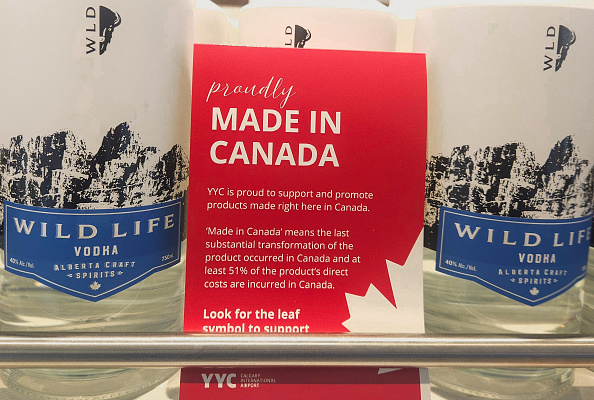
Canada’s booze boycott is becoming a potent trade weapon, as talks with the US are spiraling into an all-out trade war.

(Artur Widak/Getty Images)


Hey Snackers,

The Force is strong with municipal public comment.

After nearly a year of unsuccessfully lobbying San Diego officials over the city’s use of Flock surveillance cameras, one resident finally embraced the dark side.

Anthony Ralphs, a local events producer, arrived at a city council meeting this month dressed as Darth Vader — cape, mask, mechanical breathing and all — and explained why the Empire would be a big fan of warrantless license-plate surveillance.

Stocks finished slightly up on the day.

 
LAST CALL

Canada’s booze boycott is becoming a potent trade weapon

As negotiations to avert new US tariffs set to be imposed on Canada unfolded over the weekend, one sticking point reportedly crumbled the talks: heads of several provinces did not want to start letting American booze be sold in their territories again. 

And we all know what happened next: talks collapsed and the two neighbors are spiraling into an all-out trade war.

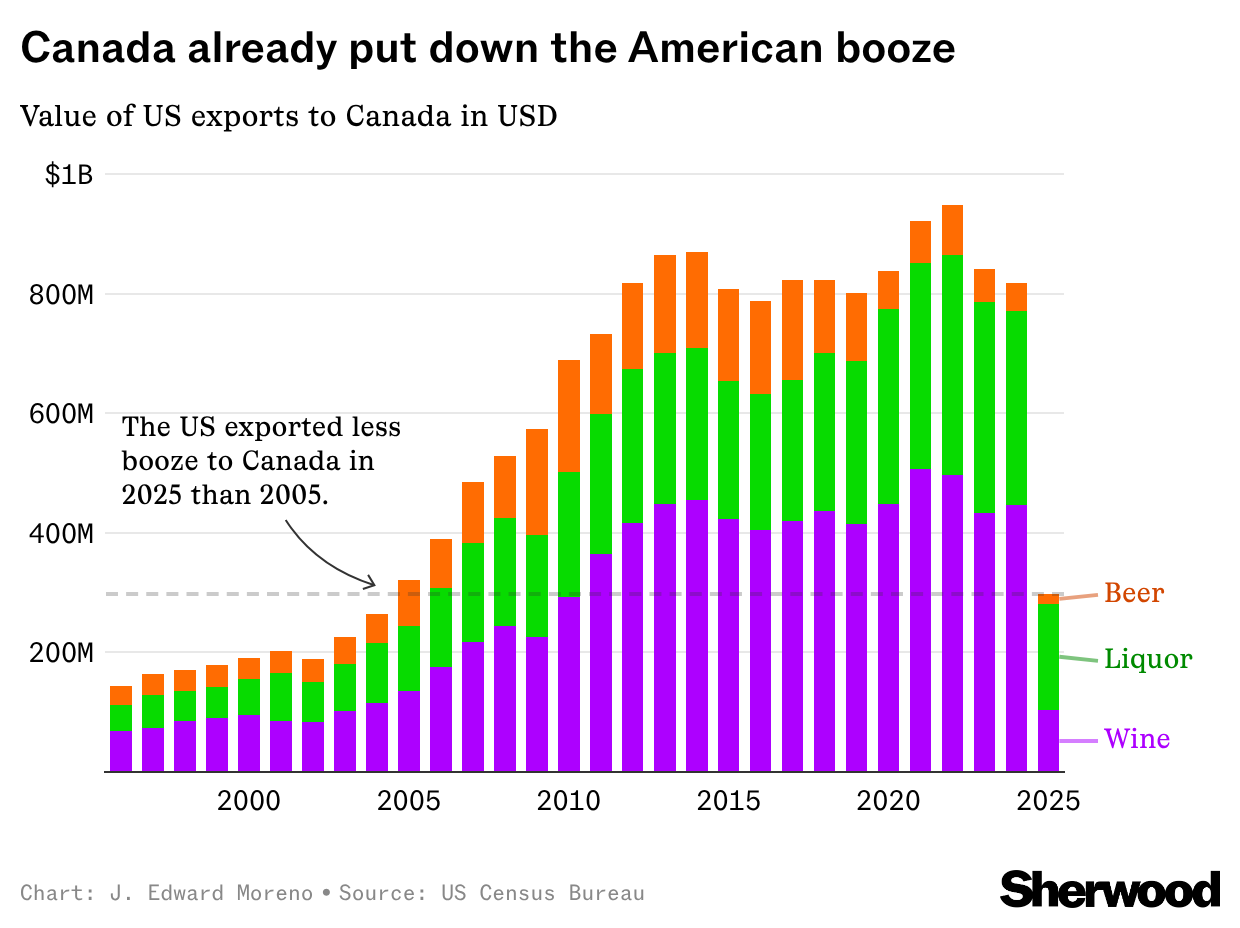
Starting March 2024, provinces in Canada began banning the sale of US alcoholic beverages, meaning no Jack Daniels whiskey or Barefoot wines on most Canadian liquor store shelves. After more than a year of getting the cold shoulder from Canada, the American booze industry is feeling the heat. Exports of booze from the US to Canada were less than half in 2025 than they were a year earlier.

“Canada continues to be a problem as we don't have our product on the shelves up there, at least none of our American made products,” Lawson Whiting, the CEO of Brown-Forman, the maker of Jack Daniels, told analysts on July 23. 

In one year, the US wine industry went from having a trade surplus of $254 million to a $90 million trade deficit, according to the Wine Institute. 

“For many wineries, Canada wasn’t just another export destination,” the trade group said in a statement in March. “It was the market that made international growth possible.”

THE TAKEAWAY

The US alcohol industry is not exactly the lifeblood of the US economy. Its annual exports to Canada before the boycott were measured in hundreds of millions of dollars, not billions.

But there’s a reason why Trump wants Jack Daniels and Jim Beam on Canadian shelves, even if it means risking the livelihoods of constituencies like farmers or the US auto industry, which have a much bigger impact on the US economy. 

Drinking is a cultural, perhaps even performative behavior. You usually drink a beer in front of someone, and whether it’s a Bud Light (pre- or post-Dylan Mulvaney) or an IPA from a local brewer may give off a certain message about you and what you believe. Swapping an American bourbon for a Canadian whisky is therefore a relatively cheap way to make a big statement. 

Alcohol is also unusually easy for Canada to weaponize. Provincial governments control much of its distribution, meaning they can effectively make American bottles disappear from store shelves. 

So, although it’s not likely to make a big dent in the US economy, Canada has an outsized bargaining chip. And judging by the latest round of negotiations, its provinces aren’t eager to give it up.

— J. Edward Moreno


Snacks Shots