Diplomacy revival

Follow energy market shifts and the forces driving the transition to clean power. Subscribe to Reuters.com for $1/week.


Power Up

Power Up

A Reuters Open Interest newsletter

By Ron Bousso, ROI Energy Columnist


Data refreshes every time you open this email. For more energy news, click here. Please send any feedback to powerup@thomsonreuters.com.

Hello Power Up readers,

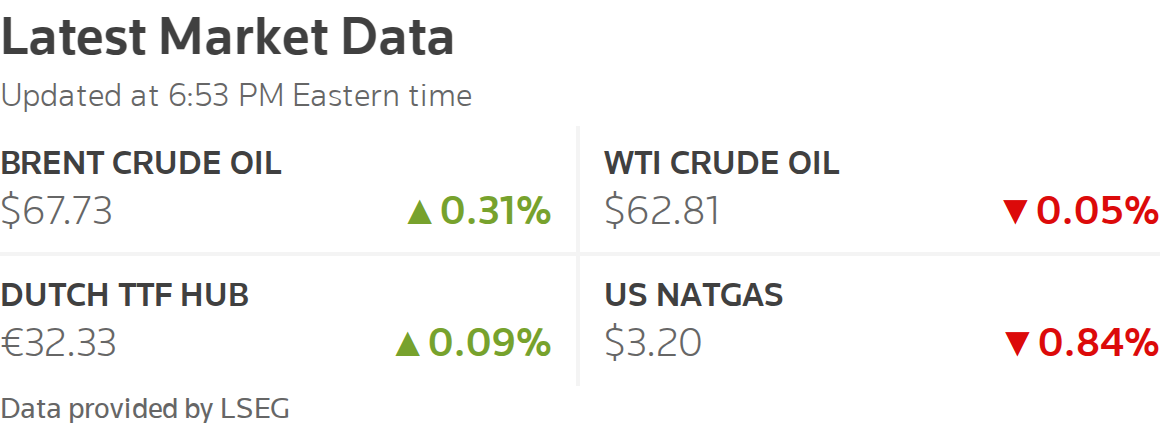
Oil prices have drifted lower this week, slipping below $90 a barrel, as the market’s attention shifts to hopes for a diplomatic breakthrough to end the six-month long Middle East conflict.

Qatar’s prime minister will visit Tehran on Thursday, three days after the visit by Pakistan’s army chief. The two countries have served as back-channel negotiators between Iran and the United States throughout the war, playing a key role in securing the June ceasefire deal that led to a brief pause in hostilities. The revived diplomatic efforts come just days after Iran and the U.S. exchanged harsh words over Washington's promise to increase economic pressure on Tehran by targeting its trade partners with sanctions.

At the same time, Iran and Oman are working on an agreement to share oversight of the Strait of Hormuz, the vital waterway that has become the epicentre of the conflict. Iran has nevertheless said an agreement with Oman would not equate to the reopening of the strait, which would depend on talks with the U.S.

In a harsh reminder that tensions remain high, on Thursday an unidentified projectile hit a tanker in the strait for the first time in over a week.

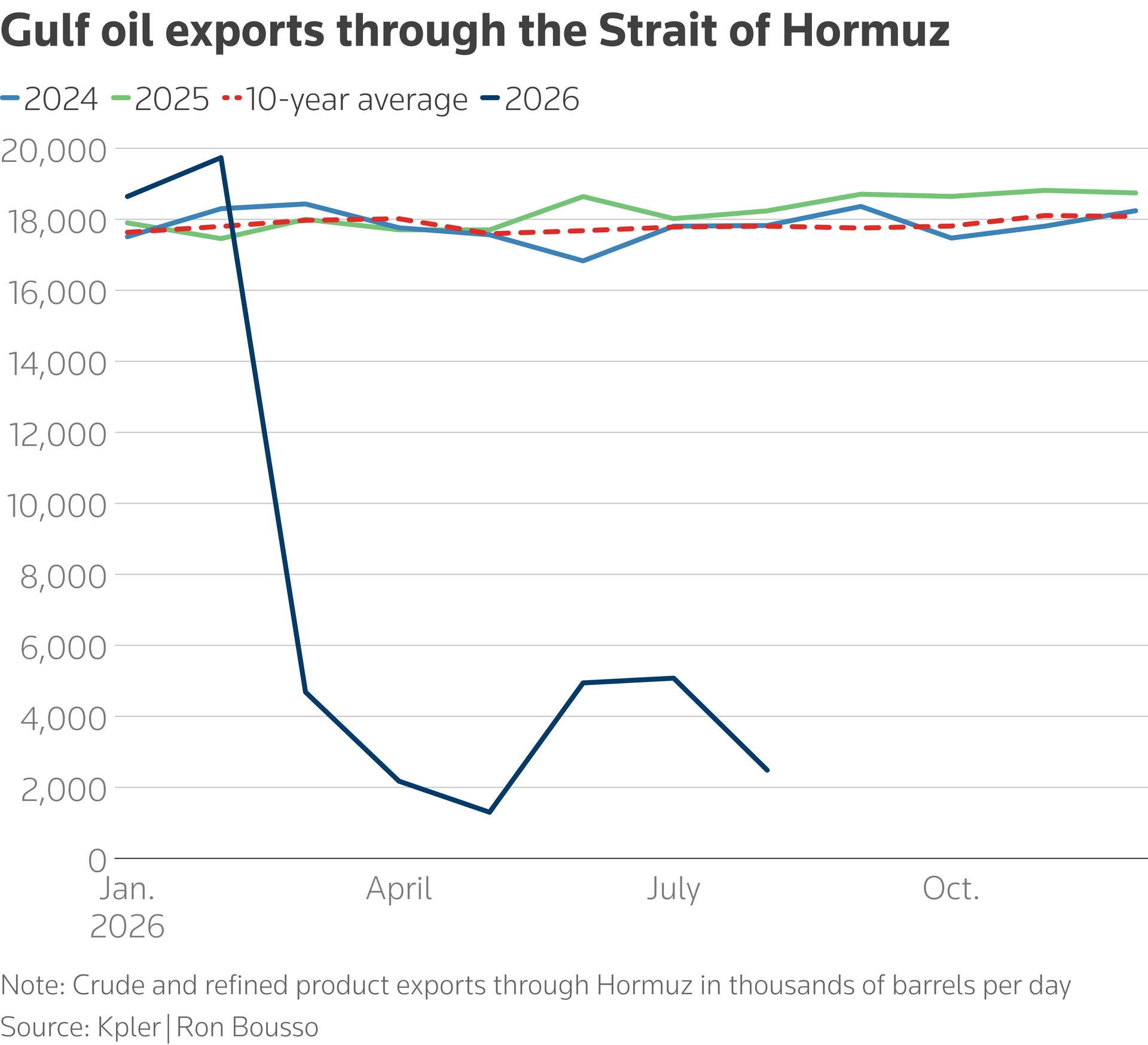
Meanwhile, oil flows through Hormuz have fallen to a three-month low, with just 5 million barrels per day transiting on Monday, according to the latest ship-tracking data, despite U.S. claims last week of a sharp recovery in volumes. Before the war, the strait carried roughly 20 million bpd of oil.

These confusing signals create a strong feeling of déjà vu. Although the heavy military phase of the war has ended for now, Washington and Tehran seem no closer to  resolving their core disputes, including the re-opening of Hormuz, let alone the goals the White House set out when the conflict began on February 28.

Indeed, six months into the war, the conflict is hardening into a stalemate that could last well into 2027, with energy markets held hostage, inflation elevated and neither side willing – or able – to back down. More on this below.

Here are a few more headlines:

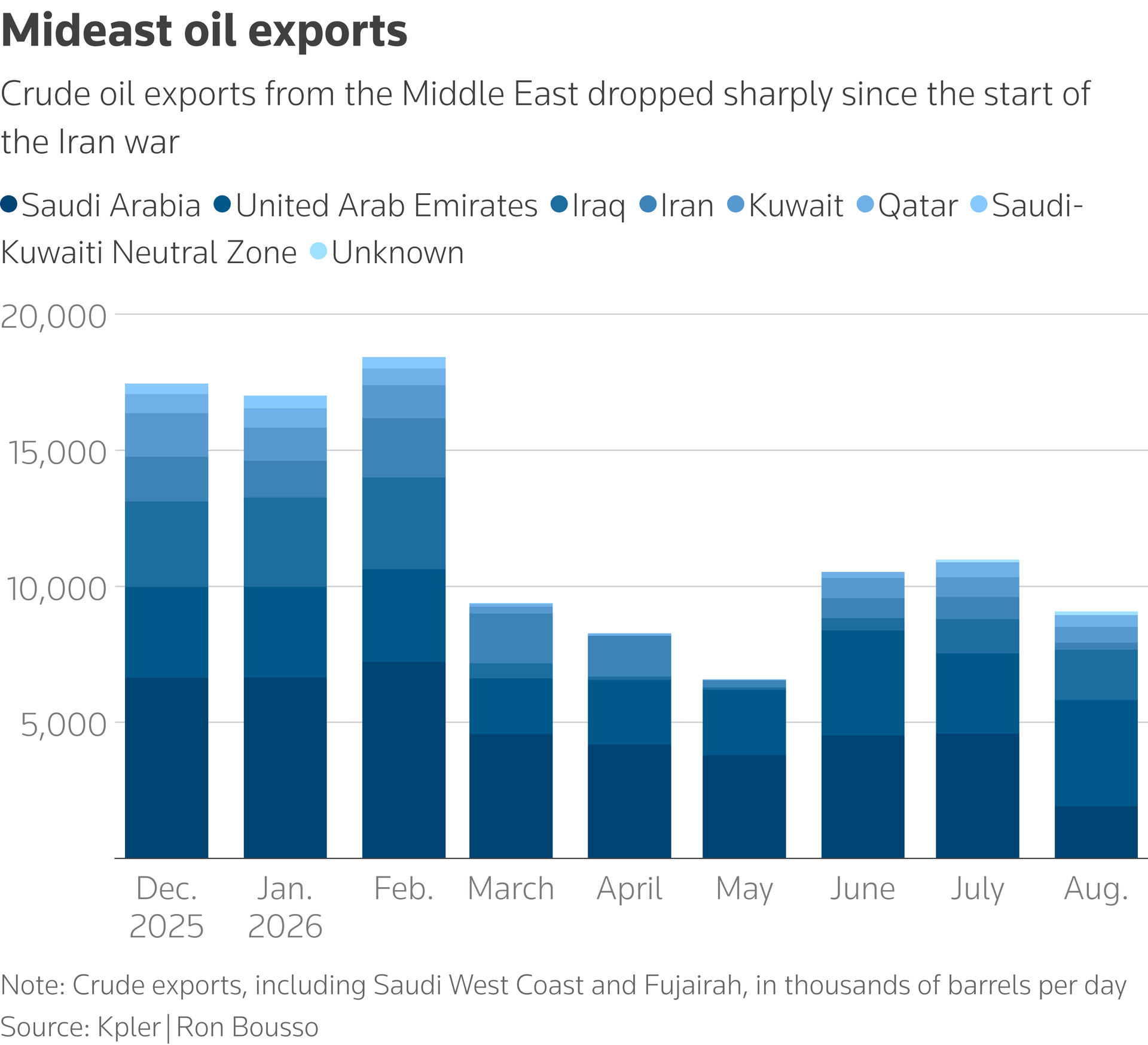
  • Asia's imports of crude oil in August are still well short of levels seen prior to the start of the Iran conflict, raising further questions about just how much crude is actually leaving the Middle East, ROI Asia Commodities Columnist Clyde Russell writes.
  • And the world's energy traders are sending a consistent message about 2027. They do not expect global energy markets to calm down anytime soon, explains ROI Energy Transition Columnist Gavin Maguire.

As always, don’t hesitate to contact me at ron.bousso@thomsonreuters.com or follow me on LinkedIn with any questions or thoughts.


Top energy headlines

  • Oil prices rise as investors weigh lack of progress in Middle East negotiations
  • OPEC+ loses oil market sway in Iran war as China gains influence
  • Farm, biofuel groups urge Trump to curb expanded refinery exemptions
  • Six months of war: How the Middle East conflict has shaped financial markets
  • Biomethanol startup Emvolon signs purchasing, financing deals with Freepoint


Trench warfare

The longer the Mideast conflict drags on, the harder it becomes for President Donald Trump to argue it is succeeding. The Islamic government remains in power, Hormuz remains constrained, fuel prices remain elevated and economic costs continue to mount.

The U.S. possesses overwhelming economic and military power but little appetite for a wider war. Iran is ⁠economically weakened, yet has demonstrated a willingness to absorb extraordinary pain to pursue strategic goals. The conflict is therefore a contest of endurance rather than manoeuvre.

Despite what Trump and Bessent argued this week, U.S. economic pressure resembles the grinding trench warfare that kept World War One going far more than the decisive Allied offensives that ended World War Two.

Read the full column
 

Sponsors are not involved in the creation of newsletters or other Reuters news content. Advertise in this newsletter or on Reuters' website

LiveIntent Logo
AdChoices Logo