Hello,
Today’s newsletter focuses again on the catastrophic Himalayan floods, caused by a glacier collapse, and the fears of yet more devastation from an overflowing lake.
At the last count, the deluge had killed 547 people in Nepal and five in China’s Tibet - figures that are expected to rise with almost 1,000 more missing in both countries.
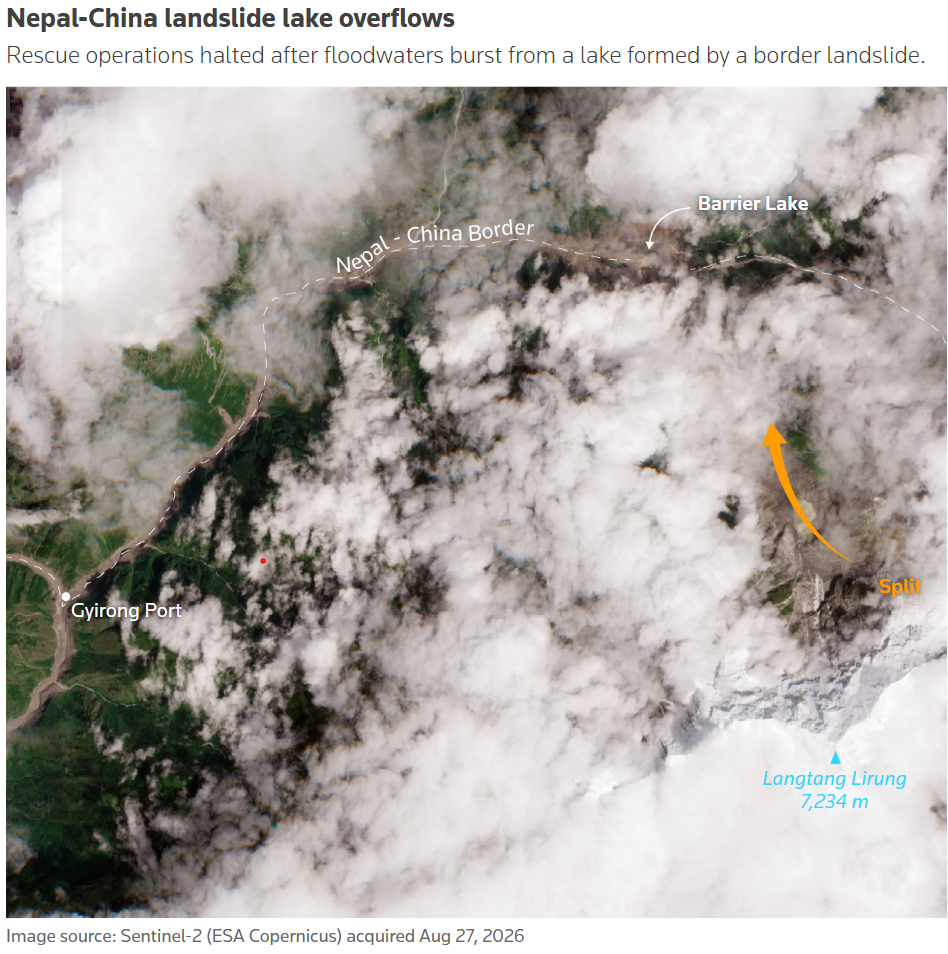
A huge torrent of rock, ice, mud and debris cascaded through Himalayan mountain river systems on Wednesday, and led to the formation of a lake where water continued to collect.
Rescuers briefly paused work as the water rose and overflowed into rivers, triggering panic. Emergency teams later resumed searching for bodies and survivors on Friday after the risks were found to be manageable.
Nepal was using satellite imagery to monitor two lakes upstream of the flood zone, including one that appeared to be growing, an official with Nepal's Disaster Management Authority said.
More than 90,000 people are estimated to be directly affected and in urgent need of humanitarian assistance, the Red Cross said, as aid officials voiced fears of further flooding.
Kamal Kishore, Head of the United Nations Office for Disaster Risk Reduction, warned of further "cascading hazards that might unfold".
"In a sense, the disaster is not yet completely over. It is still unfolding in some ways," he said.
World Health Organization spokesperson Tarik Jasarevic said at the same briefing that six health facilities had been damaged in the landslide and that eight healthcare workers were missing.
"Following a disaster of this scale, displacement, overcrowding and disruption to water, sanitation and health services can increase the risk of infectious diseases, including diarrhoea and respiratory illnesses," he said.
Wednesday's flood ripped through villages and valleys, destroying power stations, roads and bridges along a route that links Kathmandu with Lhasa in Tibet and is popular with trekkers and pilgrims. Of those missing, at least 540 are foreigners, many of them Hindu pilgrims from India headed to the holy Mount Kailash and Lake Mansarovar in Tibet.
In Beijing, China's Politburo met on Friday and called for stronger monitoring of glacier lakes, landslide risks and barrier lakes, emergency aid to affected areas in Nepal, and closer international disaster cooperation.