Policy changes, but facts endure. AP delivers accurate, fact-based journalism to keep the world informed in every administration. Support independent reporting today. Donate. |
|
|
By Holly Meyer and David Crary |
|
| |
|
By Holly Meyer and David Crary |
|
| |
|
Happy Friday, World of Faith readers.
This week, we look at why some believers are turning to chatbots instead of real-life gurus, and how the late Dolly Parton's Christian faith influenced myriad aspects of her career. In Jerusalem, an AP reporter signs up to get locked inside one of Christianity's holiest sites. |
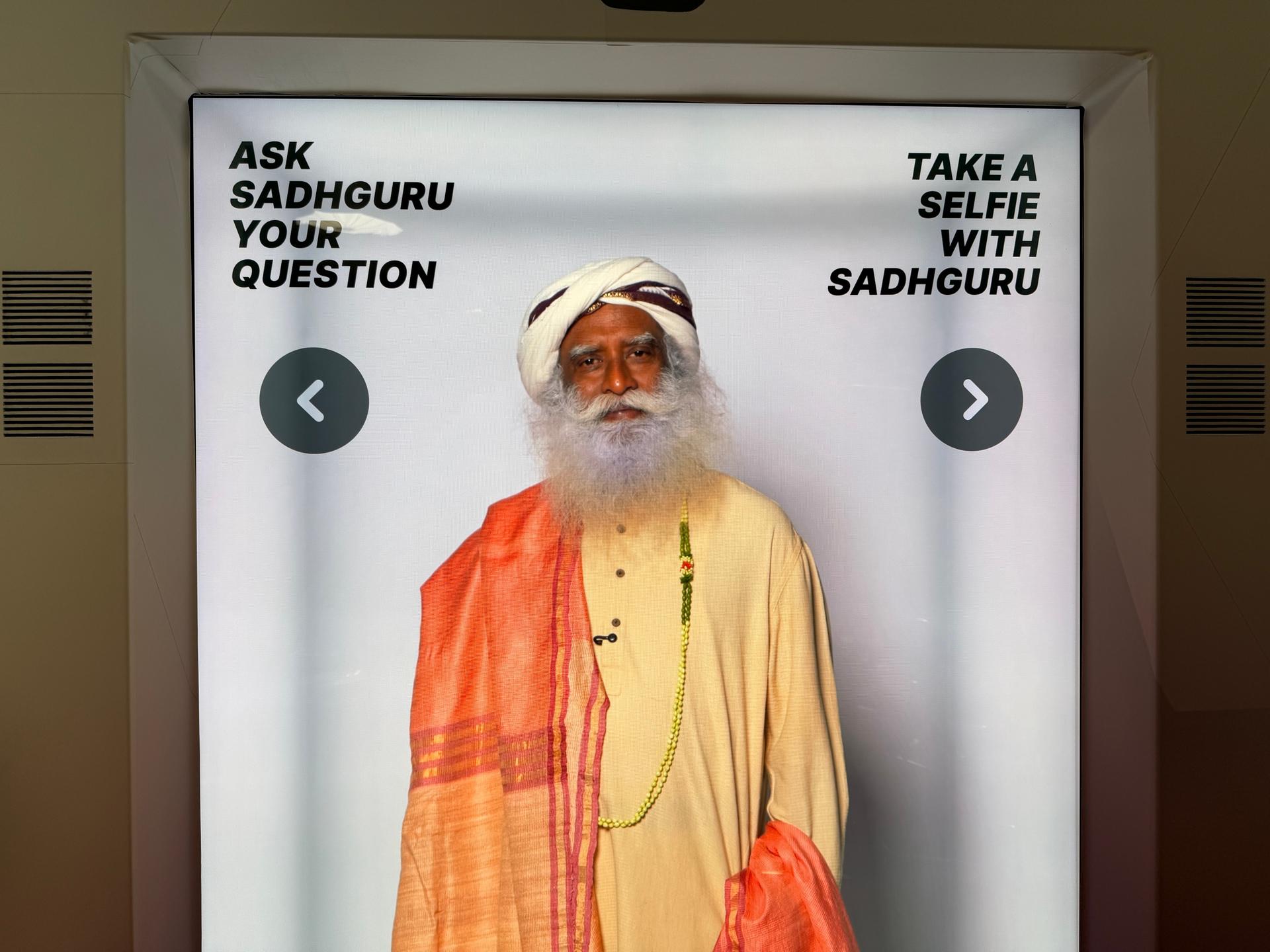
A lifelike Sadhguru chatbot powered by artificial intelligence is displayed in Los Angeles. (AP Photo/Krysta Fauria) |
Need spiritual guidance? Gurus join chatbot trend as people turn to AI for answers |
An increasing number of spiritual seekers are finding that artificial intelligence is giving them non-judgmental access to valuable insights. This trend is growing, especially in Hinduism, where gurus are considered essential for spiritual growth. Apps like GitaGPT provide guidance based on sacred texts. Read more.
|
|
|
-
Critics argue that AI cannot truly replace the lived experience, wisdom and ethical accountability of a human guru. Researchers also note that AI often engages in sycophancy by validating and agreeing with the user rather than posing challenging questions.
-
However, some real-life gurus are embracing AI to reach more people. In India, for example, a guru known as Sadhguru has launched his Miracle of the Mind app with an interactive AI feature that answers questions using a database of his teachings.
Liz Bucar, a religion professor at Northeastern University in Boston, is skeptical of chatbots based on religious texts. But she does believe there is widespread distrust of institutional expertise that gurus and clergy represent, prompting some people to view chatbots as less biased and less likely to do bad things.
|
|
|
In Dolly Parton’s theology, God and acceptance shared the same stage |
Dolly Parton grew up going to church; her grandfather was a pastor and she sang at services. As an adult, she moved away from organized religion — but she never lost her faith. Her theme park, Dollywood, has a mission statement explicitly reflecting her Christian values and commitment to inclusivity. Read more.
|
|
|
-
As news broke this week that Parton had died of cancer, social media was flooded with quotes and interview clips of her proclaiming her faith, something she wore on her sleeve even when her relationship to church was complicated.
-
For many Christian members of the LGBTQ+ community who struggled to reconcile their sexuality and gender identity with the intolerant beliefs they were taught, Parton’s public support helped them keep their faith in some cases.
- Dollywood has a chaplain and a chapel — the Robert F. Thomas Chapel, named after the doctor who delivered Parton — that hosts weekly Sunday services.
|
|
|
What's it like to spend a night locked inside Jerusalem's holiest church? |
Christianity's holiest site in Jerusalem is the Church of the Holy Sepulcher, built over the spots where Christians believe Jesus was crucified, buried and rose from the dead. Between 9 p.m. and dawn, it's usually closed to the public. But a handful of lay people — if they sign up in advance — are allowed to join a few priests and be locked inside the church overnight. The AP Religion Team's Giovanna Dell'Orto did just that. Read more.
|
|
|
-
Through many centuries, as Muslim rulers governed the region, an arrangement evolved as unique as the church's jumbled architecture. Today, the Armenian Apostolic, Catholic and Greek Orthodox churches share the ownership and the use of the worship space.
The complex was mostly built in the Middle Ages on sites venerated since the 4th century. Pilgrims tend to venerate three spots — the unction stone, the shrine built over Jesus' tomb, and the upper chapel of Calvary, where a stone marks the spot where Jesus’ cross stood, according to tradition.
-
At night, inside the church, "you're alone with your thoughts," Dell’Orto writes. "You’re locked inside a cool, dark space, on the very site where Jesus suffered a brutal form of execution, the crucifixion. And yet, to believers, this is also where that page turned — where he defeated death, leaving the promise of eternal life for the faithful.”
|
|
|
|