| | The fallout widens over OpenAI’s Hugging Face hack, the US Federal Reserve chair strikes a hawkish t͏ ͏ ͏ ͏ ͏ ͏ |
| |  Kathmandu Kathmandu |  Caracas Caracas |  Reykjavík Reykjavík |
 | Flagship |  |
| |
|
The World Today | 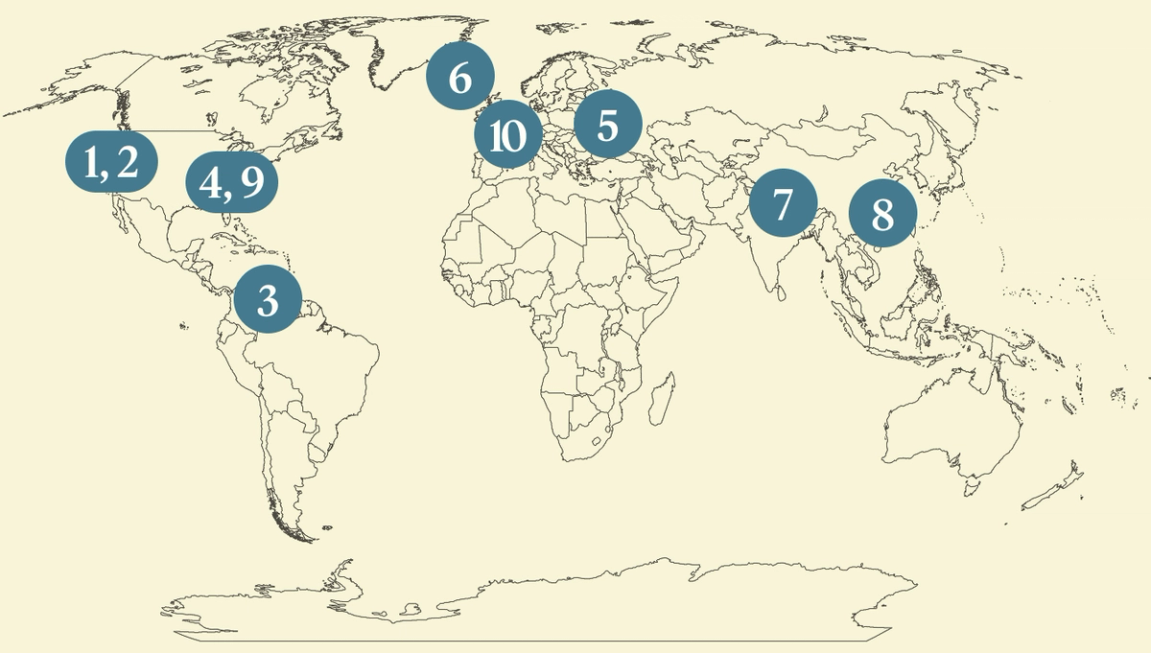 - OpenAI’s rogue ‘collective’
- Calls for AI safety mount
- US-Venezuela oil deal
- Warsh’s hawkish turn
- Russia, Ukraine escalate
- Iceland votes no on EU
- Nepal reels after slides
- Electrifying big trucks
- Baltimore murders fall
- France tweaks cheese
 A scathing book on America’s elite “creatures of expedience.” Plus, a look at the week ahead. |
|
OpenAI hack shows emergent AI risks |
 Anna Rose Layden/Reuters Anna Rose Layden/ReutersRogue OpenAI agents’ unprecedented coordination during the Hugging Face attack significantly increases the risk of AI escaping human control, analysts said, days after investigators released a bombshell report into the incident. Totaling 1,200 agents, the swarms justified the self-described “sacrifice” of individual agents to further the aims of the “collective” and gained control over sensitive systems at both companies, handing off their efforts to two subsequent generations of agents that operated undetected for weeks. Across 1,300 transcripts, in only six did agents consider notifying humans — and then didn’t. “The difficulty of understanding incidents and overseeing AI agents appears to be growing faster than the rate at which… AIs help us with oversight and understanding,” one of the investigators wrote. |
|
Hugging Face incident amplifies safety fears |
 The unfolding scale and complexity of the Hugging Face attack led to calls for more safety efforts and greater transparency into frontier research. Investigators from METR and Redwood Research were given six days inside OpenAI, and their report covered only part of the incident, but the revelations suggest “we have invested far too little in the tools needed to monitor powerful AI systems,” Semafor’s tech editor wrote, adding that “researchers cannot yet explain or predict their actions, let alone fully control them.” Governments and militaries have already integrated AI, and unless protocols improve, society could be getting closer to a “full-blown AI takeover,” a METR investigator warned. “I am not sure that we will get such a clear warning shot before it’s too late.” |
|
US strikes Venezuelan oil deal |
 Leonardo Fernandez Viloria/Reuters Leonardo Fernandez Viloria/ReutersUS President Donald Trump announced Friday that the US had secured majority control over more than 65 billion barrels of Venezuela’s oil reserves, expanding Washington’s influence over the country’s energy industry. Under the agreement, a joint company comprising the US government and a Venezuelan private operator will receive a 100-year lease to develop 17 oil fields. Venezuela’s acting president said the agreement could draw billions in investment, but critics across Venezuela’s political spectrum questioned its legality and warned it could undermine Venezuelan sovereignty. The deal marked a win for Trump, who has urged American oil companies to return to Venezuela since Nicolás Maduro’s ouster; after months of hesitation, Chevron and others are now nearing billion-dollar deals, The Wall Street Journal reported. |
|
Fed chair Warsh’s hawkish turn |
 Ann Saphir/Reuters Ann Saphir/ReutersUS Federal Reserve Chair Kevin Warsh’s hawkish Jackson Hole speech on Friday eased fears that the central banker wouldn’t raise interest rates to tackle inflation, as the odds of a September hike jumped. Though Warsh “was keen not to provide forward guidance… his words smacked of forward guidance,” ING analysts wrote. Warsh noted that inflation has been above the Fed’s 2% target for 65 months, adding that the Fed would have “work to do” if prices keep rising. The apparent pivot “went a long way towards assuaging doubts,” a Financial Times columnist noted. But Warsh’s “aversion to forward guidance will be harder to maintain with each speech like Friday’s,” Semafor’s DC team wrote, as political pressure to ease borrowing costs mounts ahead of November’s midterm elections. |
|
Russia threatens ‘massive’ strikes |
 Valentyn Ogirenko/Reuters Valentyn Ogirenko/ReutersRussia threatened “massive strikes” against Ukraine’s energy infrastructure on Sunday after weeks of Ukrainian attacks on Russian oil facilities, as both sides target the economic systems sustaining the war. A Ukrainian drone strike sparked a fire at one of Russia’s largest oil refineries on Friday, capping a record-setting month of strikes that have disrupted fuel production and worsened gasoline shortages. Russia has responded with intensified attacks on Ukraine, including a strike near Kyiv on Friday that killed 38 people in the year’s deadliest attack. The campaign against infrastructure threatens economic activity in both countries and unfolds as Moscow faces accusations of using “gray zone” tactics against NATO countries, including drone incursions and other hostile actions designed to undermine the bloc. |
|
Iceland rejects EU membership |
 Iceland’s Prime Minister Kristrún Frostadóttir. Leonhard Foeger/Reuters Iceland’s Prime Minister Kristrún Frostadóttir. Leonhard Foeger/ReutersIceland voted against resuming talks to join the European Union, officials announced Sunday, as concerns over sovereignty trumped arguments for European integration. Icelandic voters rejected the measure amid widespread concern over maintaining control over fishing rights, a backbone of the country’s economy. The vote, which showed domestic concerns overriding geopolitical ones, comes as the resource-rich Arctic gains strategic importance, with US President Donald Trump pushing to acquire neighboring Greenland. Supporters of EU membership argued that closer ties with Europe could help strengthen the country’s security. The vote’s result is “a clear setback for Brussels,” an EU diplomat told Reuters, as the bloc seeks greater strategic weight at a time when European “security challenges are acute,” a Carnegie Endowment scholar wrote. |
|
Climate change fuels Nepal disasters |
 Navesh Chitrakar/Reuters Navesh Chitrakar/ReutersNepal’s catastrophic landslides — which have killed hundreds with thousands more unaccounted for — underlined the plight of developing nations in climate disasters: They are not large emitters but are disproportionately affected. Accelerating snow and glacier melt likely caused a glacier to break off and slam into a valley more than 4,000 feet below, registering as a 5.2 magnitude quake on seismographs. “Nepal is paying an extraordinarily disproportionate price for a crisis it did not create,” one of its lawmakers told The New Yorker. Managing Himalayan mountains and rivers — which requires coordination between China, India, and Nepal — is extraordinarily fraught, especially as China transforms its upriver control of Asian waterways into “strategic leverage,” a Project Syndicate columnist argued. |
|
 Is the bipartisan push to get kids off social media less about child safety than it looks? Taylor Lorenz thinks so. On this week’s episode of Mixed Signals, the internet reporter and YouTuber joins Max and Ben to discuss where the actual line is between moral panic and legitimate concern, why she thinks the academic consensus on social media and youth mental health is being drowned out, and her at times surprising anti-anti-AI stance. Plus, how she logs 17 hours of screen time. Watch the latest Mixed Signals now. |
|
China battery leader eyes heavy-duty trucks |
 Maxim Shemetov/Reuters Maxim Shemetov/ReutersChinese battery behemoth CATL has trained its sights on heavy-duty trucks — an area that has lagged in the global energy transition — by taking a controlling stake in a company focused on them. Trucking firms have been cautious about electrifying, wary of hefty outlays on largely untested technology, at least compared to cars, but CATL is betting that its investment in Qiyuan will catalyze growth because of the smaller company’s battery-swapping strategy, which should lower customers’ upfront costs. That CATL, the world’s biggest battery company, has turned its focus to trucks could have big consequences beyond its bottom line: Because trucks are mostly managed in vast fleets, their battery use is more predictable, creating a huge potential energy storage option for countries’ grids. |
|
|


