Welcome to the 2026 Fall edition of She Served – a newsletter designed to keep you informed about VA services, upcoming events, and key information within the Phoenix VA Health Care System.
|
This season, we observe Suicide Prevention in Sept., Breast Cancer and Domestic Violence Awareness in Oct., and Veterans Day on Nov. 11. The newsletter includes information and resources about these topics. We express our appreciation and gratitude to our Veterans for their dedication and service.
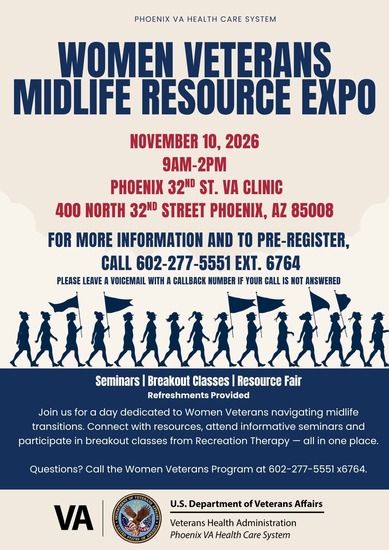
Thank you to everyone who attended the most recent Women Veterans’ Tele-Town Hall on Aug. 6. In this newsletter, you will find poll results and details from some of the feedback received. Two Women Veterans Focus Groups will be held this quarter, offering opportunities for Women Veterans to share their experiences related to Communication with the VA. On Nov. 10, the Women Veterans Midlife Resource Expo will feature speakers, resources, and breakout sessions focused on perimenopause, menopause, midlife education, information, and self-care. As always, participation in these events is truly appreciated!
Please enjoy the rest of our newsletter and feel free to reach out to the Women Veterans Program directly with any questions or comments at 602-277-5551, extension 6764.
Sincerely,
Kristen Nordquist, LCSW
Women Veterans Program Manager
Ryan McGuire, LCSW
Assistant Women Veterans Program Manager
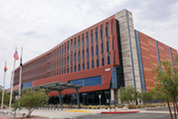
The Phoenix 32nd St VA Clinic will soon be implementing an all-female Women’s Health Patient Aligned Care Team, or WH-PACT. These primary care teams will have female providers who exclusively see Women Veterans. This clinic will be located on the 4th floor of the Phoenix 32nd St VA Clinic (400 N. 32nd St. Phoenix, AZ 85008). If you are interested in transferring to the all-women PACT at Phoenix 32nd St. VA Clinic, please call or leave a voicemail with the Women Veterans Program at 602-277-5551, extension 6764.
|
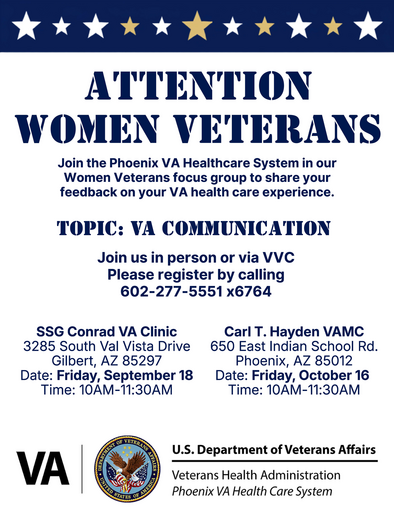
Please consider participating in an upcoming Women Veterans Focus Group. These focus groups are held quarterly and allow the Women Veterans Program to hear directly from you about your experiences with VA Care. The next two focus groups are centered around VA Communication. Participants are invited to share their experiences and offer suggestions for how VA care can be improved. Information on times, locations, and dates can be found in the flyer above.
Registration is very limited, so if you are interested, please call the Women Veterans Program at 602-277-5551, extension 6764 to RSVP.
The Women Veterans Program will be hosting a Women Veterans Midlife Resource Expo specifically designed for Women Veterans experiencing midlife transitions such as perimenopause and menopause. The event will feature informative presentations by subject matter experts; resource tables offering helpful information; and an optional Recreation Therapy class. If you are interested in attending, please register by calling 602-277-5551, extension 6764.
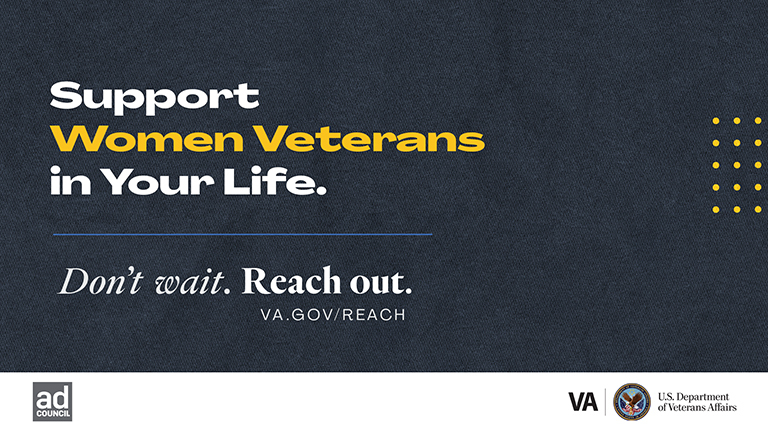 |
September marks Suicide Prevention Month—a period dedicated to raising awareness, sharing resources, and bolstering support for Veterans. For Women Veterans, it’s especially important to use suicide prevention strategies that acknowledge their distinct backgrounds, challenges, and needs. Compared to male Veterans, Women Veterans face several suicide risk factors more frequently. Interpersonal violence, including intimate partner violence and sexual trauma, is notably more prevalent among Women Veterans, and is closely associated with suicidal thoughts and behaviors. Additionally, those who have endured military sexual trauma (MST) are at greater risk of experiencing suicidal ideation and attempts after their service.
Another staggering statistic is that firearms remain the most common suicide method among Women Veterans, accounting for over half of suicide deaths. Rates of firearm-related suicides among women Veterans increased nearly 15% from 2001 to 2021. The VA provides gun locks to anyone, as they can be effective in reducing suicidality by putting time and space between the thought and the action.
If you or someone you know is having suicidal thoughts, please call the Veterans Crisis Line at 988 then press 1. You can also chat with someone online at VeteransCrisisLine.net/Chat or by texting 838255.
View Suicide Prevention Women Veterans Campaign Video: https://www.va.gov/REACH/material/women-veterans/.
October is Breast Cancer Awareness Month, focused on promoting awareness, supporting survivors, and encouraging timely screenings. Breast cancer is the second most common cancer among women; 1 in 8 will be diagnosed in their lifetime. Early detection with mammography greatly improves survival rates.
VA follows the U.S. Preventive Services Task Force (USPSTF) guidelines, which recommend that all women begin mammogram screening at age 40 and continue every other year through age 74. Evidence shows that starting screening at 40 could save nearly 20% more lives, especially as breast cancer rates for women in their forties have increased in recent years. Additionally, Black women experience a 40% higher risk of dying from breast cancer than White women, making access to screening very important to ensure everyone gets the same opportunities to stay healthy. With this information, VA encourages Veterans to begin yearly mammograms at age 40, with the option to continue annual or biennial screenings after discussing with their provider. Regular screening is part of routine VA health care and plays a crucial role in early diagnosis and success with treatment.
Women who served in locations covered by the SERVICE Act may be eligible for a breast cancer risk assessment and mammography if a potential exposure‑related risk is identified. While no direct link has yet been proven between toxic exposure and breast cancer, VA continues to study this serious concern. The specified locations and time periods include:
- Iraq between August 2, 1990, and February 28, 1991, and from March 19, 2003, until burn pits (areas used for burning solid waste in open air without equipment) are no longer used in Iraq;
- the Southwest Asia theater of operations, including Kuwait, Saudi Arabia, Oman, and Qatar, from August 2, 1990, until burn pits are no longer used in such locations;
- Afghanistan, Djibouti, Syria, Jordan, Egypt, Lebanon, and Yemen from September 11, 2001, until burn pits are no longer used in such locations; and other locations and time periods as determined by the Airborne Hazards and Open Burn Pit Registry.
To reduce your risk for breast cancer, VA recommends you ...
- Be physically active
- Maintain a healthy weight
- Avoid drinking alcohol or limit your intake
- Quit smoking
- Discuss risk factors with your doctor regularly
- Stay up to date on your breast cancer screening
Speak with your primary care provider about your individual risk to determine when the right time is for you to start your annual screening. Regular screenings are part of routine VHA care and can lead to early diagnosis and treatment. If you are over age 40 and not experiencing any symptoms, you can self-refer for your screening mammogram by calling: 602-277-5551, extension 5498.
For more in-depth education about breast cancer and screenings visit:
https://www.veteranshealthlibrary.va.gov/BreastCancerScreeningTool/
For more information on VA breast health, visit the Women’s Health site: www.womenshealth.va.gov/WOMENSHEALTH/topics/mammogram-breast-health.asp
From the Phoenix VA Breast Care Navigators
Each October, Domestic Violence Awareness Month (DVAM) is observed to promote awareness, prevention, and intervention for Veterans, their partners, and VA staff impacted by intimate partner violence (IPV). This year’s theme is “Building Relationship Health and Safety for Life,” as healthy and safe relationships are an important part of a person’s health and well-being.
What is IPV?
IPV is any form of physical, verbal, emotional, or sexual abuse between current or former intimate partners, and can also include stalking or coercion. The relationship does not have to be ongoing for IPV to occur, and partners may or may not live together or be sexually intimate.
IPV Services & Resources
- IPV screening, safety planning, and resources are available through the IPV Clinic, your care teams, or any clinic in which you enter VA care
- IPV-focused therapy programs:
-
RISE: For those experiencing abuse from an intimate partner currently or within the past year
-
Strength at Home: For those using or at risk to use IPV behaviors in their romantic relationships
National Domestic Violence Hotline is available 24/7: 1-800-799-7233 or by chat at www.thehotline.org.
For further information or questions, please contact the Phoenix VA IPV Assistance Program Coordinator at 602-277-5551, extension 2680 or scan the code below.
The MOVE! Weight Management Program for Veterans at the Phoenix VA is now offering virtual Women’s MOVE! group sessions. This program is designed to help Women Veterans with weight management by providing nutrition, activity, and behavioral support. The program will discuss a variety of evidence-based tools and strategies and use group discussion to assist each other in problem solving and overcoming roadblocks.
To join other women in this supportive group environment, please contact the MOVE Coordinator, Lauren Hill, at 602-214-6731 or contact the scheduling department and join a MOVE Orientation to learn more about the program.
Below are a couple of success stories from women involved in the program:
Patty , Melissa, Sherry
Program materials and information can be found at:
MOVE! www.move.va.gov
Phoenix VA is currently recruiting for two PTSD treatment studies, and is especially interested in studying the perspectives of Women Veterans! You may be eligible to participate in the STEER or COOPERATE study.
STEER Study
The purpose of the STEER study is to compare strategies for improving a specific kind of PTSD treatment called Cognitive Processing Therapy (CPT). CPT is an effective talk therapy that helps veterans understand and challenge how past traumatic events affect them. Veterans will attend 12-24 weeks of therapy, meet weekly with a therapist, and complete practice exercises between sessions. The goal is to test ways of identifying Veterans that may be experiencing challenges in CPT and then compare approaches for personalizing their therapy experience. Veterans will complete surveys and interviews before, during, and after treatment and will receive payment for answering these questions.
This study is recruiting Women Veterans who are:
- 18 years or older
- Have any type of traumatic experience (particularly those who have experienced sexual trauma)
- Are enrolled in VA
- Are willing and able to complete PTSD treatment
This study is being conducted in partnership with women Veterans and survivors of Military Sexual Trauma.
|
COOPERATE Study
The purpose of the COOPERATE study is to compare an individual versus couples’ approach to treating PTSD using techniques from a specific type of PTSD treatment called Prolonged Exposure (PE). PE is an effective talk therapy that helps Veterans to approach thoughts, feelings, memories, and situations that they may have avoided after experiencing trauma. Veterans will attend about 12 weeks of therapy, meet twice per week with their therapist, and complete practice exercises between sessions. Some Veterans recruited into the study will do therapy with their partners, whereas others will do therapy individually. Veterans will not be asked to talk about their traumatic experiences with their partner. Veterans will complete surveys and interviews before, during, and after treatment and will receive payment for answering these questions.
This study is being conducted in partnership with women Veterans and survivors of Military Sexual Trauma.
This study is looking for Women Veterans who:
- Are 18 years or older
- Have had a traumatic experience
- Are enrolled at the VA
- Have a significant other who is willing to participate in the study with you. This partner should be someone that you’ve been with for at least six months
If you are interested in the STEER or COOPERATE study, please contact research coordinator, Tim Fey, at 602-914-2900, extension 3204, for more information.
|
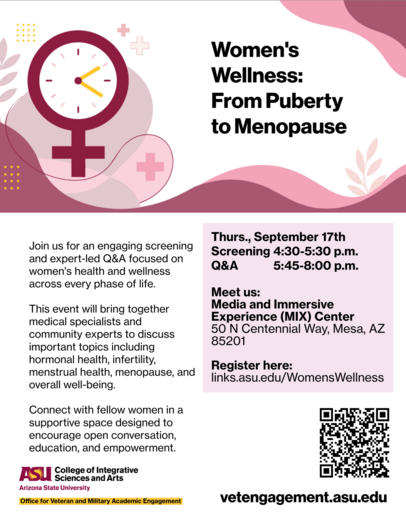 |
Women’s health changes throughout every stage of life and having access to trusted information and knowledgeable health professionals can make all the difference. Join the ASU Office for Veteran and Military Academic Engagement on Thursday, Sept. 17, 2026, at The MIX Center in downtown Mesa for Women’s Wellness: From Puberty to Menopause, an educational evening focused on helping women better understand and advocate for their health.
The event begins at 4:30 p.m. with an educational film screening, followed by a moderated discussion and audience Q&A featuring experts in women’s health, including OB/GYN physicians who specialize in menopause, and a women’s health nutritionist. The discussion will explore women’s health across the lifespan, with a focus on menopause, nutrition, and practical ways women can better understand and support their health. The nutrition expert will also help women navigate nutrition by debunking diet misinformation and providing practical, evidence-based guidance with compassionate psychological support.
This event is presented by Arizona State University’s Office for Veteran and Military Academic Engagement (OVMAE) and is being offered to women throughout the community as an opportunity to learn, connect, and share in an important conversation about women’s health and wellness.
Women Veterans are especially invited to attend, and you don’t have to come alone! Invite your mother, daughter, sister, friend, spouse, coworker, or any woman in your life who would benefit from this conversation. The event is open to all women of all ages, regardless of whether they have a military connection or attend ASU.
A light dinner will be provided for registered guests, making this a great opportunity to gather, learn, ask questions, and connect with other women in our community.
Thursday, September 17, 2026 4:30 p.m. – Film Screening | Discussion & Q&A to Follow The MIX Center | Downtown Mesa – 50 N. Centennial Way, Mesa, AZ 85201
Registration is required: links.asu.edu/WomensWellness
Maintaining good oral health is essential to a healthy lifestyle. It affects speech, engagement with others, and smiles! Unfortunately, dental issues such as cavities, gum disease, and oral cancer remain widespread and this often leads to pain and very costly treatment. Some Veterans can qualify for dental care, although these benefits are very limited and not available as a general medical benefit for all enrolled Veterans (learn more here: https://www.va.gov/health-care/about-va-health-benefits/dental-care ). To help Veterans access affordable, high-quality dental care, the VA offers the VA Dental Insurance Program (VADIP) for those who are in need of comprehensive dental coverage at a reduced cost.
VADIP allows Veterans enrolled in VA health care to purchase private dental insurance through Delta Dental and MetLife. Family members who are enrolled in CHAMPVA may also qualify. Another great benefit is that enrollment is available year-round. Veterans can sign up quickly online or by phone so that they can begin receiving services such as routine cleanings, exams, X-rays, diagnostic care, root canals, surgical care, emergence dental, and more.
With two providers and multiple plans to choose from, Veterans can select coverage that fits their dental needs and budget, as this coverage is offered at a lower cost price. For more information or to explore the plan, you can visit https://www.va.gov/health-care/about-va-health-benefits/dental-care/dental-insurance/ or directly call Delta Dental at 855-370-3303, and MetLife at 888-310-1681.
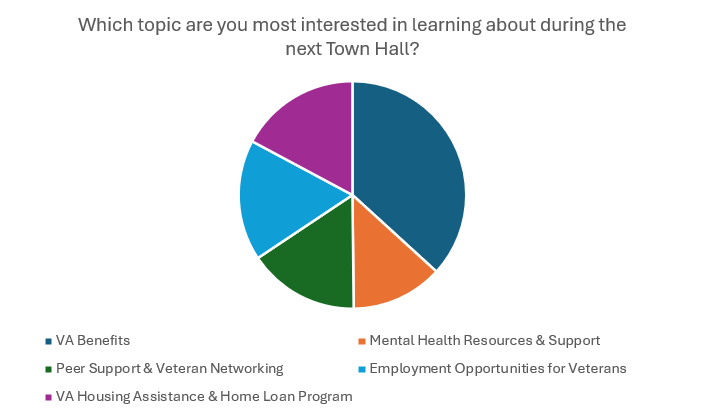
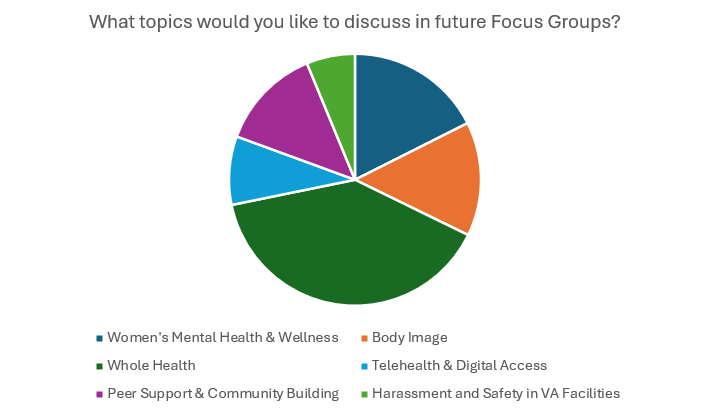
To close out this edition of the She Served Newsletter, below are the results from the Women Veteran’s Tele Town Hall held on Aug. 6. If you were unable to attend live, you can access a recording on the Phoenix VA Facebook Page (https://www.facebook.com/PhxVAHealthcare/videos/1835699420727431). Thank you so much for your participation and be on the lookout for future Town Halls and Focus Groups with the topics you chose!
 |