| | In this edition, breaking up Google could have handed more power to other monopolies, and Hollywood ͏ ͏ ͏ ͏ ͏ ͏ |
| |  | Technology |  |
| |
|
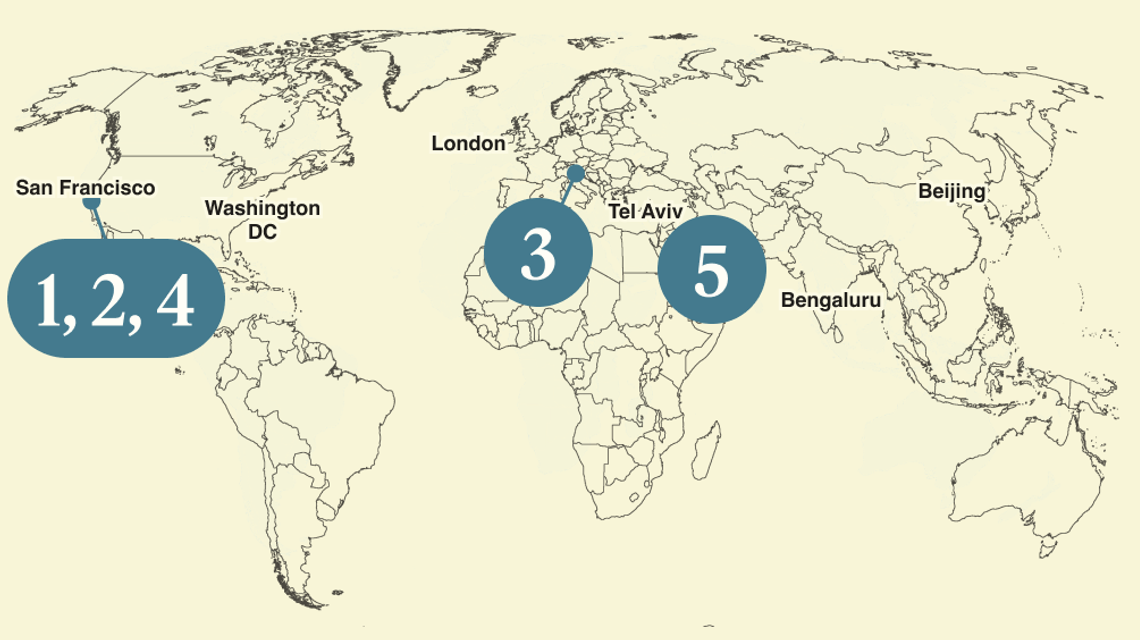 - Experts worry about Astra
- California’s AI oversight
- Hollywood’s open secret
- Philanthropy’s role in AI safety
- Saudi’s big AI plans
 Breaking up Google would supercharge other monopolies, and “cyborg roaches” come to the rescue. |
|
 Antitrust advocates on the left and the right are upset that, yet again, a big tech giant has avoided being broken up after an antitrust lawsuit. This time, it’s Google — again — that gets to stay together despite being found guilty of flouting antitrust law with its advertising business. But here’s the problem with the “break up big tech” argument: If you break up one tech giant, you create or reinforce monopolistic power somewhere else. The antitrust balloon-squeezing phenomenon is well documented. In 2012, the Department of Justice sued Apple and major book publishers for collusion. At the time, Amazon was undercutting book publishers by buying their e-books and then selling them at a loss. Apple wanted to compete against Amazon with its own e-book product, so it got publishers together to agree on pricing. Great idea, if it hadn’t been illegal. Publishers settled, and Apple went to court and lost. So Amazon got to completely dominate book publishers, who now have less money to publish books. Consumer prices rose anyway, because without competition, Amazon could charge more in the long run. Bookstores were shuttered. If you broke up Google, you’d supercharge other monopolies. For instance, if you spun off Android, which Google offers for free, low-cost smartphones would become more expensive. Apple, already too powerful, would dominate even more. In many cases, it’s become too complex to even assess whether it’s good for consumers or for innovation to force Google to spin off Chrome, search, cloud, or its advertising business. And antitrust law can only operate with tunnel vision on individual cases. A judge can’t just break up all of big tech, clearing the way for a new competitive landscape to blossom. The best solution to fostering competition in the industry is to prioritize disruptive new technology by pumping money into university research, which creates the raw material for new technology startups. Creating tax incentives and grants for startups and entrepreneurs, while increasing taxes on big, multinational corporations, would also help. Breaking up a company might be satisfying in the short term. But forcing the tech industry to face a constantly changing landscape is better for everyone in the long run. |
|
Astra kicks off AI monitoring debate |
 Courtesy of OpenAI Courtesy of OpenAIOpenAI’s new AI model, Astra, is delighting its fans with its ability to complete tasks with very little human intervention. But AI safety experts want to know how it’s accomplishing these feats, a more urgent concern in the wake of OpenAI’s Hugging Face hack, which exposed humans’ inability to fully understand the “chain of thought” outputs of AI models. Astra appears to do less of its thinking out loud, giving researchers little insight into whether it might be hiding something or planning something it shouldn’t. “It looks like it can solve hard competition math problems entirely in its head,” wrote AI safety researcher Ryan Greenblatt on X Thursday. “This seems extremely concerning.” OpenAI’s chief scientist, Jakub Pachocki, tried to stem some of that concern on Wednesday, when reports surfaced that the company might have purposely limited the visibility into the model’s outputs in an attempt to improve capabilities. “I want to prevent a race into unmonitorability kicked off by confused reporting,” he wrote. Pachocki said he plans to write more on the subject. — Reed Albergotti |
|
The limits of AI regulation |
 “California State Capitol” by Steven Pavlov via Wikimedia Commons, licensed under CC BY-SA 3.0 “California State Capitol” by Steven Pavlov via Wikimedia Commons, licensed under CC BY-SA 3.0A new California law passed earlier this week creates a framework for “Independent Verification Organizations” that can test frontier AI models before they are released, thereby limiting any risks those models pose. The new law comes as the feasibility of AI oversight is in question for being impossible and too expensive. Laws like this one, even when they are passed with relative haste, become outdated almost immediately. The models built by frontier labs have become so vast that they require other AI models to analyze them. The METR investigation into the OpenAI-Hugging Face hack required the equivalent of $400,000 in AI tokens — a bill covered by OpenAI — and that was just one incident. Rather than bills that seek to create frozen-in-time fixes for fast-moving targets, what’s needed is a more nimble approach to technological governance across the board. We need rules and best practices created by smart people who aren’t afraid to be wrong and course-correct. Otherwise, we’ll end up with reams of ineffectual laws or, worse, ones that create the opposite of the intended outcome — something Californians know all about. — Reed Albergotti |
|
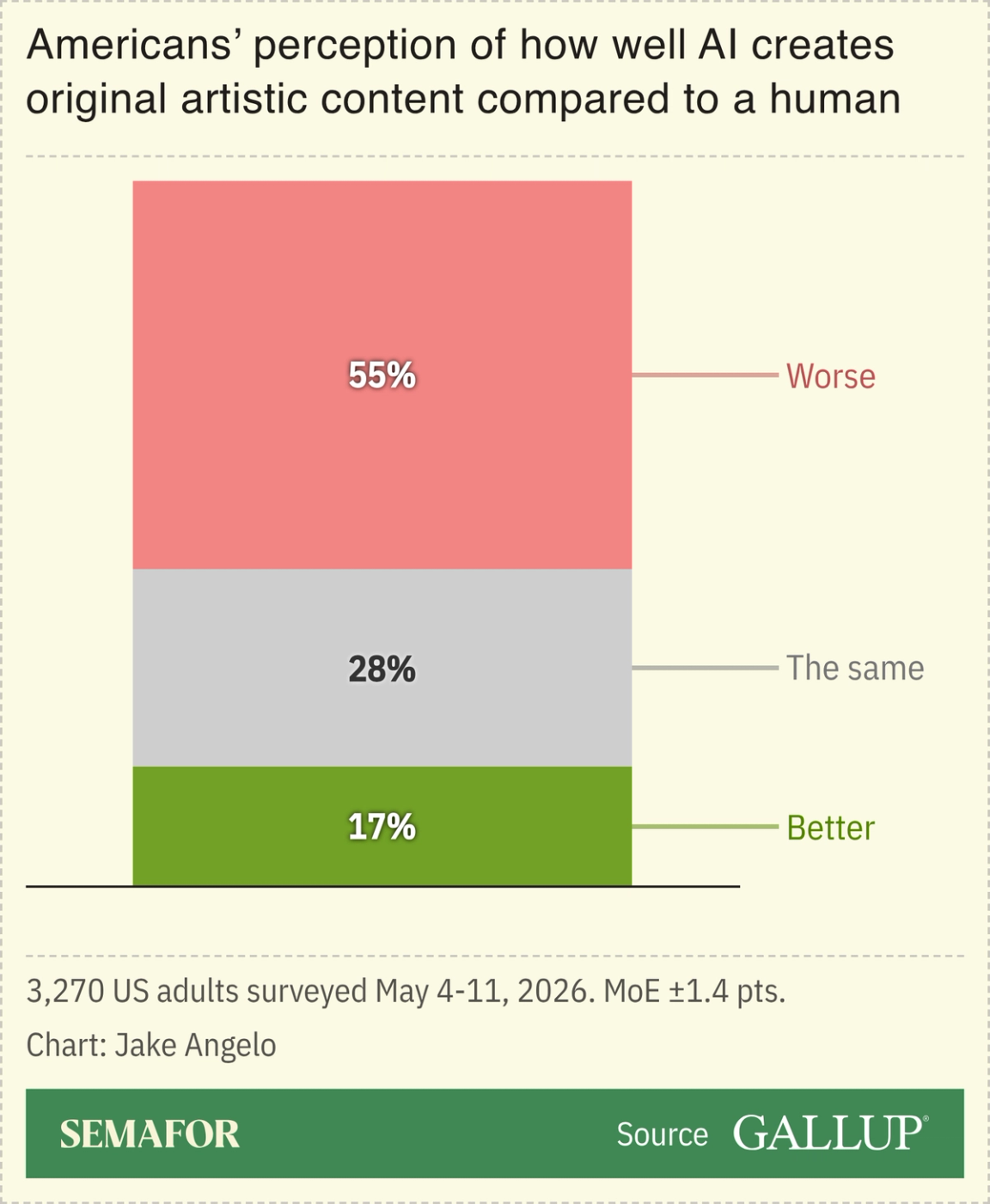 Hollywood’s dirty little secret is that filmmakers do like AI, and they use it to save money. Mike Bennion, a finalist in this year’s Reply AI Film Festival competition, which takes place this weekend, told Semafor he was recently asked to use AI for a Hollywood movie currently in production, short on cash. “They wanted to see if AI could help fill that gap at a cheaper price,” he said. He didn’t disclose which film or studio is backing the production, saying he was “sworn to secrecy,” adding that he finds the industry full of hypocrites who use the tech but are reluctant to say how and why they’re deploying it. Reply AI festival juror and Twilight director Catherine Hardwicke said Hollywood is abuzz with AI. “Every single director that I’ve talked to in the last few months — some very big, Academy-nominated, big blockbuster directors — everybody’s curious about AI,” she said. Some Hollywood titans are going public about the tech’s use. Steven Soderbergh said in April he’d use “a lot of AI” for a film about the Spanish-American war, and on Netflix’s recent earnings call, co-CEO Ted Sarandos disclosed that AI was used in roughly 300 Netflix titles this year. But backlash has been Hollywood’s default stance on the matter. Brady Corbet’s 2024 film The Brutalist was demonized for using AI to sharpen Adrien Brody and Felicity Jones’ accents, and to create architectural drawings in the style of Brody’s character. Corbet issued a statement defending the AI use cases amid swelling online revolt. — Jake Angelo |
|
AI safety is a good place for philanthropy |
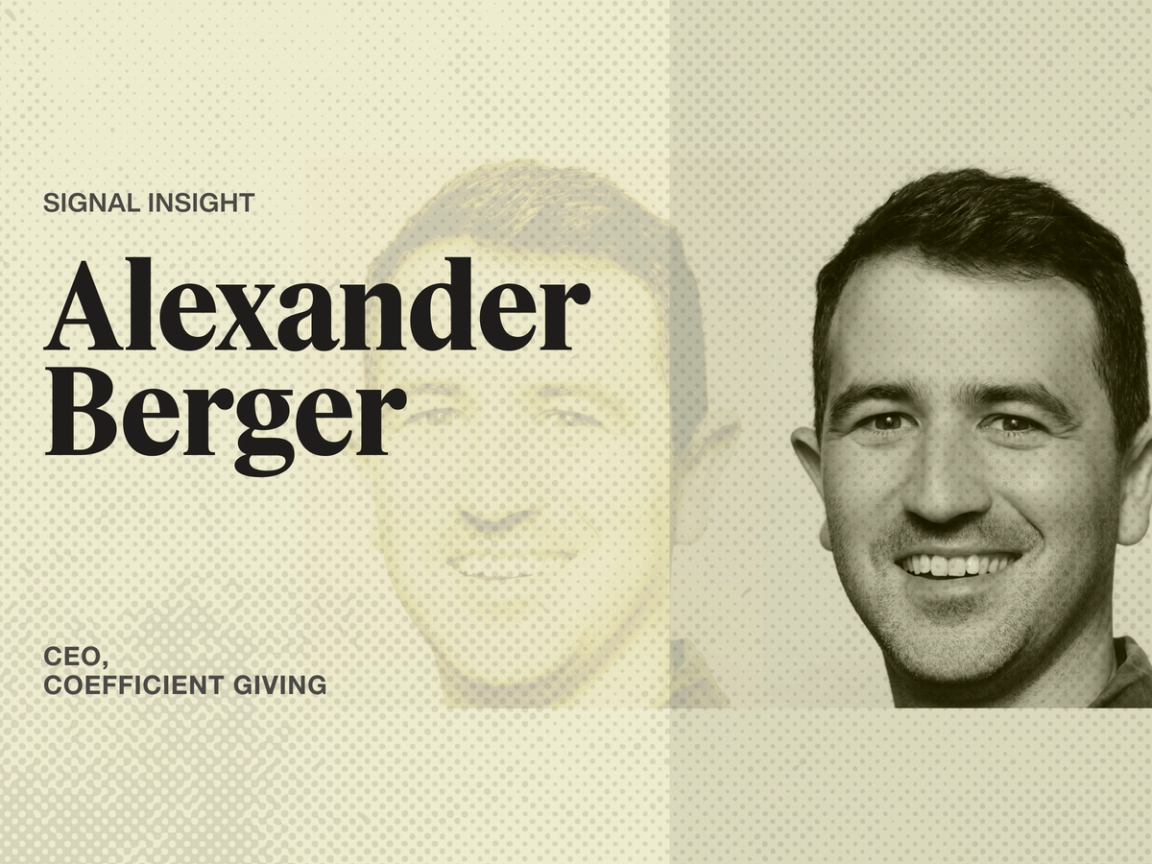 When a swarm of AI agents hacked developer hub Hugging Face in July, a Coefficient Giving grantee, Redwood Research, was one of the two key outfits OpenAI brought in to analyze the breach. “The evolution of the last couple years of progress in AI makes me feel like the early bets that we’ve made there have aged really well and look quite prescient,” Alexander Berger, CEO of the foundation, told Semafor’s Ben Smith. Redwood “clearly would not exist without philanthropic support,” he added. Now, as Silicon Valley sits on the brink of a philanthropic explosion, flowing primarily from planned Anthropic and OpenAI IPOs later this year — one estimate puts it at $370 billion — Coefficient will be a key player in deploying it. Berger says AI safety is a good destination for these funds, given that governments have been unsuccessful at hiring the right people or building consensus around regulation, and the industry’s top companies shouldn’t be tasked with regulating themselves. “There’s a huge space for philanthropy to fund these public goods,” he said, adding that because philanthropy can move fast, its efforts then often become the seeds of government or corporate regulatory bodies down the line. |
|
Saudi AI company builds VC war chest |
 Hamad I Mohammed/Reuters Hamad I Mohammed/ReutersSaudi Arabia’s AI firm, HUMAIN, which is controlled by the country’s sovereign wealth fund, is amassing a massive venture capital war chest in hopes of positioning the kingdom at the forefront of technology. HUMAIN will unveil a new fund later this year, which is expected to be significantly bigger than the $10 billion size initially anticipated, CEO Tareq Amin told Semafor’s Matthew Martin. HUMAIN’s plans are bolstered by its successful $3 billion investment in Elon Musk’s xAI before its merger with SpaceX and subsequent IPO — “a home run,” said Amin. It plans to back companies that commit to using Saudi data centers or to bringing staff to the country, he added. HUMAIN is moving ahead with plans for data centers in the kingdom and has taken stakes in AI startups, including video generator Luma AI. The breakneck pace of the company’s growth — which includes creating its own laptop and operating system — reflects the scale of Saudi Arabia’s bet on AI, in part to diversify away from oil. The momentum behind HUMAIN also contrasts with some of the kingdom’s other ambitious investment plans, which have faced budget cutbacks and management churn. |
|
 A “cyborg roach” developed in Australia. University of Queensland/Handout via Reuters. A “cyborg roach” developed in Australia. University of Queensland/Handout via Reuters.Humans aren’t the only species interacting with AI; the insect world is getting a taste of the tech, too. A team of researchers in Japan has created “cyborg” bugs, fitting cockroaches with electrodes and sensors and using AI to control their movement and track their behavior. The goal is to determine whether an insect’s physiological signals — heartbeat, neural activity, body motion — can accurately detect hazardous environments in disaster areas, using the bugs as scouts to keep humans out of harm’s way during disaster response. The experiment builds upon prior research, which has already been tested in the field for more than a decade: In March 2025, scientists in Myanmar deployed cyborg critters to search rubble in the aftermath of an earthquake, navigating narrow spaces that humans otherwise couldn’t reach. |
|
|


