
|
 |
“A Home For The Art That Connects Us”
Some drawings, photos of my experience at the new Lucas Museum of Narrative Art
|
| |||||||||||||||


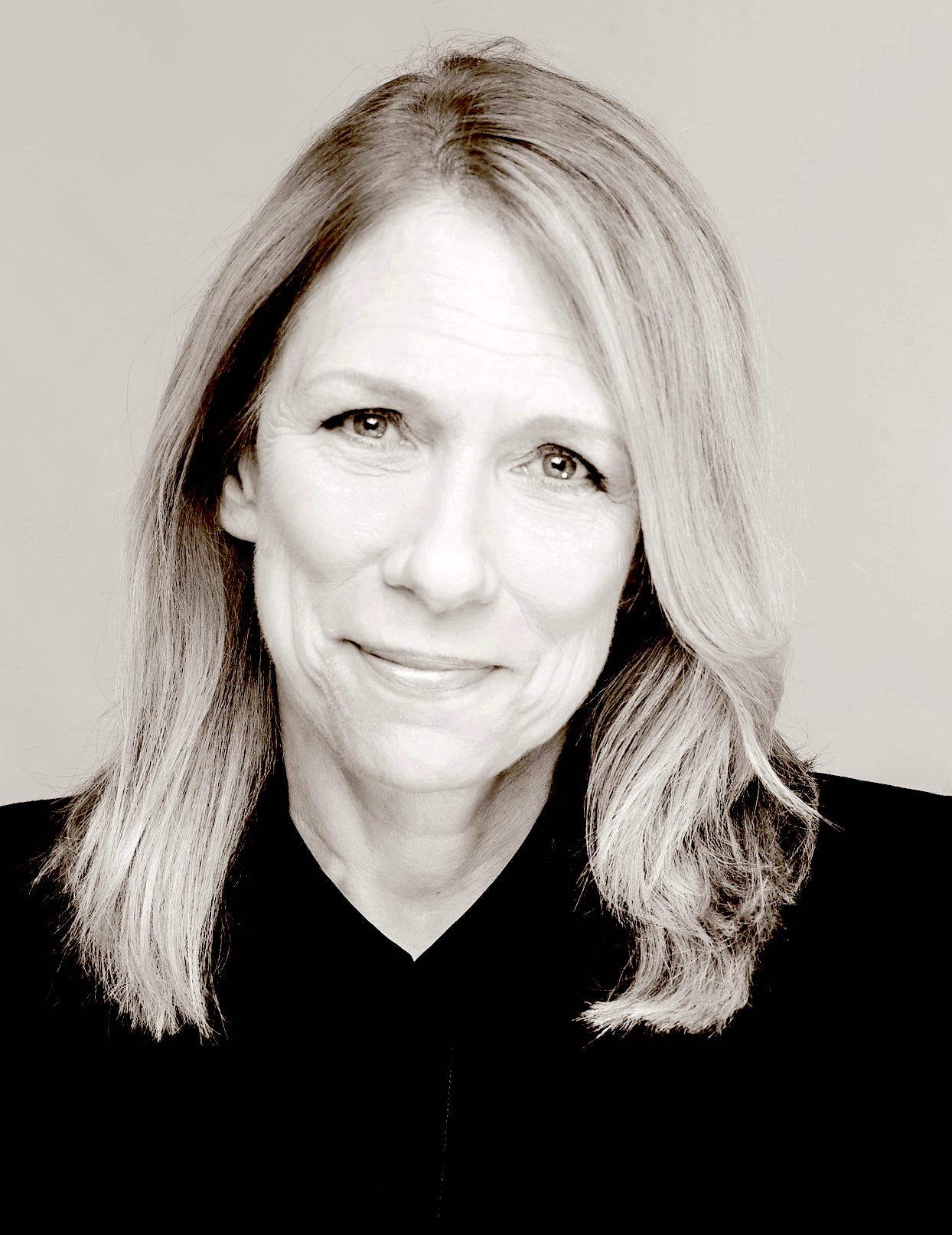
Last week, I was invited to attend a preview of a new museum that I found inspiring before I went and after I left. I want to share my experience with you, and I drew some of the people at the event.
In my corner of the art world, we have many words for what we do: cartoons, illustration, cartoon-art, comics, graphic novels, and narrative art. Each word carries a slightly different meaning; I am a cartoonist who is an illustrator, not an illustrator who is a cartoonist. I am not a comics creator. I am not a graphic novelist, but I am a narrative artist. I am a painter of abstract, figurative and landscape work. I am a photographer. And now I’m a filmmaker. I also consider myself an artist. One of the reasons I wanted to do my documentary was to explain that cartoons can be art.
What does it all mean?
When I was invited to attend a special preview of the yet-to open Lucas Museum of Narative Art in Los Angeles, I was excited to go. Based largely on their collection, George Lucas and Mellody Hobson built the museum, as I understand it, in order to answer some questions, and address the schisms that have divided “fine art” from “narrative art.” The opening of their website states:
A Home for the Art That Connects Us
The Lucas Museum explores how narrative art shapes our world—expressing beliefs, communicating values, expanding imagination, and inviting conversation.
Lucas and Hobson have made clear their intentions for the museum: to emphasize storytelling and to highlight illustration, an area often overlooked — and in their view undervalued — by the art world.
“A museum focused on storytelling in all its forms,” Tracey Bates, the museum’s chief executive, said in a recent interview. “Narrative art is the universal art of storytelling through images. It’s existed throughout our lifetime. Storytelling has always existed. We’re just now a museum that is platforming and showing that.”
I love this idea.
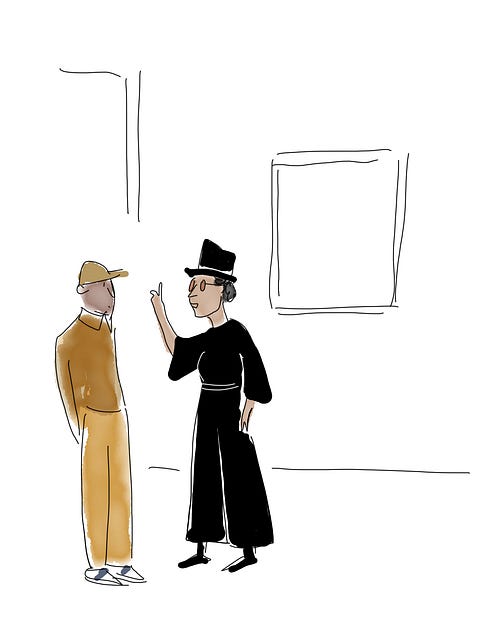
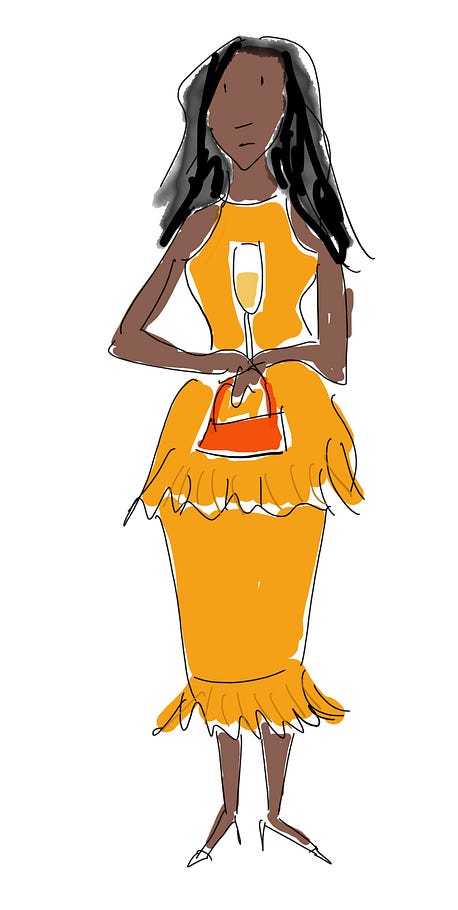
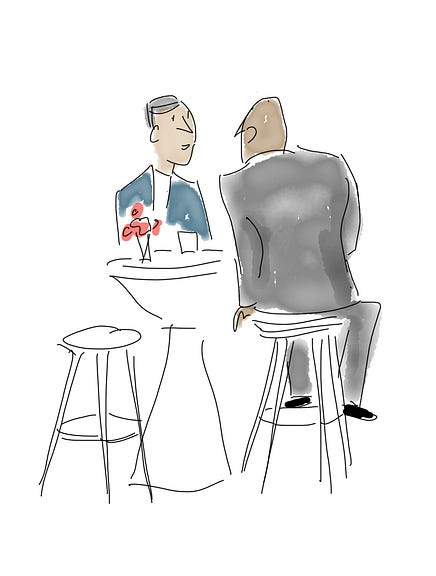
I drew some of the people at the museum opening. It was great people watching, as I tried to look at the art!
 |
The preview was a fancy evening affair. The invite said attire was to be “smart casual” (whatever that means in LA), so I wore dress black jeans and a black jacket. Many were dressed rather formally, in flashy attire, women in dresses.
 |
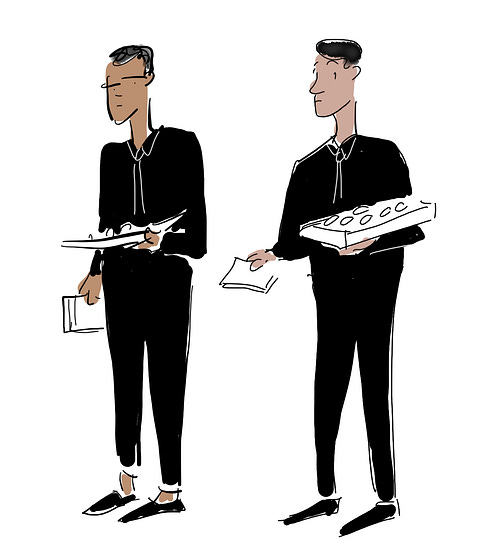
They had wait staff at every turn, and helpers with heaphones and badges to guide us if we got confused. Glasses of wine perched on trays was at one’s fingertips with every turn, as were canapes and open bars. The waiters were unusually tall.
 |
There was a huge sushi bar, and I was told there was a station for steak and lobster, but I forgot to go find it. There were people who looked like they were either investors, or CEOs of other museums.
 |
The art was fun to see, but I found the organization confusing. Some art was organized by creator: Norman Rockwells were in one section, photography in another, Manga in another. Then they had categories titled “Work,” “Family,” and “Murals.” The artwork was labeled in English and Spanish with artist, date and medium (although the medium was not in Spanish), but no context was given. I have to assume this was intentional: just enjoy what you see and draw your own conclusions. But with illustration that can be difficult; illustration is often connected to an assignment or an article, that’s what can distinguish it from “fine art” which typically is just something that comes from the artists brain and heart and hand. Cartoons share that with fine art. I would have liked a little guidance from the curators as to why art was grouped together and the signifigance of some of the pieces.
 |