




|

 |
Gird your loins
House Speaker Mike Johnson is a big touter. He loves specifically to tout the successes of the 119th Congress under his stewardship, regularly promoting to anyone with a recorder or camera the number of bills passed out of his chamber and the significant items—tax cuts and border enforcement funding, mainly—that have become law.
“I have been saying for months . . . this has literally been the most productive and successful and aggressive Congress since 1949,” Johnson told reporters last week. “And I think it’s in the top five of all time.”
“This has been the most aggressive and productive Congress in seventy-seven years—since Harry Truman was president,” Rep. Lisa McClain (R-Mich.), the chair of the House Republican Conference, told reporters. “In terms of number of bills passed, tax legislation, and deregulation, this has been the most successful Congress. Now I know you don’t all hear that because sometimes that doesn’t get covered, and we focus more on what we need to do. We still need to do some work, but we need to take a moment and just look at the work that this Congress has accomplished.”
Johnson and McClain’s boasting narrative about the 119th Congress is likely to be repeated by House Republicans taking the stage at this week’s Republican midterm convention in Dallas.
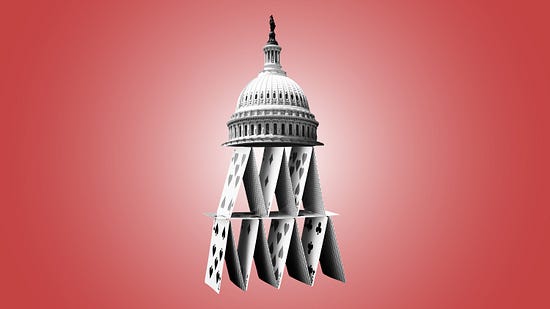
It’s true that the House has passed hundreds of bills and resolutions since the start of 2025. But as with bowel movements, quantity alone can be quite a misleading measure of success. When you take a look at how much of the legislation that got out of the House actually got through the Senate as well and onto the president’s desk to be signed into law, the successes of the 119th Congress start to look a bit different from the story Johnson would have you believe.
According to GovTrack, just 1 percent of the bills introduced in the House so far have been individually enacted into law—a continuation of the GOP majority’s snail-like pace from the previous Congress. The success rate for this Congress ticks up to 2 percent if you include legislation that has been enacted through being incorporated into other bills. That combined success rate is the worst of any Congress going all the way back to the 93rd, which met through 1973 and 1974, the earliest period for which GovTrack makes its data available.
Beyond its superlatively dismal legislative showing, the 119th Congress has stood out in other bad ways. The longest government shutdown in U.S. history took place in the fall of 2025, lasting forty-three days. The first session of the 119th Congress saw fewer votes than any first session in the twenty-first century.
You’ll sometimes hear conservatives argue that it’s actually better for lawmakers to spend more time not legislating on the theory that this would mean they’re spending less taxpayer money than they would be if they were passing more laws. If someone takes this angle in conversation with you, just ask them what happened to the federal deficit—and the national debt—during this sluggish Congress. The passed legislation Johnson and Co. have been touting includes major tax cuts, such as the “One Big Beautiful Bill Act,”¹ which have slashed revenue and pushed the deficit higher from fiscal year 2025 to 2026.
If Democrats take back control of the House and possibly the Senate, Congress will probably not suddenly start boosting its successful legislation numbers. If bills start landing at a higher rate on President Trump’s desk during the first session of the 120th Congress, he will likely just start vetoing more of them. The second session will then have relatively few working days owing to the monumental election cycle coming our way in 2028.
But that won’t be the whole story on the next Congress. When the opposition controls one or both chambers, the result is a policy agenda that leans more heavily on oversight and serves as a dry run for a potential trifecta. Of course, gaining a trifecta was once a virtual guarantee of a productive Congress. If Democrats paint the town blue in 2028, we’ll see if they maintain that tradition—one more that their colleagues across the aisle have broken with in the Trump era.