Plus: New world map, bigger Africa |

US Edition - Today's top story: Why does your brain mix up memories? A new study examines how memories are misplaced in your brain's filing cabinets

September 15, 2026

US Edition

The Conversation
 

Top headlines

Lead story

We’ve all been there: You recognize someone but can’t quite remember their name or, worse, call them something else. Or maybe you tried bonding with a friend over a memory you mistakenly thought you both shared.

Before you swear off all further human interaction for fear of repeating such gaffes, neuropsychologist Ian McDonough of Binghamton University has some potentially comforting news: Rather than completely forgetting a particular memory, your brain likely just misplaced it.

“Memory is a complicated process,” McDonough writes. “Even when everything’s working as it should, the way people remember specific events has many parts.”

In recently published research, McDonough and his team examine the multistage process involved in forming and retrieving a memory, sussing out where and how these memory mix-ups happen in the brain. Better understanding of how the brain files away new memories, he writes, could lead to new ways to prevent memory loss or restore lost memories.

Sign up for our weekly Global Economy & Business newsletter, with expert perspectives from around the world.


 

Vivian Lam

Associate Health and Biomedicine Editor

 
Older people may confuse memories rather than forgetting them altogether. LWA/Stone via Getty Images

Why does your brain mix up memories? A new study examines how memories are misplaced in your brain’s filing cabinets

Ian McDonough, Binghamton University, State University of New York

Rather than simply forgetting a memory, your brain has likely misplaced it. Aging can make memory confusion worse.

Politics + Society

How ‘portfolio reasoning’ explains Trump’s constant reevaluation of America’s value

J. Christian Spielvogel, Penn State

Trump has approached governing through the same framework as his former business portfolio, where he casts the US as a flagship holding whose value he was elected to increase.

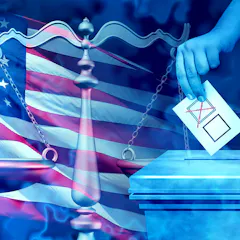
Why the Supreme Court blocked Trump and the Postal Service from restricting mail-in voting for the midterms

John J. Martin, Quinnipiac University

An election law scholar explains the president’s effort to dramatically limit mail voting ahead of the midterm elections – and why the court decided to block it.

Health + Medicine

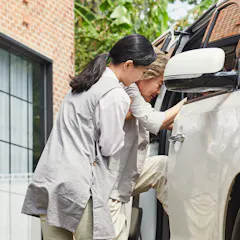
How South Korea is tackling its super-aging problem – and what other aging nations can learn from its experience

Jeongmin Park, Penn State; Alexis R. Santos, Penn State

South Korea’s unusually rapid transition to a super-aged society means it has had little time to find solutions for pension funding and healthcare for the elderly.

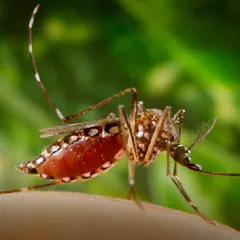
Dengue-carrying mosquitoes expand their reach into new territories – including Florida

Andrés Henao, University of Colorado Anschutz

As dengue spreads further outside its normal tropical zones, doctors and patients need to know what to watch for.

Science + Technology

Is science journalism dying? Comparing a ‘science crash’ 40 years ago to today

Bruce Lewenstein, Cornell University; Chris Mooney, University of Tennessee

While science journalism layoffs pile up and publications shutter, more science communication than ever is available via other online venues.

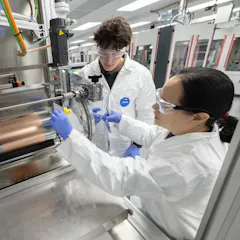
No, AI systems don’t have a drive to survive – a developmental psychologist explains why it only looks that way

Peter J. Marshall, Temple University

In tests, some AI systems resisted being shut down. But an instinct to stay “alive” isn’t the reason they behaved that way.

Economy + Business

To crack the job market, internships can be just as key for young people as the degree

Matthew J. Mayhew, The Ohio State University; Courtney DeRoche, The Ohio State University; Yun-Han Weng, The Ohio State University

Job preparation through internships matters more than ever for young people amid a precarious and fast-changing job market.

Arts + Culture

How libraries in Philadelphia, Pittsburgh and other Pennsylvania communities evolved from subscription clubs to vital public institutions

Bernadette A. Lear, Penn State

The nation’s first successful circulating library was established almost 300 years ago by Benjamin Franklin in Philadelphia.

Education

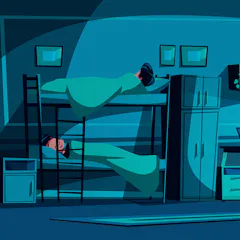
We paid college students about $5 a night to sleep at least 7 hours – and their grades quickly improved

Osea Giuntella, University of Pittsburgh; Sally Sadoff, University of California, San Diego; Silvia Saccardo, Carnegie Mellon University

Universities and colleges won’t necessarily pay students to sleep. But they can offer other incentives that encourage them to close their eyes earlier.

International

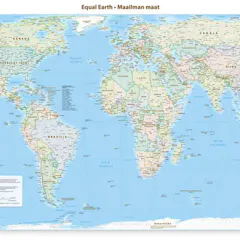
New world map makes Africa look bigger: what’s the fuss about? Cartographers explain

Jack Swab, University of Tennessee; Derek H. Alderman, University of Tennessee

Correcting the mental map of global leaders is an important step in amplifying Africa’s relevance and rights.

Trending on site

Today's video

Four tall cocktail glasses with colorful drinks. In order from right: green, red, orange, and purple. Classes also contain mint leaves, ice, lemons and limes.
Watch on YouTube
 

About The Conversation

We're a nonprofit news organization dedicated to bringing you facts and trustworthy analysis to help you make sense of our complex world. We can give away our articles thanks to the generosity of readers like you. Learn more about us

Support our work

More from The Conversation

Follow The Conversation

You can find us on all your favorite platforms:

YouTubeBlueskyFacebook