For many national leaders attending their first United Nations General Assembly (UNGA), it’s probably possible to mill unobtrusively around in the background, get to know the place a bit, figure out which table not to be seen at during lunch and so on. A UK prime minister does not have this option. Andy Burnham arrives in New York for his first UNGA this week as the leader of a G7 economy, a nuclear-armed power and one of the five permanent members of the UN Security Council. His first meeting with Donald Trump is rightly one of the most closely scrutinised encounters of this entire event.
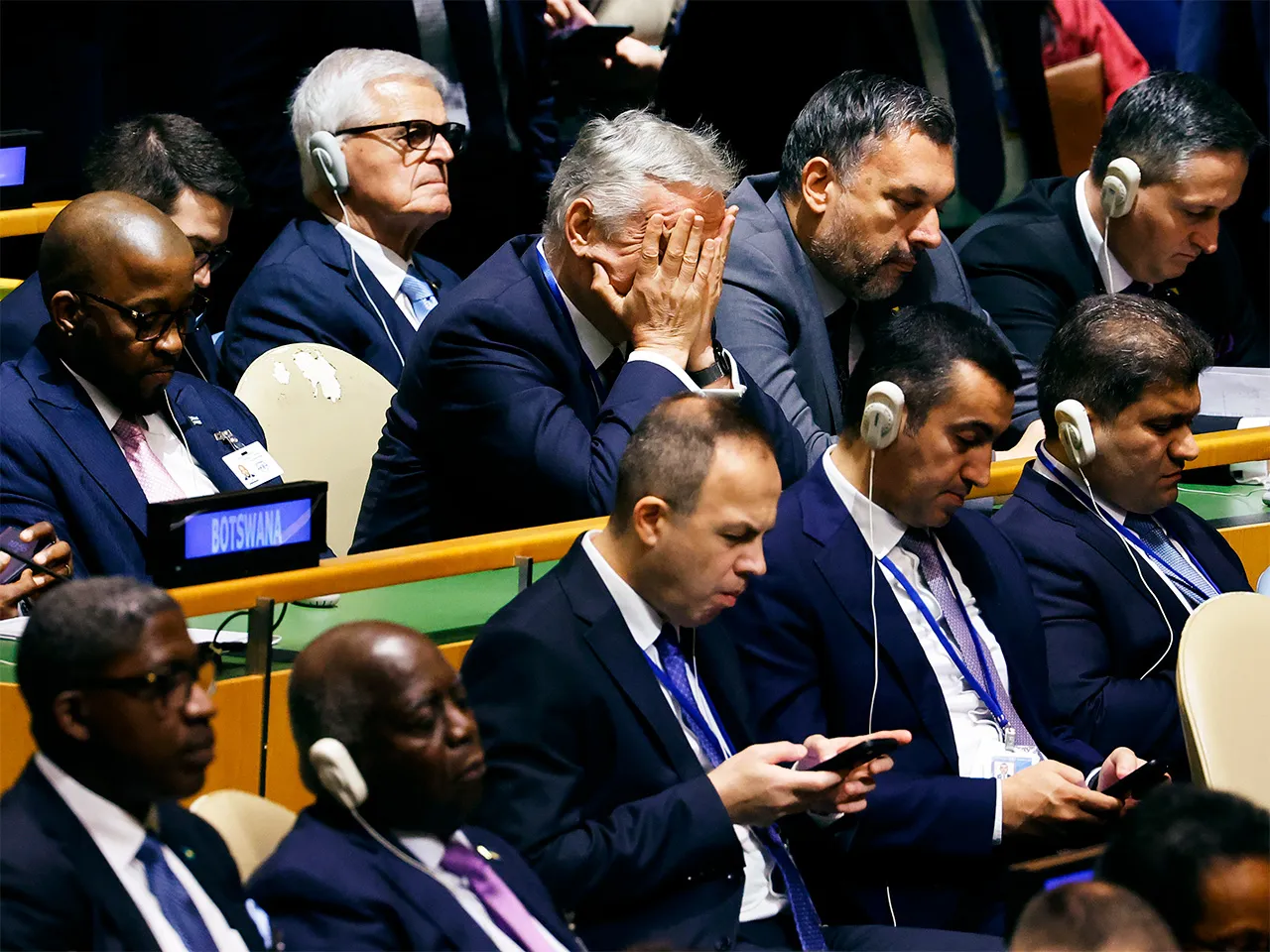
The UNGA’s general debate sessions are a punishing diplomatic ordeal. The leaders or representatives of all 193 members of the UN are given the opportunity to speak to the UN chamber from the same green marble podium from which Fidel Castro droned on for four-and-a-half hours in 1960, to which Yasser Arafat might have worn a loaded pistol in 1974 and at which Muammar Gaddafi complained at length about his jet lag in 2009 (he would shortly have bigger problems).
The complaint that these sessions are a colossal waste of time is neither new nor original. Everyone basically knows what the other representatives will say; it’s also well understood that the real audience is usually people back home, who might appreciate a little melodramatic grievance-pitching in the direction of treacherous neighbours, repressive hegemons or whichever excuse for your own nation’s self-inflicted failings you have chosen. There is also sometimes the opportunity to grandstand from the stalls. In 1960, Nikita Khrushchev, the then Soviet premier, demonstrated his objections to a speech by Filipino senator Lorenzo Sumulong by reportedly thrashing his desk with a shoe. Last year 77 countries staged a walkout during a speech by Israel’s prime minister, Benjamin Netanyahu.
Despite all of this – and the spectacle of people beating up on the UN as an institution, which is also a ritual component of these events – the UNGA remains important. It is, in its most crucial respect, like any other conference. The real value is almost never in the speeches, panels or other events listed on the schedule in your souvenir tote bag but in who you get to speak to – informally, in person. And when those potential interlocutors are the (other) people who govern the world, it would be daft not to show up. Even North Korea sends someone. This year it’s the country’s vice-foreign minister, Kim Son-gyong, who also spoke last year and ticked all of the usual boxes. (He blamed the US for everything and complained about the domination of the UN by the West but assured his audience that “the completion of the five-year plan of national economic development set forth by the Eighth Congress of the Workers’ Party of Korea is definitely within reach” – which was a load off everyone’s mind.)
Discussions in the corridors and cafés around the UNGA can have real-world effects, especially when they bring together countries that generally avoid each other. In 2004, India’s then-prime minister, Manmohan Singh, and Pakistan’s then-president, Pervez Musharraf, had a conversation that lent momentum to a tentative peace process in Kashmir. In 2019, Egypt’s president, Abdel Fattah El-Sisi, corralled his Somalian and Kenyan counterparts – Mohamed Abdullahi Mohamed and Uhuru Kenyatta, respectively – into a meeting that restored diplomatic ties between Mogadishu and Nairobi. In 2013, John Kerry, then serving as the US secretary of state, and Iran’s then foreign minister, Mohammad Javid Zarif, had a chat that helped to clear the path towards an eventual deal on limiting Iran’s nuclear programme.
Things can be done at UNGA, even if they might later be undone. The question that hangs over every UNGA (and over the UN generally) is: how can more get done? A sweeping reform of the Security Council to reduce the power of the permanent five is unlikely, on the basis that those five would need to agree to it. A rigorous enforcement of the voluntary 15-minute limit for UNGA speeches has appeal but the practicalities are daunting: who is prepared to wield the shepherd’s crook at the president of a superpower?
The most plausible solution, at the risk of prompting screaming fits from attendees, might be to extend the UNGA by a few days to allow more time for informal discussions on the fringes – or perhaps even, given the general state of the world, to lock the building from the outside until those within come up with some better ideas.
–
‘Work with the opposition inside Iran’: John Bolton’s advice to Trump as Operation Epic Fury drags on
Andrew Mueller is a frequent Monocle contributor and the host of Monocle Radio’s ‘The Foreign Desk’. For more opinion, analysis and insight, subscribe to Monocle today.