Berlin’s transport trade fair, a taste of Spain and a selection of stories from Monocle’s latest issue.
|
Friday 25/9/26
|

|
|
London
Paris
Zürich
Milan
Bangkok
Tokyo
Toronto
|
|
|
|

Good morning from Midori House. For more news and views, tune in to Monocle Radio. Here’s what’s coming up in today’s Monocle Minute:
THE OPINION: Donald Trump’s media bans might work against him
TRANSPORT: Germany is getting the world’s trains back on track
DAILY TREAT: Go with the flow at Iago Pazos’s riverine restaurant
THE LIST: A selection of stories from Monocle’s latest issue
|
|
The recent White House ban risks alienating traditional media
By Gregory Scruggs
|

|
The normally hyper-competitive US news industry sounded like a trade union this week following the Trump administration’s decision to bar CNN, MS Now (formerly MSNBC) and Politico from the White House grounds. The two left-leaning cable news channels and the DC-insider digital news outlet “shouldn’t be able to constantly write or report FICTION and LIES”, wrote the president on his social-media platform. Even if some reporters were allowed to re-enter the White House yesterday, the debacle should spark a renewed confidence in traditional news gathering.
No specific recent incident sparked the eviction and in response the US’s five major TV news networks – ABC, CBS, CNN, NBC and Fox – collectively agreed to suspend pool coverage of White House events. When I tuned into National Public Radio’s coverage of the UN General Assembly on Tuesday, anchor Mary Louise Kelly pointedly told listeners that they would not hear Trump’s remarks “in solidarity with our fellow journalists”.

|
|
|
In the dark: Traditional media is needed to enlighten the public
|
|
While rivals standing shoulder to shoulder might seem surprising – especially conservative outlet Fox News’ decision not to cross the picket line – a precedent had been set in 2009. During the financial crisis, the Obama administration sought to exclude Fox from interviews with the White House official who was overseeing the bailout programme. ABC, CBS, CNN and NBC closed ranks and declined to air those segments until Fox was allowed around the microphone.
Back then social media was in its infancy. Today the White House believes that it can shrug off a boycott. On Monday, Trump TV debuted on YouTube with round-the-clock coverage of Oval Office comings and goings. (As of Wednesday, viewership had peaked at about 8,500 – a figure just a few zeros shy of the millions who tune in to cable news networks every day.)
It might be tempting to write off the major TV networks, legacy daily newspapers and nationally syndicated radio stations amid a nimbler media landscape of streamers and their ilk. But this would ignore a vast infrastructure of studios, bureaux, broadcast booths, cameras, audio equipment and the people who run it all – from smart on-air anchors and bold-faced columnists to behind-the-scenes technicians and shift workers at printing presses. These professionals provide the raw material for the online commentariat and podcast hosts.
While a handful of the so-called “new media” landed coveted White House press credentials last year, livestreaming from the briefing room with a jury-rigged smartphone is still a far cry from on-the-ground reportage or the foresight from global correspondent networks. And when the presidential debates roll around in two years’ time, I guarantee that tens of millions of Americans will be tuning in to a legacy network, not Real America’s Voice or The Young Turks.
In a hotel last week, I channel-surfed between CNN and Fox. The former was fixated on a Russian oligarch who bankrolled Donald Trump Jr’s wedding in the Bahamas as symptomatic of the administration’s corruption. The latter trumpeted a federal fraud investigation into a Los Angeles housing scheme to pound Gavin Newsom’s record ahead of his expected presidential bid.
Did the breathless coverage of the other side’s foibles, with guests often speaking from their home offices rather than the studio, endear me to the on-screen reporting? Not particularly. But I found myself doing some further reading. Both stories were factual and I hadn’t come across either in my daily newspaper. As it happens, I went to sleep a more informed citizen.
Gregory Scruggs is Monocle’s Seattle correspondent. For more opinion, analysis and insight, subscribe to Monocle today.
|
|
Own the thing. Behind the next big thing
|
transport: germany
It’s full steam ahead at Berlin’s Innotrans trade fair
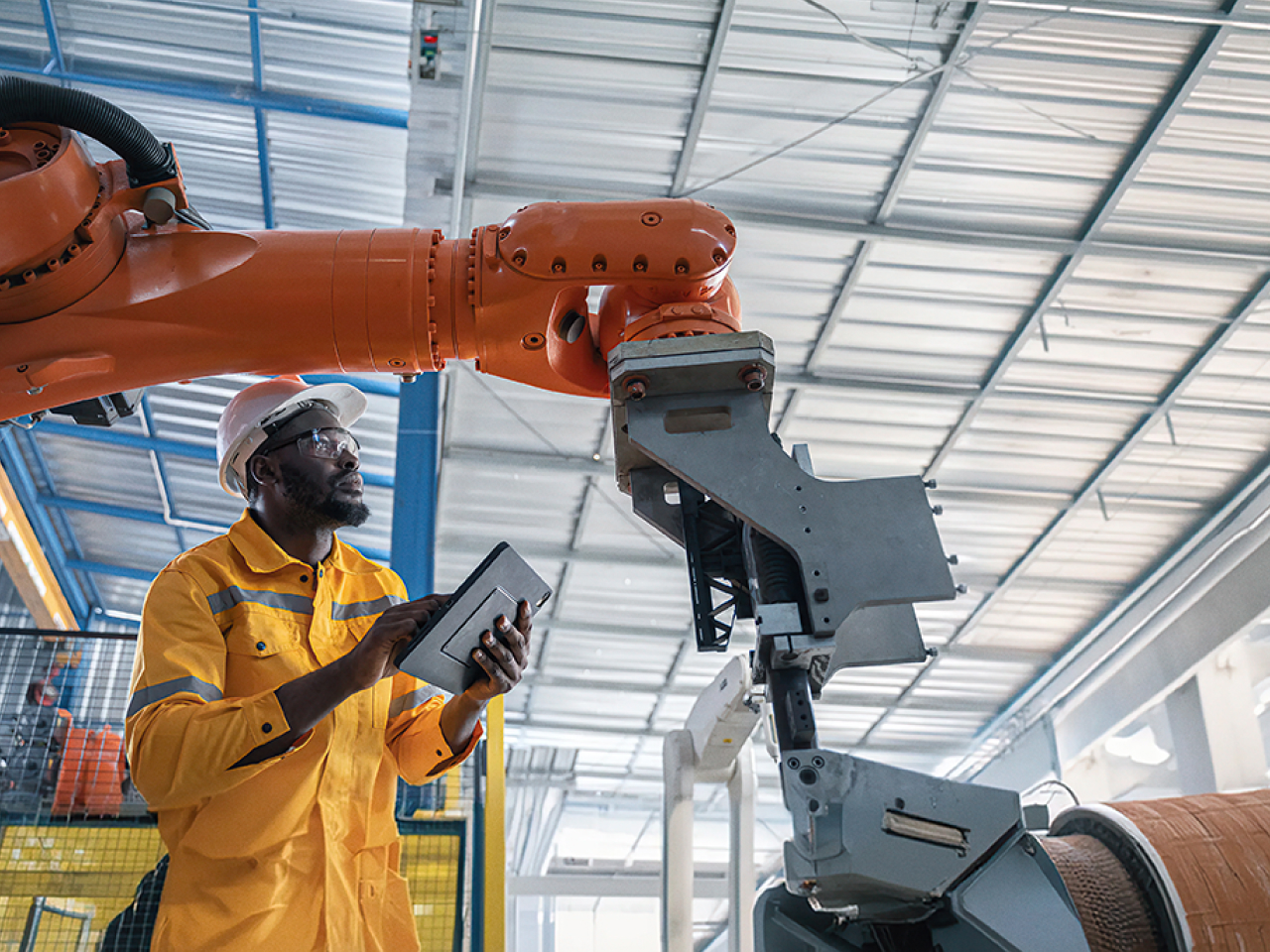
Germany might have trouble running its railway but it remains remarkably good at inventing things for everyone else’s (writes Florian Siebeck). Need proof? Head to Innotrans, the biennial transport trade fair that wraps up in Berlin today. Across 42 halls – and kilometres of track – the Germans have been busy.
Monocab, for example, is an autonomous pod designed to give disused, rural railway lines another life. These small, lightweight vehicles can travel in both directions on the same track and be summoned using an app. Then there’s Hyperloop: a project that the Technical University of Munich has picked up where Elon Musk gave up, shooting passenger capsules through tubes at aircraft-like speeds. And a design studio from Hamburg has rethought the restaurant car with dinner served from rail-based food lanes,
kaiten-style.

|
|
|
Fast track: Germany is bringing the world’s trains up to speed
|
|
Some of what’s on show is nearly set to go. Berlin night-train start-up Nox has unveiled a private suite inspired by long-haul business class, with a large reclining seat that turns into a bed. The train will run from 2027 between Munich and Hamburg. Other routes and more ambitious private rooms will follow later, including cabins with hotel-sized double beds.
Siemens, meanwhile, has brought its new tube to Berlin. The model will soon replace the old Piccadilly line fleet dating from 1975, with walk-through trains, wider doors and – a novelty for a deep-level London Underground train – air-conditioning. So yes, Germany’s trains might still run late. But judging by what’s on display at Innotrans, the country hasn’t lost its appetite for the railway.
|
|
• • • • • DAILY TREAT • • • • •
Dive in to a riverside dinner at O Loxe Mareiro

Picture this: it’s 19.00 and an hour until dinner service but chef Iago Pazos strolls out of O Loxe Mareiro in his trunks, walks five metres and then plunges into the Ría de Arousa in Galicia, northwestern Spain. If you’re lucky, you’ve managed to reserve a table overlooking the estuary where the river Ulla meets the Atlantic (you really must book in advance).
Pazos has plenty of gastronomic ventures in this corner of Spain but the rustic O Loxe Mareiro is his passion project. “Everything that we serve has been caught or farmed locally,” says Pazos. Here guests begin the meal outside with clams and apéritifs, before heading in for mains and returning to the waterside for dessert and a digestif at sunset.
loxemareiro.com
|
|
the LIST: FROM monocle.com
A selection of stories from the latest issue
Monocle’s
October issue – our Style Special – is out now. We dive in to the colourful world of Santos Populares, Lisbon’s exuberantly sanctified street party; toast to the entrepreneur shaking up Singapore’s nightlife; and visit architect Lina Ghotmeh’s Paris studio. Plus: our Style Top 25, the art of dressing smart, a Burgundy roadtrip and Auckland gets back on track. Here are three reads to start with:
|
|
| | |