
|


 |
The other day I went on the Monitoring the Situation livestream, and we talked about the history of San Francisco tech culture:
I’ve never actually worked in the tech industry, but I’ve lived on and off in the Bay Area for a quarter of a century now — including the last 10 years in San Francisco itself — and I’ve spent a lot of that time hanging out with people who work in or around the tech industry. Throughout much of that time, I was also reading some the same source materials that inspired lots of tech people — science fiction, futurist websites and books, nerdy forums and blogs, and so on.
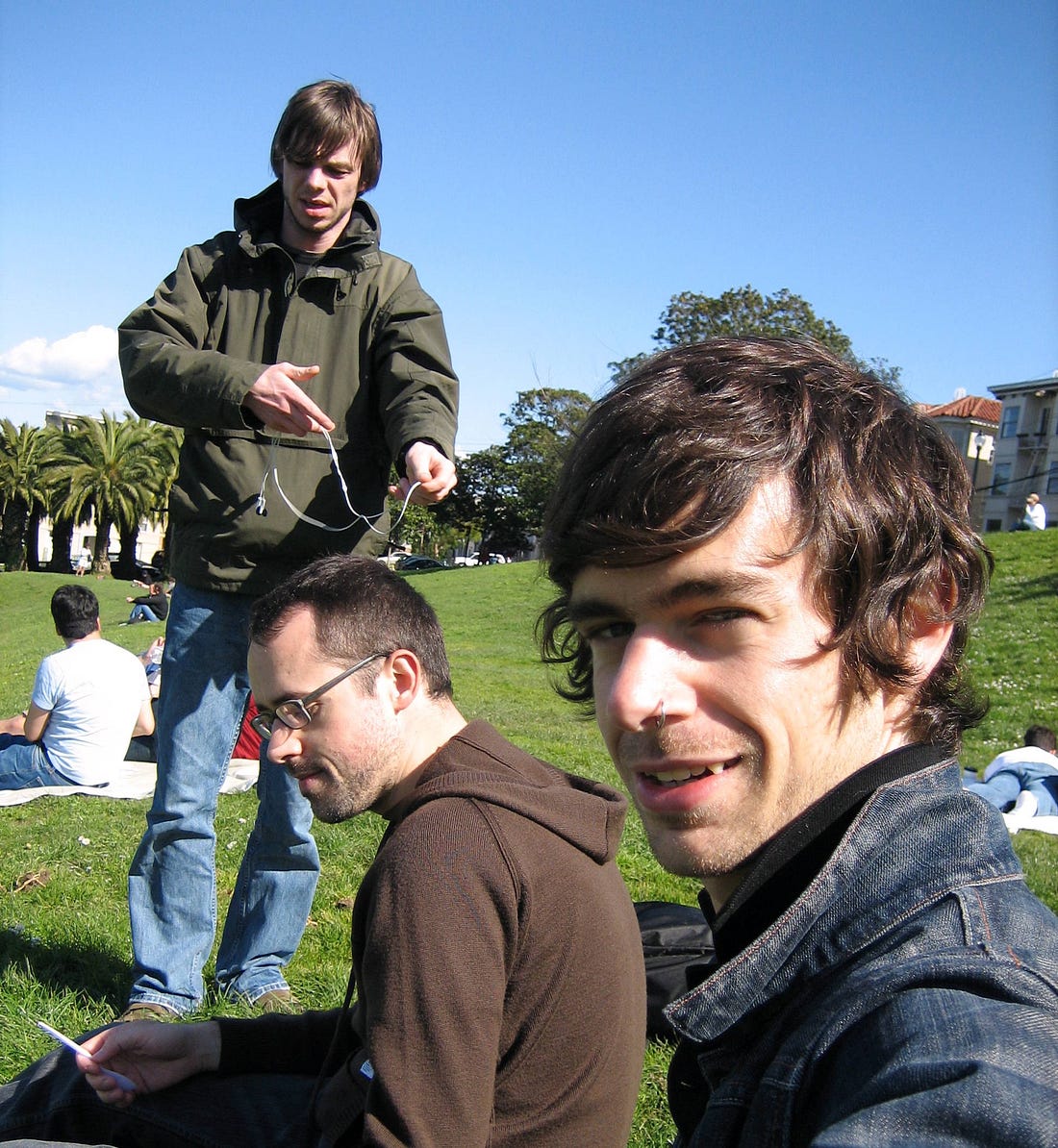
Over that time, I’ve watched more and more people start to care about all this. Back in the early 2000s, as far as I could tell, pretty much nobody in the world cared about what some dorky hoodie-wearing computer programmers were up to on a Saturday night in SF. Fast forward 25 years, and the President of the United States is gathering opposition research on SF techie subcultures:
President Trump's allies are targeting Anthropic CEO Dario Amodei as the face of AI "doomerism" and a founding father of the effective altruism movement that's come under increasing political fire…Trump surrogates see Amodei as an easy foil because of his politics and focus on AI safety, sources told Axios…
A memo began circulating within the White House this week that seeks to paint effective altruism as a fringe, cultish collective out of touch with mainstream America. The memo, obtained by Axios, places Amodei at the foundation of the movement…Effective altruism “built the AI-doom pipeline,” states the memo, which was penned by a Trump political adviser…Critics of the movement, which has ties to the AI research community, have called out its obsession with AI safety, animal welfare (including musings on shrimp consciousness) and other values they deem far from the U.S. mainstream…
The document lists a veritable parade of horribles for the average conservative mind: abortion, veganism, devaluing human life by overvaluing animals or granting "digital minds" civil rights-like protections.
If you could go back in time and tell the 2001 version of me that the President’s allies are talking on national news about shrimp consciousness, I would have laughed out loud. (Until you told me who the President was, of course.) Not only that, but you have the New York Post talking about Effective Altruists’ sex lives, and op-eds debating EA philosophy in top blogs and the Washington Post.
Ladies and gentlemen, it really happened. The nerds took over the world. We have arrived.
I’ve never been an Effective Altruist,¹ of course, and I’ve only hung out a little bit in those circles. But in fact, EA is only one corner of the tech culture, and its influence on the AI safety discussion is probably a lot less than people think. In fact, the people talking about EA in the White House and in the news aren’t even really identifying the right group of people — the AI safety obsessives that the White House is taking aim at are the Rationalists, who are descended from a group of 1990s futurists called the Extropians. EA is a largely separate philosophical movement that appeals to some of the Rationalists, has some overlapping social circles, and jumped into the AI safety discussion later on after the basic ideas were all in place.
But anyway, that whole intellectual history is a story for another day (or you can just go ask AI). Today what I wanted to do is to give a brief anthropological history of the tech culture in San Francisco since the turn of the century, from my own quasi-outsider’s perspective. There have been four distinct eras over that time period:
The Rebel Era (2001-2012)
The Corporate Era (2012-2019)
The Interregnum (2020-2022)
The AI Era (2022-present)
But let’s start with some background.
The 20th century: SF tech pre-history
SF tech culture is the modern descendant of a very long lineage. It’s a branch off of the tree of computer science culture, which is closely intermingled with electrical engineering culture, and which are both branches off of the great broad trunk of science and technology culture more generally. But it’s important to realize that what became SF tech culture didn’t start in San Francisco — it started down on the peninsula to the south.
The modern tech industry began in the suburban towns around Stanford University — Menlo Park, Palo Alto, Cupertino, Sunnyvale, and so on. This had been a hub of the old electric equipment industry from World War 2 onward, and so William Shockley chose Mountain View to start the first semiconductor company in 1955. Fairchild broke off from Shockley, and Intel broke off from Fairchild. The whole area became a hub of semiconductor manufacturing in the 60s and 70s, then computer companies (Apple was founded in 1976 in Cupertino), then software companies like Oracle and Adobe. For a long time, Sand Hill Road in Palo Alto was the locus of the venture capital industry.
Today we use “Silicon Valley” to refer to the IT industry in general, but originally it meant the area around Menlo Park and Palo Alto. I wasn’t there to see this era, but a few good resources to learn about both the economics and the culture are:
The book Regional Advantage, by Annalee Saxenian, which documents how and why Silicon Valley became America’s top tech cluster
The documentary General Magic, which chronicles a failed but highly influential smartphone startup in the 90s
The movie Office Space and the book Microserfs, which both satirize the stultifying experience of working for a big tech company in the 90s
The book From Counterculture to Cyberculture, which chronicles the techno-hippie movement that grew up around the emerging computer industry
San Francisco began as a marginal bit player in the whole tech ecosystem. It was a place that some tech people would come up to party and network, especially during the dotcom era when a lot of money (at least, for those days) was splashing around.
But it did have a media industry, and in the 1990s, some people who worked in publishing, advertising, and other media started trying to get in on the internet gold rush. A few engineers and entrepreneurs who didn’t want to live in the boring suburban environment of Silicon Valley moved to SF to make tech media and web startups. Tony Hsieh’s autobiography, Delivering Happiness, tells the story of how he founded LinkExchange in San Francisco, while getting involved in the rave scene. At the same time, SF became a locus of tech media — Wired was founded there in 1993.
That, I think, was really the start of modern San Francisco tech culture as we know it. It bled dir