| | In this edition: Kenya eyes US minerals deal, Dangote faces East Africa refinery competition, and te͏ ͏ ͏ ͏ ͏ ͏ |
| |  Addis Ababa Addis Ababa |  Nairobi Nairobi | Kinshasa |
 | Africa |  |
| |
|
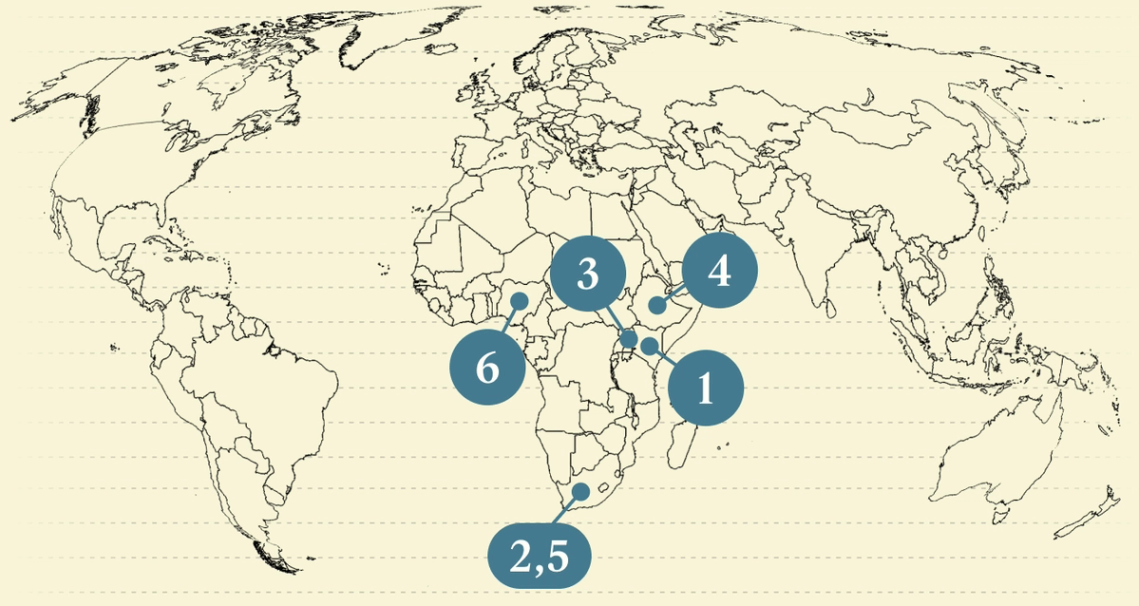 - Kenya eyes US minerals deal
- S. Africa needs US reset
- East Africa fuel rivalry
- Ethiopia peace unravels
- $27B mining deal falters
- Diesel generator reliance
 DR Congo film examines life without electricity |
|
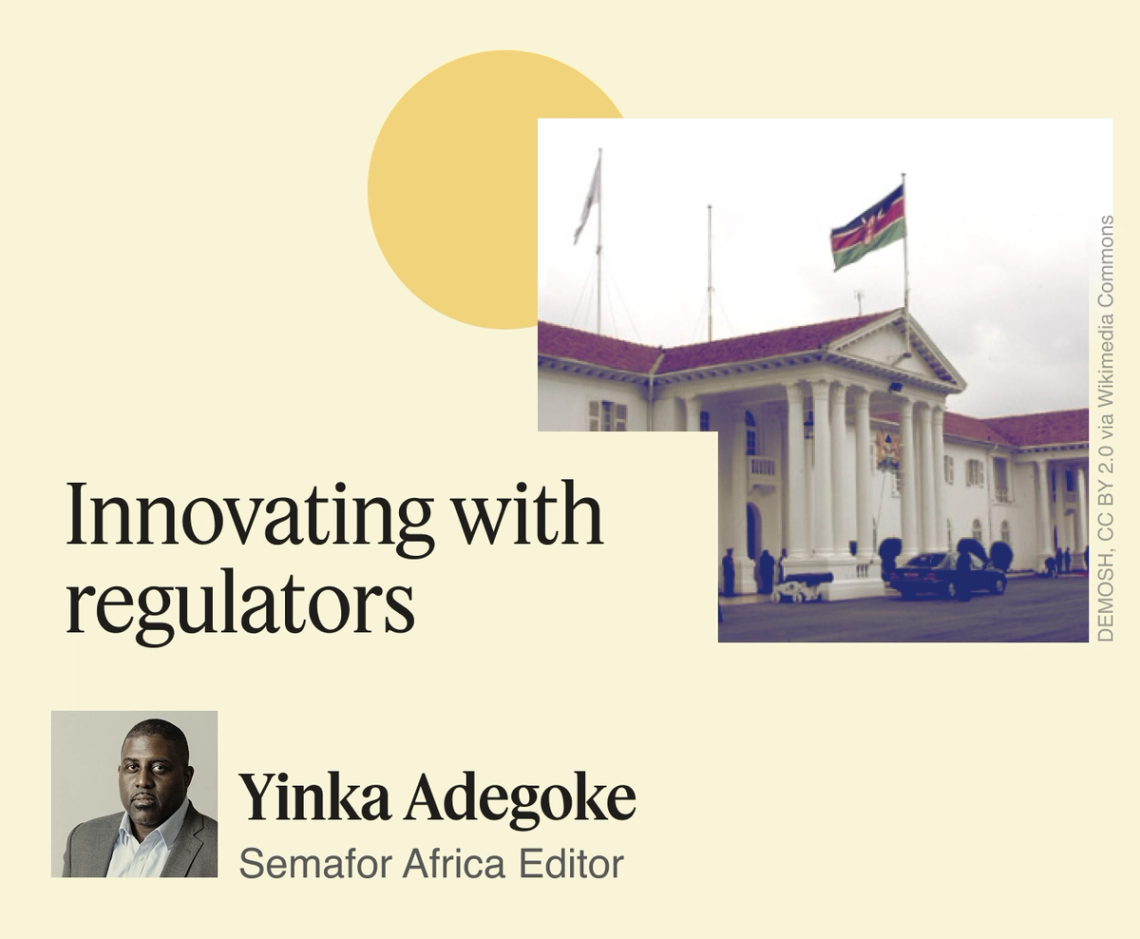 Africa’s innovators are discovering that building a new product or service often also means building a new relationship with the government. Flutterwave CEO Olugbenga “GB” Agboola told me this past weekend that the leading fintech player learned that lesson “the hard way” after regulatory challenges in Kenya back in 2022. “We have to engage in advocacy. We have to influence policies,” Agboola said, explaining that Flutterwave began treating the regulator as a “stakeholder in our business.” That is a useful lens for African innovation. Often these types of companies are described as technology businesses, but many of the problems they are trying to solve are institutional. Of course, businesses the world over lobby governments to shift regulations in their favor. But in developing economies, innovators must go further — building payment rails, logistics networks, or healthcare systems that companies in richer countries take for granted. In parts of Africa, working with the government, and sometimes helping reshape it, becomes part of the innovation itself. Food4Education founder Wawira Njiru told us at Semafor’s Next 3 Billion last week that she started feeding 25 children in Kenya in 2012 and now feeds more than 700,000. To do that, her organization built kitchens and supply networks, but also worked with county governments to fund school meals, even where those responsibilities did not fit existing mandates. “I always say, meet them where they are, not where you wish them to be,” Njiru said of regulators. That meant understanding government incentives, finding champions, and figuring out what agencies could actually fund. Scaling across Africa means navigating regulatory regimes, financial systems, and government institutions. Companies that understand those institutions are learning — but also shaping — how the economies where they operate actually work. African companies will need to do more than build apps, raise money, or deploy AI. They will need to make new ideas work inside the economies around them — and bring government along. |
|
Kenya nears US critical minerals deal |
| |  | Alexis Akwagyiram |
| |
 The US and Kenya are in “very advanced” talks on a critical minerals deal, Nairobi’s mining minister told Semafor. Hassan Ali Joho said discussions have focused on building refineries and processing plants that could supply the US, and would include “necessary incentives,” such as “special economic zones, port access, support infrastructure, and tax concessions.” Kenya’s President William Ruto has made wealth creation through industrialization a focal point in his pitch to voters ahead of polls next year in which he will seek a second term. Joho said the mining sector currently contributes around 1% of Kenya’s GDP, but that the government wants to increase that to 10% within the next decade. Washington has unveiled investments across Africa as it looks to challenge China’s access to minerals needed for the digital infrastructure, the energy transition, and defense equipment, though it could be years before the new US projects become productive. African nations, meanwhile, have sought to to capture more value from the supply chain: Leaders complain that refining and processing is largely done overseas and are increasingly pushing for investments and job-creation at home. |
|
Pretoria needs US reset, says minister |
 Dean Macpherson. James Oatway/Reuters. Dean Macpherson. James Oatway/Reuters.South Africa needs to reset its relationship with the US, a senior member of Pretoria’s governing coalition said in an interview, describing Washington’s demands as “fairly straightforward.” Infrastructure Minister Dean Macpherson’s comments suggest a more conciliatory stance than has often come from Pretoria, pointing to a measure of distance within the government between the African National Congress and Macpherson’s Democratic Alliance. Macpherson told Semafor that anyone who thought Africa’s biggest economy could do without the US was “misguided.” Relations between Pretoria and Washington remain strained, particularly after the US imposed visa restrictions on unspecified South African officials. The Trump administration has pressed South Africa over its Black Economic Empowerment rules and laws that allow the state to take land without compensation in some circumstances. South Africa, meanwhile, has been pitching mining deals to US companies, betting that business-to-business relationships will transcend fractured political ties. — Tiisetso Motsoeneng |
|
East Africa refinery rivals take on Dangote |
| |  | Martin K.N Siele |
| |
 Thomas Mukoya/Reuters Thomas Mukoya/ReutersAliko Dangote’s planned refinery on Kenya’s Lamu Island will likely rely on seaborne imports for crude supplies as Uganda remains non-committal on the project. A Uganda National Oil Corporation executive told Semafor that the country, which is set to begin its first commercial oil production in the coming months, would instead back two other planned refinery projects in Uganda and Tanzania. The tensions between Kenya and Uganda over oil partnerships point to a race to see which country will be East Africa’s dominant energy hub. The shock to energy supply chains caused by the war in Iran have revealed the extent of the region’s reliance on fuel imports. Uganda is set to take up a much more influential role in East African geopolitics thanks to its leverage from its oil sector and recent investments. They include taking up a 20% stake in Kenya Pipeline Company, which distributes petroleum products across East African countries, including Uganda, DR Congo, Rwanda, and Burundi. |
|
US Senators warn on Ethiopia conflict |
| |  | Adrian Elimian |
| |
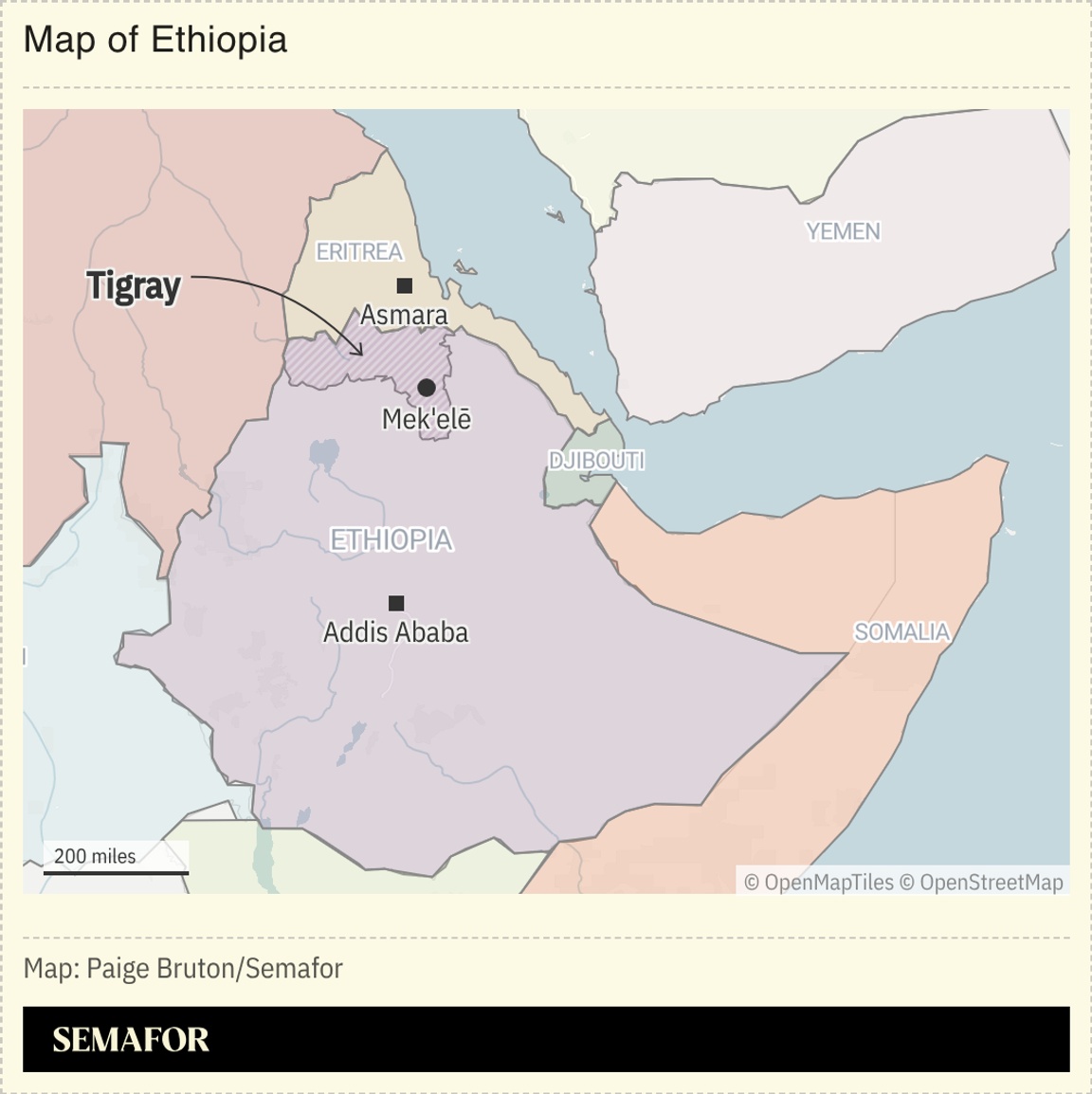 US Senate Democrats are pressing Secretary of State Marco Rubio to intervene over renewed fighting in Ethiopia, amid fears of a return to civil war. In a statement shared first with Semafor, the lawmakers warned that the African Union-brokered peace deal ending the 2020-2022 war, which Washington backed, was “unraveling” as clashes restart. The senators criticized both sides of the conflict. Tensions in Tigray have escalated for months, with increased fighting and airstrikes. Last week, the Tigray People’s Liberation Front declared a “defensive war,” seizing key locations and pushing into the neighboring Afar and Amhara regions. Just days before, the TPLF publicly allied with other Ethiopian armed groups that aim to overthrow the federal government. The 2020-2022 Tigray war killed over 100,000 people and contributed to famine in the region. |
|
Gold Fields $27B bet hits a wall |
 Oupa Nkosi/Reuters Oupa Nkosi/ReutersSouth African gold miner Gold Fields offered to buy Northern Star Resources in a $27 billion deal that would create the world’s second-largest gold producer, part of an effort to build longer-term profits as some of its mines near the end of their lives. Northern Star branded the approach “highly opportunistic,” however, and said such a takeover would expose the Australian firm’s shareholders to “jurisdictional and operational risks.” The rejection highlights the discount African exposure carries for gold miners, as governments across the continent seek to cash in on record prices. Ghana, for example, introduced a royalty of up to 12% this year and declined to renew a Gold Fields’ licence, while in the Sahel, military governments in Mali and Burkina Faso have seized mines or raised stakes. — Tiisetso Motsoeneng |
|
Diesel generator reliance persists |
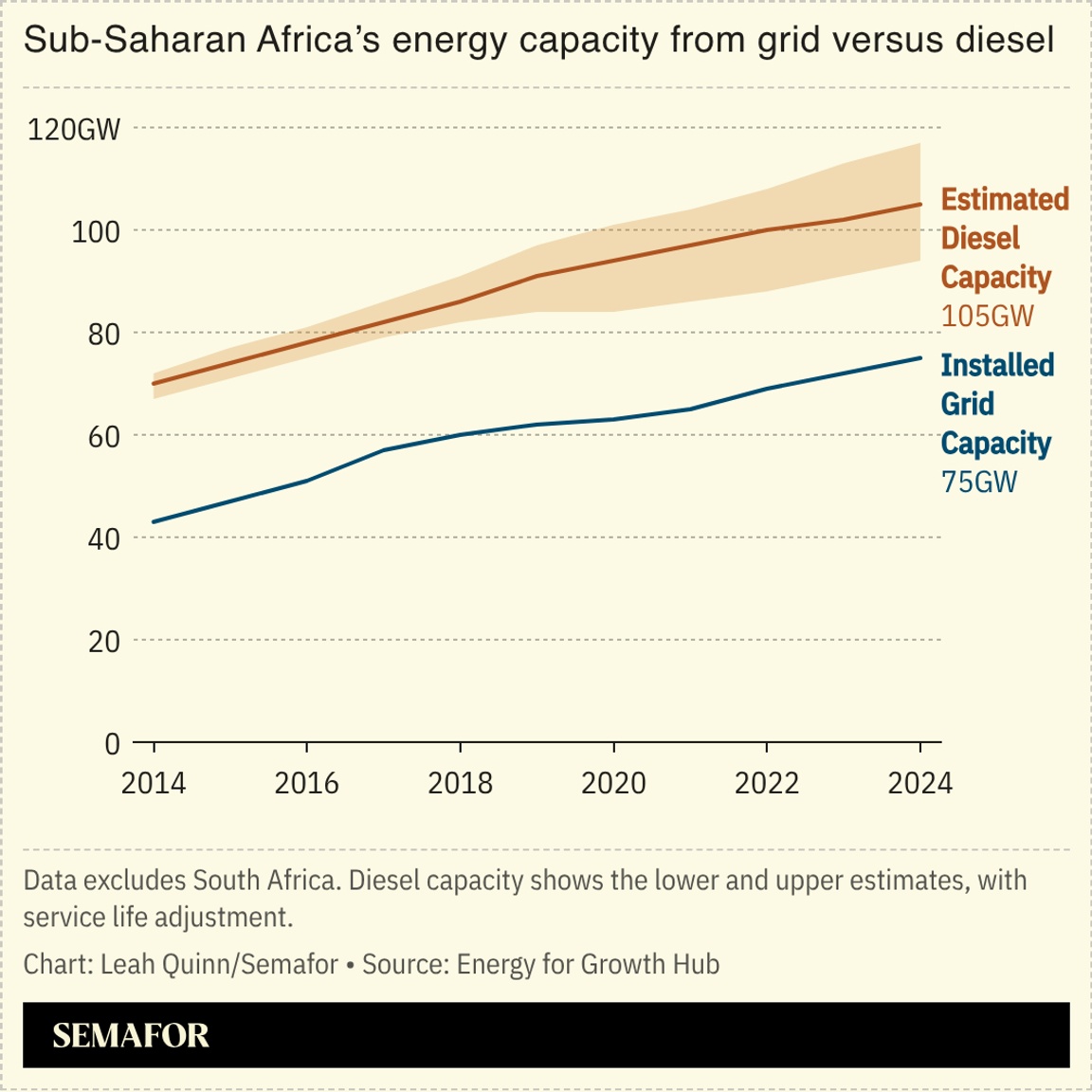 Half of all countries in sub-Saharan Africa are relying more on diesel generators than on grid power, according to analysis from Energy for Growth, leaving countries with less reliable energy infrastructure particularly vulnerable to the effects of the Iran war. The continent’s dependence on diesel has emerged as a coping mechanism to a persistent shortfall in grid-supplied electricity. But while diesel generators provide more reliable energy, their dependence on imported fuel leaves consumers at the mercy of volatile global pricing. Africa’s diesel generator fleet is far larger than previously captured by official power data, according to the research, amounting to about 63% of the continent’s grid-connected generation capacity. Outside North Africa and South Africa, diesel capacity is even more dominant, with 26 sub-Saharan markets estimated to have more diesel generation capacity than grid power, leaving businesses and households heavily exposed to fuel costs and supply disruptions. — Leah Quinn |
|
 - Sept. 28-29: Johannesburg hosts the annual TECHSPO summit, highlighting the latest innovations in technology in Africa.
- Sept. 29: Senegal publishes its second-quarter GDP data.
- Sept. 30: Mozambique and Zambia announce their interest rate decisions.
- Sept. 30: Botswana releases its GDP data for the second quarter.
- Sept. 30: Kenya and Uganda publish their monthly inflation data.
|
|
|


