| | In this edition, the IMF’s Kristalina Georgieva on globalizing the AI risks, and the meeting between͏ ͏ ͏ ͏ ͏ ͏ |
| |  | | | Global Capital Edition |
| |
|
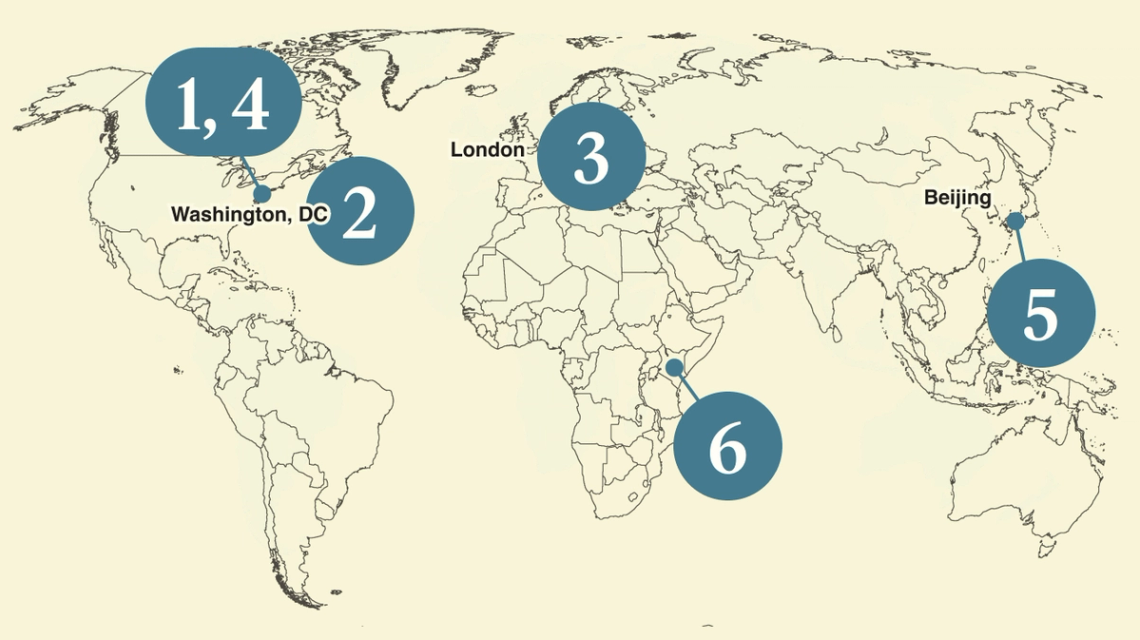 - IMF’s AI warning
- Trump’s lonely AI maximalism
- UBS pokes Zurich
- The cost of tariffs
- Riding SoftBank’s coattails
- US-Kenya minerals deal?
 What’s happening this week, and caviar’s identity crisis. |
|
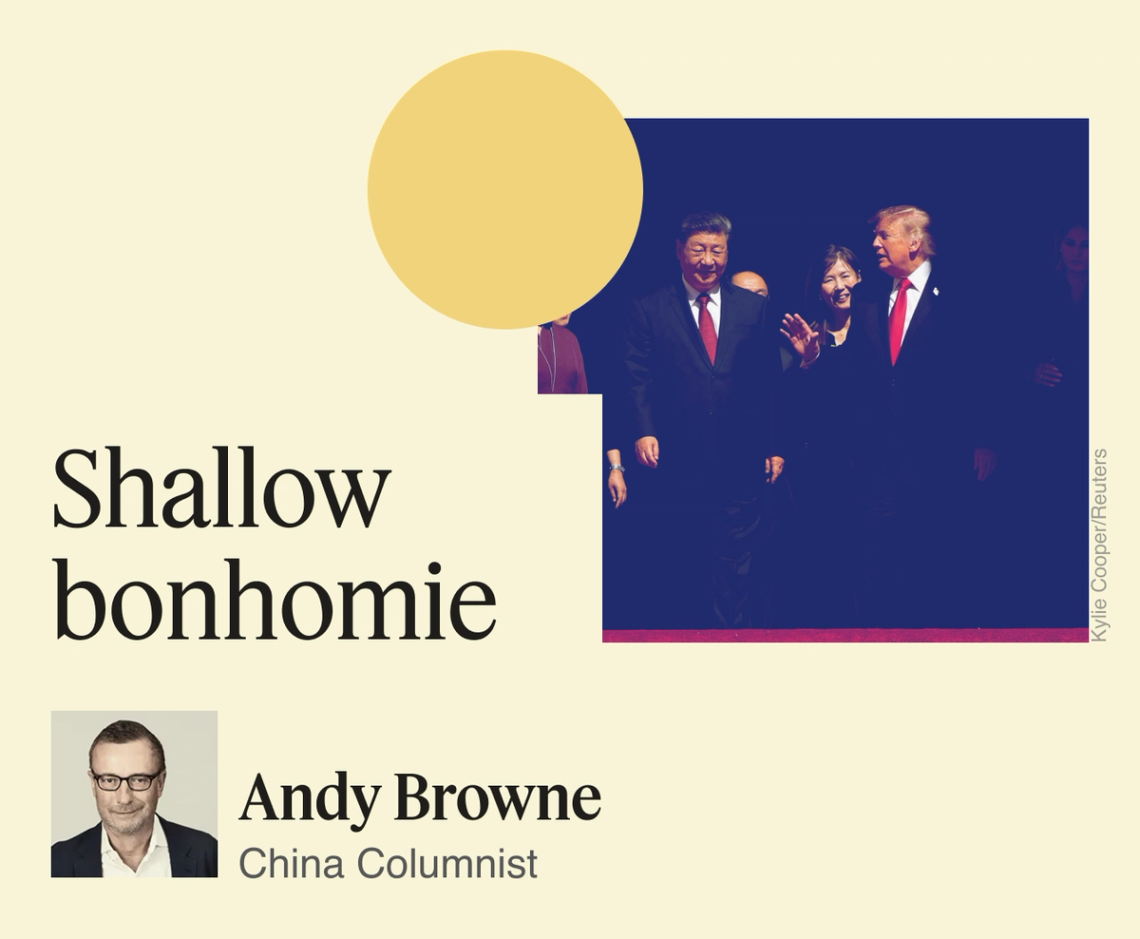 The image of President Donald Trump waiting at the foot of the stairs of an Air China Boeing-747 to personally greet Chinese leader Xi Jinping is historic, and not just because it’s the first Joint Base Andrews tarmac greeting for a foreign leader since 1962. Back then, UK Prime Minister Harold Macmillan was the leader of a close American ally. Xi Jinping leads America’s paramount adversary. In rolling out the red carpet, Trump underscored how rapidly the balance of power in the relationship has shifted. China has “basically tamed the United States,” Rush Doshi, a Georgetown University professor and former Biden administration official, told me of Xi’s warm welcome, which also included a 21-gun salute and a flyover by B-1B bombers, far exceeding the courtesies extended to Trump in Beijing in May. In classic diplomacy, protocol giveaways are supposed to be reciprocated by substantive concessions. Otherwise, why bother? Xi offered two pandas for the Atlanta zoo — and seemed to please Trump by admiring the granite used to construct the new White House helipad — but little else. There was talk of an AI hotline to share information about risks, but the history of such a US-China “red phone” actually working is thin. An agreement to extend a trade truce for two months only underscored its fragility. The week was an exercise in shallow bonhomie. |
|
| | Semafor Next 3 Billion • Exclusive |  | |
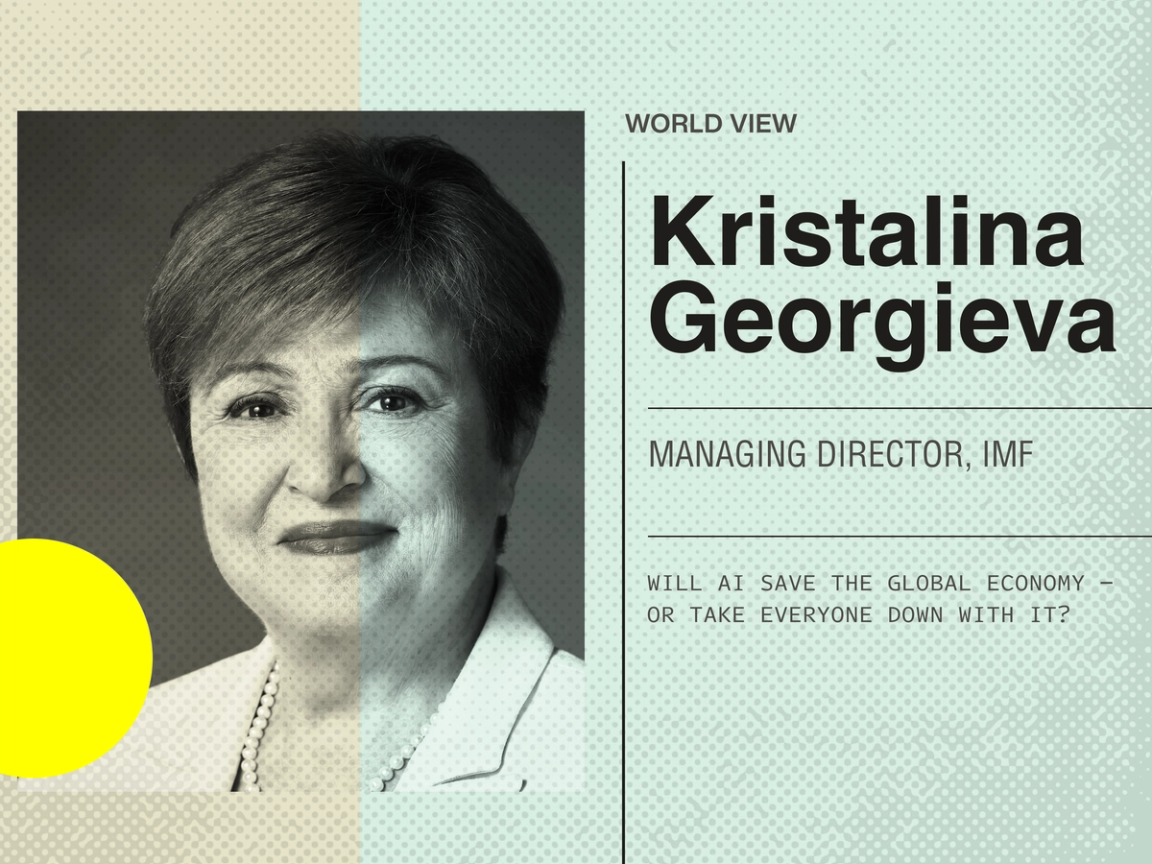 The AI buildout has lifted economies far outside Silicon Valley, revving up factories across Asia to churn out the components it needs. That’s both a boon and a flashing risk for the global economy, Kristalina Georgieva, the managing director of the International Monetary Fund, told Semafor. “Yes, we have globalized” what might otherwise remain a Silicon Valley phenomenon, Georgieva said at Semafor’s The Next 3 Billion summit in New York. “It also stabilizes it, because then you have more production that may not be so bubbly. But yes, it makes it a global phenomenon.” The AI investment boom has also contributed to rising interest rates and inflation as hyperscalers compete — with each other and, as Georgieva said she has a close eye on, with governments — for capital. That has erased hard-won gains by emerging economies, which have spent years tidying their budgets and working their way back into bondholders’ good graces only to suffer “the punishment for somebody else’s sins.” The interview answer we’ll be thinking about for a while: When asked whether a skunkworks team inside the IMF, which usually helps developing economies that have gotten out over their financial skis, is working on a break-the-glass plan for advanced economies in trouble, Georgieva said: “I’m not going to tell you. I take my job very seriously.” |
|
 Nathan Howard/Reuters Nathan Howard/ReutersThe White House and its allies are lonely in their insistence that AI development in America must accelerate without governments setting ground rules. At the UN General Assembly in New York, as well as in meetings with Chinese leader Xi Jinping in Washington, Trump’s team was clear: US companies are the leaders in AI, they plan to keep it that way, and they reject any international attempts to rein in the technology. Trump, with his call to leave AI “exactly where it is,” contrasts with Xi, who said responsible AI development is necessary — as other Chinese officials said this week that they support a global governance framework. Meanwhile, frontier labs are pushing forward with their own self-regulatory schemes, which will ask them to agree on testing standards in a highly competitive environment. — Ashley Gold |
|
UBS moves spook the Swiss |
 Swiss Finance Minister Karin Keller-Sutter. Denis Balibouse/Reuters. Swiss Finance Minister Karin Keller-Sutter. Denis Balibouse/Reuters.Our scoop last week that UBS is discussing ways to leave Switzerland, including by merging with a foreign bank, touched a nerve in Zurich. Swiss Finance Minister Karin Keller-Sutter told a major Swiss newspaper that leaving would be “far more expensive and legally complex” for the bank, and erode a business model based “on Swissness.” Another Swiss paper, Blick, reported that at least eight global financial institutions have signaled interest to UBS’ top management in a story airing concerns that a foreign buyer would neglect UBS’ domestic retail and corporate banking. That’s not necessarily true — the $6 trillion of Swiss household wealth is nothing to sneeze at, and neither are giants like Glencore, Nestlé, and Roche — but a less competitive UBS will also be less able to serve those customers. The bank is weighing its options from a position of political weakness but operating strength, with businesses that are cozy fits for half a dozen global peers. “We don’t comment on speculation or views expressed on this matter,” a UBS spokesman said. — Liz Hoffman |
|
| | Semafor Next 3 Billion • Exclusive | | |
 The Trump administration’s tariff war threatens to split the global economy into hostile trading blocs, which could shave 7% off global GDP by 2050, the head of the World Trade Organization told Semafor. WTO Director-General Ngozi Okonjo-Iweala’s warning reflects a chaotic global trade environment unleashed by US tariffs in 2025, which has forced middle-power economies into a search for economic cover. Just last week, the EU invited Canada — battered by a 50% US tariff on $20 billion worth of goods — to become the bloc’s first-ever “associate member” in a historic bid to shield middle powers from what some deem American economic coercion. (“Why not?” Okonjo-Iweala said, adding that the WTO generally doesn’t weigh in on the affairs of its members.) Okonjo-Iweala also urged companies looking to bypass US duties to search beyond standard Asian alternatives and embrace a “China plus Africa” strategy to secure critical mineral supply chains. |
|
 Kim Kyung-Hoon/File Photo/Reuters Kim Kyung-Hoon/File Photo/ReutersSoftBank last week paid dearly to pull off an $11 billion bond sale to pay for its mega investment in OpenAI — and blazed a new financing path for junk-rated AI companies to follow. The massive AI buildout has so far relied on blue-chip bonds, issued by highly rated companies like Meta and Alphabet, and highly structured loans from private credit firms for less creditworthy players. SoftBank’s deal puts the $5 trillion global junk-bond market squarely in play, pushing on a door opened by CoreWeave earlier this summer. That gives unprofitable AI companies options to raise cash that don’t involve having Nvidia co-sign their loans. The development bears out JPMorgan’s prediction that the AI ecosystem’s insatiable financing needs would eventually overturn every couch cushion: “The question is not ‘which market will finance the AI-boom?’ Rather, the question is ‘how will financings be structured to access every capital market?’” |
|
Kenya nears US critical minerals deal |
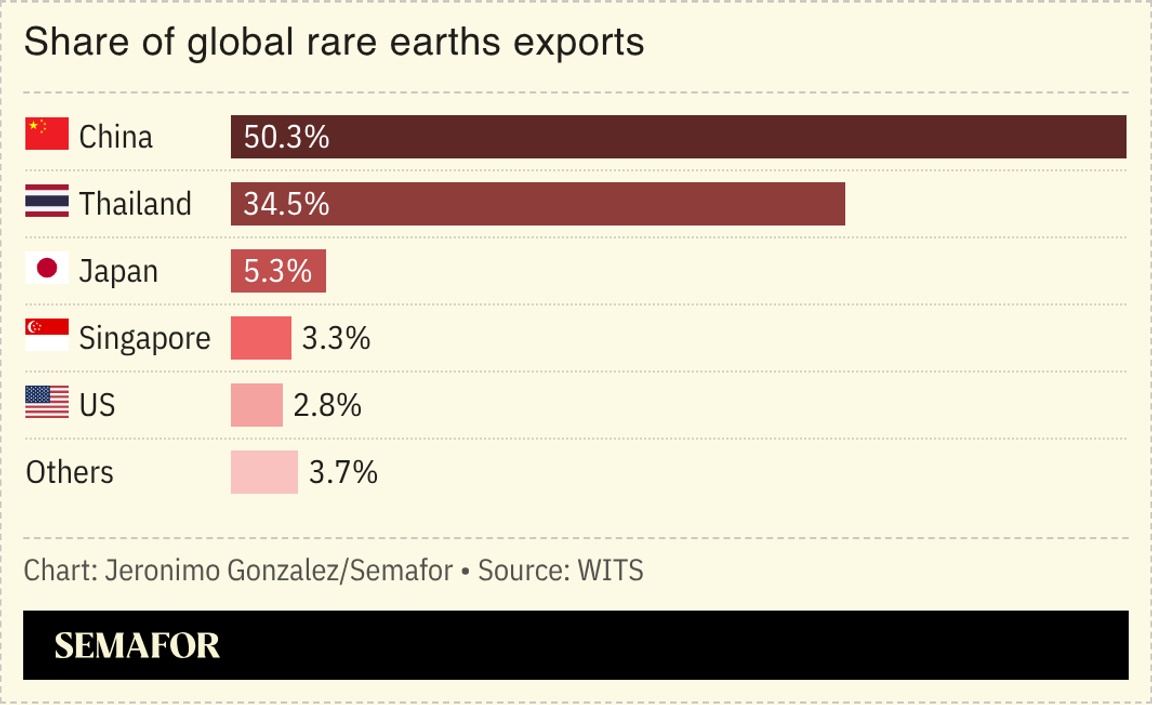 The US and Kenya are in “very advanced” talks on a critical minerals deal, Nairobi’s mining minister told Semafor. Hassan Ali Joho said discussions centered on the creation of refineries and processing plants in Kenya that would partly supply the US. Washington has unveiled investments across Africa as it looks to challenge China’s influence on the continent, though it could be years before the new US projects become productive. African nations, meanwhile, have sought to capitalize on this critical minerals push to capture more value from the supply chain. — Alexis Akwagyiram |
|
 - Sept. 28: SpaceX’s first full lap around the planet will be an operational test for its now-public stock, showing its Starship rockets can do one of the key jobs NASA needs it to do.
- Sept. 30: Micron earnings give another AI supply-chain bellwether check. Analysts expect a 350% year-over-year sales jump — which still might not be enough to impress investors.
- Sept. 30: The US government’s fiscal-year end usually brings a flurry of Securities and Exchange Commission enforcement actions as the agency looks to wring fines to pad its budget. We’ll see if that holds as Trump’s regulators continue to take a light-touch approach to white-collar crime.
|
|
|


