



 |
1. Ohio
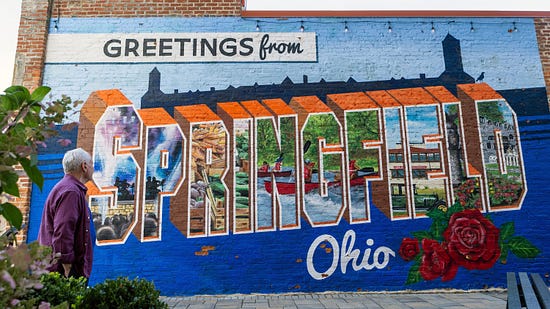
I’m back from Ohio, where we did a Bulwark LIVE benefit show on Friday night, and I want to talk with you about the experience. Because there were some good lessons and some hard lessons. We’ll start with the good.
As of this writing, you guys—the Bulwark community—have raised $351,000 for the Haitian community in Springfield. I am dumbstruck by your generosity. Here’s what that money buys:
Legal help
Food
Medication
Transportation
Rent
The Haitian community in Springfield is under siege. People who came to America legally and built productive, beautiful lives now hide in their homes, afraid to go outside because masked, armed agents of the state may abduct them. They cannot go grocery shopping. If they are sick or hurt, they cannot go to the doctor or the hospital. They cannot take their children to school.
They need help. And you all stepped up to give it. I am, once again, overwhelmed with gratitude for the goodness in your hearts. Thank you.
The singer John Legend sent a message to the show on Friday night and it was powerful. I hope you’ll watch the video because even though it’s six minutes long, it is worth your time.
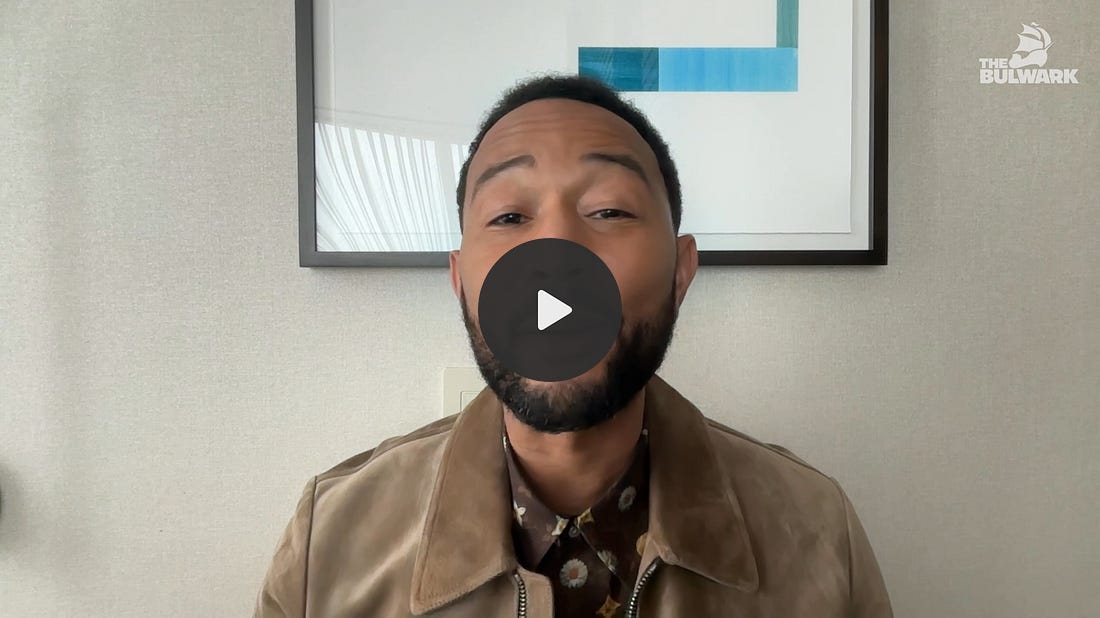
Here’s the transcript:
Hello. Years ago, I joined my friend, Skip Gates, on a show called Finding Your Roots, and I learned something about my family that changed the way I think about my home state of Ohio.
One of my ancestors, his name was Peyton Polly. He was born into slavery in Kentucky. And when his master passed away, he granted Peyton his freedom in his will. And when Peyton gained that freedom, he brought his family across the Ohio River to build a life in Ohio—a free state.
But some people in Peyton’s former master’s family were not happy about this development. And one night in 1850, armed men crossed into Ohio, broke into the Pollys’ home, and kidnapped eight children, carrying them back across the river into slavery. Devastating. But Ohio responded. The governor, the legislature, they took up the cause. They sent investigators and lawyers to fight to bring those children home.
Now, I hesitated to tell that story because I don’t want to compare slavery to what’s happening now. It is not the same as the immigration debate we’re having today. But I’ve never forgotten what that family story taught me.
One, is that my family has a legacy we can be proud of. But also, that when our neighbors’ freedom, safety, and dignity were in doubt, the state of Ohio stepped up for us. Ohio was a free state, a major part of the Underground Railroad, a place where people sought refuge and freedom. They often found it in Ohio.
So in 2026, we have to challenge ourselves. We have to ask the question, what kind of state are we going to be? I want to thank the Bulwark team for making room for this conversation. I want to thank my friend Patrick Gaspard for inviting me to be a part of it. Before I was John Legend, I was a kid growing up in Springfield, Ohio, the son of a factory worker, the son of a seamstress. I learned to sing in the church. I started playing the piano when I was five. Springfield made me. So when I hear Springfield being talked about on national television, I don’t hear a talking point. I don’t see a political football. I see my home! I see my people.
Like communities across this country, people in Springfield, they want the basics: good schools, affordable housing, good jobs, health care, safe neighborhoods, a fair shot at building a good life. But when those things feel out of reach, we’re too often told to blame somebody else. That another family has to lose for yours to get ahead. And that opportunity for others is a loss for you. I don’t believe that zero-sum thinking is how we build a stronger Springfield. I don’t believe that’s how we build a stronger America. The Haitian families who came to Springfield, they came looking for safety and a future. Over time, they became classmates, coworkers, business owners, teammates, friends, caregivers, neighbors.
Tonight I want to say the name of one of those neighbors, Pierre Damas Bel. Pierre was 20 years old. He came here from Haiti in 2024. He graduated from my high school, Springfield High School, with honors. He played soccer and was active in JROTC. He had just started at Wright State University. He wanted to become a doctor. He should have become a doctor. He should have had so much life ahead of him. Instead, his family is grieving him.
To Pierre’s father, his family, his friends, his teammates, his teachers, I send you my love tonight. To every Haitian family in Springfield carrying fear and uncertainty, I send you love. To my hometown, I send you love. And to Ohio, the state that will always be a part of who I am, I send you love.
But love has to mean more than what we say. Love has to mean showing up. And everyone here tonight has already done that. Thank you. You are directly supporting the Haitian Support Center and families in Springfield who need help right now. Thank you.
And this is about TPS, but it’s also about our entire immigration policy—how we treat people, whether we can hold on to our humanity. We have seen leaders across the aisle in Ohio who do that, and we can too. Tonight we help. In November, we make our voices heard. And always we keep organizing. Keep building coalitions. Keep pushing for a more humane way forward. May Ohio always be the place that it was for my ancestors, a place with a big, beautiful heart. One that welcomes the refugee, extends a helping hand to the stranger, one that fights for freedom and believes in the expansiveness of the American dream. Thank you.
This is the way—the only way. We show up for each other.
But now, I’m afraid we have to talk about the hard lesson.
2. Bad Wolves
When we went to Minneapolis last winter we encountered a city and a state united against totalitarianism. Literally every person I met was outraged at what the federal government was doing. Thousands of volunteers organized to help. The governor, the mayor, the local police were all united in trying to protect both citizens and immigrants. I’m sure there were, somewhere in Minnesota, people who celebrated the deaths of Renée Good and Alex Pretti, but they were unwilling to show their faces because they knew, at the instinctual level, that it would make them pariahs in the community.
Ohio is not Minnesota.
I was only on the ground for a short period of time and it was obvious that there are plenty of people who are happy to see Haitians being criminalized, arrested, and deported.
I picked this up from conversations with people who were polite about it, and from remarks made by people who were less polite about it, including people who were unhappy with us doing a show to benefit the Haitian community.
And in general, the level of support for the Haitian community has been nothing like the mobilization in Minnesota. There are brave and generous volunteers working to help, but they seem to be the minority.
The governor of Ohio has refused to step in—at all—even though his sympathies are obviously with the Haitians. He knows better, but has been cuckolded by his cowardice.
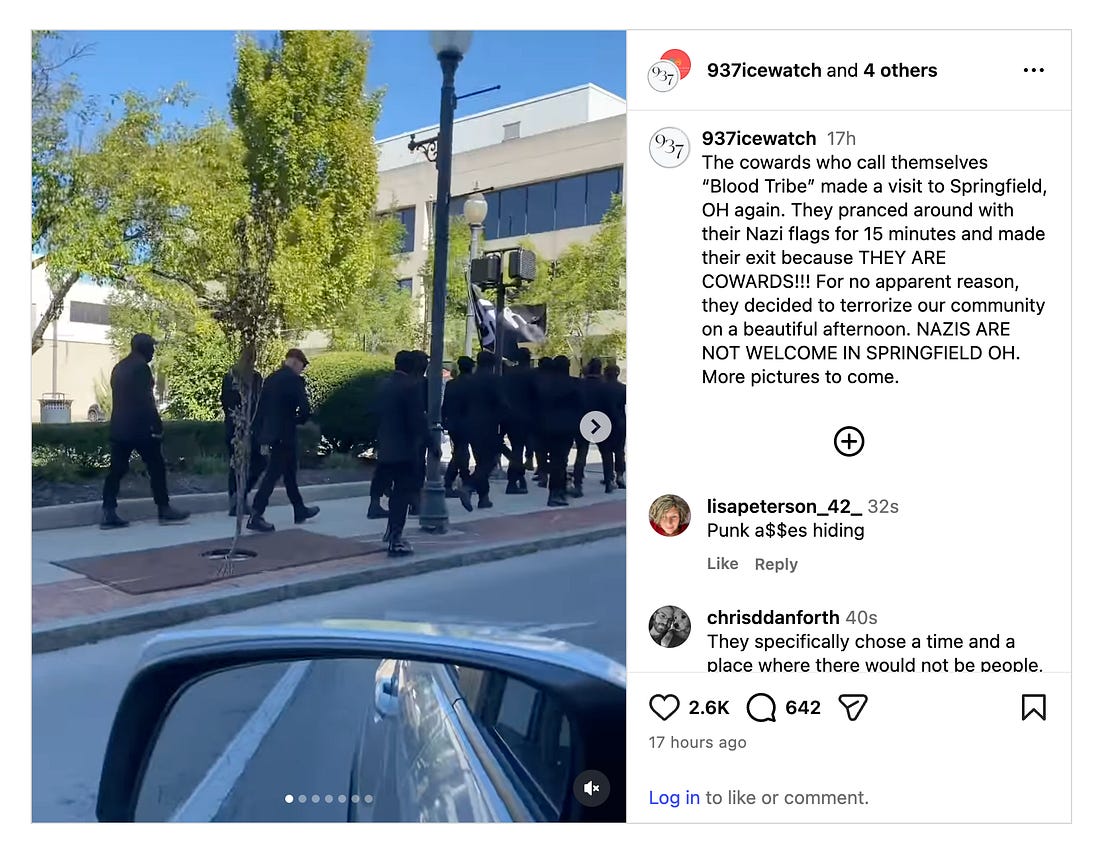
On Saturday, the day after our benefit, Nazis marched through Springfield.
Really. That happened.
 |