The Martyrdom of Mahmoud Khalil Until he was detained by ICE, the anti-Israel activist was nothing more than a scoundrel. His new memoir confirms his status as a secular saint for progressives.
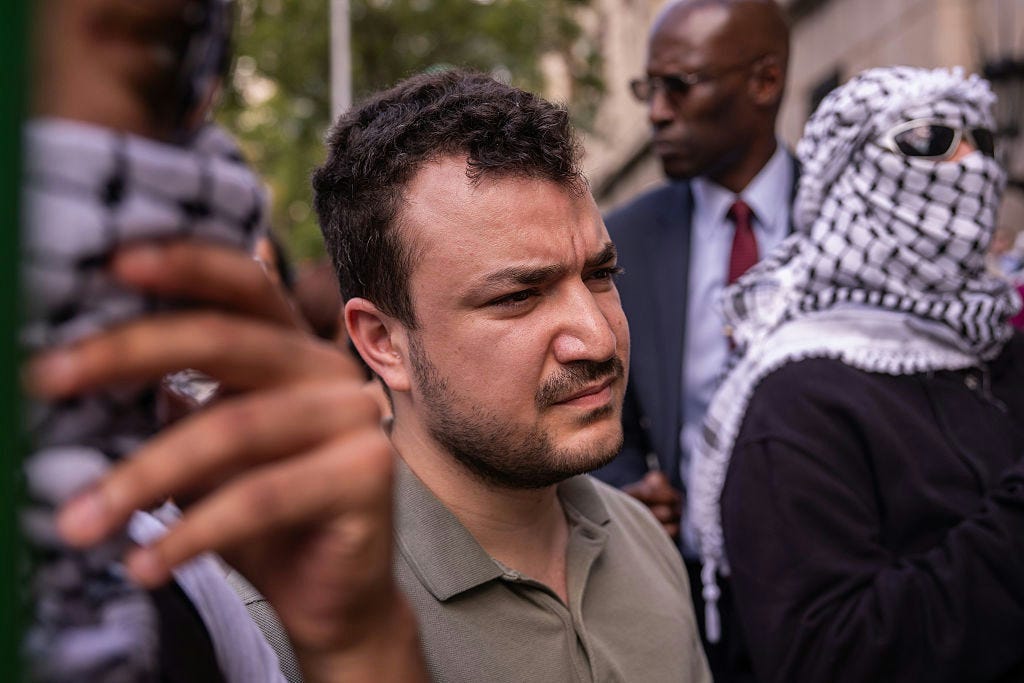
Mahmoud Khalil attends a vigil and protest for Palestine outside of Columbia University on October 7, 2025, in New York City. (Adam Gray/Getty Images)
For Americans perpetually enraged about Israel, the ordeal of Mahmoud Khalil has become an obsession. On March 8, 2025, this Columbia graduate and Palestinian activist was snatched from his home by federal agents and whisked off to a series of detention centers. Since then he has fought his deportation tooth and nail. Khalil’s lawyers are asking the Supreme Court to reverse the deportation order from last year on constitutional grounds. Khalil first gained notoriety in the aftermath of the October 7, 2023, massacre. In the campus turmoil that followed, he emerged as a spokesman—one of the few who was unmasked—for students at Columbia using the occasion of the Hamas-led slaughter to demand the university cut ties with and divest from the state Hamas attacked, Israel. Today, he has emerged as a secular saint for New York’s progressive literati. His legal battle to remain in the United States is being fought by a team of more than 20 lawyers representing the Center for Constitutional Rights, the American Civil Liberties Union, and other progressive groups. New York’s socialist mayor, Zohran Mamdani, hosted Khalil for a Ramadan dinner in March, paying tribute to his “profound courage.” The New Yorker compared the appearance of his 6-month-old-son, Deen, to “a Rubens portrait of the infant Jesus, if the Flemish had been more realistic about a Nazarene’s complexion.” This month he spoke at a Yom Kippur rally with anti-Zionist Jews in Brooklyn at a podium draped in a sign reading, “For the sin of genocide, we atone.” Khalil’s journey from Syria to Lebanon to Columbia and through the federal government’s immigration and deportation system is the grist for his new memoir published this week, No Land to Stand On. As one might expect, the blurbs include high praise from the anti-Zionist left. Peter Beinart calls it “a defining document of our age.” Beinart is correct but for different reasons than he imagines...
Become a paid subscriber To support our journalism, and unlock all of our investigative stories and provocative commentary about the world as it actually is, subscribe below. UPGRADE TODAY |