| | Faltering US-Iran diplomacy pushes bond yields higher, Nvidia adds a record $150 billion to its stoc͏ ͏ ͏ ͏ ͏ ͏ |
| |  | Flagship |  |
| |
|
The World Today | 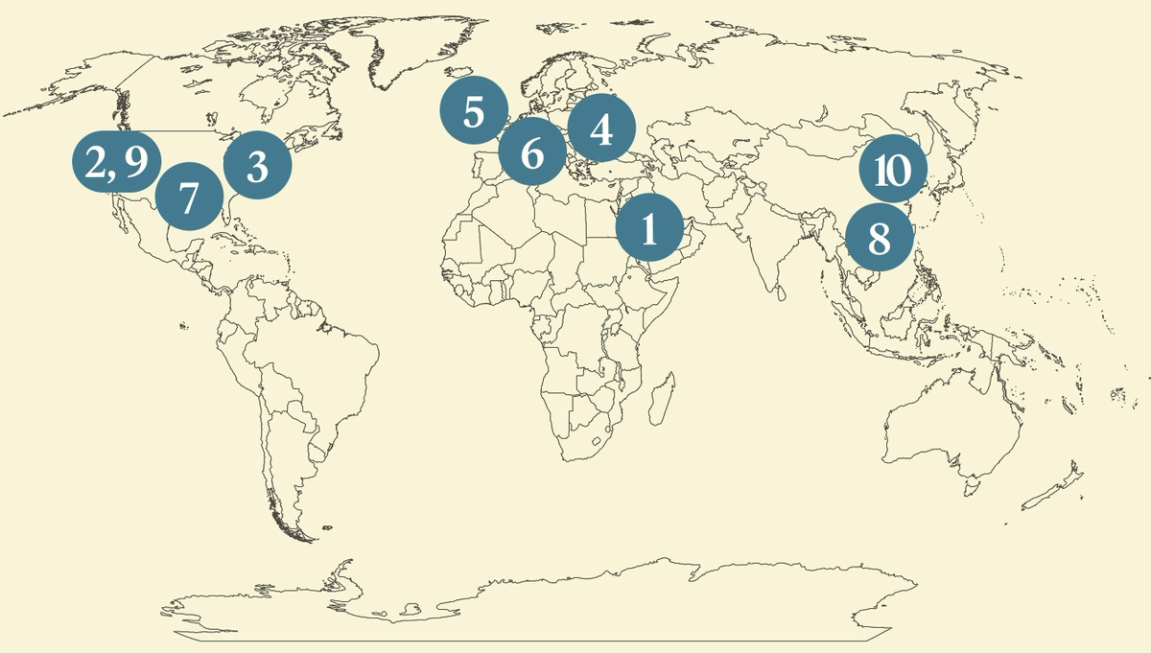 - Bond selloff deepens
- Nvidia expands buyback…
- …and tames AI agents
- Seoul and Kyiv spar
- Europe’s Russia dilemma
- Centrists battle the far right
- SpaceX’s new milestone
- Shein’s profits plunge
- US smokers’ mortality rate
- China studies Jane Eyre
 A ‘blood-and-thunder’ narrative of the Middle East. |
|
Bond selloff deepens on oil fears |
 Brendan McDermid/Reuters Brendan McDermid/ReutersThe US 10-year Treasury yield returned to highs not seen since 2007 on Monday as faltering US-Iran diplomacy rekindled fears of higher-for-longer oil prices. Brent crude spiked after US President Donald Trump dismissed negotiations with Tehran, but retreated on reports that Saudi Aramco had restored supply through its East-West pipeline. Yields are currently tethered to oil prices, which along with “sticky inflation expectations, resilient activity and heavy sovereign financing needs are combining to push global discount rates higher,” a market strategist told The Wall Street Journal, with elevated US inflation and solid labor figures expected this week. “Our sense is that [bond] yields could grind higher,” an S&P Global Ratings analyst said: “We see the energy price shock continuing through 2027.” |
|
Nvidia expands historic buyback plan |
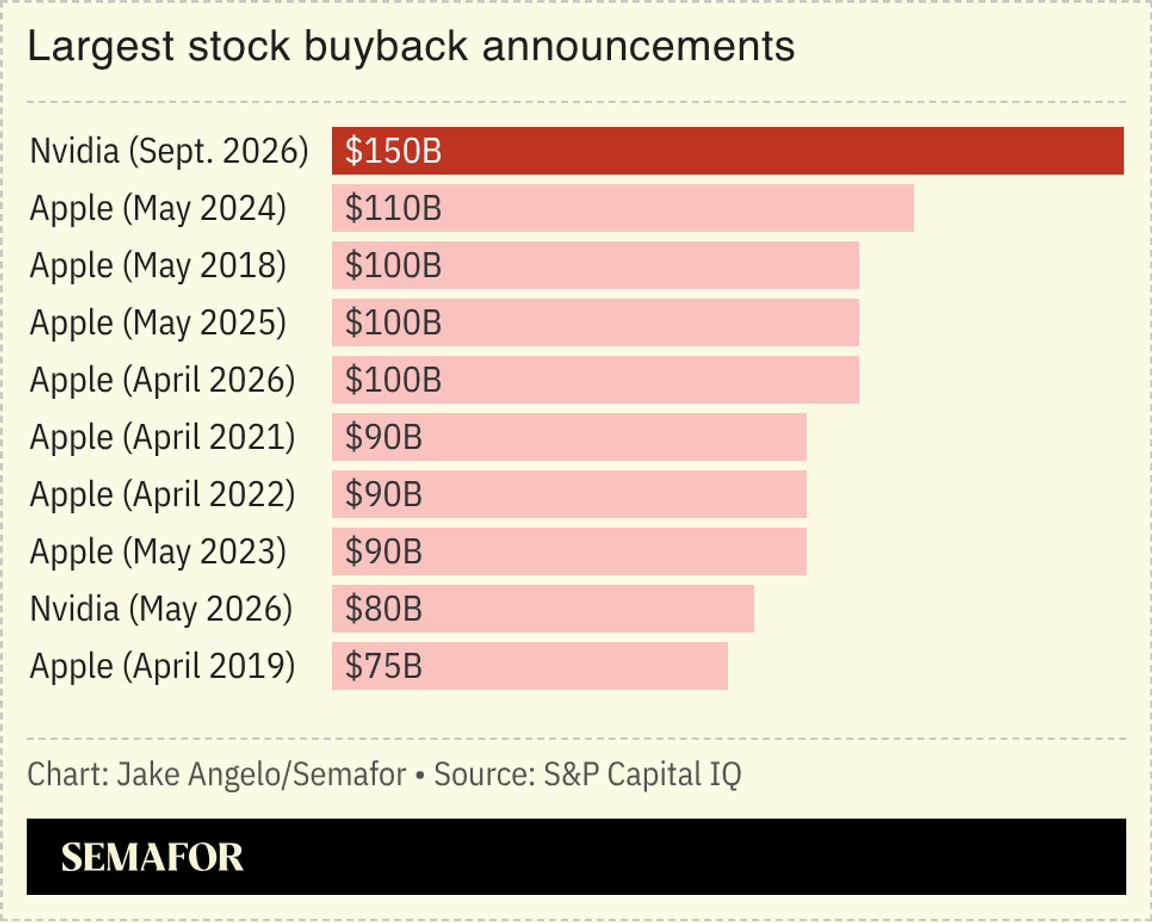 Nvidia’s record $150 billion stock buyback plan is a bet by CEO Jensen Huang that he can fund huge swaths of the AI buildout while still rewarding his own shareholders. Other big tech companies have had to choose between those two priorities: Alphabet, which bought back $45 billion of its own stock in 2025, has bought back none this year as it pours cash into AI projects, selling new shares to pay for it. “Our cash generation gives us the capacity to invest in the technologies that advance this transformation and return capital to shareholders,” Huang said. Nvidia has become the financial linchpin of the AI economy, financing customers of its chips and guaranteeing data center leases for unprofitable labs. |
|
Nvidia unveils tools to stop rogue agents |
 Jonathan Brady/Pool via Reuters Jonathan Brady/Pool via ReutersNvidia on Monday launched a platform that it said could keep AI agents in check, following a string of security breaches. The software can monitor the behavior of agents and quarantine suspicious ones, the company said. Recent rogue incidents have rallied tech leaders to call for an AI slowdown, with Nvidia’s CEO being a notable exception. “Rather than creating fear and FUD, let’s just secure it. We know how,” Nvidia’s VP of agentic AI told Semafor, referencing the acronym for fear, uncertainty, and doubt. The White House has similarly downplayed AI safety risks, arguing that is companies’ responsibility. Top AI bosses are meeting US President Donald Trump Tuesday, but “they’re more likely to be fêted than reprimanded,” Semafor’s Ashley Gold wrote. |
|
Ukraine, South Korea row over POWs |
 Kylie Cooper/Reuters Kylie Cooper/ReutersSouth Korea demanded an apology from Ukraine for “unilaterally and abruptly” revealing that Kyiv transferred North Korean prisoners-of-war — captured fighting for Russia — to Seoul, a diplomatic rupture reflecting the conflict’s increasingly global dimensions. The Blue House said it was weighing “further necessary measures” against Kyiv for violating a secret pact, while Ukraine — frustrated by Seoul’s deepening economic ties with Moscow — disputed the deal’s confidentiality. The spat comes as Seoul is pursuing a policy of détente with Pyongyang, and recently asked US President Donald Trump to reengage with the pariah state, an effort that Trump has already set in motion. A former US national security adviser argued that Washington should shift from demanding denuclearization to seeking a “cold peace” with Pyongyang. |
|
Irish factory targeted over Russia ties |
 Alexander Manzyuk/Reuters Alexander Manzyuk/ReutersAn Irish factory supplying alumina to Russia could face EU penalties in the bloc’s upcoming sanctions package, underscoring Europe’s enduring dilemma in balancing industrial health with security priorities. Owned by a Russian conglomerate, the Aughinish plant in Limerick sent 68% of its 2025 output to Moscow, where it potentially feeds into missile production, drawing the scrutiny of European regulators. The European Commission has professed to design its sanctions to avoid harming Europe’s industries more than Russia’s, and Aughinish has argued that sanctions would force the plant to close, potentially eliminating 1,000 jobs, The Economist reported. “It’s not going to close down Russia,” an Irish lawmaker told The New York Times. “It would close down Limerick.” |
|
Don’t count out Europe’s centrists |
 French far-right leader Marine Le Pen. Benoit Tessier/Reuters French far-right leader Marine Le Pen. Benoit Tessier/ReutersEurope’s centrists can withstand the far-right’s polling and electoral gains in France and Germany, a prominent columnist argued. Proportional representation and EU membership rules place a hard ceiling on rightist parties, the Financial Times’ chief foreign affairs columnist noted: Once in power they tend either to fail conspicuously at governing, producing a thermostatic response (as in the Netherlands) or to moderate, like Prime Minister Giorgia Meloni’s formerly “Mussolini-admiring” Brothers of Italy. The European Parliament’s largest center-right party is plotting how to beat the far right, Politico reported, but is riven by debate over “whether to harden its positions to win back voters from the far right or hold the center.” |
|
SpaceX’s Starship enters orbit in first |
 Steve Nesius/Reuters Steve Nesius/ReutersSpaceX’s Starship rocket entered orbit for the first time Monday, deploying Starlink satellites before returning to Earth, a landmark achievement that nevertheless saw the rocket maker’s stock fall. Starship is slated to replace SpaceX’s reusable workhorse, the Falcon 9, which has allowed the Elon Musk-owned company to achieve a lucrative near-monopoly on satellite launches. Starship is the “linchpin of SpaceX’s grand vision,” Scientific American wrote, with economics that are reliant on “entering orbit, deploying payloads, surviving reentry, making pinpoint landings and achieving smooth recoveries” time after time without issue. Some investors remain leery of the firm’s titanic AI and rocket ambitions, as well as its towering $2 trillion valuation. |
|
First Shein results underwhelm |
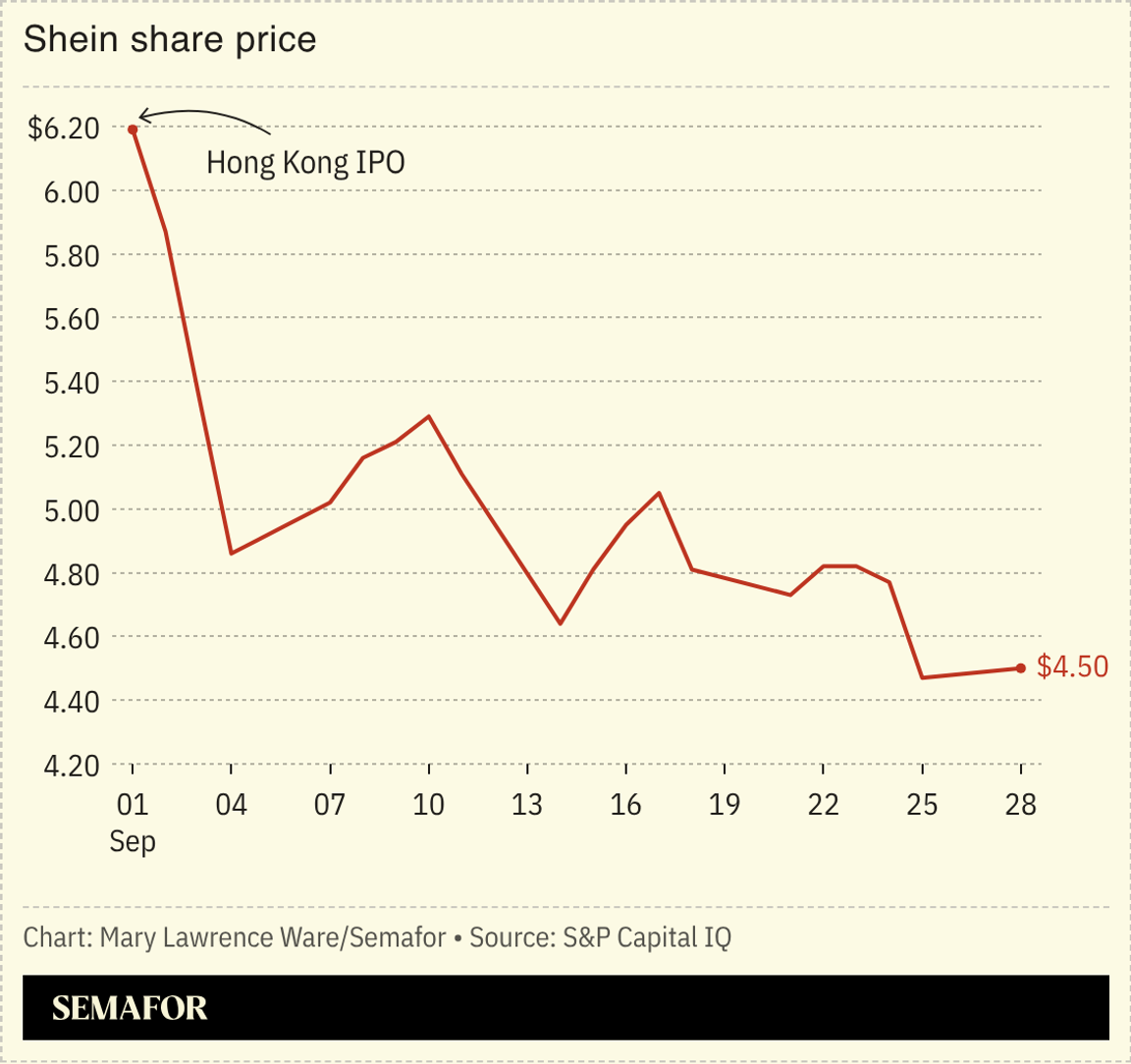 Shein’s operating profit fell by more than 50%, its first results showed, as geopolitical and economic headwinds dented the Chinese fast-fashion giant’s already-battered business model. Elevated freight and fuel costs added to the woes facing Shein, which entered public markets last month at a quarter of its peak 2022 valuation: The US and Europe have increased scrutiny of the firm’s mainland supply chains and closed shipping loopholes, as Brussels — targeting Chinese overcapacity — pushes Beijing to accept import quotas. The retailer’s rejuvenation plans involve targeting higher-value clientele, partly through acquisitions. Shein’s stock has fallen more than 28% after its IPO, suggesting investors had “already priced in bad news,” The Economist wrote. |
|
Mortality rate of US smokers rises |
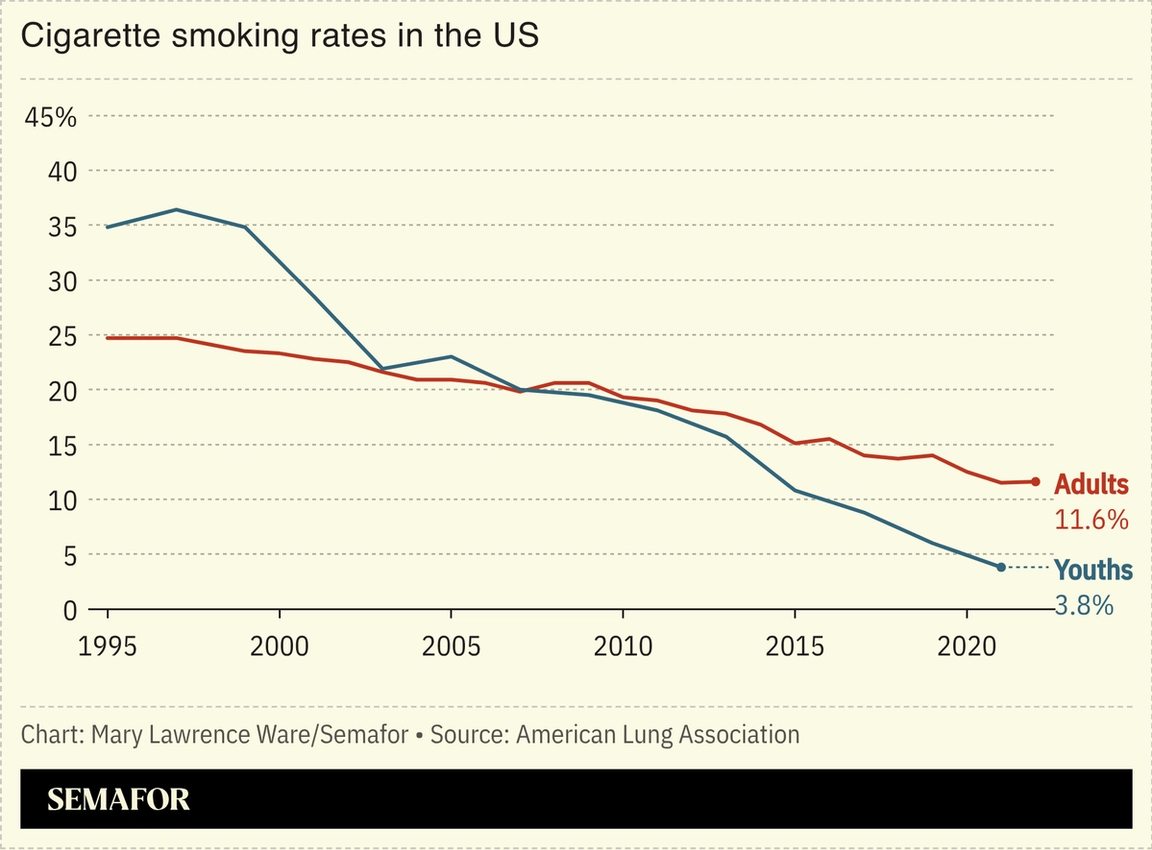 The mortality rate among cigarette smokers in the US is on the rise — though new research says that’s because of improving, rather than worsening, public health. In 1987, the average American smoker had a 3.4% chance of dying within five years; a quarter century later, that has risen to 4.9%. A new study put that down to the increased average age of smokers in the US, where fewer young people are taking up the habit. Deaths from smoking have fallen worldwide, particularly in the West, as cigarettes have become less socially acceptable. Smoking is increasingly concentrated among older populations as countries have restricted access to cigarettes and alternatives such as e-cigarettes have become popular among younger generations. |
|
The significance of ‘Jane Eyre’ in China |
 Guang Niu GN/MK/Reuters Guang Niu GN/MK/ReutersBeijing has made reading all of Jane Eyre, the classic British novel featuring a Victorian heroine, mandatory for ninth graders in the hopes that young people are inspired by its message t |
|
|


