| | In today’s edition: UAE-Saudi relations thaw, Iran’s grip on Hormuz slips, and Dubai sends its robot͏ ͏ ͏ ͏ ͏ ͏ |
| |  | Gulf |  |
| |
|
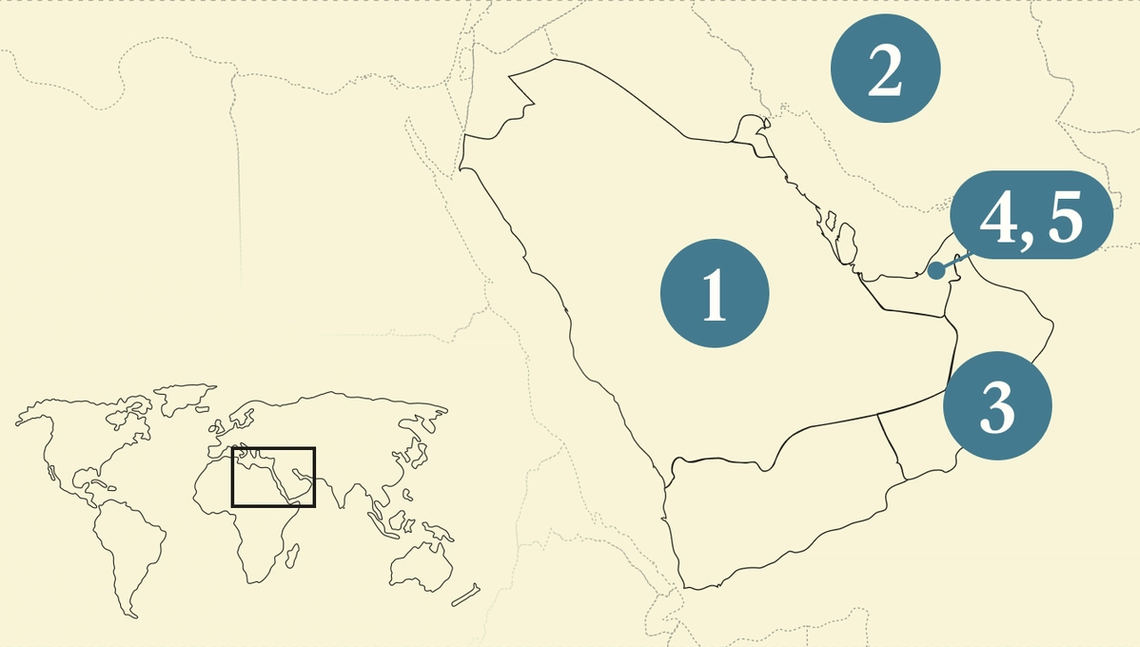 - Elite-level diplomacy
- Iran is losing Hormuz
- Oman’s bright outlook
- Dubai’s self-driving school
- Abu Dhabi’s haven pitch
 The UAE’s president gets on board. |
|
Houthi threat spurs rivals to speak |
 Emirates News Agency, Turki_alalshikh/X, Robert Galbraith/Reuters Emirates News Agency, Turki_alalshikh/X, Robert Galbraith/ReutersUAE Vice President Sheikh Mansour bin Zayed visits Saudi Arabia today at the invitation of Defense Minister Prince Khalid bin Salman, a sign both Gulf powers may want to bridge divides that have characterized their relationship in recent years. No agenda was announced, but Yemen’s worsening security crisis and the threats it poses to the region are likely to dominate. The trip follows a rare visit by Israeli Prime Minister Benjamin Netanyahu to Abu Dhabi to discuss “regional challenges” with UAE President Sheikh Mohamed bin Zayed. Riyadh has been rallying support for military operations against Yemen’s Houthis since the US reportedly pulled out of a planned bombing campaign at the last minute. The Iran-backed group has struck the kingdom’s critical infrastructure and major cities, threatening trade routes. So far, Saudi Arabia has won only limited backing, including from France and the UK. The World Health Organization says more than 800 people, nearly all in Yemen, have died since fighting resumed in August. The Gulf’s two largest economies have been at odds since their coalition in Yemen collapsed, but tensions had been simmering for years. Many analysts in Riyadh see Abu Dhabi as empowering secessionists to maintain influence in failing states, while those in the UAE view Saudi Arabia as an imposing regional hegemon increasingly aligned with an Islamist axis led by Ankara, Doha, and Islamabad. Emirati political adviser Nadim Koteich said Sheikh Mansour’s visit should be seen beyond the bilateral relationship, as part of a “new regional security architecture” combining Gulf and Israeli interests in confronting the Houthis without creating a united front against Iran. |
|
Hormuz ‘shuttle trade’ breaks Iran’s grip |
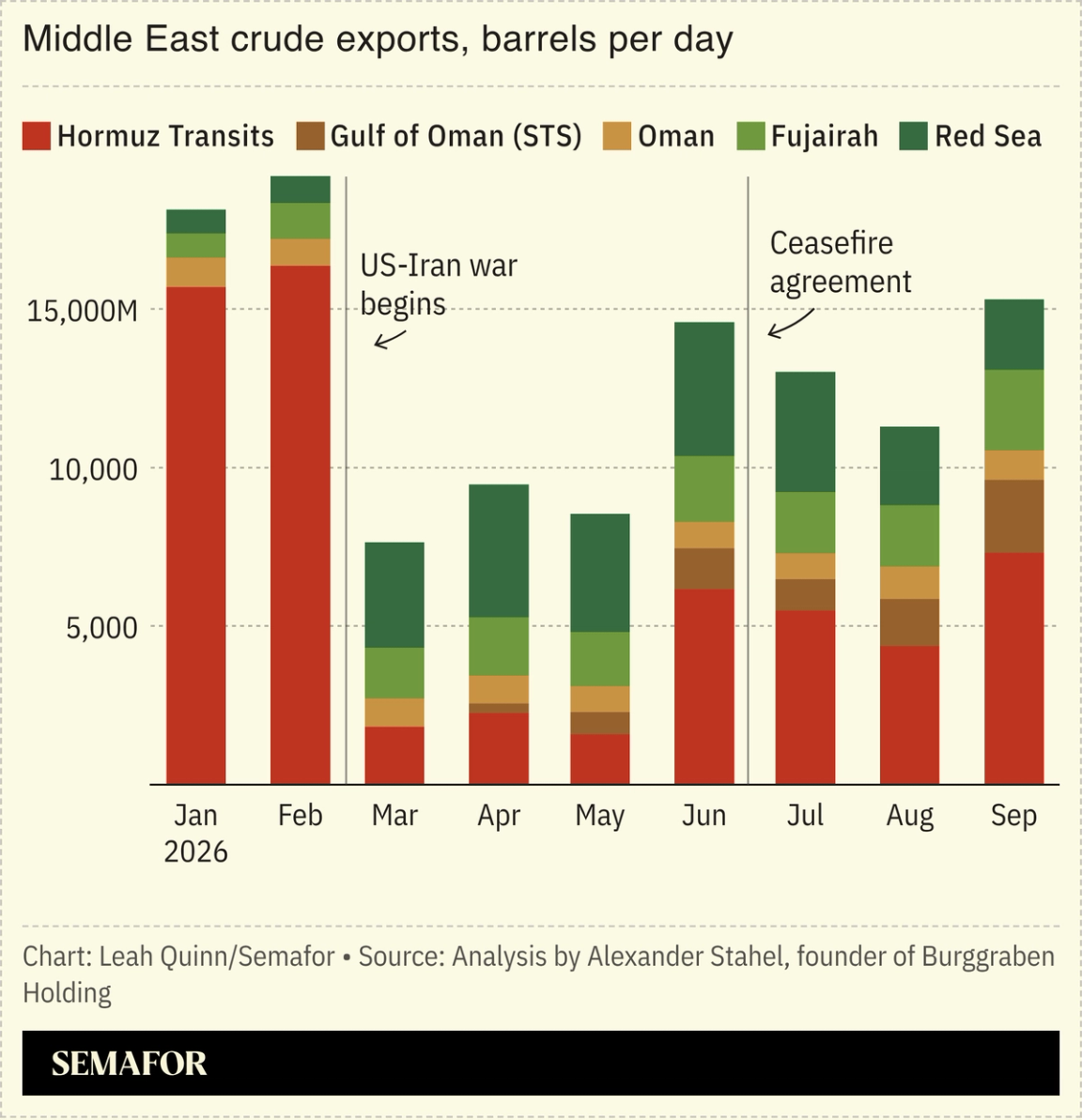 Middle East crude exports have recovered to almost 80% of pre-war levels, a sustained rise showing Iran’s grip on the Strait of Hormuz has weakened. After traffic plunged in March, a US-protected “shuttle trade” emerged, with tankers owned and insured by Gulf states moving crude through the strait. Abu Dhabi has been the most prolific, according to Alexander Stahel, co-founder of Swiss hedge fund Burggraben Holding. Saudi Arabia, forced to halt flows through its East-West Pipeline after attacks by Iran-linked groups, is also using the route and now has 23 hulls, “more than anybody else” working the shuttle, Stahel wrote. The revival is good for the Gulf and the global economy, but bad for Tehran. Its waning leverage could “lead to a more explosive dynamic” as Iran seeks other ways to exert pressure, Sanam Vakil, director of Chatham House’s Middle East and North Africa program, told The Wall Street Journal. — Mohammed Sergie |
|
Higher oil prices give Oman a boost |
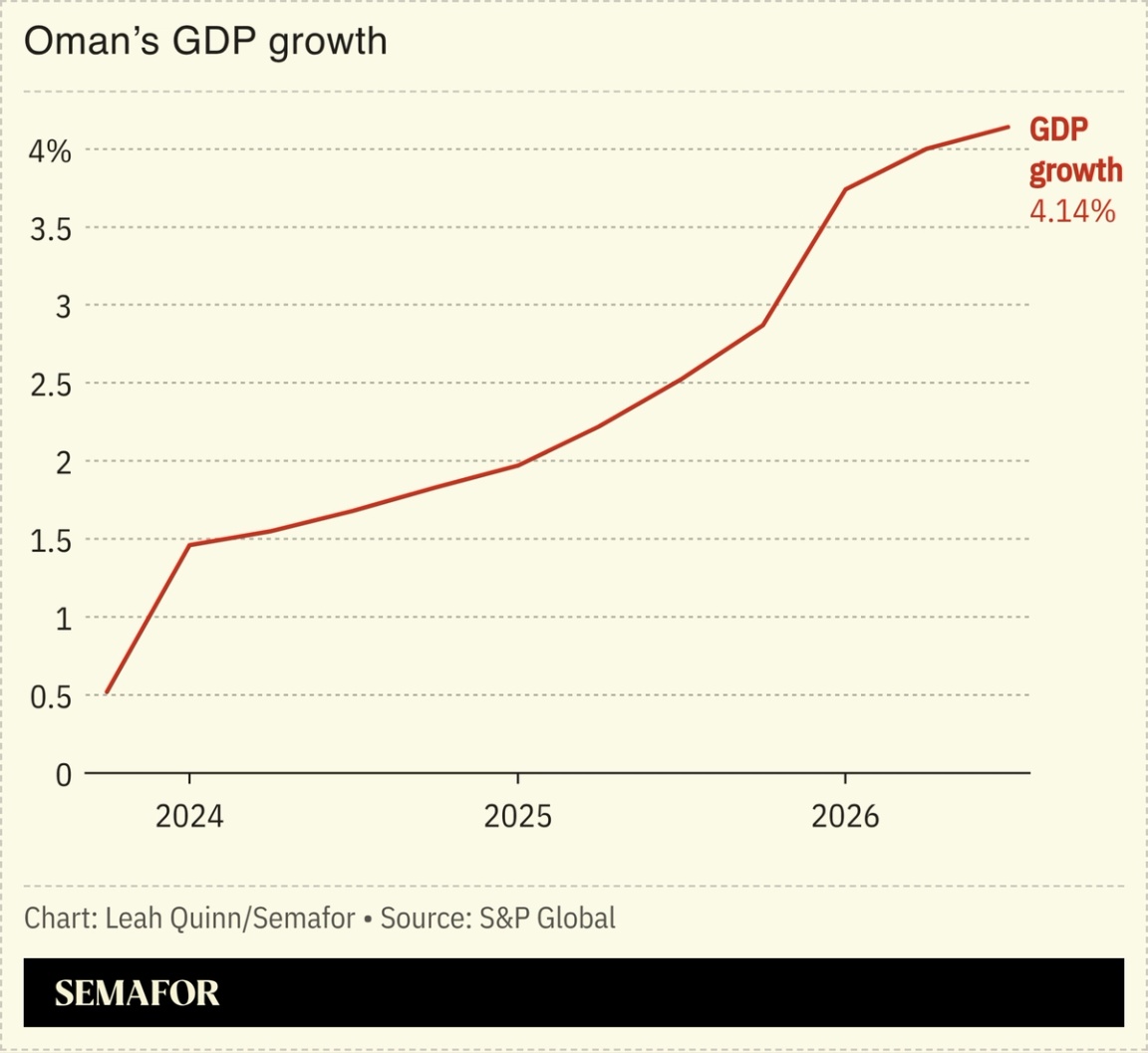 Ratings agency S&P Global more than doubled its 2026 growth forecast for Oman to 3.5%, the latest sign the sultanate is benefiting from both the Iran war and long-running economic reforms. Unlike its Gulf neighbors, Oman exports its oil and gas from Arabian Sea ports, and output was up 16% by July. S&P now expects a fiscal surplus of 4.8% of GDP this year, after first-quarter government revenues rose 13% thanks to higher oil prices. The windfall builds on a turnaround that was already underway: Fitch moved Oman to a positive outlook in 2024, and the IMF praised its surpluses and low government debt last year. Sultan Haitham bin Tariq has cut the deficit since taking power in 2020. S&P affirmed Oman’s investment-grade rating and said only a prolonged Iranian campaign against its energy infrastructure could threaten it. — Ed Clowes |
|
Dubai sends robotaxis to school |
 Emirates News Agency Emirates News AgencyDubai has built a training ground where the robotaxis it wants on its roads can practice. The Dubai Mobility Labs opened Sunday at Silicon Oasis, running vehicles through 248 test scenarios on closed tracks and a public road to Al Qudra. WeRide, Pony.ai, and Tesla have already finished trials. The UAE wants a quarter of all journeys to be autonomous by 2030, a target that can only be reached if adoption is accelerated. Relatively few options are available, with only 7,613 passenger trips in Dubai so far. Nearly every commercial operator in the UAE is Chinese — including the flying car tested by Ras Al Khaimah, which was built by China’s XPeng.
|
|
Abu Dhabi pushes livability |
 Courtesy of Guggenheim Abu Dhabi Courtesy of Guggenheim Abu DhabiAbu Dhabi’s property developers are settling into a paradox: Their city is in the middle of a regional conflict, yet it can still market itself as among the safest in the world, with a Disney park under construction and an outpost of the Guggenheim set to open in December. The first edition of LIVEX, a conference in the UAE capital this week, has drawn executives from the UAE’s largest developers, the former mayor of Paris, Tucker Carlson, and Ryan Reynolds (of all people), to discuss livability and promote Abu Dhabi as an investable destination. “It’s now been 213 days since the 28th of February,” Aldar Group CEO Talal Al Dhiyebi said. “Today, look at Abu Dhabi. Our airports are open. Our malls are busy. Our construction sites are moving.” While its sovereign wealth funds are pouring billions into real estate abroad, its domestic players — Mubadala-backed Aldar and L’IMAD-owned Modon — are still focused on turning undeveloped land into some of the most sought-after property in the region. — Kelsey Warner |
|
 Deals- Abu Dhabi investment firm Shorooq and G42’s AI company Presight joined a $100 million Series A round in California-based Maven Robotics. Maven, which makes warehouse robots, plans to build 250 more machines with the money.
Finance- Boston-based asset manager and custodian State Street plans to hire 300 people over three years at a new operations center in Al Ain, the oasis city in Abu Dhabi, which will focus on technology, AI, and client services. — The National
- AIX Investment Group, a Dubai-based firm offering “bond-like products” with annual returns of 12% to 16% and a guaranteed 14.4% on real estate assets, has reportedly stop paying coupons since April. The firm, which isn’t licensed to offer such products in the UAE, occupies three floors in the Burj Khalifa and runs commercials on Emirates flights. — Financial Times
Real estate- Dubai developer Sobha Realty is investing $600 million to build about 700 homes in Texas on land it bought in the Dallas suburbs of Celina and Frisco. The company is scouting Houston and Austin next. — The National
- A unit of Abu Dhabi’s sovereign wealth fund ADIA is backing the $2.34 billion takeover of Slate Grocery REIT by US firms Brixmor Property Group and Everview Partners. The Toronto-listed trust owns 115 grocery-anchored shopping centers across the US.
|
|
 Etihad_Rail/X Etihad_Rail/XUAE President Sheikh Mohamed bin Zayed inaugurated Etihad Rail’s passenger service with a ride ahead of tomorrow’s public launch of the country’s first intercity trains. Five daily departures each way will link Abu Dhabi and Dubai in just over an hour, with fares from 39 dirhams ($11), alongside a daily Fujairah service. Bookings are open on Etihad Rail’s site. |
|
|


