| | In this edition, a succession plan for David Solomon, and Thoma Bravo finds the Saaspocalypse hasn’t͏ ͏ ͏ ͏ ͏ ͏ |
| |  | Business |  |
| |
|
 - Anthropic worries
- Can Jensen have it all?
- Oura punts IPO
- Thoma tests the SaaSpocalypse
- Slater’s next act
|
|
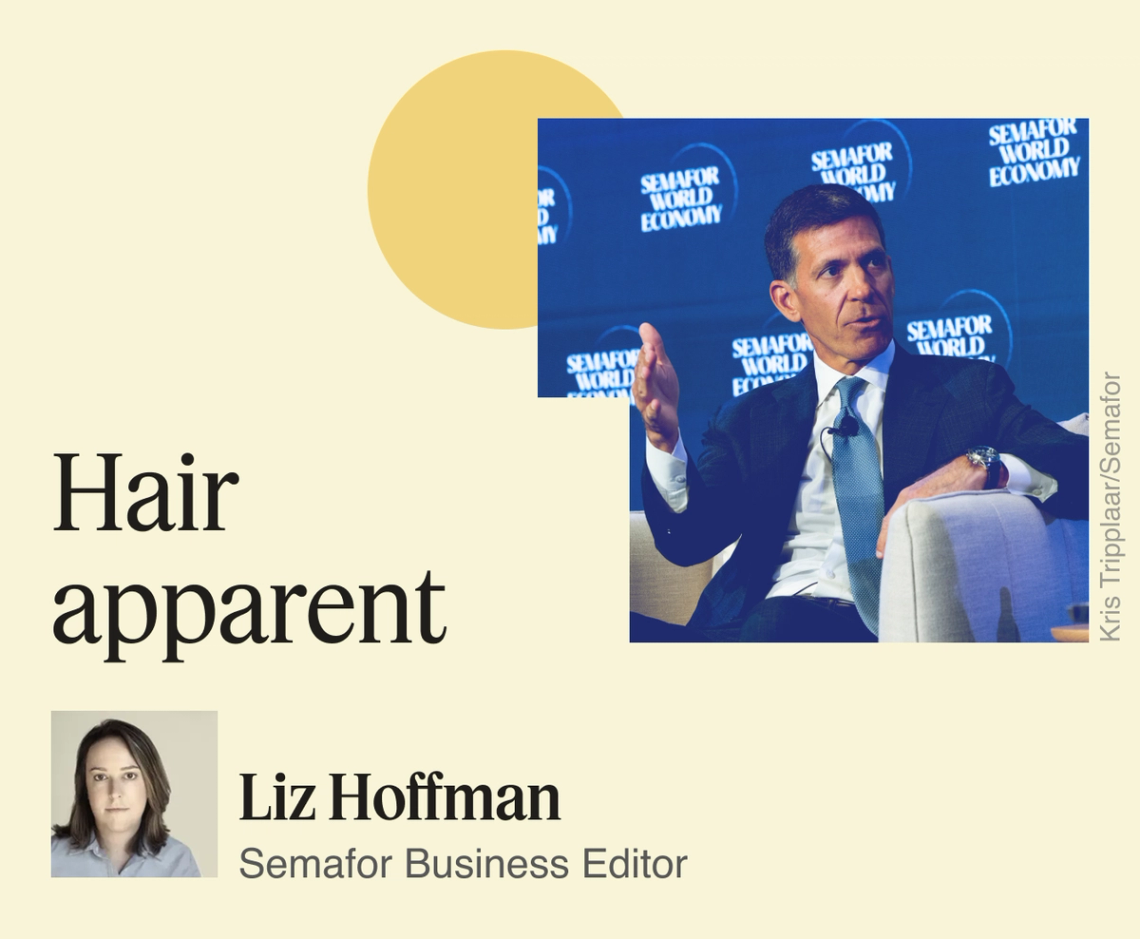 Lloyd Blankfein, contemplating his exit from Goldman Sachs, liked to say that when things are bad, you can’t leave, and when things are good, you don’t want to. Blankfein was finally having fun, after a decade as CEO, when he started laying the groundwork for his exit in 2017. That’s where David Solomon will be in 2028, which The Wall Street Journal reports is the loose timeframe for him handing the reins to his longtime lieutenant, John Waldron. There’s little drama here: Waldron has followed a step behind Solomon since the 1990s, from Bear Stearns to Goldman and then up through its banking arm, and has had the heir apparent title to himself for Solomon’s entire run — something no incoming Goldman CEO in Goldman’s history can say. (He also turned down $500 million and a write-your-own-ticket offer from Apollo when it tried to scoop him up in 2024, not something one does without assurances.) Goldman has a history of chewing through CEOs-in-waiting. Neither John Thain nor John Thornton succeeded Hank Paulson. Gary Cohn tired of life as Prince Charles under Blankfein. Waldron will get the prize, and good timing, benefitting from Solomon’s stabilizing march but inheriting none of the baggage of his early tenure. Solomon had the Jack Welch-ian temperament to remake Goldman and, early on, the room to do it. He spent that capital on a disastrous foray into consumer banking — started before he became CEO but expanded on his watch — then spent his middle years putting down the resulting internal mutiny and mending fences with regulators. Goldman today looks like a more profitable, organized, and top-down version of its pre-2008 self. And its stock price, which is a decent proxy for the resting pulse inside 200 West Street, has quadrupled since he took the job. Unless he strikes the big deal that plenty of people, myself included, have long assumed he wants, Solomon will be remembered as a stabilizing, corporatizing leader of Wall Street’s premier institution. The transformation, if it comes, will be Waldron’s. The 56-year-old has staked out ground on AI and China, the two forces likely to define his tenure, and is a dealmaker at heart. Solomon leaves him with a clean slate. |
|
Anthropic makes its pitch |
 Carlos Barria/Reuters Carlos Barria/ReutersAnthropic’s pitch to investors: We’re losing gobs of money, we might kill everyone, buy our stock anyway. Reuters’ peek at the company’s IPO prospectus includes warnings not far off from Semafor’s imaginary list of risk factors, and it details the company’s plans to spend hundreds of billions of dollars more on compute than it expects in revenue. That means public investors will take on the risk so far carried by Anthropic’s venture backers, suppliers, and guarantors. That’s how it’s supposed to work, and the chance that retail investors end up holding the bag should be weighed against the risk that they miss out on huge gains. (A pickle for progressive politicians.) As for the company’s warning of “existential risks to humanity” — concerns newly elevated by the pope — we’d note that the existence of Anthropic’s 401(k) benefits assumes a world where we’re all still here. — Liz Hoffman |
|
Can Jensen Huang have it all? |
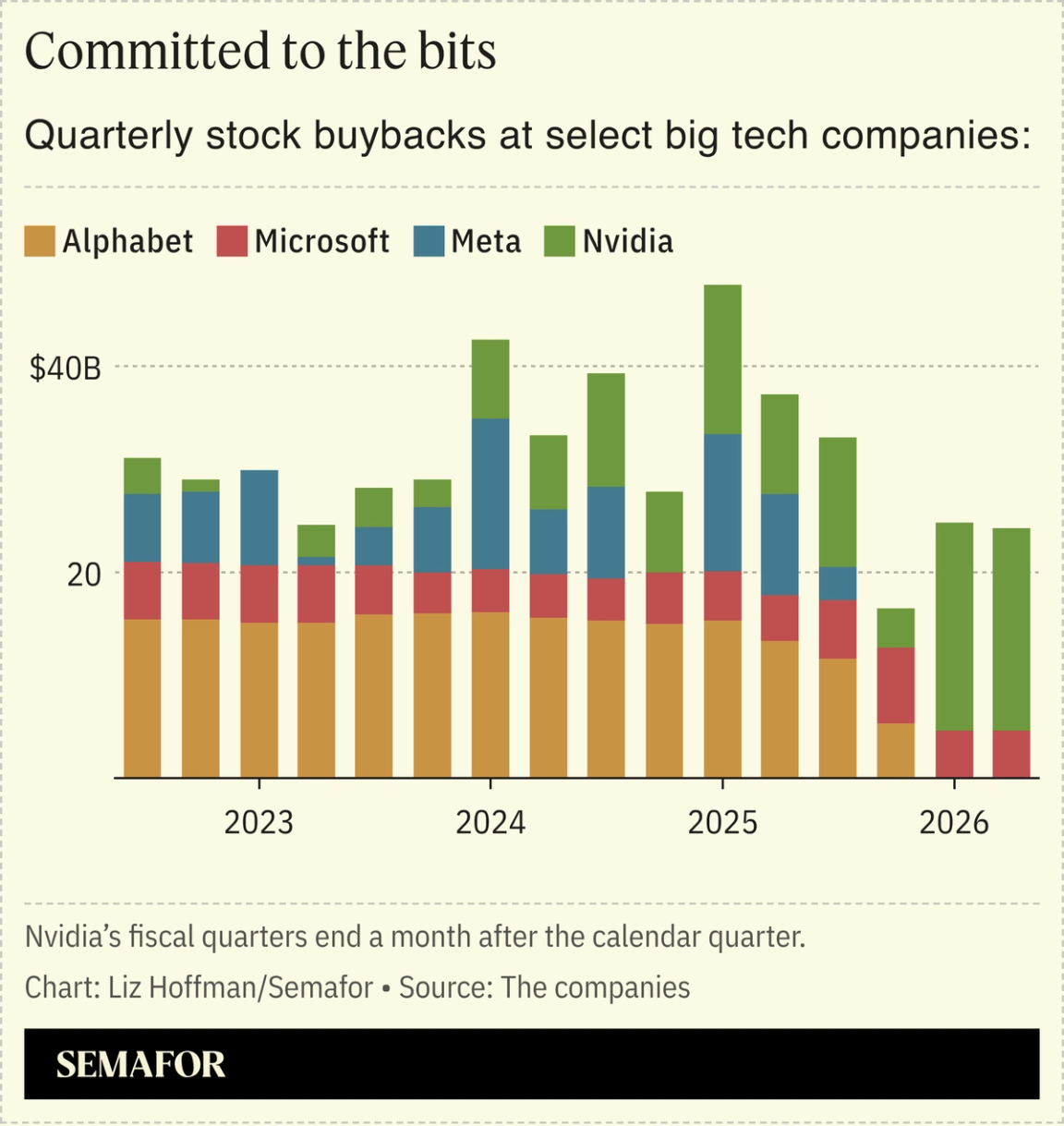 Big tech companies have had to choose between funding their AI buildouts and keeping their own shareholders happy. Nvidia’s Jensen Huang rejects the premise. Nvidia’s record $150 billion stock buyback plan is a bet that the company — which has become the linchpin to the AI economy — can do both. Huang’s balance sheet backs him up for now: Nvidia has $33 billion in net cash, though that doesn’t account for hundreds of billions of dollars of data-center lease payments it has guaranteed for unprofitable labs including OpenAI. Those aren’t treated as traditional debt, but might as well be, given the disastrous consequences if Nvidia couldn’t, or wouldn’t, pay. Other big tech companies have sacrificed shareholder goodies for AI investments. Of the four biggest AI spenders, only Microsoft has bought back any shares this year. Alphabet, which averaged about $15 billion per quarter in buybacks from 2022 to 2024, has flipped to issuing new shares to fund its AI plans. — Liz Hoffman |
|
Oura flashes IPO warning sign |
 Oura’s CEO Tom Hale. Pedro Nunes/Reuters. Oura’s CEO Tom Hale. Pedro Nunes/Reuters.Oura delayed its $2 billion IPO citing market “uncertainty,” a term usually reserved for pandemics, wars, and tariff shocks, not when the Nasdaq is hitting record highs. Indications that the smart ring’s shares were likely to price at the low end of the $40-to-$44 range delayed the plans, a person familiar with the matter said. The two big upcoming AI IPOs — OpenAI and Anthropic — are creating an attention and capital vortex, making it harder for the investors who back other tech IPOs to justify spending their time and money on much else. Other rallies have lifted all boats; this one is creating haves and have-nots. “I just think this is a terrible year to go public,” Databricks CEO Ali Ghodsi said this summer. — Rohan Goswami |
|
Thoma Bravo tests the receding SaaSpocalypse |
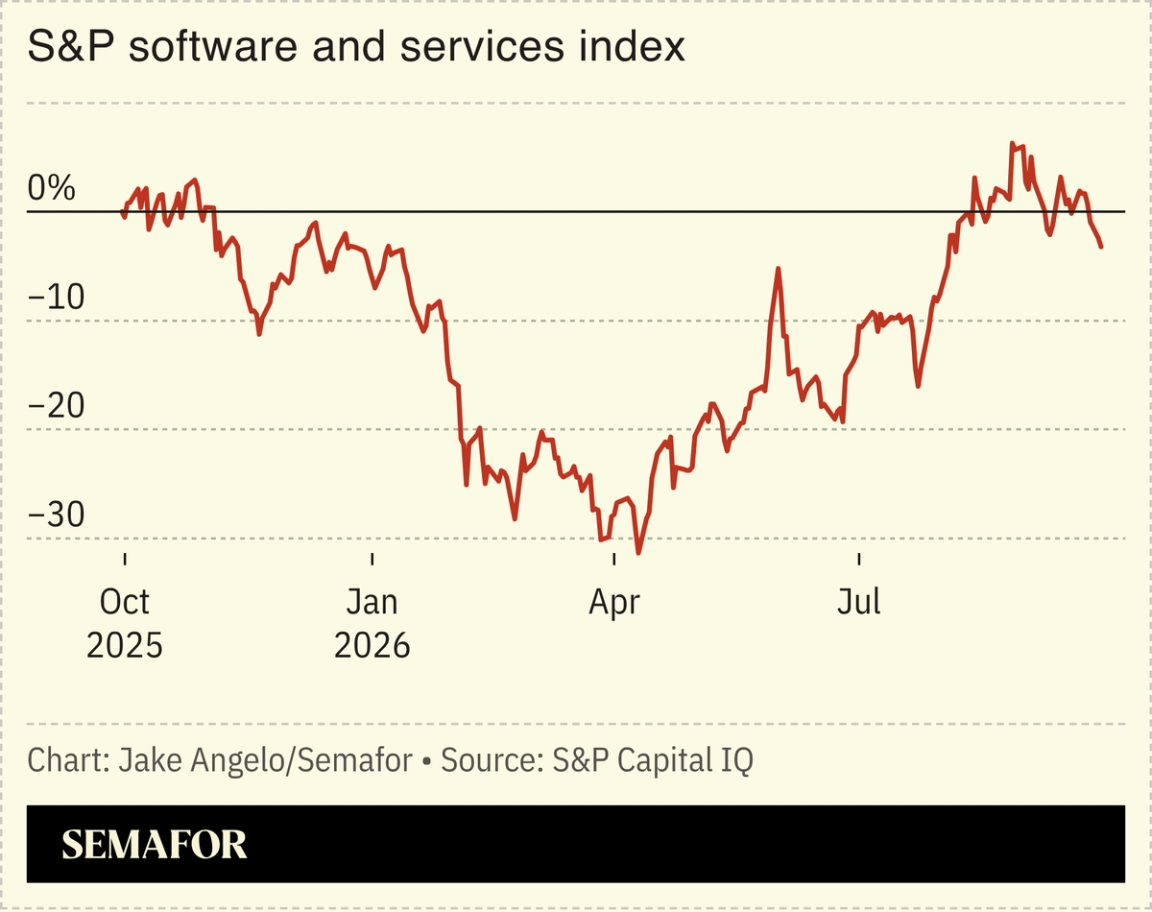 Thoma Bravo is testing the receding waters of the AI-panic flood. The private equity firm is looking to sell a $1.5 billion stake in software company Imprivata, tapping JPMorgan and Evercore to market a decade-old LBO, people familiar with the matter said. Another Thoma-backed SaaS company, Sophos, also raised new debt at 5 percentage points above the baseline rate, or around 9%, an outcome that counts for a win after a tough marketing process. Thoma declined to comment. Investors pulled out of software services companies earlier this year fearing AI obsolescence. But adoption has been slow, some mission-critical functions are proving tougher to displace inside big corporate workflows, and talk of a slowdown in model development — OpenAI is scrapping its latest update over safety concerns — appears to have lengthened the runway for legacy software providers. Thoma, which has been through cycles before, is the first to brave the post-panic market. — Ellen DiMauro |
|
Antitrust chief plans a comeback |
 Mattie Neretin/CNP/Sipa USA Mattie Neretin/CNP/Sipa USAFormer Trump antitrust enforcer Gail Slater has held discussions about returning to the private practice of antitrust law, people familiar with the matter tell us, advising companies trying to get mergers past an unpredictable administration. The author of America First Antitrust and former Senate aide to JD Vance, Slater brought a tough enforcement mindset to the early months of Trump’s second term, but was marginalized as the administration took a pro-corporate turn and lost internal fights over mergers involving HPE and Live Nation, where the role of outside lobbyists drew criticism. Slater has been interviewing with at least one Washington, DC law firm about joining as a partner, these people said. Slater declined to comment. — Liz Hoffman & Rohan Goswami |
|
➚ BUY: New Jersey. Drilling began Monday on the first new tunnel under the Hudson River in 116 years, months after the Trump administration attempted to freeze funding for the project. ➘ SELL: New jerseys. A 9% drop in Bloom Energy shares, after potential delays at a New Mexico AI data center it will power, soured the unveiling of new Philadelphia 76ers jerseys sponsored by the company. But getting its logo on LeBron James did send Google searches for the AI infrastructure player soaring 250% week-over-week. |
|
 Companies & Deals- Xed out: Elon Musk’s X won’t run ads for Alex Gibney’s new documentary on the billionaire. No surprise there, except for his being a free-speech absolutist, but neither will TikTok, YouTube, or Meta, according to The Hollywood Reporter.
- Clock out: As many as 16 million US workers, 10% of today’s workforce, may need to change jobs over the next decade because of AI displacement, McKinsey predicts. Lower-wage workers are 7.6 times more likely to be forced to switch (and there are some grim options).
- Cloud chasing: Alaska Airlines is belatedly chasing the premium-travel dollars that are the profit engine of global carriers. Its new growth strategy includes… lie-flat seats on its coast-to-coast 737s.
Markets- Bot banking: Apollo’s chief economist mused about an “agentic bank run” as AI personal assistants helpfully move billions of dollars from low-interest checking accounts to high-yield savings, sapping banks’ funding.
|
|
|


