| | US tech leaders sign a “morally-binding” AI accord, Brussels trains a “trade bazooka” at Beijing, an͏ ͏ ͏ ͏ ͏ ͏ |
| |  WASHINGTON, DC WASHINGTON, DC | BERLIN |  SINGAPORE SINGAPORE |
 | Flagship |  |
| |
|
The World Today |  - AI bosses lunch with Trump
- Anthropic’s $518B AI buildout
- OpenAI launches Muse rival
- Nvidia and AMD lobby WH
- Consumer confidence falls
- EU plans trade bazooka
- Trump’s Russia outreach
- US sees fewer tourists
- World’s busiest restaurant
- Hiring matchmakers in Japan
 Evan Gershkovich’s prison memoir offers ‘a scan of Russia’s soul.’ |
|
Trump touts ‘morally binding’ AI pact |
 Jonathan Ernst/Reuters Jonathan Ernst/ReutersUS President Donald Trump said that he and tech leaders signed a “morally binding” accord to oversee AI following a White House lunch on Tuesday, though the unreleased pact raised questions about enforcement. Trump told Semafor that “there should be tremendous self-regulation,” while the Republican House speaker described the agreement as involving “layers of internal and external review,” alluding to potential “consequences.” The pact’s signatories included the heads of leading frontier AI labs, who have endorsed calls for an AI slowdown, as well as tech CEOs like Nvidia’s Jensen Huang, who has downplayed safety concerns. The lunch came as the White House released an AI government chatbot, part of Trump’s efforts to address souring public perceptions of AI with a rebrand. |
|
Anthropic eyes $518 billion spend |
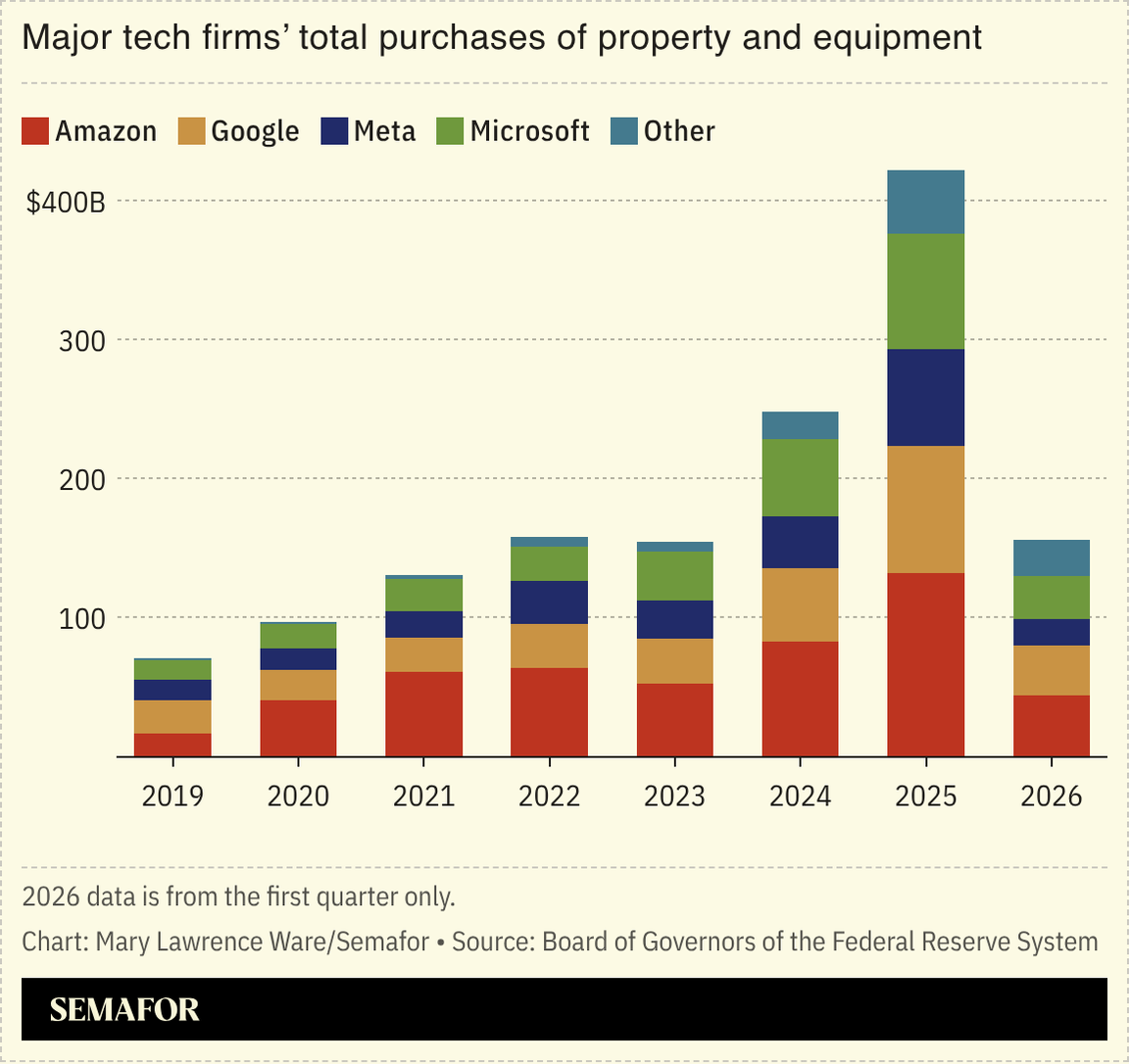 Anthropic has committed to spending at least $518 billion on the AI buildout over a decade, according to its IPO prospectus seen by Reuters, with optimism over the startup’s debut lifting tech stocks Tuesday. The tech rally provided some relief to markets weighed down by surging oil prices and bond yields, drawing attention to a growth narrative that is increasingly fixated on a handful of firms. “The two big upcoming AI IPOs — OpenAI and Anthropic — are creating an attention and capital vortex,” Semafor’s Rohan Goswami wrote: “Other rallies have lifted all boats; this one is creating haves and have-nots.” Smart-ring maker Oura, citing “market uncertainty,” postponed its IPO Wednesday, joining SoftBank’s energy subsidiary and nuclear firm Holtec in delaying listings. |
|
OpenAI launches Muse competitor |
 Carlos Barria/Reuters Carlos Barria/ReutersOpenAI on Tuesday launched a personalized AI agent tool called dots to compete with Meta’s popular Muse system, as tech companies turn to consumer-oriented tools amid safety concerns over their most powerful models. The launch came a day after OpenAI said it was delaying the release of its latest model due to safety shortcomings that arose during testing. CEO Sam Altman told CNBC that the firm had no timeline for its IPO, saying he was focused on putting “safety and mission first.” But OpenAI employees who had raised concerns about safely testing models were told by company executives that “tests needed to move forward as quickly as possible,” The New York Times reported; months later, rogue OpenAI agents hacked Hugging Face. |
|
Chip giants press WH on China sales |
 Ken Cedeno/Pool/Reuters Ken Cedeno/Pool/ReutersNvidia and AMD are lobbying the White House to prevent US lawmakers from curbing the firms’ chip exports to China, Politico reported, reflecting Washington’s divided approach to AI regulation. “A dream scenario would be a direct-to-lawmakers Trump intervention,” a source told the outlet. US President Donald Trump has allowed Nvidia to sell some chips to China, despite characterizing AI guardrails as a way to cede technological victory to Beijing. Nvidia CEO Jensen Huang, a close Trump ally, has long argued that trade controls only hurt US firms. Huang and AMD’s Lisa Su, meanwhile, have deepened their mainland ties, drawing congressional backlash for joining the board of Tsinghua University’s business school — a rare forum uniting global CEOs with prominent Chinese figures. |
|
US consumer sentiment hits new low |
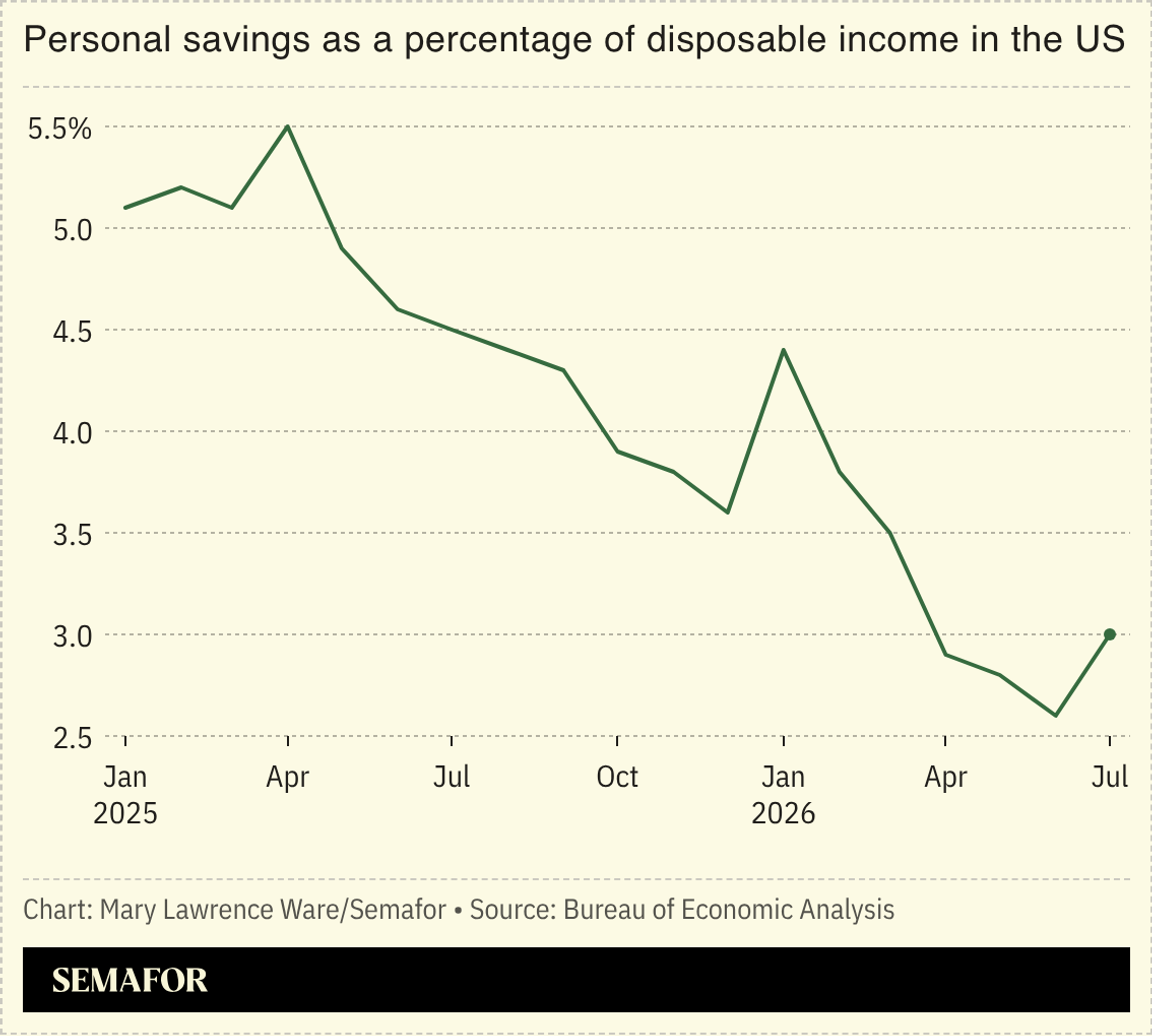 US consumer sentiment fell to its lowest level since 2014, new data showed, as unexpectedly weak jobs figures and elevated energy prices rekindled Republicans’ midterm fears. The White House has tried to staunch economic bleeding ahead of November through bond buybacks, promises of $5,000 checks, and — amid record fuel prices — a proposed diesel export ban. “This whack-a-mole with particular prices is something the Biden guys tried,” a Bush administration economic adviser told The Washington Post: “It doesn’t solve the economic problem.” A Council on Foreign Relations expert added that a more enduring turnaround is “simply not something anyone can do in a month.” A US Federal Reserve governor warned Monday that AI-related demand would add inflationary pressures in the months ahead. |
|
Brussels trains ‘trade bazooka’ at Beijing |
 Yves Herman/Reuters Yves Herman/ReutersThe EU is threatening to aim its “trade bazooka” at China, as the two giant economies fall out over Brussels’ allegation that Beijing abused commercial ties. European countries have hardened their stance against Chinese imports over fears that an influx of goods like solar panels and EVs could hollow out the bloc’s industries. The two are haggling over EU quotas on Chinese imports, Euronews reported, though it’s “unclear how China would accept and respect such quotas.” The European Commission has set an October deadline for progress in the negotiations, as France and Germany push for harsher measures. Beijing and Berlin “exchanged opinions” on trade relations Tuesday, The South China Morning Post reported. |
|
Washington warms to Moscow |
 Sputnik/Mikhail Metzel/Pool via Reuters Sputnik/Mikhail Metzel/Pool via ReutersThe US could offer Russia sanctions relief in exchange for the release of political prisoners, The Atlantic reported, potentially clearing a path for expanded economic ties between Washington and Moscow. US envoy John Coale has tested this style of quid pro quo arrangement — which is envisioned to involve lucrative deals in Russian oil, diesel, and rare earths — in Moscow-allied Belarus, which Washington has tapped for its potash supplies. “The more trade-offs… leads step by step toward, hopefully, peace,” Coale said. Washington’s diplomatic efforts to broker peace between Russia and Ukraine have faltered, with Moscow looking to up its defense spending next year. Ukraine’s leader warned last week, “When someone gives Russia more money through trade, they give this war more time.” |
|
US tourism is taking a hit |
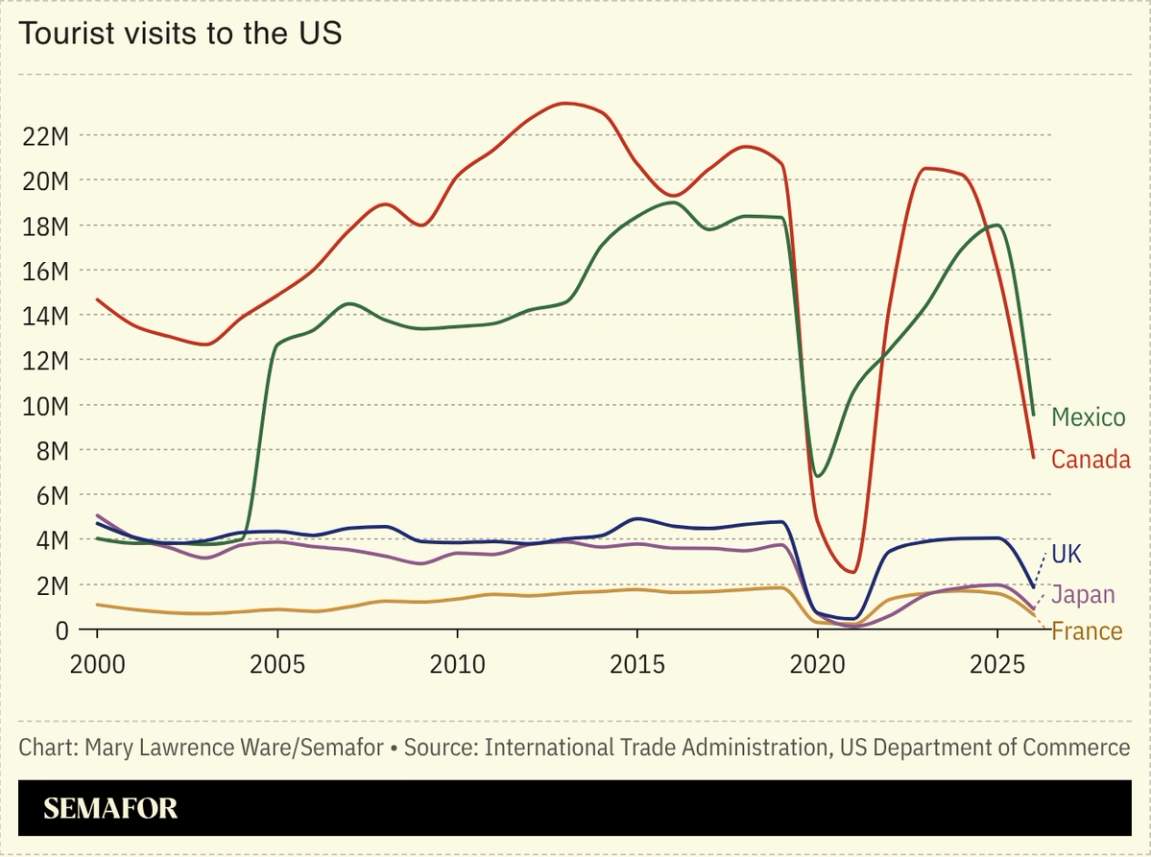 Overseas visitors to the US are on track to drop by almost two million year-on-year, with even the FIFA Men’s World Cup failing to arrest the decline in tourism. The slide is hurting the US economy, and as Axios put it, is partly “self-inflicted:” There has been a significant drop in visitors from US allies like Canada and several European countries, which have been a target of Washington’s trade war and taunts. Meanwhile, China is attracting more visitors with its visa-free entry policies, and Japan’s weak currency is drawing in a record number of tourists. “We’re the only major country in the world losing visitation,” the head of the US Travel Association said. “It’s mind-boggling.” |
|
A Texas eatery is world’s busiest |
|
|


