| | In this edition:͏ ͏ ͏ ͏ ͏ ͏ |
| |  Cape Town Cape Town | Lamu |  Ouagadougou Ouagadougou |
 | Africa |  |
| |
|
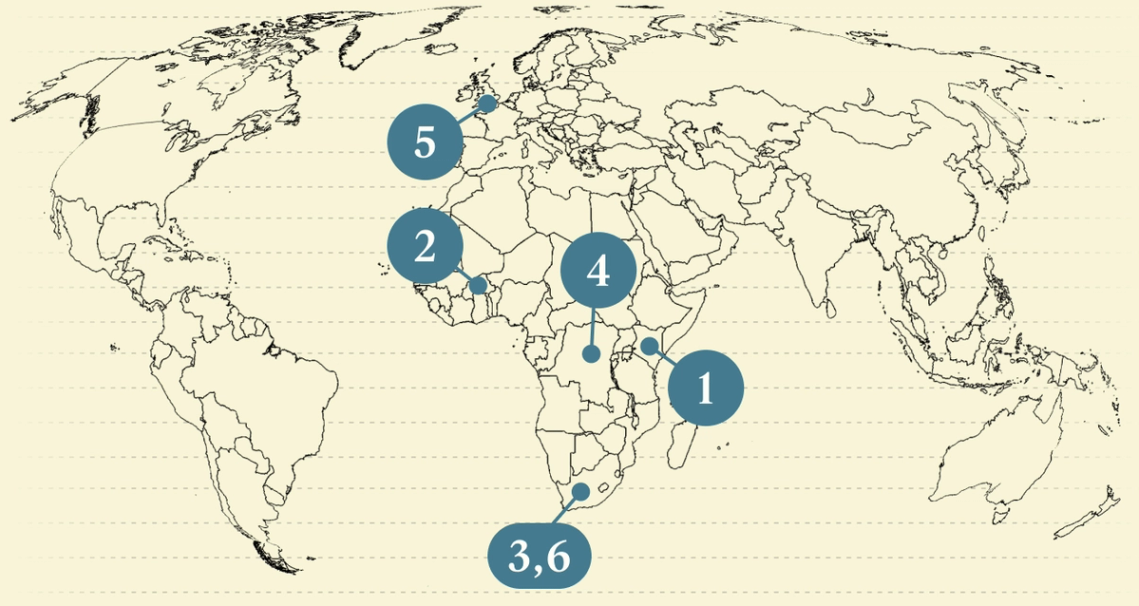 - Oil refinery breaks ground
- Burkina Faso’s gold refinery
- US ambassador is summoned
- Africa’s aid cut ‘opportunity’
- Fintech eyes growth amid IPO
- Data center water fears
 Côte d’Ivoire hosts an AI film festival |
|
Work starts on $16B Dangote refinery |
 Monicah Mwangi/Reuters Monicah Mwangi/ReutersAfrica’s richest man Aliko Dangote formally kicked off construction of a $16 billion oil refinery in Kenya on Wednesday, aiming to replicate the success of his plant in Nigeria which has turned the country into a fuel-producing powerhouse amidst a global energy crisis. The new refinery on the island of Lamu is set to be completed in 2030, ultimately refining 700,000 barrels a day. It will serve a region that has historically relied on Middle East fuel imports as part of a broader push to strengthen Africa’s energy security and bolster economic growth. Kenya’s President William Ruto was joined at the groundbreaking ceremony by the presidents of Ethiopia and Uganda. The planned refinery already faces competition from upcoming projects in Tanzania and Uganda, however. Separately, a Kenyan court had granted a group claiming ownership of the refinery’s proposed site the right to maintain status quo until a hearing on the case in October, though the order did not prevent Dangote’s kick-off event. The group plans to list shares of its Nigeria refinery on the Nairobi Securities Exchange in December, following a Lagos initial public offering two weeks ago. — Alexander Onukwue |
|
Burkina Faso opens gold refinery |
 Endeavour Mining gold mining site in Burkina Faso. Anne Mimault/Reuters. Endeavour Mining gold mining site in Burkina Faso. Anne Mimault/Reuters.Burkina Faso opened a refinery to process the country’s gold reserves domestically, a demonstration of the junta-led government’s resolve to prevent raw minerals exports. The nation is among Africa’s largest gold producers, but has struggled to regulate its informal mining sector. Junta leader Ibrahim Traoré, who inaugurated the new plant on Monday, said it was part of a long-term approach for the sector: “For everything related to the extractive industry, we want to have the entire value chain in the country.” He vowed to enshrine domestic control over other minerals, including lithium, copper, and nickel. Governments across the continent are pursuing policies aimed at capturing more value from their natural resources. African leaders have increasingly argued their countries should build domestic processing and refining capacity, rather than shipping fossil fuels and critical minerals abroad. — Alexander Onukwue |
|
Pretoria hauls in US envoy again |
 Leo Brent Bozell. Kris Connor/Getty Images. Leo Brent Bozell. Kris Connor/Getty Images.South Africa summoned US ambassador Leo Brent Bozell III again, deepening a diplomatic rift with Washington in the same week that one of the country’s biggest companies lost ground in a US terrorism lawsuit. Bozell — first summoned in March over his remarks on the “Kill the Boer” chant — has more recently been attacking Pretoria’s response to US President Donald Trump’s demands on land, race policy, farm murders, and hate speech. South Africa has repeatedly rejected the demands as interference in domestic affairs, arguing its race-based policies are constitutional redress in a country where the Black majority was left destitute by apartheid policies. The clash coincides with Johannesburg-based MTN Group, Africa’s largest telecoms company, failing to clear a key hurdle in a New York lawsuit brought by families of US citizens killed or injured in Iraq and Afghanistan. They allege MTN aided the Taliban through protection payments and switched off its towers at the request of the Islamist group, and assisted Iran’s Revolutionary Guards in Iraq through its stake in Irancell. — Tiisetso Motsoeneng |
|
Aid cuts provide health ‘opportunity’ |
 Semafor SemaforWestern aid cuts offer African nations a “major opportunity” to regain their independence after years of overreliance on overseas assistance to fund public health services, the head of the Africa Centres for Disease Control and Prevention told Semafor. Governments across the continent relied heavily on USAID, Washington’s development agency, to fund health programs before it was shuttered last year. Some 700,000 people have lost their lives in the past 18 months as a result of the development cuts, the head of a global aid organization said last week. Yet “even if administrations change in Western countries, we’ll never again have the level of support we had in the past,” Jean Kaseya said in an interview on the sidelines of Semafor’s The Next 3 Billion event. Kaseya said he was working with African governments to cut waste by eradicating fraud in procurement and salary payments, citing the example of one nation (which he did not name) in which half of salaried health staff were found to be “ghost workers.” Kaseya, who said there was “no doubt” the Ebola outbreak in DR Congo was made worse by the cuts, also urged governments to mobilize domestic resources through taxation. — Alexis Akwagyiram |
|
 Behind closed doors, a new era of healthcare policy is taking shape. From AI and access to care, to the race for new drugs, and China’s growing role in global medicine, the forces remaking healthcare are accelerating, with implications for systems worldwide. Introducing Semafor Healthcare, your weekly read on the politics, policy, and business driving the industry. Delivered weekly by David Lim, the briefing will deliver the analysis and reporting leaders need to understand the forces reshaping healthcare, and what comes next. Subscribe for free. |
|
Airtel Money bets on payments ahead of IPO |
| |  | Alexis Akwagyiram |
| |
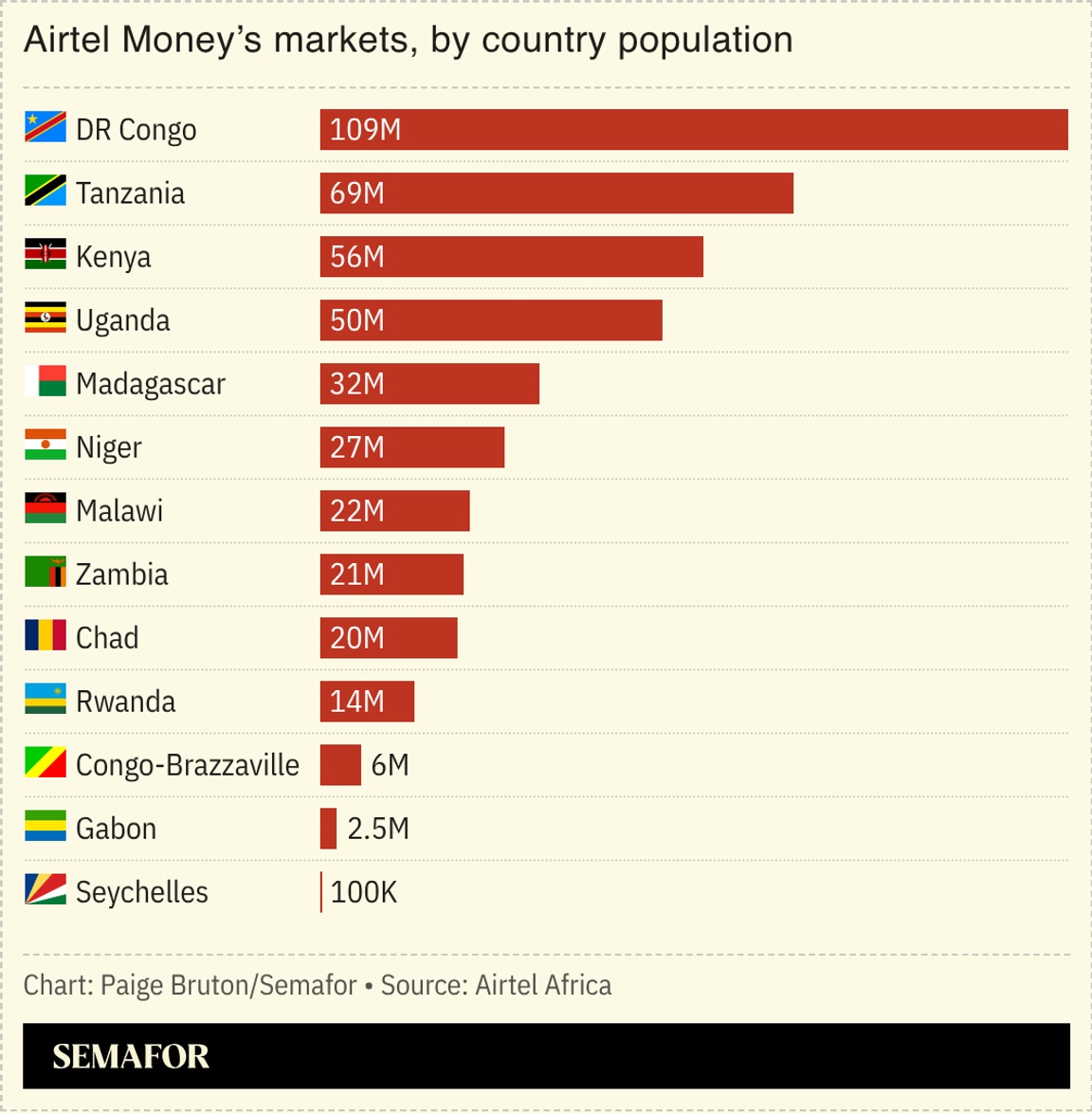 Airtel Money is betting on digital payments and financial services to drive revenue growth across Africa, the company’s CEO told Semafor ahead of what looks set to be London’s largest initial public offering in recent years. The mobile money arm of telecoms group Airtel Africa, which operates in 13 African countries and is the third-largest mobile money operator in Africa by transaction value, is reportedly looking to raise at least $800 million from the sale of shares by existing shareholders, which would give it a market capitalization of up to $9 billion. Airtel Money’s Chief Executive Ian Ferrao said in an interview the company’s revenue mix had shifted away from cash deposits and withdrawals. Customers instead use it to pay bills, buy goods, transfer funds to people, and arrange microloans. “We’ve really put a tremendous focus on the payments and transfers side of the business because that’s higher-quality revenue, better margin,” he said. |
|
Data centers prompt water fears |
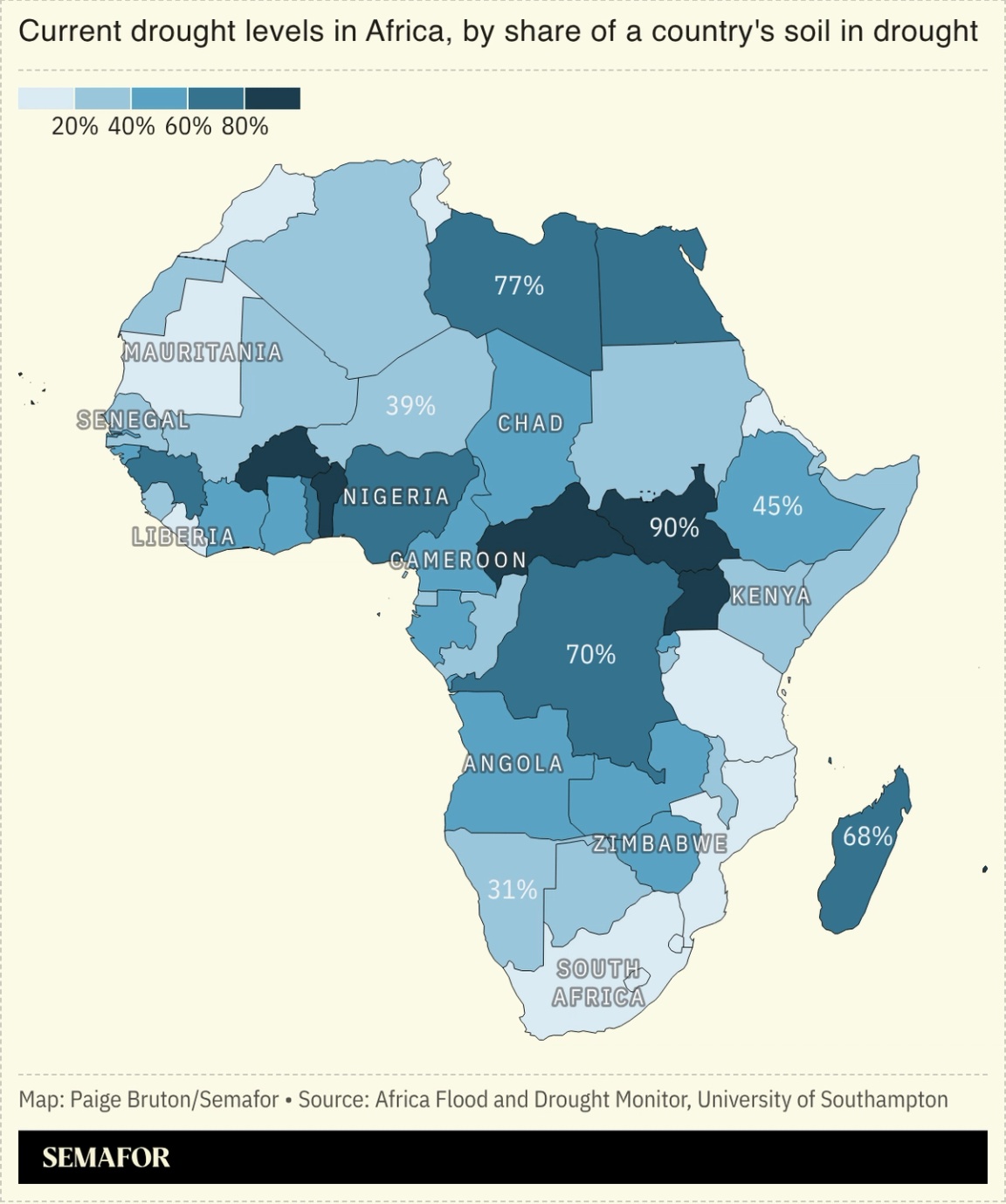 Concerns are rising in Africa about the potential water use by data centers. A recent petition by a collection of civil society groups to the South African Human Rights Commission highlighted concerns over the lack of awareness of water consumption in a country that already hosts 60 data centers and is struggling with climate-change-induced drought. Large data centers can consume up to 5 million gallons per day; a recent study modelling water use in African data centers found that ChatGPT-4 used up to 60 liters of water — or a standard washing machine cycle — to produce a 10-page paper. While water usage by data centers is a global problem, Africa is particularly vulnerable to the effects of climate change. “You are introducing sites which are resource intensive enough to be in many ways comparable to extractive industries,” Michael Marchant, head of investigations at civil society group Open Secrets, which was among the petitioners, told Semafor. “We see the risk of data centers, especially hyperscale, falling through the cracks.” — Paige Bruton |
|
 Business & Macro
|
|
|


