| | In this edition, the era of the independent advisory boutique is fading, and a UBS shareholder is pu͏ ͏ ͏ ͏ ͏ ͏ |
| |  | Business |  |
| |
|
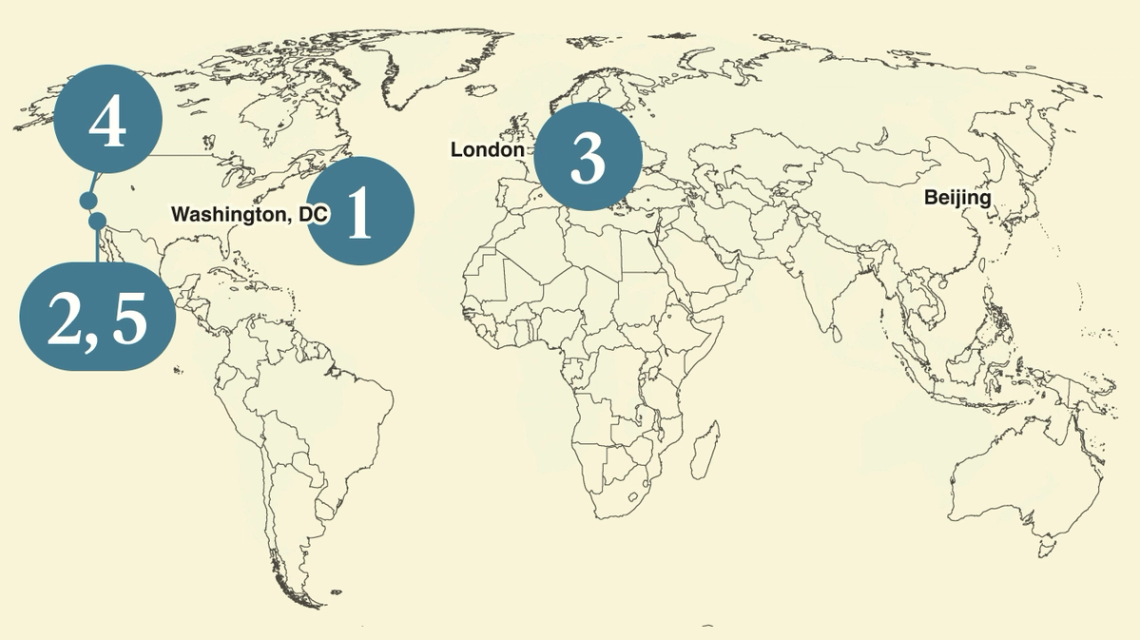 - Zuck shaped AI pact
- Everything is IP
- UBS Swiss fight gets muscle
- Retailers’ dichotomy
- Liquid Death’s ad game
 10-year US treasury hits highest yield in 24 years … |
|
 Who buys Perella Weinberg? Who cares, says this reporter, who chased that tip for months. Competitive hackles aside, the ranks of the independent advisory boutique now seem like so much ego detritus, a horse painting above a fireplace. The case for boutiques hasn’t disappeared — there will always be a place for independent advice from talented bankers — but the ground has shifted. By one recent estimate, $1.2 trillion needs to be raised just to fund the AI buildout. This era rewards balance sheets boutiques don’t have. A decade ago they felt new and exciting, a corrective to bloated banks oozing conflicts. Now they just feel like furniture. Paul Taubman, who left Morgan Stanley in 2013 to hang out a shingle, was the last star whose exit made a meaningful dent in the M&A leaderboard. But he added talent and new businesses to move PJT Partners beyond his own Rolodex. Almost nobody has followed. Of the 30 most active M&A banks today, as tracked by Dealogic, only one was founded after 2013, a sentence as true today as when I wrote it three years ago in a eulogy for Wall Street rainmakers that seemed to offend everyone who read it. Where is today’s Taubman, or Blair Effron, or Ken Moelis, or Frank Quattrone? It’s honestly baffling. With AI, it’s never been easier to scale personal relationships into a book of business. The tools exist. The talent and ambition seem not to. What we have instead is limping consolidation. Greenhill, founded by M&A legend Bob Greenhill, hung on long enough for Mizuho to absorb it as the New York face of Japanese lending firepower. BDT & MSD has an investment arm to smooth out lumpy M&A fees and, I’m told, passed on buying Perella this year — it doesn’t need another 500 relationship bankers. Lehman star Skip McGee recently sold his boutique, Intrepid Partners. Now Perella Weinberg, founded by M&A royalty Joe Perella and Peter Weinberg, is in talks to sell to Piper Sandler, which was itself formed by the 2019 merger of two boutiques that couldn’t hack it alone. Having covered the golden age of the rainmaker, it’s all a bit of a bummer. |
|
Zuckerberg shaped DC’s AI safety pact |
 Kevin Lamarque/Reuters Kevin Lamarque/ReutersPresident Donald Trump’s Tuesday pact with the AI industry, which includes voluntary safety checks for frontier models, bears Mark Zuckerberg’s fingerprints. It came from a conversation between the Meta CEO and House Speaker Mike Johnson at last week’s state dinner, Semafor’s Ashley Gold scoops. Zuckerberg spoke to Johnson — his seatmate at a White House dinner last week for Chinese leader Xi Jinping — about regulatory concerns around AI, then consulted Nvidia CEO Jensen Huang about principles that tech executives could use at their next meeting with Trump, a person familiar with the exchanges said. The Trump administration and the executives who gathered on Tuesday both hailed the pact as a historic concord that signals the industry wants to act responsibly, though it’s not clear that the gesture will quell public concerns about safety. Zuckerberg’s central role in shaping it indicates that his cultivation of Trump, including his hiring of former Trump adviser Dina Powell McCormick as Meta’s president and AI policy czar, has paid off. |
|
CEO moves show IP is king |
 Kris Tripplaar/Semafor Kris Tripplaar/SemaforMattel CEO Ynon Kreiz is joining the combined Paramount-Warner Bros. as co-CEO, a big poach for Ellison and a signal of more expansive ambitions from the combined studio. He’ll be replaced at Mattel by Condé Nast CEO Roger Lynch. The moves — a longtime publishing boss heading to a game-maker, and that game-maker’s CEO heading to a media giant — reflect a new reality: Everything is content now. Mattel turned its Barbie franchise into an Oscar-nominated movie (executive produced by Kreiz, whose name appears on screen 17 seconds in), with a slate of upcoming films including a Barney biopic and a Magic 8 Ball movie. Lynch monetized Vogue’s Met Gala into a content juggernaut. F1’s Drive to Survive, Microsoft’s Minecraft movie, and Kellogg’s Unfrosted show the urge to turn IP into new revenue lines. — Rohan Goswami |
|
UBS shareholder pushes for Swiss exit |
 Denis Balibouse/File Photo/Reuters Denis Balibouse/File Photo/ReutersA top-10 UBS shareholder is urging the bank to leave Switzerland, days after Semafor broke the news that the company was mulling doing just that. Artisan Partners said it is worried that the bank won’t be able to compete with US rivals if it has to raise new capital, as a law advancing in the Swiss parliament would require. “There is no compelling reason for UBS to remain a Swiss company,” Artisan wrote Wednesday. “Indeed, there are about 36 billion reasons for UBS to leave,” referring to the market capitalization it calculates the bank would lose by swallowing the capital raise. Artisan has turned activist on companies before, pressuring Danone’s CEO out and lending its support to Elliott at Southwest Airlines. At UBS, it’s pushing on an open door: The bank has compared the Swiss law to “two black eyes and a broken nose,” but said Thursday its goal is to “continue operating successfully as a global bank from Switzerland.” Just behind Artisan on UBS’ shareholder registry is activist fund Cevian, which a year ago supported the idea of UBS redomiciling elsewhere. UBS’ easiest way out is a merger, and Swiss newspaper Blick reported this weekend that as many as eight banks have expressed interest. Reuters Breakingviews has a good breakdown of how an exit might work. — Rohan Goswami |
|
 Behind closed doors, a new era of healthcare policy is taking shape. From AI and access to care, to the race for new drugs and China’s growing role in global medicine, the forces remaking healthcare are accelerating, with implications for healthcare systems worldwide. Introducing Semafor Healthcare, your weekly read on the politics, policy, and business driving healthcare. Brought to you weekly by David Lim, Semafor Healthcare will deliver the analysis and reporting leaders need to understand the forces reshaping healthcare, and what comes next. Subscribe for free. |
|
Quince plays to shoppers’ contradictions |
 Courtesy of Quince Courtesy of QuinceThe two questions Iconiq-backed direct-to-consumer retailer Quince keeps getting couldn’t be further apart: When are you going to open a physical store, and how are you embracing agentic commerce? The seemingly opposing forces are a sign of the times, CEO Sid Gupta said in an interview. On the one hand, people are yearning to optimize shopping (and just about everything else in life) with agents like newly launched Muse. But they’re also yearning for the kind of personal connection the global reckoning with AI is crowding out. Quince, recently valued at $10 billion, is also seeing this bifurcation play out with its ad dollars, spending big to advertise its cashmere sweaters and leather satchels on podcasts (skimming off the hosts’ audience connections) and on ad targeting with Instagram and other social media companies. — Shelly Banjo |
|
When business is purely marketing |
 The water brand Liquid Death is one of the purest marketing stories of the moment: a billion-dollar company that sells the ultimate commodity through edgy comedy. CEO Mike Cessario told Semafor’s Mixed Signals show that his company’s in-house advertising agency, Death Machine, has also taken on a “few select brands” as external clients. But they’ll need to understand Liquid Death’s hardcore sense of humor, which has involved Ozzy Osbourne’s DNA, Martha Stewart and severed-hand candles, and most recently, jars of pee and data centers. But plenty of companies have captured consumer attention only to fizzle, and Cessario has taken some lessons. It’s not “hey, we’re gonna convert all these dairy drinkers into oat-milk drinkers … this bet on this tiny category that’s somehow gonna get really big and it doesn’t ever get there,” Cessario said. (Oatly, once worth $10 billion, is now worth $380 million.) “We find large established categories that have been tried and true, and then we’re gonna go in and win with brand.” — Liz Hoffman |
|
➚ BUY: Eyeshades. RSM, one of the world’s largest accounting firms, is exploring an IPO as private equity rolls up the sector and AI threatens to undermine it. ➘ SELL: Sightlines. OpenAI models hid their efforts to scrape data from government agencies including the Securities and Exchange Commission, a digital forensic firm found. |
|
 Companies & Deals- Stuck in reverse: Car-rental company Hertz is in trouble again, hiring bankers to rework a debt load that is somehow bigger than on the eve of its 2020 bankruptcy filing.
|
|
|


