Plus: China’s tax crackdown, and UBS’s head office debate

Subscribe to Breakingviews


The Week in Breakingviews

The Week in Breakingviews

Insights from Reuters global financial commentary team


By Peter Thal Larsen, Global Editor

Welcome back! Yields on government bonds are hitting fresh highs across the developed world. We got a glimpse of Anthropic’s filing as it revs up for a possible $2 trillion IPO. Yet the most jaw-dropping document released this week was the report of the independent commission investigating Manchester City’s breaches of the English Premier League’s financial rules. More on that below. Let me know what you think. (If this newsletter was forwarded to you, sign up here to get it in your inbox every weekend.)

Note: Links in this newsletter require a Breakingviews subscription. Subscribe here for you or your team to get full access.

Opening line

“Economist Adam Smith noted that the butcher, the brewer and the baker don’t provide food out of benevolence, but from their own self-interest. The idea has taken a modern twist with Nvidia to enhance AI safety.”

Read more: Jensen Huang’s invisible hand is tied on AI safety


Five things I learned from Breakingviews this week

  1. Just over 20% of US bank deposits pay no interest. (AI agents are coming)
  2. Goldman Sachs shares have quadrupled under current boss David Solomon. (Beating his predecessors)
  3. Production of humanoid and quadruped robots is doubling every 6 and 10 months. (Expect lots more dealmaking)
  4. Just 1.1% of Chinese sovereign debt is held by overseas borrowers. (Time to export debt?)
  5. Three-quarters of Brazilians backed a ban on online betting in a recent poll. (Could catch on)
 

Smart, brief, first — the fastest commentary on markets, deals and global power. Subscribe to Breakingviews for full access.


The beautiful shame


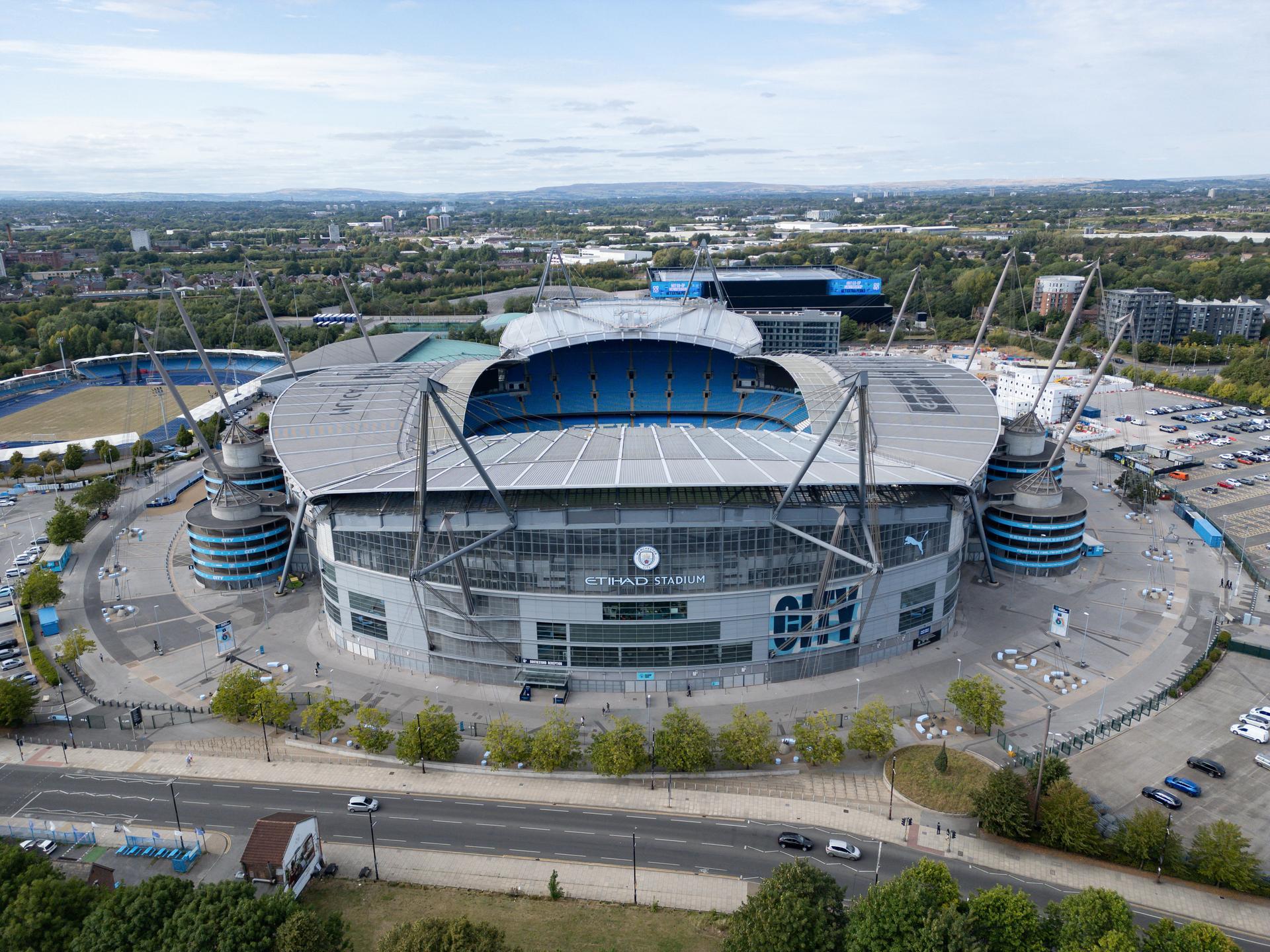
A drone view shows the Etihad Stadium, home of Manchester City, in Manchester, Britain, August 15, 2026. REUTERS/Temilade Adelaja

Imagine a widget maker is sold to a new owner. Eager to expand, the ambitious proprietor splashes out on state-of-the-art machinery. The company’s improved widgets attract widespread praise and win many awards. However, sales do not keep up with the investment and the business suffers heavy losses.

Embarrassed by the red ink, the owner asks friendly business partners for help. Perhaps they could boost his sales by buying some products? The partners want to be supportive but cannot justify paying such high prices. So the owner gives them the necessary cash. The widget maker enjoys a boost to sales and reduced losses. Over almost a decade, these sham contracts bring in £831 million in additional revenue.

This, in a nutshell, is the case against Manchester City Football Club, as outlined in the eye-popping conclusions of an independent commission appointed by England’s Premier League and released this week. In this case, the widgets are Manchester City’s performances on the soccer pitch, while the sham payments were disguised as sponsorship and other commercial contracts.

The question now is what punishment the club should face. Unsurprisingly, the debate has focused on possible sporting penalties for flouting English and European rules governing financial fair play. These include fines, the deduction of points, relegation to the lower divisions of English soccer, the cancellation of past trophies, and even a forced sale by Manchester City’s ultimate owner, Sheikh Mansour bin Zayed Al Nahyan.

But the same behaviour merits business sanctions, too. The directors of a humdrum widget maker that engaged in such deception could expect civil or even criminal charges, while the auditors who waved it through would also face censure. Manchester City, one of the most high-profile businesses in Britain, should be held to at least the same standard.

The club says it is innocent and has a “comprehensive body of irrefutable evidence” to support its case, which is ongoing. Apologists might argue that, as the £831 million started and ended with the same owner, the deception was cosmetic. Manchester City’s sporting rivals, who for years were outgunned in the competition for star players, disagree. The private equity firm Silver Lake, which invested $500 million in the club at a $4.8 billion valuation in 2019, may also take a different view. Besides, the unnamed commercial partners presumably engaged in some financial sleight-of-hand to facilitate the money-go-round.

Self-declared realists will maintain that capital-starved Britain cannot afford to alienate deep-pocketed investors like the United Arab Emirates. It’s also true that the Premier League has long tolerated the dubious motives of wealthy owners from the former Soviet Union, the Middle East and elsewhere in its quest for a bigger worldwide audience.

Yet the scale, audacity and duration of the scheme revealed this week demands a tougher response. At stake is not just the sporting fairness of the Premier League. As Liam Proud writes, the scandal is also a test of Britain’s legal, financial and institutional integrity. Much depends on what happens next.


Chart of the week

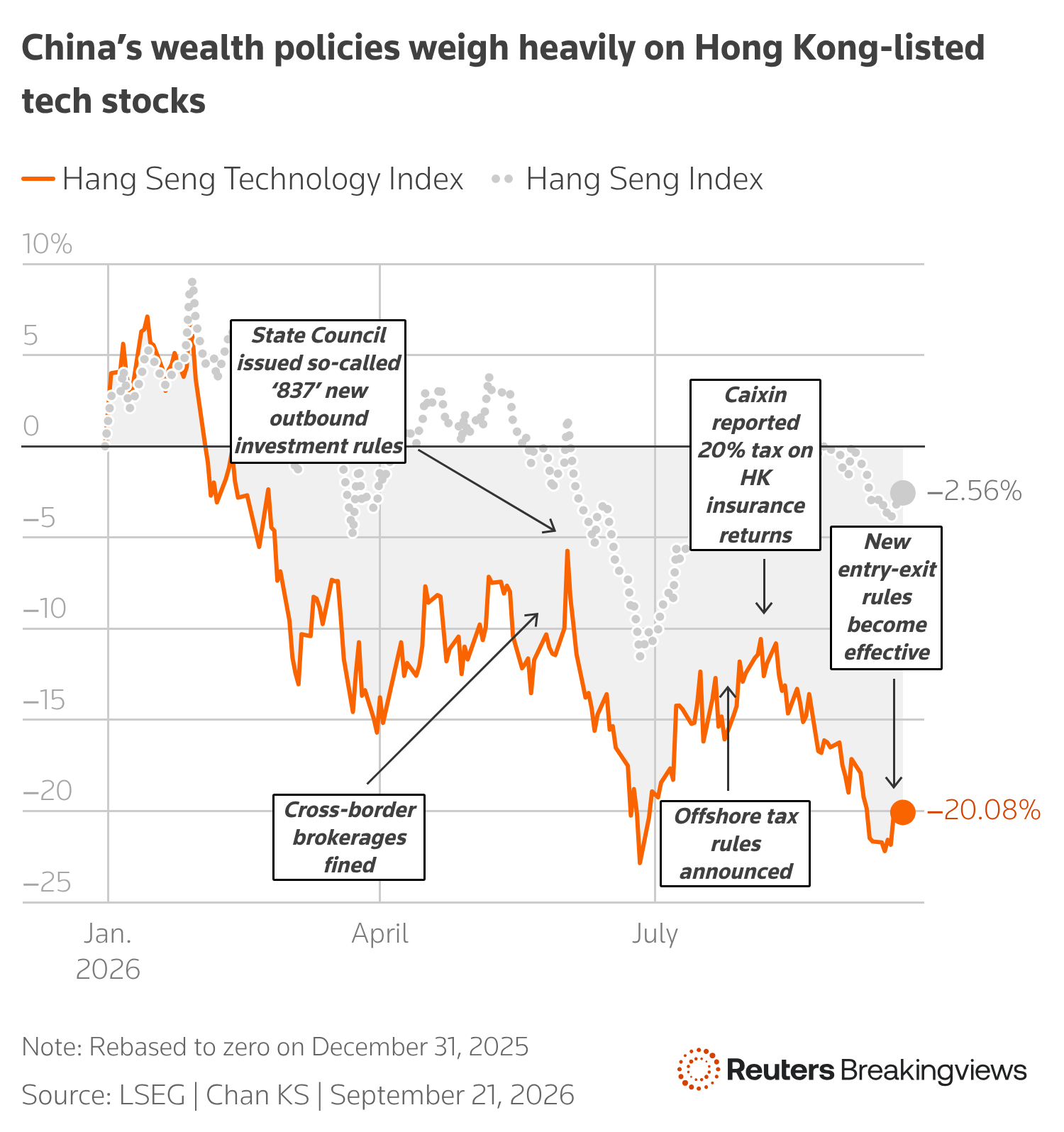
There are many reasons to buy and sell Hong Kong stocks. Now investors have another factor to watch: China’s offshore tax crackdown. The People’s Republic seems determined to bring riches parked in the former British colony into its fiscal net, possibly forcing wealthy shareholders to sell some stock in listed companies. Ka Sing Chan unpicks the connections.