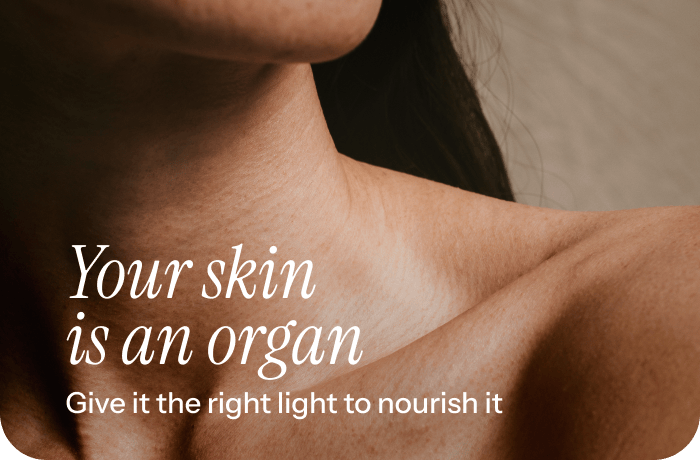
Where red light comes in Research shows that red (630 nm) and near-infrared (850 nm) light supports cellular energy beneath the surface. At that level, near-infrared and red light stimulate cytochrome c oxidase, a key enzyme in skin cell mitochondria — supporting ATP production, supporting skin elasticity, texture and a more radiant-looking complexion. Red light may be the “missing topical” in your skincare routine. The one that sunlight provided for most of human history — and that modern indoor life has largely removed. |