Yesterday, the 2026 Most Powerful Women Summit started off strong with a tribute to the late, great Gloria Steinem. As guests arrived in Santa Barbara, Calif., they were invited to join “talking circles,” in honor of the ones the activist would host in her own living room to debate the issues of the day.
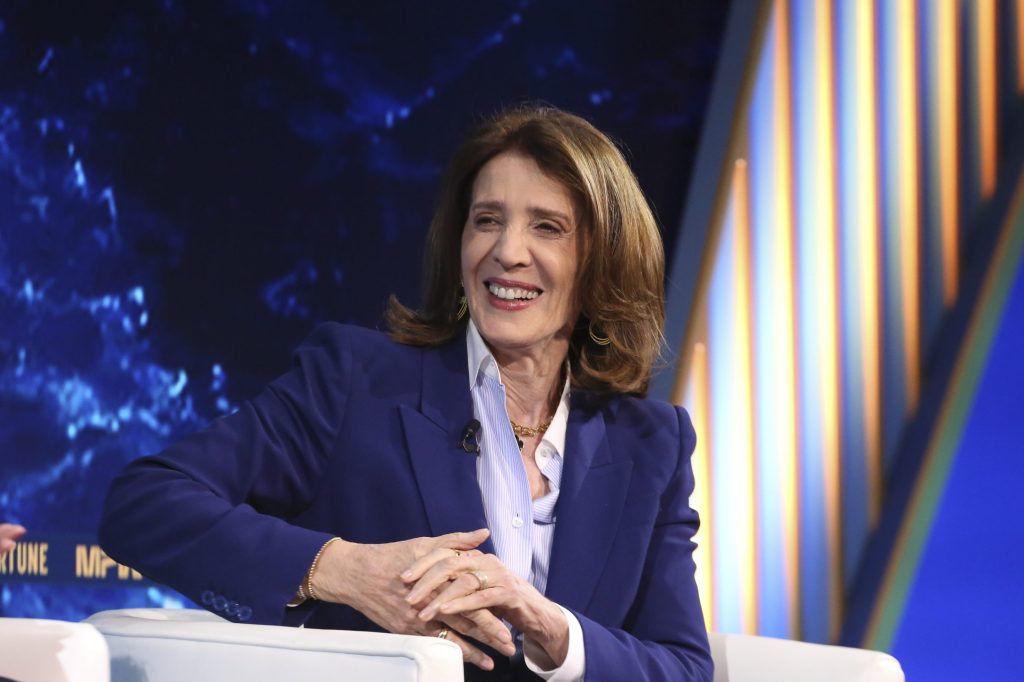
Steinem, who died in September at 92, like 1 in 8 women in the U.S., was diagnosed with breast cancer in 1986. Later in the day, we heard from another woman who knows that fight firsthand: Ruth Porat, Alphabet’s president and chief investment officer, who was diagnosed with breast cancer in 2001 and again in 2004, while she was at Morgan Stanley. While much of her conversation was focused on Google’s $200 billion AI buildout (
more on that here), Porat closed on a far more personal note.
The first time she spoke at
Fortune’s Most Powerful Women Summit, she told the audience, she had just been through cancer for the second time.
“If anyone’s going through it now, my heart is with you,” Porat said. “The unknown is a scary part of it.”
Two decades later, what Porat finds “so distressing” is how uneven the survival rate in America for treatable cancers is. For example, Black women are about
38% more likely to die of breast cancer than white women, despite being slightly less likely to be diagnosed with it, according to the American Cancer Society. Porat also said survival rates can vary from zip code to zip code.
When she arrived at Google and began seeing its health research, she asked her oncologist how much it mattered. His answer, she said: “The only way to democratize health care is with AI,” because it can give doctors everywhere the insight they need for early detection and treatment decisions. Porat pointed to Google’s work on early detection of breast and lung cancer.
“Early detection is a gift,” she said. “It is the gift of time that can actually make such an impact on survival rates.” Google’s AI model reads mammograms more accurately than radiologists, cutting false negatives by 9.4 percentage points in the U.S. and 2.7 points in the U.K., according to a
2020 study.
Porat also highlighted a screening effort in the Global South for diabetic retinopathy, a diabetes complication that can cause blindness if it isn’t caught early. Google and local partners have completed about 1 million scans so far, she said, with a goal of more than 6 million.
To be sure, she sees the real anxiety people have about AI’s impact on the world, but that she believes the rewards outweigh the challenges.
“We must marshal every ounce of energy we have to deal with the governance around all elements that you’ve raised: financial risk, the model risk, the build-out risk,” she said, “because the upside potential…is astounding.”
Sydney Lakesydney.lake@fortune.comThe Most Powerful Women Daily newsletter is Fortune’
s daily briefing for and about the women leading the business world.