|
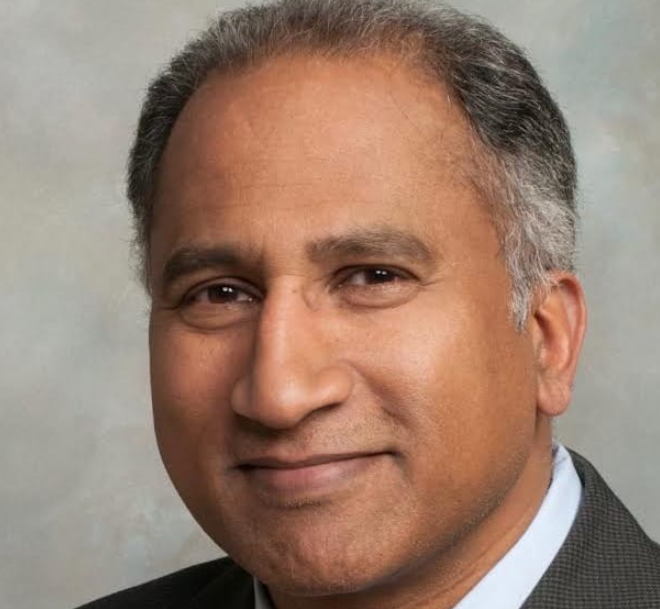
By Stephanie Rasmuson Ravi Ravichandran has spent more than 25 years working in technology while also supporting Christian education in Massachusetts. For Ravichandran, leadership extends beyond advancing technology or guiding institutions toward their goals. It entails recognizing one’s gifts and employing them in service of a greater purpose. His career has contributed to research and development in defense-related technologies, while his dedication to Christian education is reflected in his service as vice chairman of the board of trustees at Boston Trinity Academy and as a trustee of Gordon College. Ravichandran has also used his success in technology to help others. His professional contributions have helped advance technologies used by American military personnel, while his service in Christian education supports the intellectual, moral, and spiritual development of future generations. Throughout his career, he has come to regard leadership as a responsibility to cultivate the abilities of others rather than simply achieve individual success. Whether contributing technical expertise, mentoring colleagues, or helping guide educational institutions, he seeks to unite professional excellence with meaningful service. Three aspects of his career have been especially fulfilling: recognition from fellow researchers, seeing research translated into practical capabilities for military personnel, and helping others develop their potential. “When these technical ideas became production services that our soldiers used, that was amazingly meaningful,” he recalled. For Ravichandran, the measure of achievement lies not solely in discovery, but in the difference that discovery makes in the lives of others. Ravichandran grew up in Kandy, Sri Lanka, in a family of four boys. His father was a physician with a doctorate who taught at a medical school, while his mother, a nurse, devoted herself to raising their children. He recalls a warm, close-knit household in which education was valued and family life was enriched by Sri Lanka’s cultural traditions. From first through twelfth grade, he attended the same school, where chapel services held twice a week introduced him to Christianity. Although these early experiences established a foundation for his faith, his relationship with Christ deepened after he moved to the United States and encountered individuals whose example encouraged him to embrace his beliefs as a personal commitment. Ravichandran left Sri Lanka in the early 1980s amid mounting political instability and the prospect of civil war. He and his brothers came to the United States to pursue their education. At the same time, their parents confronted the difficult prospect of leaving established careers and rebuilding their lives in a new country. He admired his parents for making that sacrifice and says their decision helped him appreciate the opportunities available in America. Drawn to mathematics and its practical applications, Ravichandran pursued electrical engineering. He earned his bachelor’s degree from the Georgia Institute of Technology and completed both his master’s and doctoral degrees in electrical engineering at Rensselaer Polytechnic Institute in New York. His university years also proved formative in his spiritual development. At Georgia Tech, involvement with a local church helped nurture his Christian faith. Later, through Christian campus ministry at Rensselaer, he met Barbara, whom he married in 1992. Together, they raised three children. These formative experiences shaped both his professional direction and his personal convictions, establishing a foundation for a life in which technical inquiry and faith would remain closely intertwined. Ravichandran has spent much of his career developing technology with practical uses. His work has encompassed estimation, controls, situational awareness, decision-making, and knowledge discovery—fields that help people interpret complex information and make informed decisions. According to his professional biography published by Rensselaer Polytechnic Institute, his research and development experience includes initiatives supported by the Defense Advanced Research Projects Agency and research laboratories. Technologies associated with his work have transitioned into programs serving the Air Force, Army, and Navy. His professional accomplishments also include patents, publications, and recognition from his peers. Alongside these technical contributions, Ravichandran has devoted considerable time to advancing Christian education through Boston Trinity Academy and Gordon College. Founded in 2002, Boston Trinity Academy is a Christian college-preparatory school serving students in grades six through twelve in Boston’s Hyde Park neighborhood. Its educational philosophy combines academic rigor with Christian formation, seeking to cultivate intellectual ability, personal character, and spiritual maturity. Ravichandran and Barbara chose the academy for their children following a period of homeschooling. The school’s commitment to integrating faith, learning, and service aligned with their aspirations for their family. Its emphasis on ensuring that every student is loved and cared for particularly resonated with them, prompting their deeper involvement in the school community. Ravichandran now serves as vice chairman, helping support the institution’s mission and long-term direction. His commitment to Christian education extends to Gordon College, a Christian liberal arts college in Wenham on Boston’s North Shore. Established in 1889 as the Boston Missionary Training School, Gordon evolved from an institution devoted to preparing Christian ministers into a college integrating academic study with Christian faith and formation. Two of Ravichandran’s children attended Gordon, and he serves on its board of trustees. His involvement with both institutions reflects his conviction that education should prepare young people not only for professional success but also for lives characterized by intellectual curiosity, sound judgment, and service to others. For Ravichandran, Christian faith is not an isolated aspect of his identity but a guiding framework through which he understands his work, relationships, and responsibilities. He acknowledges that he once regarded science and faith as potentially competing approaches to truth. Through reading Christian authors and reflecting more deeply on the relationship between knowledge and belief, however, he came to reconsider that assumption. “There is only one truth, and that truth comes from God,” he said. Ravichandran believes scientific inquiry can deepen one’s appreciation for creation rather than undermine religious conviction. In his view, investigating the natural world and seeking to understand its complexities are compatible with Christian faith because both concern the same reality. This perspective informs his understanding of professional responsibility. He believes faith should shape not only private convictions but also professional decisions, personal relationships, and the conduct of everyday life. Integrating those principles consistently, he recognizes, remains a lifelong endeavor. His experience as an immigrant has also influenced his understanding of opportunity and responsibility. Ravichandran came to America for his education and says he appreciates the opportunities the country gave him to build a career and raise a family. A sermon by an immigrant priest and professor left a lasting impression on him by examining the relationship between liberty and spiritual freedom. The message reinforced his belief that freedom extends beyond individual independence; it also offers an opportunity to live in relationship with God and dedicate one’s abilities to the service of others. Ravichandran’s advice to younger professionals reflects these principles. He encourages them to pursue excellence in their chosen fields, remain committed to learning, and fulfill their responsibilities faithfully, whether leading a team or contributing as a member. Professional competence, he believes, is more than a means of personal advancement. It is an opportunity to exercise one’s gifts responsibly and make a meaningful contribution to others. Ravichandran’s career illustrates how scientific innovation, faith, and community service can reinforce one another. His work has helped translate technological research into practical applications, while his leadership at Boston Trinity Academy and Gordon College supports institutions preparing young people for lives of learning, character, and service. Yet he does not regard professional accomplishments, institutional titles, or recognition as the ultimate measures of leadership. Instead, he emphasizes faithfulness to one’s responsibilities and the willingness to direct personal abilities toward the well-being of others. Whether advancing technology, strengthening Christian education, or encouraging the next generation to pursue excellence with purpose, Ravichandran remains guided by the conviction that service is an expression of faith. His contribution to Massachusetts extends beyond the technologies he has helped advance and the institutions he serves. It is also reflected in his investment in people, his commitment to education, and his belief that achievement carries a responsibility to benefit the broader community.
|