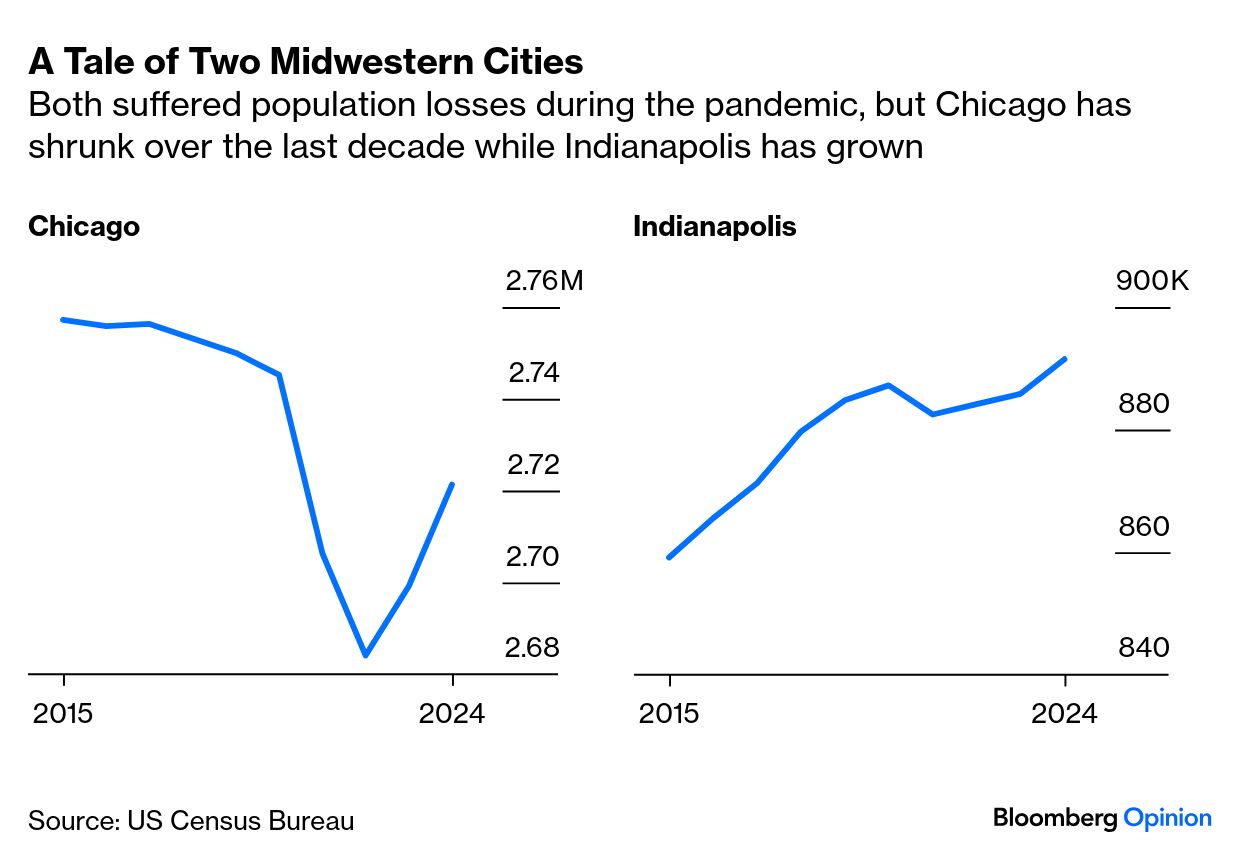
| Let’s kick this newsletter off with a game of “Spot the Difference.” Here’s your first photo, taken in late February: 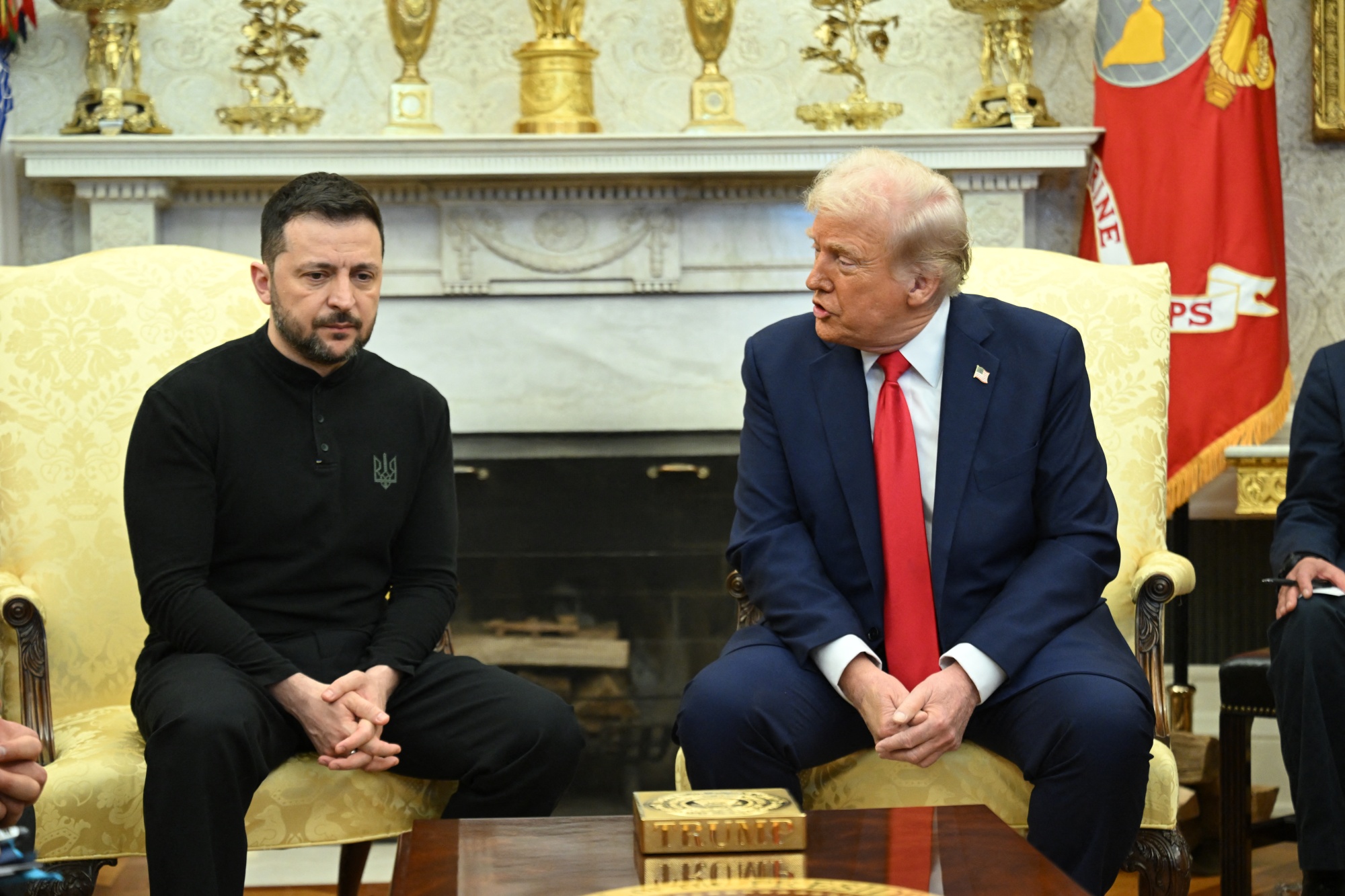 Photographer: Saul Loeb/AFP And here’s the second one, taken this morning: 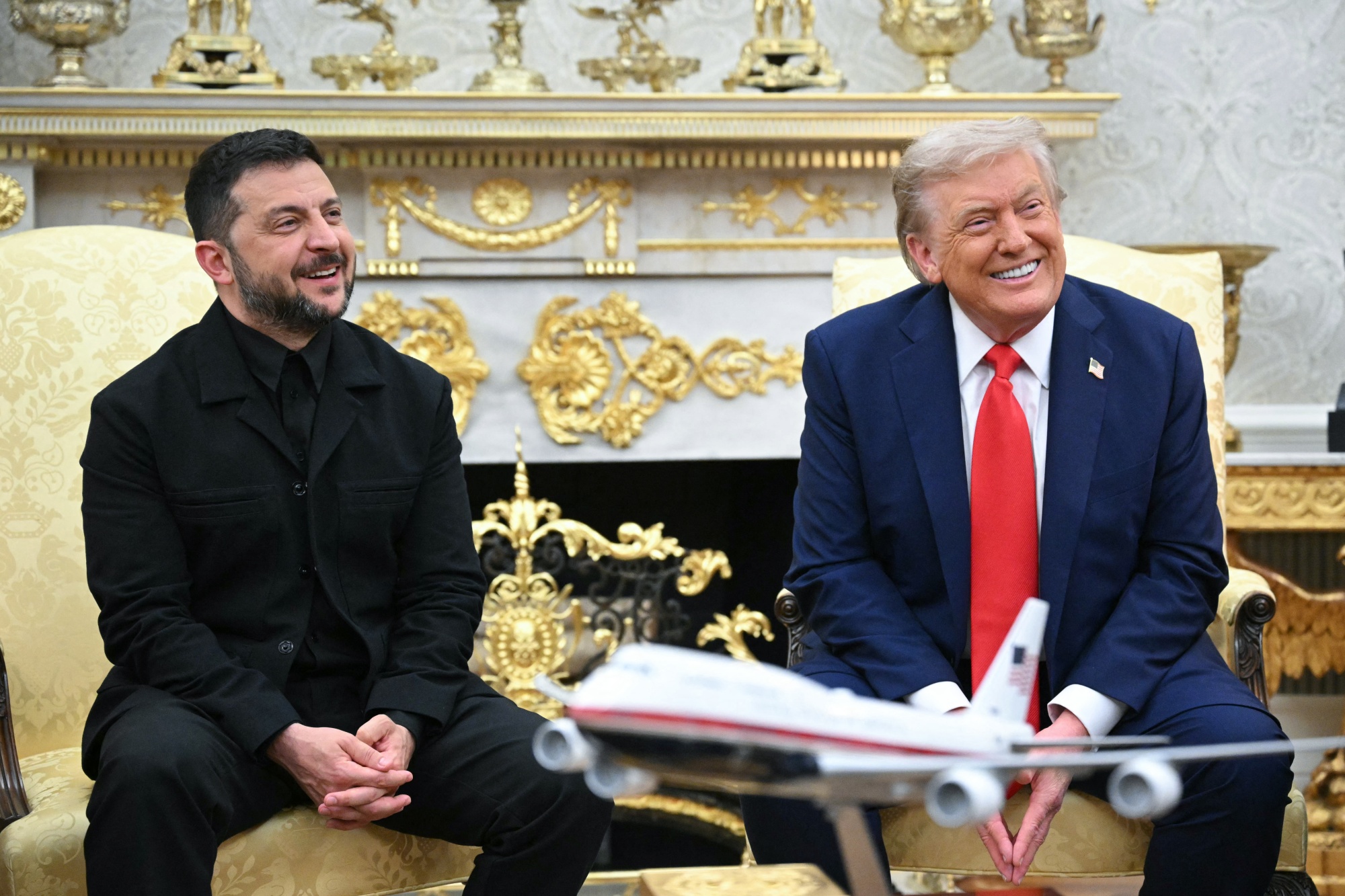 Photographer: Mandel Ngan/AFP What did you catch first? Perhaps you were blinded by the gold flourishes covering the mantle in the second photo. Or maybe it was the body language. In the first image, both are hunched over and Zelenskiy seems resigned while Trump appears combative. In the second, they’re both giving full-teeth smiles and have a proud posture. But the subtlest difference is perhaps the most symbolic: In his latest visit to the White House, Zelenskiy traded his knitted long-sleeve polo for an all-black suit. The Ukrainian president’s military-style attire is a point of contention for Trump, so the fact that he skipped his usual getup for something more formal says a lot about how delicate — and absurd — geopolitical bargaining can be. Still, such theatrics may be unsurprising, considering how Trump’s trip to Alaska went. Although we may never know exactly what Trump and Russian President Vladimir Putin said behind closed (car) doors, Marc Champion argues “much can be deduced from the two words never spoken during the heavily choreographed, question-free joint press conference that wrapped it up: ‘ceasefire’ and ‘sanctions.’ … Putin — an indicted war criminal — instead got a red carpet, a friendly shoulder clap and a private ride in The Beast, the US presidential limousine.” Tim O’Brien says that’s exactly how Trump prefers to conduct his business. “I’ve said it before and I’ll say it again, but the most useful lenses for understanding why Trump does what he does are self-aggrandizement and self-preservation,” he writes. “He is almost invariably motivated by at least one of those things — and often both. All of the energy that goes into speculating about his grand designs or philosophy is a distraction. He’s in it for himself.” Putin, of course knows this. And so does Europe: Zelenskiy was joined by several European leaders at the White House because, as Tim says, they “understand that strong-arming Zelenskiy into concessions may simply postpone further conflicts, not end them.” To truly close the chapter on this war, former supreme allied commander of NATO James Stavridis says “more sticks appear to be needed to get Putin to make a deal.” The White House, alongside its European allies, should consider ramping up the pressure to force Putin back to the bargaining table. They seem to be headed in that direction. According to Bloomberg News, trilateral talks with Putin could come after today’s meeting. Whether the US and Europe will back up their words with actions — more aircrafts, weapons and intelligence — is up for debate. “There’s still time to clean up the mess Trump made in Alaska,” James writes. But it’ll take a lot more than a suit change from Zelenskiy and a few White House photo-ops to bring Russia to its knees. Bonus Ukraine Reading: Betting markets were unfazed by the Trump-Putin summit. Might Europe and Ukraine move the needle? — John Authers Here’s a question from Allison Schrager: “Is the Era of the Big City over?” Our columnists sure seem to think so. Liam Denning argues Detroit needs a new direction. Matt Yglesias is not pleased by DC’s sudden transformation into a police state. And Howard Chua-Eoan says New York City’s most prized fine dining establishment, Eleven Madison Park, is — gasp! — derivative. Allison recognizes the cliché in all of this doomerism: “The obituary for the big city has been written time and again over the last several years,” she admits. But the quibble with city life can no longer be boiled down to the rent being too damn high. “It’s not just cheaper housing,” she explains. “Being in a big city may no longer be critical for a successful career. Both professional opportunities and cultural amenities are far more accessible with the ability to work remotely, use AI to keep up to date, and collaborate and network using social media. There are also real-world networks of talented and ambitious people all over the country.” Just look at all the people voluntarily signing up to be Hoosiers in recent years: “It’s not as if it’s never happened before,” says Allison. “Cities tend to go in cycles, based on changes in both leadership and technology. Over the course of the 20th century, as ineffective governance allowed many big US cities to become more dangerous and undesirable, improvements in cars and telephones made the suburbs more appealing and accessible. Technology and better leadership in the early 21st century brought urban renewal to many cities.” But that might be changing once again with the advent of AI. Or, more specifically, AI clones, which Parmy Olson informs us are already here: “More people are using artificial intelligence to create digital replicas of themselves and conduct their work at a greater scale,” she writes. “Right-wing influencer Dave Rubin even has an AI clone presenting his YouTube show while he’s on vacation this month.” I suppose that leaves us with a new question: If AI clones are doing our big city jobs for us, who needs to live in the big city anyway? Bonus Big Tech Reading: The tepid reception of GPT-5 and the selloff of CoreWeave could be an inflection point for AI — or merely a bump in the road. — Dave Lee |